Skip to content

You're staring at seven French business schools, three ranking systems, two tuition stories, and one application deadline that won't wait for your spreadsheet to calm down. I've seen this exact shortlist confusion many times, and the right answer is never “the highest rank” alone. It's the school that matches your career goal, French level, budget, and campus life without forcing you into the wrong admissions track. For the best business universities in France, I'd start with fit, then filter by prestige.
Table of Contents
- 1. HEC Paris
- 2. INSEAD
- 3. ESSEC Business School
- 4. ESCP Business School
- 5. EDHEC Business School
- 6. emlyon business school
- 7. SKEMA Business School
- Top 7 French Business Schools Comparison
- Turn Your Shortlist Into a Confident Application Plan
1. HEC Paris
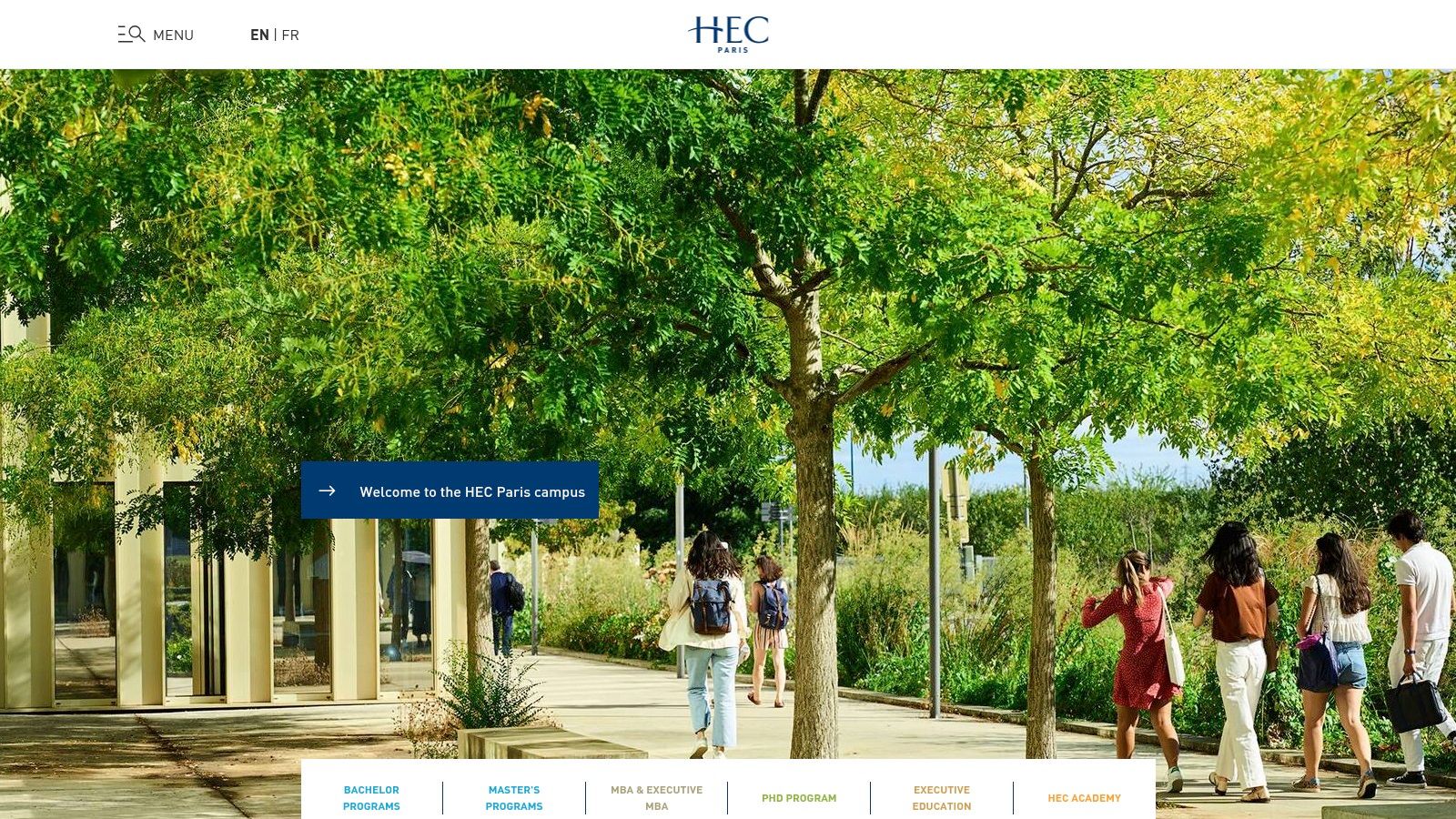
HEC Paris is the safest recommendation when a student wants elite brand power and a broadly focused business portfolio. If you're targeting consulting, finance, tech, luxury, or entrepreneurship, this is one of the first names I put on the board. The school's strength isn't just reputation, it's range, from MiM and Grande École to MSc, MBA, EMBA, PhD, and executive education. You can check the school directly on the HEC Paris website, and I'd pair that with a look at our guide to the best French business schools.
Best suited for
Choose HEC if you want deep elective choice, a serious corporate pipeline, and the option to move from strategy into finance, entrepreneurship, or a sector-specific path without changing schools. The 12-month MBA track also gives experienced professionals a faster route, while the longer format suits people who want more time for specialization and internships.
My rule for HEC applicants: if you need flexibility and the highest brand recognition, HEC is hard to beat. If you need a gentle workload or a low-cost Paris lifestyle, it's the wrong fit.
Admissions are selective, and that matters more here than at many other schools. I'd also be blunt about the pace, HEC rewards students who can handle a competitive cohort and a heavy workload. The high cost of living around Paris is part of the equation too, so I always tell families to think beyond tuition and into housing, transit, and daily spending.
2. INSEAD
INSEAD is the right answer when speed and global mobility matter more than campus rituals. The school's one-year MBA is built for professionals who want a compressed route into consulting or general management, and its Fontainebleau, Singapore, and Abu Dhabi footprint makes the international angle impossible to ignore. If you're comparing options by brand and time-to-degree, INSEAD belongs near the top of the shortlist, and the official details live on the INSEAD website. For a broader comparison of French study paths, I'd also point readers to our page on the best universities in France.
INSEAD's appeal is simple, it is intensely international and widely recognized. That helps if you're aiming for consulting or roles that reward a portable business profile across Europe and Asia. The trade-off is equally clear, the pace leaves less room for long internships, and the multi-campus structure can make everyday planning feel tighter than at a single-city school.
Where INSEAD wins
- Fast degree completion: The one-year MBA suits experienced candidates who don't want to pause their career for long.
- Global network: The alumni base is one of the biggest draws for internationally minded applicants.
- Recruiting fit: Consulting and general management are the cleanest matches.
The practical question I ask applicants is not whether INSEAD is impressive, it clearly is. It's whether they can thrive in a compressed program without needing a long runway for internships, campus adaptation, or a slower academic rhythm. If that answer is yes, INSEAD is one of the strongest buys in French business education.
3. ESSEC Business School
ESSEC is the school I recommend when a student wants customization and still wants a top-tier French brand. Its Paris-Cergy, Singapore, and Rabat campuses give it real geographic reach, and the academic portfolio is broad, with a flagship MiM/Grande École, specialized MScs, Global BBA, and MBA or EMBA options. That matters for families and professionals who don't want a one-size-fits-all route. You can review the school on the ESSEC website.
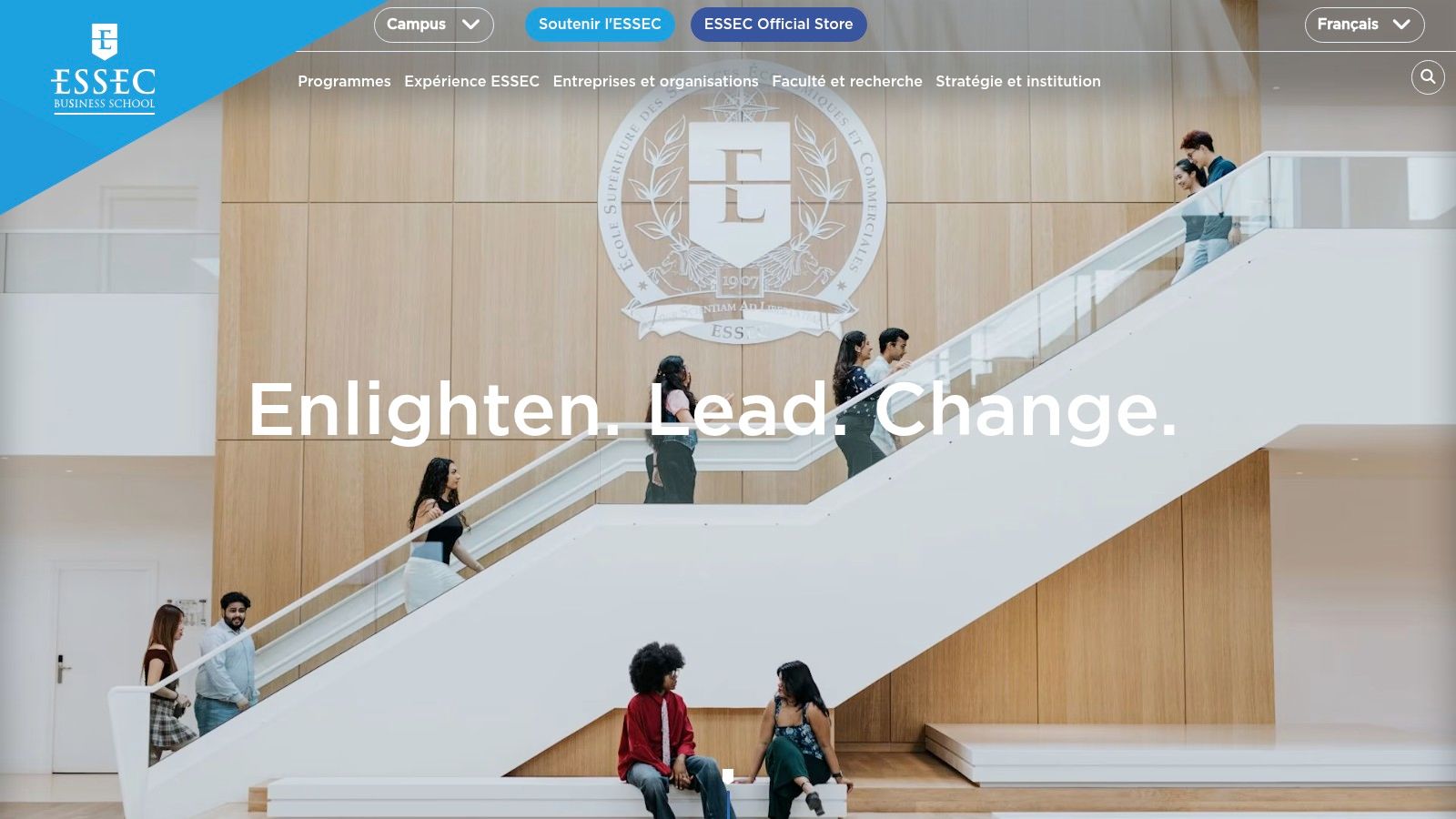
ESSEC stands out for luxury, strategy, consulting, analytics, and hospitality, which gives it a strong commercial edge for students who already know their sector. Apprenticeship pathways are especially useful if you want work experience while studying, and that can make the tuition burden feel more manageable in real life. Clear scholarship and deposit policies also help families plan earlier, which I value a lot when a decision has financial consequences.
Best suited for
ESSEC is a strong fit if you want consulting or luxury and need a school with multiple entry points. It's also a good match if you're open to apprenticeship and want a path that mixes study with employment.
The downside is not mysterious, it's complexity. The campus split creates logistics, and track choices can be confusing if you haven't clarified your goal yet. I tell applicants to choose ESSEC only when they're ready to manage options carefully, because this school rewards planning.
4. ESCP Business School
ESCP is the most distinctive choice on this list because its identity is built around movement. With campuses in Paris, Berlin, London, Madrid, Turin, and Warsaw, it offers a genuinely multi-city business education rather than a Paris-first model. If your goal is to build a European career with cross-border exposure, this school has a clear edge. The program pages and financing details are on the ESCP website.
The MiM is the signature route here, and the value is not just academic. Students get language and cultural immersion tied to local employer networks, which is exactly what many internationally mobile applicants want. If you're targeting finance, consulting, luxury, or sustainability across European markets, ESCP can be a smart commercial choice because the degree itself reflects mobility.
The right ESCP applicant doesn't mind logistics. They want the logistics because the movement is part of the value.
Best suited for
Pick ESCP if you want a European career map, not just a French one. It's also a good fit if you learn well by moving, adapting, and building contacts in more than one market.
The trade-off is obvious. More cities mean more moving costs, more administrative complexity, and more chances to feel stretched if you're not organized. I never recommend ESCP to students who want a single-campus routine. I do recommend it to people who want a business education that looks and feels international from day one.
5. EDHEC Business School
EDHEC is the cleanest recommendation for students who already know they want finance, risk, asset management, or business analytics. The school has a serious reputation in those areas, and its MiM and MiF offerings are the right products to inspect first. The English-taught MiM Business Management track is especially useful for international applicants who want access without waiting to become fluent before enrolling. Start with the EDHEC website.
What I like about EDHEC is that it gives you a direct route into quantitative careers while still keeping the program structure practical. Structured internships and career coaching matter here, because finance hiring punishes applicants who wait too long to build a recruiting profile. The school also publishes fee information and payment-plan options, which makes budgeting more manageable than at schools that leave families guessing.
Best suited for
Choose EDHEC if your target is quant finance, risk, or asset management and you want an English-first path. It's also a strong option if you're willing to work hard and distinguish yourself inside a large cohort.
The catch is that EDHEC expects initiative. A strong program won't recruit for you on autopilot, and students who coast tend to disappear into the crowd. Living costs in Nice or Paris can also bite harder than people expect, so I always tell families to budget with realism, not hope.
6. emlyon business school
emlyon is the best fit for applicants who want an entrepreneurial, hands-on business school rather than a purely prestige-driven one. The Programme Grande École carries a state-recognized Master's degree, and the school leans hard into learning by doing, project work, and work-study routes. If you're the kind of applicant who wants to build while studying, this is a serious contender. The school's official pages are on the emlyon website.
I like emlyon for candidates who need a school that treats entrepreneurship as a method, not a slogan. The apprenticeship and work-study options can reduce tuition pressure and add practical experience at the same time, which makes the model attractive to career switchers and younger applicants alike. Lyon also tends to be easier to plan around than Paris, especially for students watching the total cost of attendance.
Best suited for
Pick emlyon if you want startups, innovation, and practical project work. It's also strong for applicants who want experience built into the degree structure.
The limitation is that this route asks more from the student. You need initiative to manage track choices, work-study planning, and campus logistics between Lyon and Paris. If you want a school that pushes you to act like a builder, emlyon fits. If you want a polished but passive experience, it won't.
7. SKEMA Business School
SKEMA is the practical choice for applicants who want mobility, multiple campuses, and a broad business-school menu without paying for brand alone. Its French footprint includes Grand Paris, Lille, and Sophia Antipolis, and its international sites make it easier to connect study with different markets. The school's financing information is unusually useful too, because it publishes the full two-year Master in Management Programme Grande École cycle at €37,000, plus a €500 annual service fee on the official page. That gives you a concrete budgeting baseline on the SKEMA website, and I'd also read our piece on French business culture.
SKEMA's real strength is flexibility. Many tracks are taught in English, and the school's regional positioning gives students exposure to both the La Défense business environment and the tech ecosystem around Sophia Antipolis. The outcome is a school that works well for internationally minded students who want options, not a single rigid pathway.
Practical rule: if you are comparing total cost, never stop at the headline tuition. Add service charges, living costs, and the way your campus choice changes daily spending.
Best suited for
Choose SKEMA if you want mobility, English delivery, and a broad set of specializations. It's especially useful if you're comparing several French schools and want a model that feels internationally flexible.
The downside is that costs can still rise depending on campus and track, and recruiting outcomes vary by specialization. That's why I treat SKEMA as a smart-value choice, not a blanket bargain. It works best for applicants who know how to shop with a full cost picture.
Top 7 French Business Schools Comparison
| School | 🔄 Implementation complexity | ⚡ Resource requirements | 📊 Expected outcomes | 💡 Ideal use cases | ⭐ Key advantages |
|---|---|---|---|---|---|
| HEC Paris | High selectivity; intense workload 🔄🔄🔄 | High tuition + Paris living costs ⚡⚡⚡ | Top‑tier placements in consulting, finance, tech; strong ROI 📊 ⭐⭐⭐⭐ | Experienced professionals seeking network, strategy or finance roles 💡 | Broad program portfolio and large alumni/corporate links ⭐ |
| INSEAD | Competitive admissions; compressed, fast pace 🔄🔄 | High tuition; campus living costs (Fontainebleau/Singapore) ⚡⚡⚡ | Excellent global management and consulting placement; rapid time‑to‑degree 📊 ⭐⭐⭐⭐ | International candidates wanting a one‑year MBA and global exposure 💡 | Very international cohorts and multi‑campus brand recognition ⭐ |
| ESSEC Business School | Competitive with multiple tracks and apprenticeships 🔄🔄 | Moderate tuition; possible travel between campuses ⚡⚡ | Strong placement in consulting, luxury, hospitality sectors 📊 ⭐⭐⭐ | Students targeting luxury/consulting with apprenticeship experience 💡 | Highly customizable MiM and apprenticeship pathways ⭐ |
| ESCP Business School | Administrative complexity from cross‑campus rotations 🔄🔄🔄 | Variable living/relocation costs across cities ⚡⚡⚡ | High European employability; strong FT MiM rankings 📊 ⭐⭐⭐ | Candidates aiming for multi‑city exposure and European market access 💡 | Unique multi‑city model and strong employer networks across Europe ⭐ |
| EDHEC Business School | Demanding curriculum; proactive student profile needed 🔄🔄 | Moderate‑high tuition; campus costs (Nice/Paris) ⚡⚡ | Top MiM/MiF rankings; strong finance & analytics outcomes 📊 ⭐⭐⭐ | Students focused on quantitative finance, risk and analytics roles 💡 | Strong quantitative specializations and English‑first delivery ⭐ |
| emlyon business school | Competitive admissions; planning for work‑study tracks 🔄🔄 | Tuition varies; apprenticeships can offset costs ⚡⚡ | Good outcomes in entrepreneurship and practical project experience 📊 ⭐⭐⭐ | Entrepreneurial students seeking hands‑on learning and work‑study 💡 | Entrepreneurial culture and "learning by doing" emphasis ⭐ |
| SKEMA Business School | Moderate complexity; multi‑campus coordination 🔄🔄 | Varied fees plus admin charges; mobility costs ⚡⚡ | Solid international mobility and varied MSc outcomes across campuses 📊 ⭐⭐⭐ | Students wanting global mobility and exposure to tech/innovation ecosystems 💡 | Wide campus network, English tracks and strong mobility options ⭐ |
Turn Your Shortlist Into a Confident Application Plan
Don't apply to seven schools just because seven look impressive on paper. Narrow the list to two or three schools that match your target role, your budget, and the amount of French you can already use in interviews, written work, and everyday campus life. Then confirm admissions rules, language expectations, and fee details directly on each school's official site before you spend energy on essays and references. That's the point where the shortlist becomes a plan.
I also want families and professionals to be honest about French readiness. If the program, internship path, or early career goal depends on client-facing communication in France, French can't be treated as a side project. If your level is still basic, you should factor that into your timing, because language confidence affects interviews, oral presentations, and integration far beyond the classroom.
If you want help turning this decision into a concrete language plan, book the free 20-minute consultation with Elite French Tutoring to review your objectives, current level, and learning style. We can also help you compare business-French and DELF/DALF preparation options at elitefrenchtutoring.com, so your school choice and your language prep support each other instead of competing for your time.