You pick a French course on your lunch break, feel motivated for two days, then realize the format fights your schedule, your goals, or your attention span. I see this all the time. The problem usually is not effort. It is mismatch.
I judge online French lessons the same way I judge a training plan. The right option depends on what you need French for, how you learn best, and what will keep you consistent after week one. A busy professional needs something different from a parent helping a child, an exam candidate, or an adult learner who wants real conversation and direct correction.
So I built this guide as a matchmaking tool, not a generic ranking. We are pairing learner type to lesson format, then pressure-testing each option against the same decision factors: flexibility, teaching quality, accountability, speaking practice, and long-term value. You will also get a comparison table and a clear framework for choosing without wasting time.
If you already suspect that private instruction may suit you best, start with these tips for finding the right French tutor as an adult learner. If you need a broader view first, that works too. Programs now range from live tutoring and small-group classes to audio-first systems and guided self-study, with established institutions such as Sorbonne CCFS online French courses offering online options alongside specialist platforms.
My advice is simple. Choose the program that fits your real life, not the one with the loudest marketing. That is how people stick with French long enough to get good.
Table of Contents
- 1. Elite French Tutoring
- 2. Lingoda
- 3. French Institute Alliance Française
- 4. Berlitz
- 5. Pimsleur
- 6. Frantastique
- 7. Live Lingua
- Top 7 Online French Lessons Comparison
- How to Choose Your Best Path to French Fluency
1. Elite French Tutoring
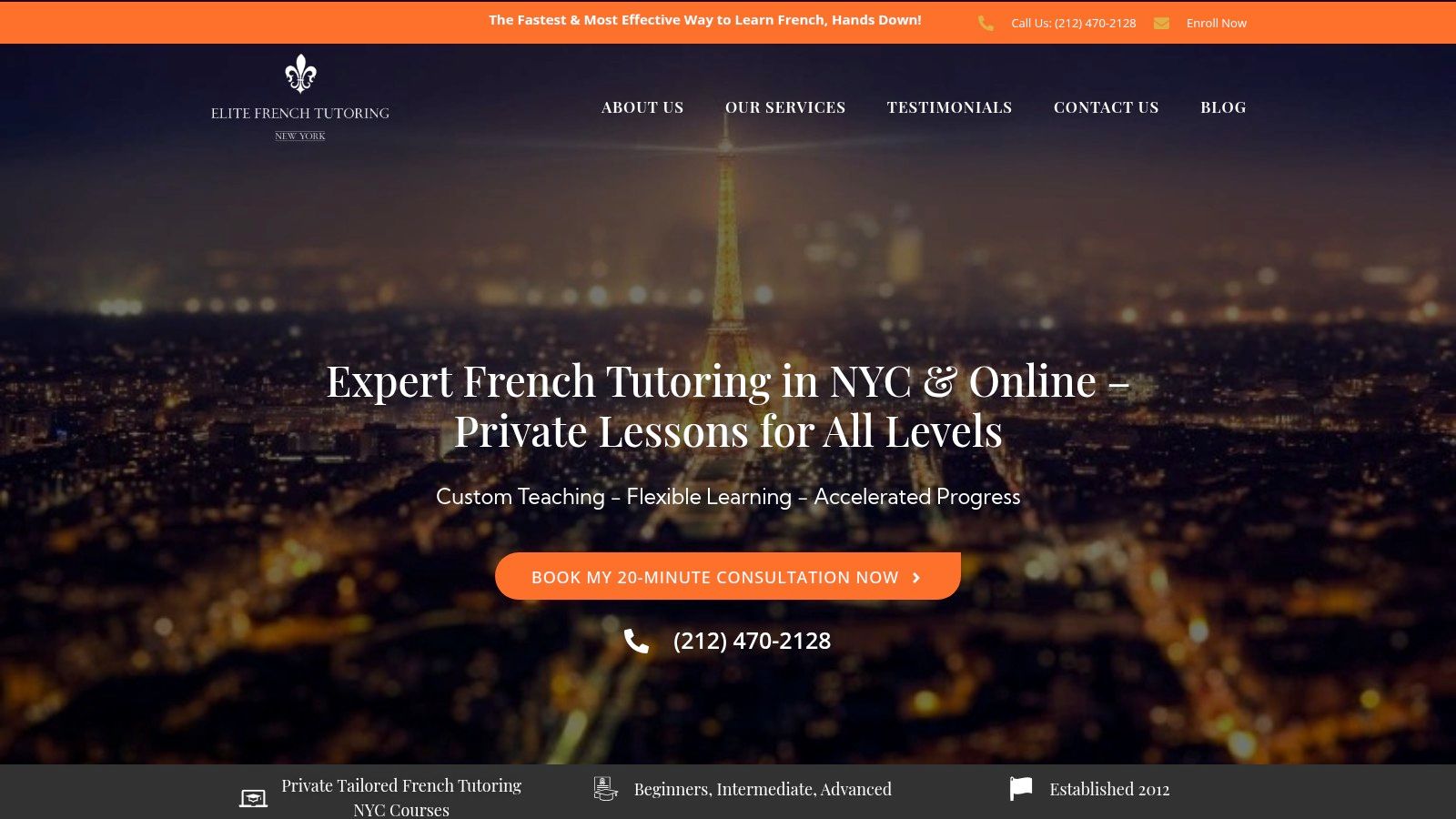
You have a real reason to learn French. A promotion, a move, an exam, your child's school, or a deadline that will not wait. In that situation, I would not send you to a generic app or a large group class first. I would point you to Elite French Tutoring.
This provider fits the learner who wants expert guidance, steady correction, and a program shaped around real-life demands. Elite French Tutoring has operated since 2012 and works with adults, children, teens, professionals, exam candidates, and families. Lessons are available online worldwide, with private in-person tutoring in New York and some Washington, D.C. availability.
Why I recommend it first
I put Elite French Tutoring at the top for one reason. It solves the problem of mismatch. A busy executive, a DELF candidate, and a child in a bilingual program should not be learning French the same way, and this service treats those cases differently from the start.
Each engagement begins with a free 20-minute consultation, which helps place you with the right instructor and define a practical plan. That matters if you need French for work, school support, relocation, or an exam date that is already on the calendar. If you want a sharper framework for evaluating options by age and goal, read this guide on how to find the best online French classes for kids, teens, and adults.
I also like the teaching priorities. The focus is on conversation, pronunciation, precise correction, and the kind of vocabulary you will use. That makes it a strong match for learners who need performance, not just exposure.
My rule: If the outcome matters, choose private instruction with targeted feedback.
Best fit
Elite French Tutoring is my pick for three types of learners. Busy professionals who need efficient progress. Families who need school or curriculum alignment. Students who need an experienced teacher to catch mistakes early before those mistakes become habits.
The continuity helps too. Working with the same instructor over time usually leads to faster progress, better accountability, and lessons that stay connected from week to week.
One student story shows why this model works:
“I needed to improve my professional French for a new role at the UN. My tutor, Élodie, didn't just drill grammar; she built lessons around diplomatic vocabulary and real-world scenarios I'd actually face. In three months, I went from being hesitant to confidently leading meetings in French. The personalized approach made all the difference.” – Sarah K., UN Program Officer
A few strengths stand out:
- Specialized instruction: Support is available for business French, school support for children, bilingual-school alignment, and exam prep.
- High-efficiency format: It suits learners who want focused progress and clear correction.
- Flexible delivery: Online lessons are available worldwide, with in-person options in select locations.
I also recommend this option for adult learners who know they need more than motivation. They need a method, a sharp teacher, and fast feedback.
The tradeoff is straightforward. Pricing is not public, so you need to contact the team for a quote. If low cost is your top priority, look elsewhere. If fit, precision, and guided progress matter most, this is one of the strongest matches in the entire guide.
2. Lingoda
Lingoda is the cleanest choice for learners who want live classes, a visible progression path, and the rhythm of a real online language school. It's one of the strongest mainstream options for people who learn best when someone expects them to show up.
On its French page, Lingoda states that it offers live, teacher-led French classes with certified native-speaking instructors and supports levels from A1 through B1 through Lingoda French classes. That defined ladder is exactly what I want to see from a serious online program.
Who should choose Lingoda
Choose Lingoda if you want scheduled speaking practice without committing to a boutique private tutor. It works well for adults who need structure but still want flexibility in timing.
I also like Lingoda for learners who drift in self-study apps. Group classes create useful pressure. You prepare more, participate more, and get correction in real time.
Live feedback changes the learning experience. You stop guessing whether your French sounds right and start adjusting in the moment.
A few reasons it earns a spot on this list:
- Structured progression: The level pathway is clear, which helps if you want a curriculum instead of random lessons.
- Speaking-forward format: You're not just tapping through exercises alone.
- Good middle ground: It sits between self-study and fully private tutoring.
The main caution is fit. If you need highly personalized support for a child, an executive role, or exam strategy, Lingoda may feel too standardized. It's strong for broad language growth, less ideal for highly specific outcomes.
If you're weighing group classes against private tutoring for different ages and goals, this comparison of the best online French classes for kids, teens, and adults is useful.
3. French Institute Alliance Française
FIAF is the best pick here for learners who want formal instruction with institutional credibility and a stronger cultural layer around the language. If you like the feel of a serious school rather than an app ecosystem, FIAF makes sense.
Its online program includes classes and private lessons for adults, teens, and children through FIAF online French classes. That range makes it especially appealing to families who want one institution that can support different ages.
Where FIAF stands out
I recommend FIAF for learners who enjoy term-based study. Fixed schedules aren't always a downside. For many students, they create commitment and momentum that on-demand platforms never manage to generate.
FIAF also benefits from the Alliance Française identity. That usually attracts learners who want language plus culture, not language stripped down to app mechanics.
Here's where I'd place it:
- Best for families: Strong option if a parent and child both want formal French study.
- Best for institutional learners: Good fit if you trust established pedagogy more than marketplace tutors.
- Best for cultural immersion: Better than most platforms if you want your French studies connected to a wider French-speaking environment.
The downside is flexibility. If your calendar changes constantly, term-based enrollment can feel rigid. I'd also skip FIAF if your goal is rapid, specialized progress in business communication or exam coaching and you need lessons specifically designed for that goal.
4. Berlitz
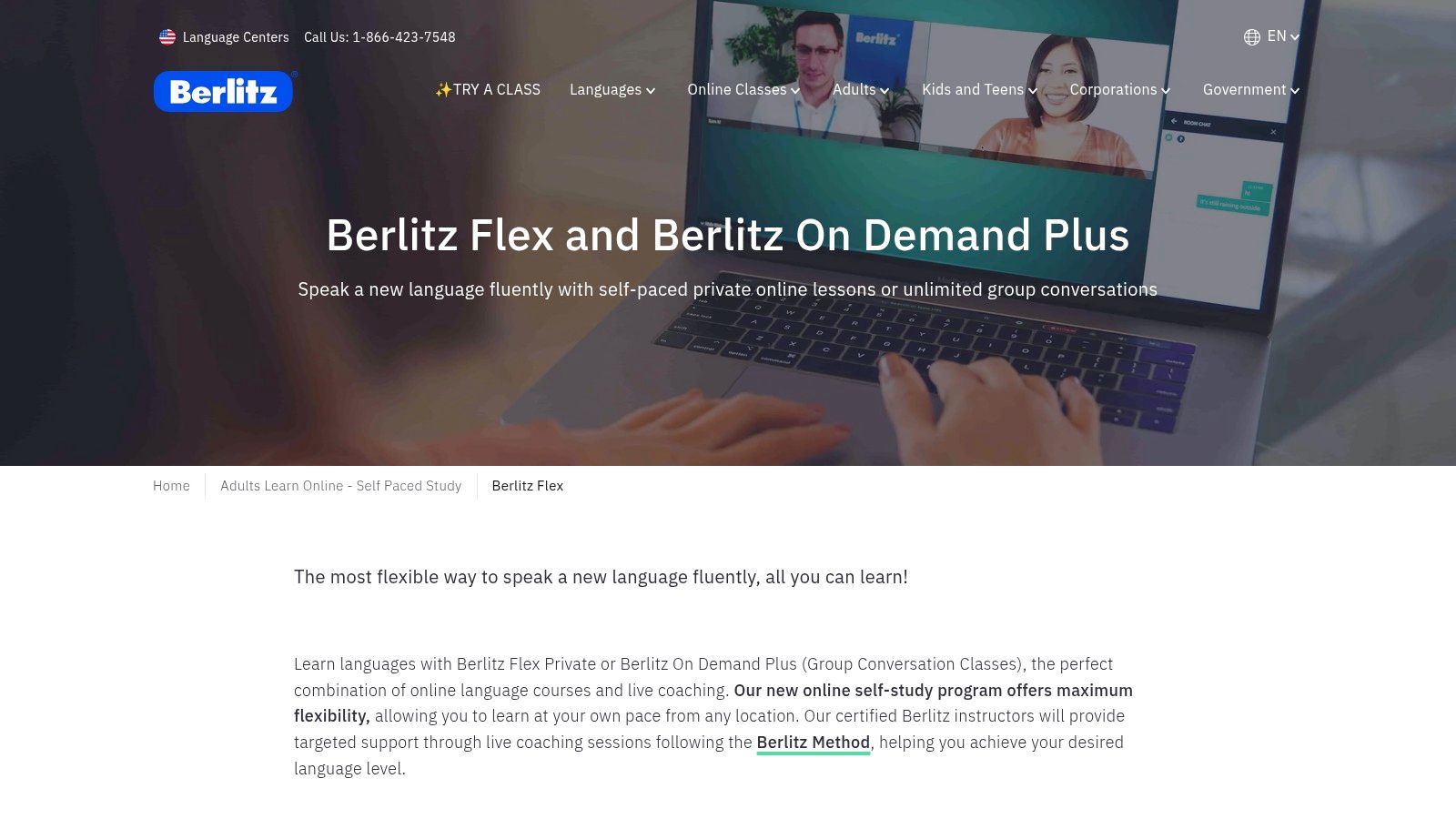
You have a full calendar, a budget for training, and a clear reason to learn French. You want a program that feels organized, credible, and easy to explain to a manager or HR team. That is where Berlitz fits.
I place Berlitz in the busy professional category. It suits learners who want structure without putting every hour of progress in the hands of a private tutor. Its online French offering covers beginner through advanced levels and gives you a few ways to study, including live lessons and independent coursework.
That mix is the key selling point. If your week is unpredictable, you can keep moving with self-study, then show up for live speaking practice when your schedule allows. For adults who need consistency more than novelty, that setup works.
Why Berlitz is a smart match for career-focused learners
I recommend Berlitz if you want a polished system with fewer decisions to make. You are not shopping through a giant tutor marketplace. You are choosing a structured path that is built to feel professional from the start.
It also makes sense for beginners who need a clear starting point and steady momentum. If that is you, this guide to French classes for beginners who want to get started and stay motivated will help you judge whether a blended program like Berlitz matches your habits.
Here is who should choose it:
- Best for busy professionals: Good fit if you need French lessons to work around meetings, travel, or uneven workweeks.
- Best for employer-funded learning: Easier to justify if you want a known brand and a formal training feel.
- Best for learners who want structure without daily live lessons: You get a curriculum and live practice without committing to constant one-on-one sessions.
My caution is simple. Berlitz still asks you to do your part. If you tend to ignore self-paced lessons, a fully teacher-led option will get better results because the accountability is built in.
5. Pimsleur
You finish work late, your calendar is packed, and the only study time you can count on is the drive home or a morning walk. That is the learner Pimsleur serves well. If you want French lessons that live in your ears instead of on your screen, Pimsleur deserves a serious look.
I place it in the audio-first category of this guide's matchmaking framework. It is a strong match for busy adults, rusty returners, and beginners who need to build a speaking habit before they worry about grammar charts or long video lessons.
Who should choose Pimsleur
I recommend Pimsleur if your real problem is not interest. It is follow-through. Audio lessons lower the friction because they fit into time you already protect.
It is also one of the better options for learners who feel self-conscious speaking French out loud. Repetition, listening, and guided response practice can help you hear patterns faster and answer with less hesitation.
Pimsleur is a smart fit for:
- Busy professionals: Best if your study time happens in the car, at the gym, or between errands.
- Beginners who freeze when speaking: Good for building mouth memory and basic pronunciation confidence.
- Learners who quit visual apps: Better if screen-based lessons start to feel like homework.
Its limits are clear, and I would not gloss over them. Pimsleur will not replace live correction, free conversation, or targeted exam prep. If you need accountability and a clearer starting plan, this guide to French classes for beginners who want to get started and stay motivated will help you choose a path that includes more teacher support.
My advice is simple. Choose Pimsleur if you need consistency more than variety. Choose something else if your goal is job-specific French, interactive speaking, or fast feedback from a real instructor.
6. Frantastique
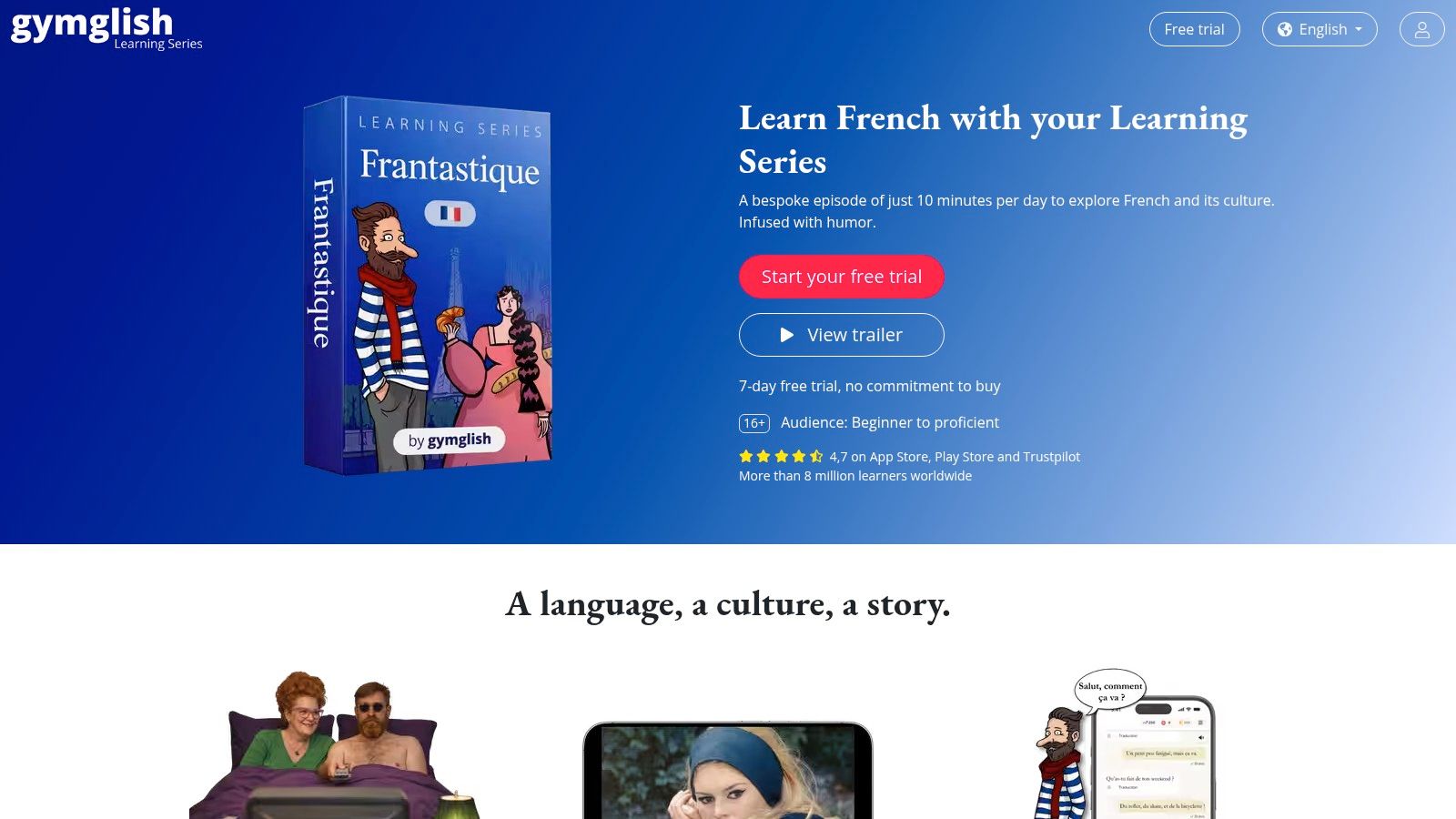
Frantastique is not the best choice for everyone, and that's exactly why I like it. It knows what it is. This is a microlearning tool for people who want short, adaptive French practice they can sustain over time.
I place it in the maintenance and vocabulary-growth category. It's especially useful for intermediate learners, professionals trying not to lose momentum, and anyone who wants a daily touchpoint without booking live classes.
Who gets the most value from it
Frantastique works best when your main challenge is consistency, not access. Short adaptive lessons lower the barrier to showing up, and that matters more than people think.
I also like it for learners who get bored easily. Story-driven lessons can keep daily study from feeling mechanical.
Where it fits well:
- Intermediate maintenance: Good if you already have some French and need regular contact with the language.
- Busy professionals: Useful when your schedule can't support frequent live sessions.
- Habit-driven learners: Better for people who want a steady cadence than an intensive burst.
I wouldn't choose it as a stand-alone solution for a true beginner who needs speaking practice and correction. If you're just starting, this guide to French classes for beginners and staying motivated points you toward stronger foundational formats.
7. Live Lingua
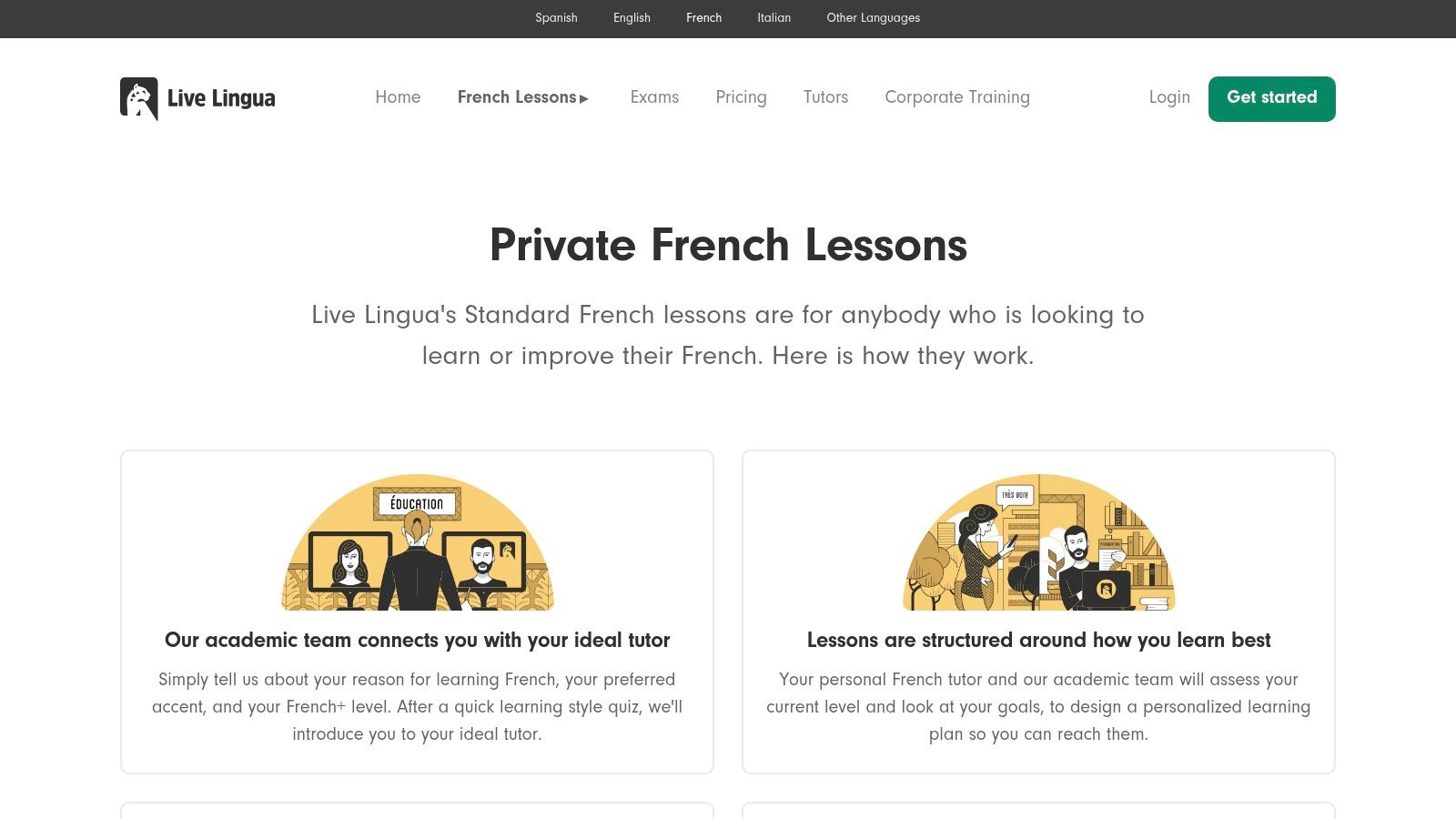
Live Lingua sits in a smart middle position. It's more personalized than a group-class platform, usually more flexible than institutional programs, and less boutique than a premium tutoring firm.
I recommend it for learners who want regular one-to-one support but don't need the white-glove customization of a provider like Elite French Tutoring. It's also a solid option if continuity with the same tutor matters to you.
Where Live Lingua fits best
This is one of the better choices for exam candidates, relocation learners, and adults who want a tutor to pace the process with them. If you know you need human accountability, but you still want a fairly straightforward setup, Live Lingua is easy to justify.
The broader online French market now includes very different models, from free and self-study options to private tutoring and mixed systems. That fragmentation is exactly why learner fit matters more than generic rankings, as reflected in Alliance Française Ottawa online French options and L'Alliance New York online language classes.
Live Lingua's strengths are practical:
- Flexible pacing: Good if your goals are specific and your timeline is personal.
- Human correction: Stronger than self-study for speaking and error reduction.
- Goal-specific tutoring: Better than broad app programs when your French needs context.
The tradeoff is cost versus scale. Personalized tutoring almost always costs more than self-paced tools, and the platform experience may feel simpler than bigger brands. If your priority is teacher continuity and customized sessions, that's a trade I'd gladly make.
Top 7 Online French Lessons Comparison
| Service | Implementation Complexity 🔄 | Resource Requirements ⚡ | Expected Outcomes 📊⭐ | Ideal Use Cases 💡 | Key Advantages ⭐ |
|---|---|---|---|---|---|
| Elite French Tutoring | High, bespoke 1:1 curriculum and assessment, intensive tutor prep | High, premium pricing, regular lesson hours, native-expert instructors (in-person/online) | High, rapid conversational confidence, professional register, exam-readiness | Professionals, executives, relocation, families, DELF/DALF candidates | Native expert tutors, fully personalized plans, strong social proof |
| Lingoda | Medium, CEFR-structured pathway with scheduled live classes | Medium, subscription or per-class fees, frequent live attendance required | Medium–High, steady CEFR progression and speaking practice | Learners seeking regular live classes and structured CEFR progression | 24/7 live classes, CEFR-aligned curriculum, group or 1:1 options |
| FIAF (French Institute) | Medium, term-based courses with institutional syllabus and placements | Medium, course fees, fixed-term schedules, cultural event access | Medium, solid pedagogy plus cultural literacy and community ties | Families, school-age learners, those wanting cultural integration | Reputation-backed instruction, cultural programming, membership perks |
| Berlitz (Flex / On Demand Plus) | Medium, blended self-study plus coached or unlimited live sessions | Medium, published U.S. pricing, platform access, coaching sessions | Medium–High, structured professional outcomes with coaching | Busy professionals, corporate learners needing PD justification | Transparent pricing, structured paths, options for unlimited group practice |
| Pimsleur | Low, audio-first, self-paced daily lessons (repeatable routine) | Low, subscription, 30-min daily time, app/offline audio | Medium, improved pronunciation/listening, conversational patterns (limited grammar/writing) | Time-limited learners, commuters, beginners building ear and speech | Hands-free practice, strong pronunciation focus, offline access |
| Frantastique (Gymglish) | Low, adaptive micro-lessons delivered daily, minimal setup | Low, short daily sessions (10–15 min), subscription-based | Medium, vocabulary expansion, maintenance, adaptive review for intermediates+ | Intermediate/advanced learners wanting daily habit and vocab growth | Highly personalized microlearning, engaging cultural content, low friction |
| Live Lingua | Medium, tailored 1:1 or small-group tutoring, continuity with same tutor | Medium, hourly packages or monthly bundles, Zoom/Skype setup | High (if sustained), bespoke accent, exam and business prep | Learners needing consistent tutor relationship, bespoke exam/business prep | Flexible scheduling, transparent starting rates, continuity with one tutor |
How to Choose Your Best Path to French Fluency
You log off work, squeeze in a short French lesson, and still hesitate when a real conversation starts. I see this constantly. The problem is usually not effort. It is a poor match between the learner and the lesson format.
I treat this decision like matchmaking. We need to match your goal, your schedule, and your tolerance for structure to the right kind of program. If you choose based on brand recognition alone, you can spend months on a method that was never built for your situation.
Start with the question that matters. What do you need French for?
If you need to perform under pressure, pick private lessons. I mean interviews, relocation, school support, client calls, presentations, and exams. In those cases, I want live correction, a plan tied to a concrete target, and someone keeping you accountable. Elite French Tutoring fits that profile for learners who want a personalized path and close guidance. Live Lingua is another strong fit if you want a tutor-led experience with more flexibility in how lessons are shaped.
If you learn best inside a system, choose a class-based program. Lingoda works well for adults who want frequent live classes and a clear curriculum they can follow without overthinking. FIAF is the better choice for learners who want a more academic feel, stronger institutional credibility, and a cultural layer alongside language study.
If your real obstacle is consistency, choose the format you will use every week. Berlitz suits professionals who want a structured option that feels organized and easy to justify. Pimsleur is the right call if your best study time happens while commuting, walking, or doing chores, and speaking and listening matter more than worksheets.
Frantastique is a narrower match. I recommend it to intermediate or advanced learners who want a daily habit and steady vocabulary review. I would not rely on it as a primary tool if your goal is confident, spontaneous conversation.
My framework is simple. Choose tutoring for precision and faster speaking progress. Choose live classes for routine and curriculum. Choose audio or micro-lessons for habit and convenience.
Then use the comparison table like a decision filter, not a scoreboard. Match the program to your learner type, your deadline, and the level of accountability you need. That is how we get to the right fit.
My advice is blunt. If French needs to work in real life, pay for feedback and accountability. If you want light exposure and habit-building, pay for convenience. Make that choice clearly, and you avoid a lot of wasted time.