Skip to content
You're already doing the hard part, which is wanting French that works in real life, not just in an app streak. If your next trip, client dinner, or school meeting depends on sounding confident, the fastest path is to learn from people who've already used French under pressure. That's why celebrities who speak French are useful here, not as trivia, but as blueprints for lessons that fit busy schedules, high-stakes conversations, and real-world goals. I've seen the same pattern again and again in our tutoring work, students progress faster when we stop treating French like homework and start treating it like a tool they need for a specific life situation.
Table of Contents
- 1. Charlize Theron Fluent French Through South African Multilingual Upbringing and Immersion Acting Prep
- 2. Serena Williams Conversational French Acquired Through International Tennis and French Speaking Coach Networks
- 3. Natalie Portman Academic French Through Childhood Exposure and Formal Education
- 4. Gwyneth Paltrow Conversational French from European Travel and Lifestyle Immersion
- 5. Johnny Depp Functional French from Long Term French Relationships and Paris Residency
- 6. Marion Cotillard Native French Fluency with English Acquisition The Reverse Model for Heritage Learners
- 7. Leïa Seydoux Upper Intermediate French from Bilingual Swiss Education and Professional Acting Preparation
- 8. Diane Kruger Fluent French from German French Bilingual Childhood and International Modeling Acting Career
- Comparison of Celebrity Learning Models
- Next Steps to Speak French Like Your Favorite Stars
1. Charlize Theron Fluent French Through South African Multilingual Upbringing and Immersion Acting Prep
Charlize Theron is a strong example of why language learning gets easier when your brain already knows how to switch between languages. She grew up speaking Afrikaans and English in South Africa, then built French through immersion and role preparation. That matters for anyone who feels “too busy” to study, because her path shows that French confidence often comes from repeated performance, not endless grammar notes. For practical learners, that means French tutoring should feel like rehearsal for your real life.
Her celebrity value is not passive knowledge, it's functional execution. Public coverage identifies her as a multilingual performer, and the best learning takeaway is simple, build French around situations you face, like press questions, client introductions, or industry meetings. That's exactly why our French immersion starting point guide is the right fit for professionals who need a plan, not a hobby.
Use role based practice, not abstract lessons
If you're a lawyer, founder, or executive, copy Theron's approach by creating your own performance contexts. I'd build lessons around boardroom introductions, media-style Q&A, and travel logistics instead of generic vocabulary lists.
Practical rule: learn the French you'll need in the room you're walking into, not the French you might someday use.
A busy professional can also borrow her multilingual advantage. If you already speak another language, use that structure to spot French patterns faster. That's the same mindset behind elite tutoring done well, it links language to identity, pressure, and use.
2. Serena Williams Conversational French Acquired Through International Tennis and French Speaking Coach Networks
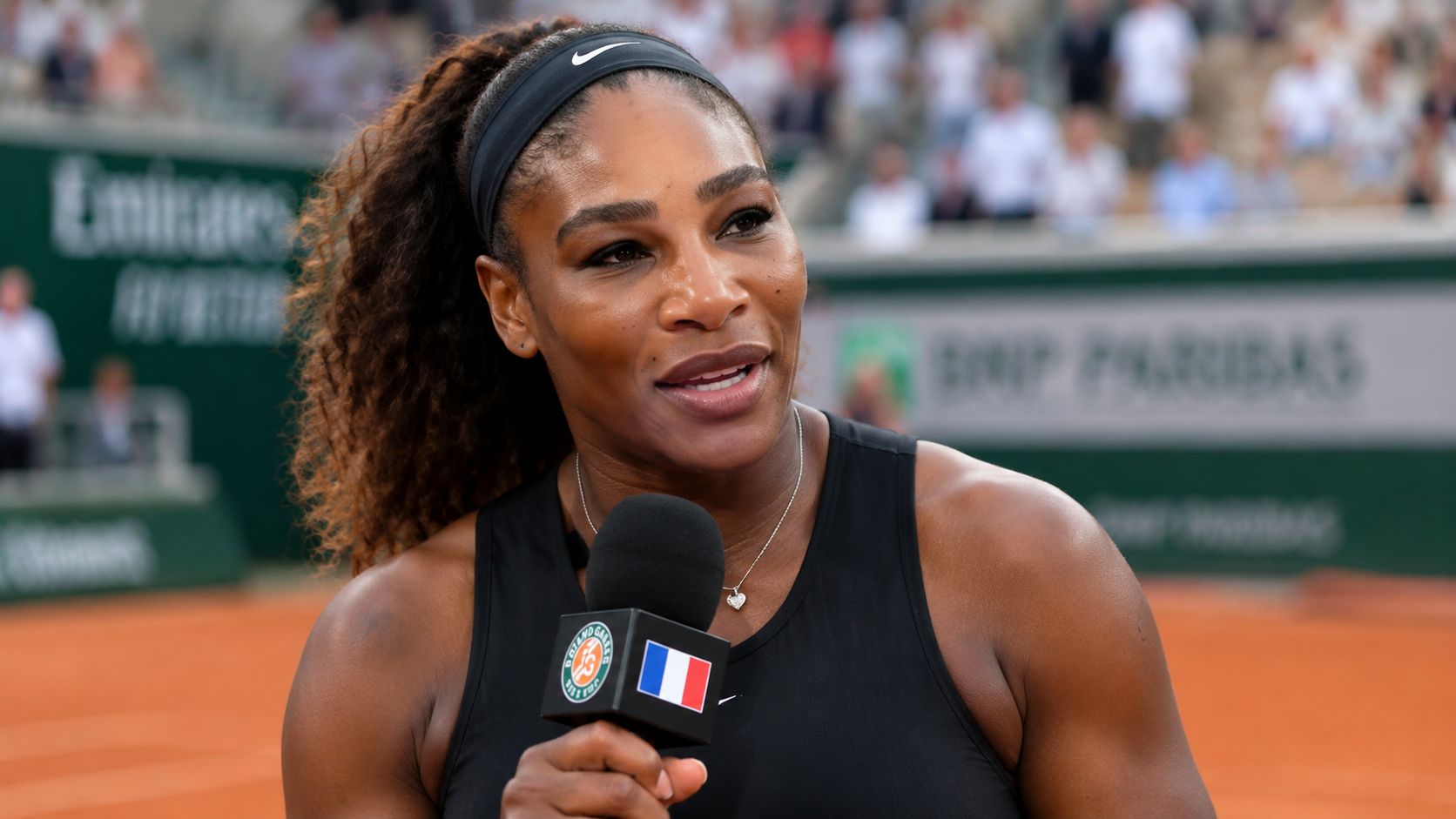
Serena Williams shows how French gets sticky when it's attached to a professional world you already live in. She learned conversational French through years on the international tennis circuit, especially at Roland Garros, where speaking enough French to handle interviews and everyday interactions became useful fast. That kind of learning is ideal for parents, frequent travelers, and professionals who need practical output, not perfect textbook accuracy. French becomes easier when it shows up in your calendar every week.
Build a French context that repeats
Her model is especially useful because it proves you don't need a classroom to build usable French. You need a recurring environment where the language matters. In Williams' case, that environment includes post-match interviews, French-speaking coaches and trainers, and media appearances across Europe, all of which force quick comprehension and fast replies.
A smart learner should copy that structure.
- Choose one recurring French setting: a client base, a hobby, a school pickup routine, or a travel destination.
- Practice only what the setting requires: greetings, opinions, follow-up questions, and closing lines.
- Stop waiting for perfect grammar: useful speech comes from repetition in live situations.
For anyone comparing tutoring options, this is the reason I recommend lessons built around your actual speaking environment. Our guide to why learning French is worth the effort fits learners who want French that pays off in work, family, or travel, not just on a worksheet.
3. Natalie Portman Academic French Through Childhood Exposure and Formal Education
Natalie Portman is the clearest model for learners who want polished, precise French. She's known for speaking Hebrew, French, Spanish, German, and Japanese, and her French developed through childhood exposure plus formal study at Harvard University. That combination matters because it shows how structure and immersion work best together. If you want academic French, professional written French, or exam-ready accuracy, you need both.
Portman's example also helps parents make a smart decision. Children who start with structure usually build stronger long-term control over pronunciation and grammar, especially when tutoring is consistent and age-appropriate. If you're weighing investment decisions for your family, our French tutor investment guide gives the right framework for choosing support that sticks.
Choose structure when precision matters
Portman's French is the kind people notice because it sounds intentional. That's why her path is the best blueprint for DELF/DALF prep, written French, and high-level conversation about culture or ideas. She's the opposite of “just enough French for travel,” and that difference matters if your goals include school success or career advancement.
I recommend this approach for three learners in particular.
- Parents of young children: start formal lessons early, then reinforce with media and conversation.
- Adult learners with clear goals: use a qualified tutor, not random apps, if accuracy matters.
- Heritage learners: keep the structure strong so the language doesn't get fuzzy over time.
A student story from our tutoring work mirrors this. A Manhattan parent came to us wanting stronger French for her child's bilingual school track, and the turning point was replacing casual exposure with structured weekly lessons tied to classwork and speaking practice. The child stopped guessing and started answering with confidence. That's the Portman model in action, organized, precise, and hard to shake.
4. Gwyneth Paltrow Conversational French from European Travel and Lifestyle Immersion
Gwyneth Paltrow is the right example if your French goal is social ease, not academic polish. She's widely seen as conversational in French through European travel, time living in London, and a lifestyle that naturally touches French-speaking environments. That makes her a realistic model for professionals who want French to feel natural at dinners, on trips, and in polished social settings. It also shows that you can build French without making every practice session look like a classroom.
Her path is useful because it respects a busy schedule. You don't need to become a full-time language student to sound comfortable in a restaurant, at a hotel, or during a cultural weekend. You do need repeated exposure in settings you already enjoy, and that's where lifestyle-based tutoring helps.
Make French part of the life you already have
I'd recommend her method for families and professionals who want low-friction progress. French media, French podcasts, and dinner conversations are enough to create momentum if they happen regularly. For a practical next step, focus on the parts of French that show up in travel and social life, then let a tutor fill the gaps.
French feels easier when it lives beside your routine instead of competing with it.
Use these ideas if you want the Paltrow version of French.
- French media you'd enjoy: fashion, wellness, travel, or food content.
- Social repetition: French film nights, restaurant outings, or conversation clubs.
- Family exposure: make French part of vacations and weekend culture, not just class time.
If you're trying to estimate how long conversational French might take, her example supports a straightforward answer, it depends less on ambition than on consistent contact. Our conversational French timeline guide is a smart next read if you want to compare lesson options before booking.
5. Johnny Depp Functional French from Long Term French Relationships and Paris Residency
Johnny Depp's French is a lesson in what happens when language becomes part of your actual life. His conversational French grew through long-term relationships with French women and extended time in France, especially Paris, not from a formal study plan. That makes his path especially relevant for expats, blended families, and anyone trying to build French through real belonging rather than obligation.
The point here is emotional integration. When French becomes the language of home, friendship, and daily routine, people keep using it. That's why relocation clients often progress faster than they expect, provided they use the language outside lessons. It's also why families with French-speaking partners need a tutoring plan that supports relationship language, not just classroom French.
Turn community into your classroom
Depp's example works because it ties French to identity and place. If you're moving to a French-speaking country, don't frame the language as a subject to pass. Frame it as the code for community access, local humor, and everyday respect.
Here's how I'd apply that model.
- Build local ties: join social clubs, community gatherings, and neighborhood events.
- Make French personal: use it for affection, family routines, and recurring conversations.
- Practice cultural language: the slang, greetings, and polite phrasing people commonly use.
For families, this is especially important. Children learn faster when a language feels tied to belonging, not pressure. Adults do too. If you want the Depp-style result, tutoring should support real life, not sit apart from it.
6. Marion Cotillard Native French Fluency with English Acquisition The Reverse Model for Heritage Learners
Marion Cotillard gives heritage learners a valuable reverse model. She is a native French speaker who learned English as a second language, and that bilingual base helped expand her international career. Her example illustrates how strong first-language French can support future language gains, not compete with them. For families raising children across languages, that's a powerful argument for protecting French at home.
Her example is also useful for parents worried about language dilution. When English becomes dominant, heritage French can fade unless you maintain it intentionally. That's not a theory, it's a common family reality, and the solution is structure.
Protect the home language first
If you're raising French-American or international children, keep French as a live language in the home. Then let school, tutoring, and community exposure build the second language around it. The goal is balance, not replacement.
A strong heritage plan usually includes these moves.
- Primary language at home: make French the default for family communication.
- Structured support: use tutoring early so children don't drift into English-only habits.
- Reactivation for adults: if you lost fluency, rebuild it. You're not starting from zero.
A practical student example comes from an adult learner we worked with who grew up hearing French but stopped using it in school. We didn't restart from scratch, we reactivated what was already there through guided speaking, correction, and family-based vocabulary. That kind of progress is often faster than people expect, because the language is still underneath the surface.
Cotillard's model is the best reminder that bilingual strength is maintained, not assumed.
7. Leïa Seydoux Upper Intermediate French from Bilingual Swiss Education and Professional Acting Preparation
Leïa Seydoux is proof that even native speakers invest in professional French. She grew up with French in Switzerland and France, then added accent coaching, diction training, and professional communication prep for international film roles. That makes her the gold-standard example for executives, presenters, and anyone who needs French to sound clean under pressure. Casual fluency is one thing. Controlled, high-stakes speech is another.
This is the point where many learners plateau. They can talk, but they don't sound sharp. Seydoux's path says the fix is not more vocabulary, it's better delivery. Professional French coaching improves clarity, pacing, and confidence in situations where every word counts.
Train for the room, not just the conversation
I'd use her model for negotiation prep, media appearances, and public speaking. Mock interviews, boardroom simulations, and press-style responses belong in serious French lessons because they force precision. Even native speakers rehearse for performance, so second-language learners should absolutely do the same.
Expert rule: if your French has to hold up in public, practice the exact pressure you'll face in public.
A few smart training moves fit this level.
- Accent and diction coaching: aim for clarity before speed.
- Recorded practice: compare your speech to native media examples.
- Scenario drills: rehearse meetings, openings, objections, and closing lines.
That's the kind of tutoring serious professionals want. It's not about sounding like a textbook, it's about sounding ready.
8. Diane Kruger Fluent French from German French Bilingual Childhood and International Modeling Acting Career
Diane Kruger shows how multilingual childhood exposure compounds over time. She grew up in Germany and became fluent in French through bilingual education, European living, and a career that moved between France and French-speaking markets. Add German, English, and conversational Spanish, and you get the kind of language profile that makes international work easier, not harder. That's exactly why expat families and globally minded parents should pay attention.
Her journey is especially useful because it ties language to mobility and career development. French wasn't just an academic subject for her, it was part of a wider professional identity. That mindset helps children and adults stay motivated because the language has a purpose.
Treat French as an investment, not a school task
If you're raising children in a multilingual region, start bilingual education early. If you're already working internationally, use your network as your practice field. And if you're deciding whether French lessons are worth it, think in terms of access, confidence, and opportunity.
The best practical lessons from Kruger are straightforward.
- Start early for children: bilingual schooling works best when it begins young.
- Use work as practice: make your professional life the place where French gets used.
- Keep the long view: multilingual education pays off through repeated use over time.
For expat families, this is the cleanest takeaway in the whole list. French grows fastest when it's tied to real outcomes, school, work, travel, and cross-border life. That's the kind of goal our private lessons are built to support.
Comparison of Celebrity Learning Models
| Approach / Celebrity | 🔄 Implementation Complexity | ⚡ Resource Needs & Time | ⭐📊 Expected Outcomes (quality & impact) | 💡 Ideal Use Cases |
|---|---|---|---|---|
| Charlize Theron: Fluent French Through Multilingual Upbringing & Immersion Acting Prep | 🔄 High, intensive role-based immersion and prep | ⚡ High, 1:1 immersion tutoring, accent coaching; intensive short-term work | ⭐ Near-native conversational fluency; 📊 Strong media and interview performance | 💡 Busy professionals who need fast, performance-ready French for press or negotiations |
| Serena Williams: Conversational French from International Tennis Exposure | 🔄 Medium, long-term repeated real-world exposure | ⚡ Moderate, travel plus recurring interactions; limited formal study | ⭐ Functional conversational French, B1 to B2; 📊 Reliable for interviews and team communication | 💡 Frequent travelers or international-team professionals seeking practical French |
| Natalie Portman: Academic French via Childhood Exposure & Formal Study | 🔄 High, structured academic curriculum plus long-term study | ⚡ High, sustained coursework, exam prep; longer programs with regular practice | ⭐⭐ Academic and professional proficiency; 📊 Suitable for writing, exams, and intellectual contexts | 💡 Parents and learners targeting academic bilingualism or exam certification |
| Gwyneth Paltrow: Conversational French from Travel & Lifestyle Immersion | 🔄 Low, informal, lifestyle-based exposure | ⚡ Low, media consumption, travel, occasional conversation practice | ⭐ Conversational French, B1; 📊 Good for travel and social contexts, but limited professionally | 💡 Busy people wanting casual travel and social French without heavy study |
| Johnny Depp: Functional French from Long-Term Relationships & Paris Residency | 🔄 High, deep life integration over years | ⚡ High time investment, relocation or long-term relationships; little formal instruction | ⭐ Conversational French with cultural nuance, B1 to B2; 📊 Strong community and family communication | 💡 Families relocating or learners aiming for authentic community integration |
| Marion Cotillard: Native French with English Acquisition, Heritage/Reverse Model | 🔄 Medium, native maintenance plus targeted reactivation and study | ⚡ Moderate ongoing maintenance; heritage advantage reduces time to reactivate | ⭐ Native-level French plus professional English; 📊 Strong bilingual career advantage | 💡 Heritage learners and bilingual parents preserving or strengthening a home language |
| Leïa Seydoux: Native Foundation + Professional Accent/Diction Coaching | 🔄 High, professional diction and media coaching layered on native base | ⚡ High, specialized accent coaching, rehearsal, ongoing refinement | ⭐ Professional and media-level French; 📊 Executive presence and polished public speaking | 💡 Executives, spokespeople, and actors preparing for high-stakes French appearances |
| Diane Kruger: Fluent French from Bilingual Childhood & International Career | 🔄 Medium, multilingual childhood plus professional immersion | ⚡ Moderate, bilingual schooling and international mobility in youth | ⭐ Near-native fluency plus multilingual competence; 📊 Broad international career benefit | 💡 Expat families, parents seeking bilingual education, international professionals |
Next Steps to Speak French Like Your Favorite Stars
These celebrity strategies prove that French confidence doesn't come from one perfect method. It comes from matching the method to the life you live. Charlize Theron shows the power of immersion and role-based practice. Serena Williams proves that repeated real-world exposure builds functional speech. Natalie Portman demonstrates the value of structure and accuracy. Gwyneth Paltrow makes the case for lifestyle integration. Johnny Depp ties French to belonging. Marion Cotillard shows why protecting heritage French matters. Leïa Seydoux reminds us that professionals still need coaching. Diane Kruger proves that bilingual education compounds over time.
That's the core lesson behind celebrities who speak French, the language works best when it has a job. If you want French for travel, social confidence, business, school, or family life, don't copy everything. Pick the blueprint that matches your situation and build from there.
At Elite French Tutoring, we design lessons around that exact idea. We work with adults, children, teens, professionals, expats, and families who want private French support that feels practical, personal, and effective. Book your free 20-minute consultation with us, and we'll help you choose the right path, whether that's conversational French, professional communication, exam prep, or a family plan that fits your schedule.