Skip to content

You're comparing French medical schools with one question in mind, will you be able to get in, keep up in French, and land in a hospital network that gives you real clinical depth. That's the right question. The best medical universities in France aren't just famous names, they're entry routes, language expectations, hospital ecosystems, and backup options that can make or break your first year.
The fastest way to sort them is to match your current French level to the route you'd use, then compare the school's hospital network, research intensity, and how clear its admissions guidance is for international students. In France, the strongest faculties tend to sit inside large public universities with broad research bases, not isolated medical colleges, and that matters for lab access, clinical exposure, and mobility between specialties. The comparison below focuses on where each school is strongest, where the language pressure is real, and what kind of applicant each one suits best.
Table of Contents
- 1. Sorbonne University, Faculty of Medicine
- 2. Université Paris Cité, Faculty of Health
- 3. Université Paris-Saclay, Faculty of Medicine
- 4. Claude Bernard Lyon 1, Faculty of Medicine and Maieutics Lyon-Sud
- 5. Aix-Marseille Université, Faculty of Medical and Paramedical Sciences
- 6. Université de Bordeaux, UFR des Sciences Médicales
- 7. Université de Montpellier, Faculty of Medicine
- Top 7 Medical Universities in France, Comparison
- Build Your French Level Before Your Application Window Opens
1. Sorbonne University, Faculty of Medicine
A student who wants Paris, scale, and serious academic depth will usually land on Sorbonne first. Its Faculty of Medicine sits inside a long-running research university, with a large student body and roots that reach back to the medieval university tradition, as shown in the EduRank France medicine ranking. That mix matters because medicine here is shaped by a broad academic system, not a narrow training school.
The clinical advantage comes from the AP-HP ecosystem. France's biomedical research structure is strongly hospital-linked, and universities with teaching hospitals produce more than 60% of the country's biomedical research, while university hospitals devote roughly 75% of their research activity to clinical work (France Universités biomedical research report). For a student who wants large case volumes and highly specialized services, that is a real advantage.
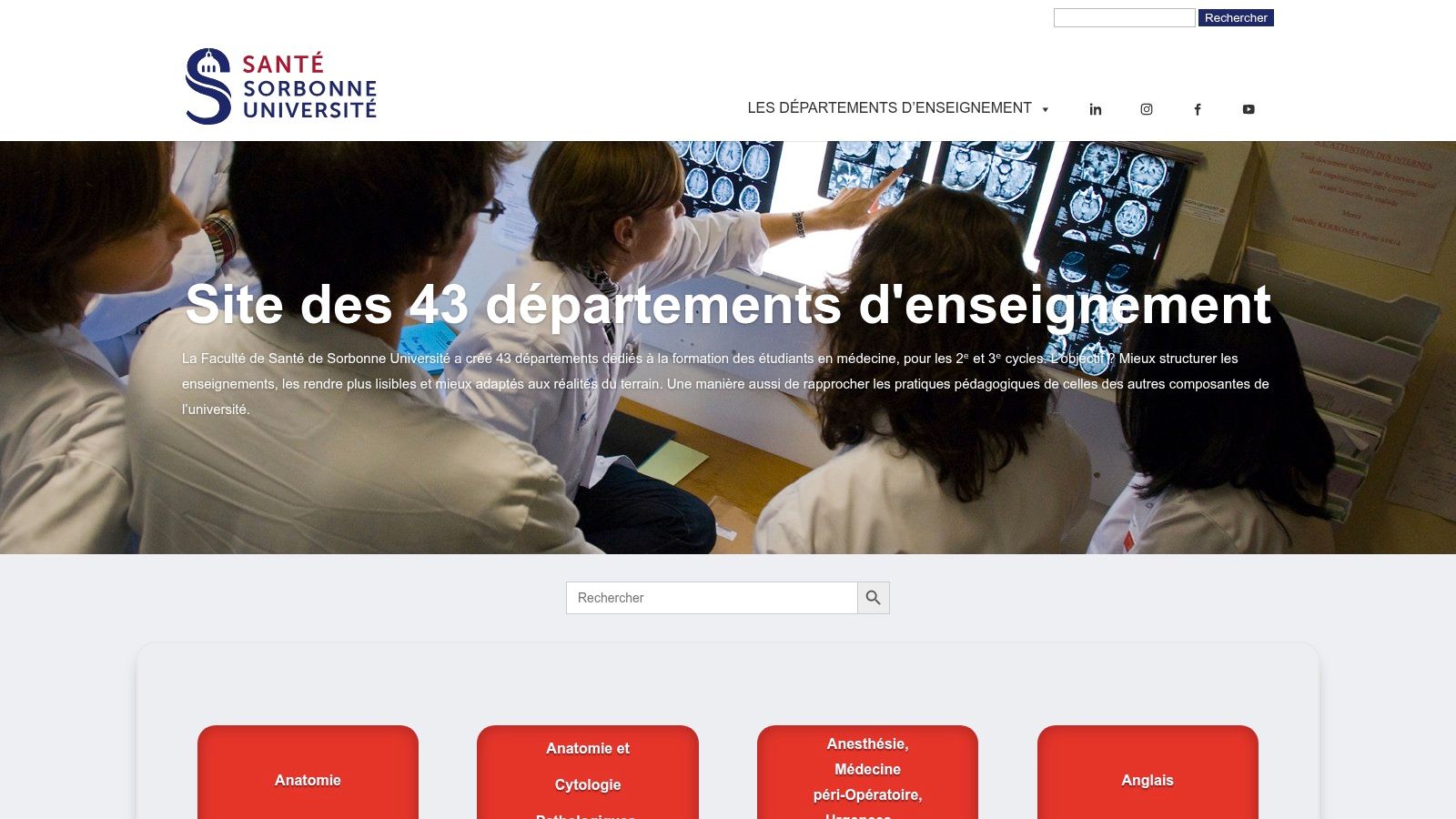
Sorbonne is not a school for testing your French as you go. The curriculum is taught in French, and the hospital environment expects you to keep up in real time, so a serious language plan should be in place before you apply.
The admissions route matters just as much as the name on the gate. Sorbonne's own guidance for the 2025–26 intake lists 215 medicine places through PASS, 3 through LAS1, and 212 through LAS2–LAS3 (Sorbonne PASS and LAS intake). As a practical applicant, that route distribution is the key detail to pay attention to. It tells you where the main access points are, and it also shows that prestige alone does not decide your odds.
For applicants building their French around medicine, the right preparation is specific, not general. Focus on medical vocabulary, oral speed, and the kind of French used in ward rounds and patient interviews. A broader comparison of French university fit can also help you decide whether Sorbonne matches your profile, including this guide to best universities in France.
2. Université Paris Cité, Faculty of Health
If your priority is clinical variety, Paris Cité is one of the strongest options in the country. The university's medicine ranking places it first for medical research in a 2026 French medical-university comparison, ahead of Sorbonne Université and Université Paris-Saclay, using HCERES-based measures tied to publication volume and impact (Thotis medical university ranking). That's the kind of signal research-minded applicants should take seriously, because medical training in France is tightly tied to research output.
Paris Cité also sits inside a huge hospital network. AP-HP reports that its hospitals conduct about half of all clinical research in France, and its infrastructure includes more than 14 million patient records in its clinical data warehouse, plus 11 University Hospital Institutes and multiple research programs, federations, and rare-disease centers (AP-HP essentials 2024). For students, that means the city isn't just a brand name, it's a working research-and-care machine.
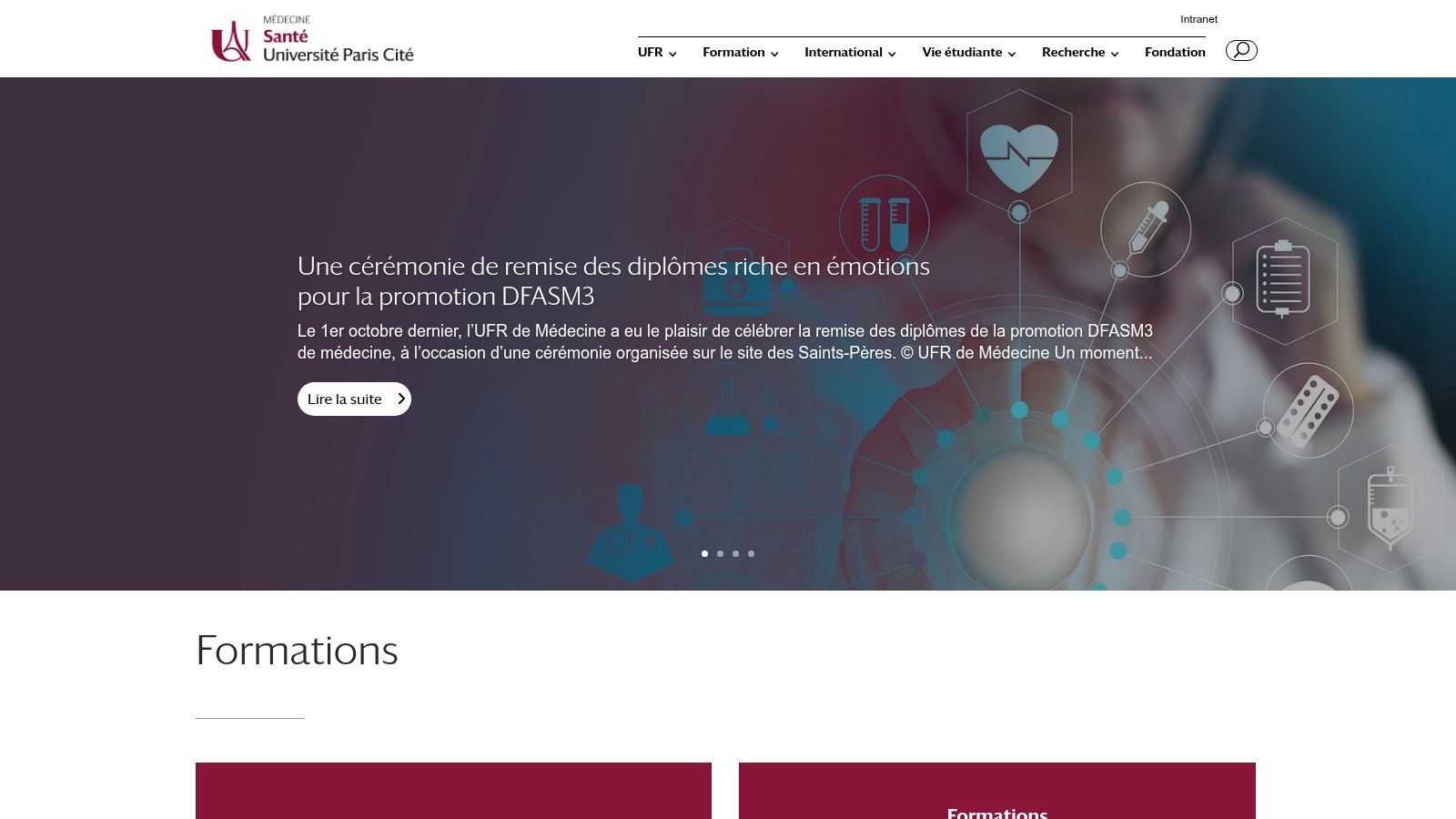
Paris Cité is a particularly strong fit if you want a faculty that can connect preventive health, major specialty centers, and broad research coverage without leaving central Paris. The trade-off is predictably French: admissions are rigorous, language expectations are high, and the core degree is not built for casual bilingualism. That's why I'd recommend this school only if your French is already close to clinical use.
Practical insight: don't judge Paris Cité by the prestige alone. Judge it by whether you can function in a crowded, fast-moving hospital system where the language and the pace are both non-negotiable.
If you're still building language readiness, this is the kind of school where targeted coaching pays off. Medical French, interview practice, and written precision matter more here than broad grammar revision. A focused option like French for medical professionals fits that need much better than a general beginner class.
3. Université Paris-Saclay, Faculty of Medicine
Paris-Saclay is the stronger choice if you want a faculty built around translational research and a tightly connected hospital setting. Its medical training is anchored near Hôpital Bicêtre and the surrounding clinical network, so classroom science and patient-facing work stay closely linked. For applicants who want medicine plus research exposure, that proximity changes the daily reality of training.
The faculty also fits students who are comfortable working in a large French research university rather than a standalone medical school. That matters because the pace is shaped by both academic science and hospital expectations, and you need to be ready for both.
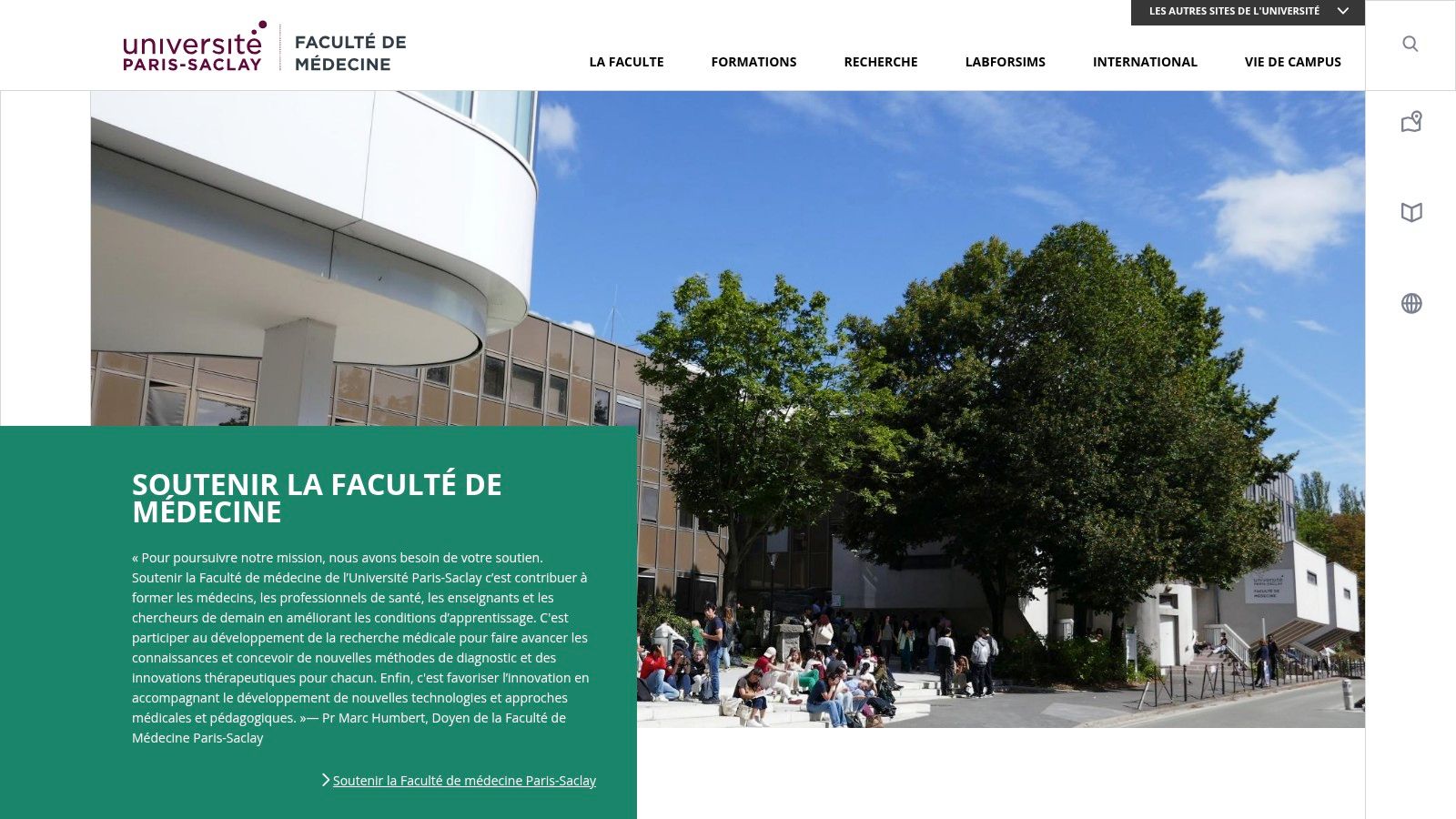
The trade-off is straightforward. Paris-Saclay teaches medicine in French, and the national PASS and LAS entry routes demand clear route discipline from the start. If your French is still shaky, this is usually a better target after structured preparation than as a first leap into French medical admissions.
Practical rule: Paris-Saclay works best when your application plan already includes a backup route, because French medical admissions give limited attempts and the school expects you to understand the pathway before you arrive.
I also like this faculty for applicants who want to keep research on the table from day one. That makes French certification part of the admissions strategy, not an afterthought. A focused path like French language certification preparation can help you arrive with the language level the program expects.
4. Claude Bernard Lyon 1, Faculty of Medicine and Maieutics Lyon-Sud
Lyon 1 is the school I'd flag for students who want high clinical volume without Paris-level chaos. The faculty is integrated into the Hospices Civils de Lyon network, which is one of the major engines of French medical training and research. That matters because in France the attached hospital often shapes your day-to-day training more than the university name alone.
The campus setting is also practical. Lyon-Sud places you beside major hospital sites, which reduces the friction that often comes with city-wide rotations. The faculty also includes simulation-based training resources and medical English oral practice in the pre-clinical years, which signals the school's focus on communication skills, not just memorization.
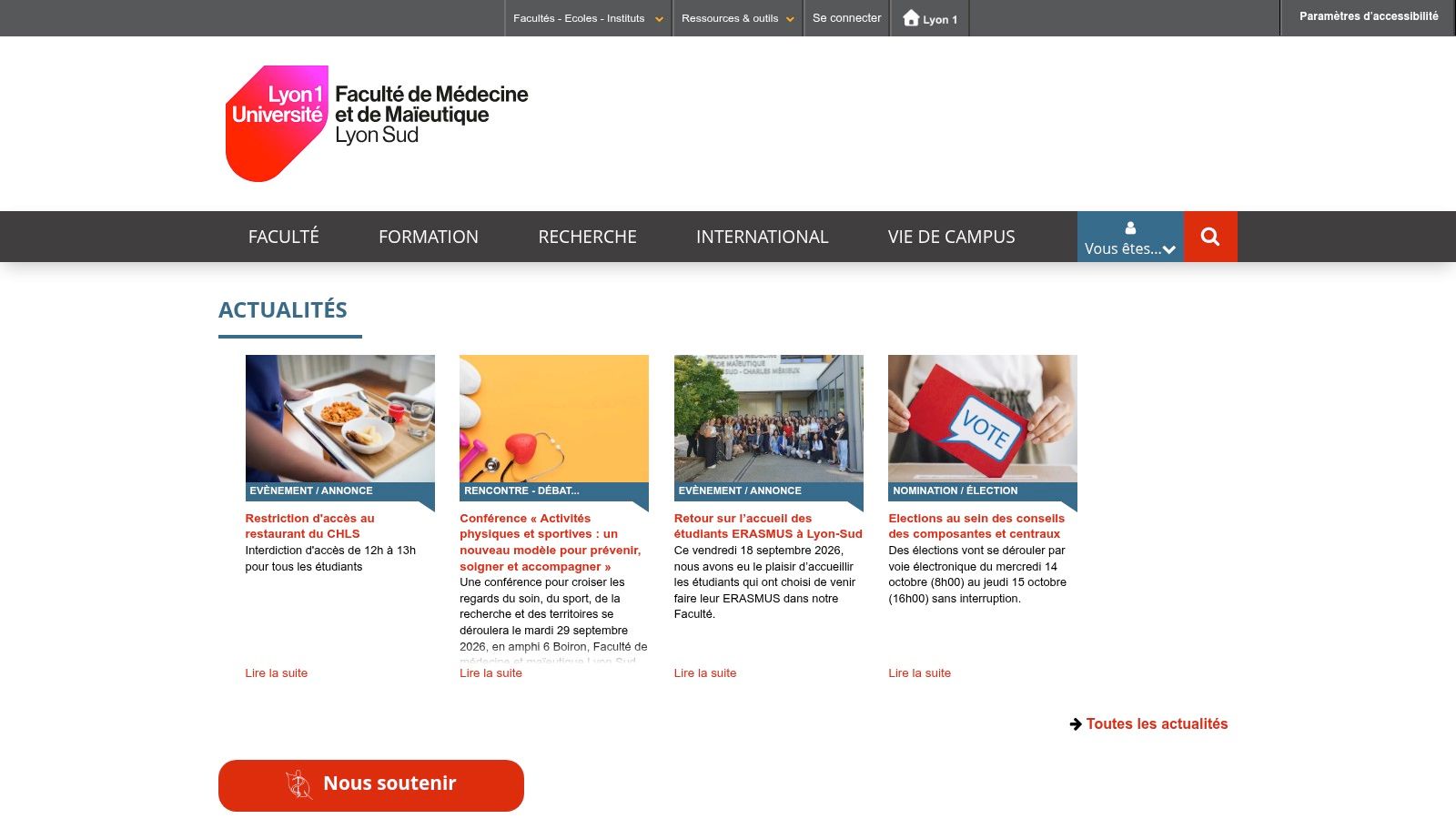
Lyon is especially attractive if you want strong specialty exposure in oncology, transplantation, and surgical disciplines, while avoiding the logistics of a giant capital city. The trade-off is straightforward. The core MD track is French-taught and competitive, and the admissions system is still the national one, so a city reputation does not soften the entry route.
Practical insight: Lyon 1 is the stronger real-life choice compared to flashier Paris options if you value easier movement between teaching, simulation, and hospital sites.
If you want a smoother personal transition, Lyon is a sensible compromise. I would still treat French preparation as required, especially if you want to handle oral practice and ward communication early. For students mapping a wider move to France, a guide to studying abroad in France is a useful planning companion.
5. Aix-Marseille Université, Faculty of Medical and Paramedical Sciences
Aix-Marseille works well for applicants who want breadth and a real hospital network. The faculty is spread across multiple sites and closely tied to the AP-HM university hospitals, so you get access to a large metropolitan catchment and a wide mix of placements. Marseille's scale helps if you want variety in specialty exposure, but it also asks you to stay organised across a more distributed training setup.
The faculty also feels more interprofessional than many medical schools in France. Its paramedical integration is a real part of the training environment, which suits students who want to see medicine inside a broader care system. For applicants drawn to team-based practice, that matters.
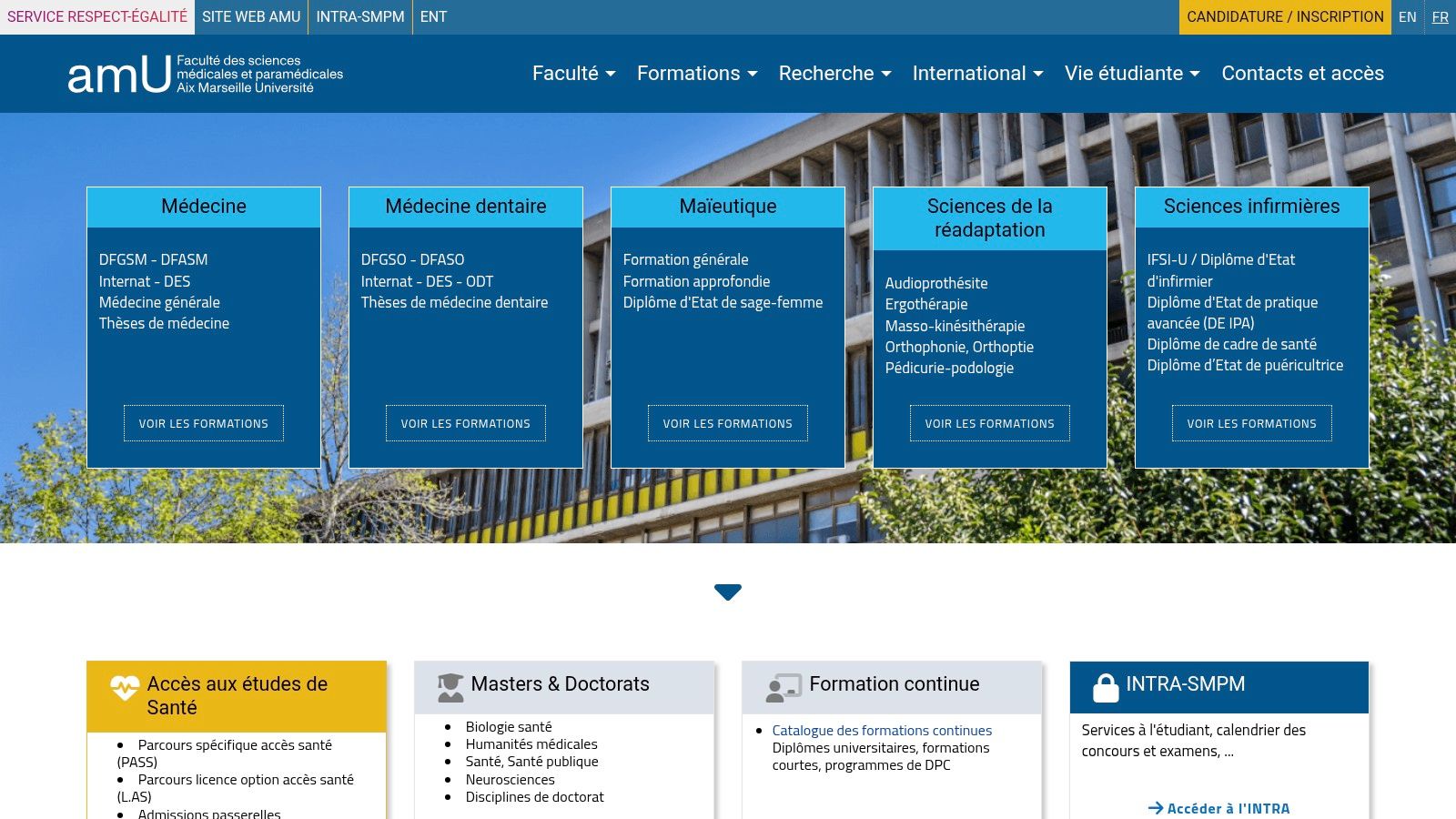
The trade-off is logistics. A city-wide spread of sites can mean longer commutes between placements, and that friction matters once your weeks fill up with rounds, tutorials, and transport. If you dislike moving between distant teaching sites, Marseille will feel less tidy than its reputation suggests.
Practical rule: choose Marseille if you want range and volume, not if you need a compact, single-campus experience.
The research side remains strong, and for applicants who want medicine alongside a wider French-life experience, it is a practical option. If you are planning that move, our guide to studying abroad in France gives useful context. The admissions and language filters still stay strict. The school is French-taught, the national route applies, and you need enough French to function well before your first serious placement.
6. Université de Bordeaux, UFR des Sciences Médicales
Bordeaux is one of the easiest faculties to like if you want strong medicine with a more balanced city rhythm. The university's medical school is integrated with CHU de Bordeaux and specialist partners such as Institut Bergonié and Charles-Perrens, which gives the school a solid clinical base without the scale pressures of Paris (Université de Bordeaux medical faculty). That's a good mix for students who want research momentum and a livable city.
Bordeaux also has a research-forward feel. Its medical ecosystem is involved in public-health, digital-health, and neuroscience initiatives, and the university is developing IHU-related work under national programs. For applicants who care about modern medicine as a research practice, not just a degree path, that combination is valuable.
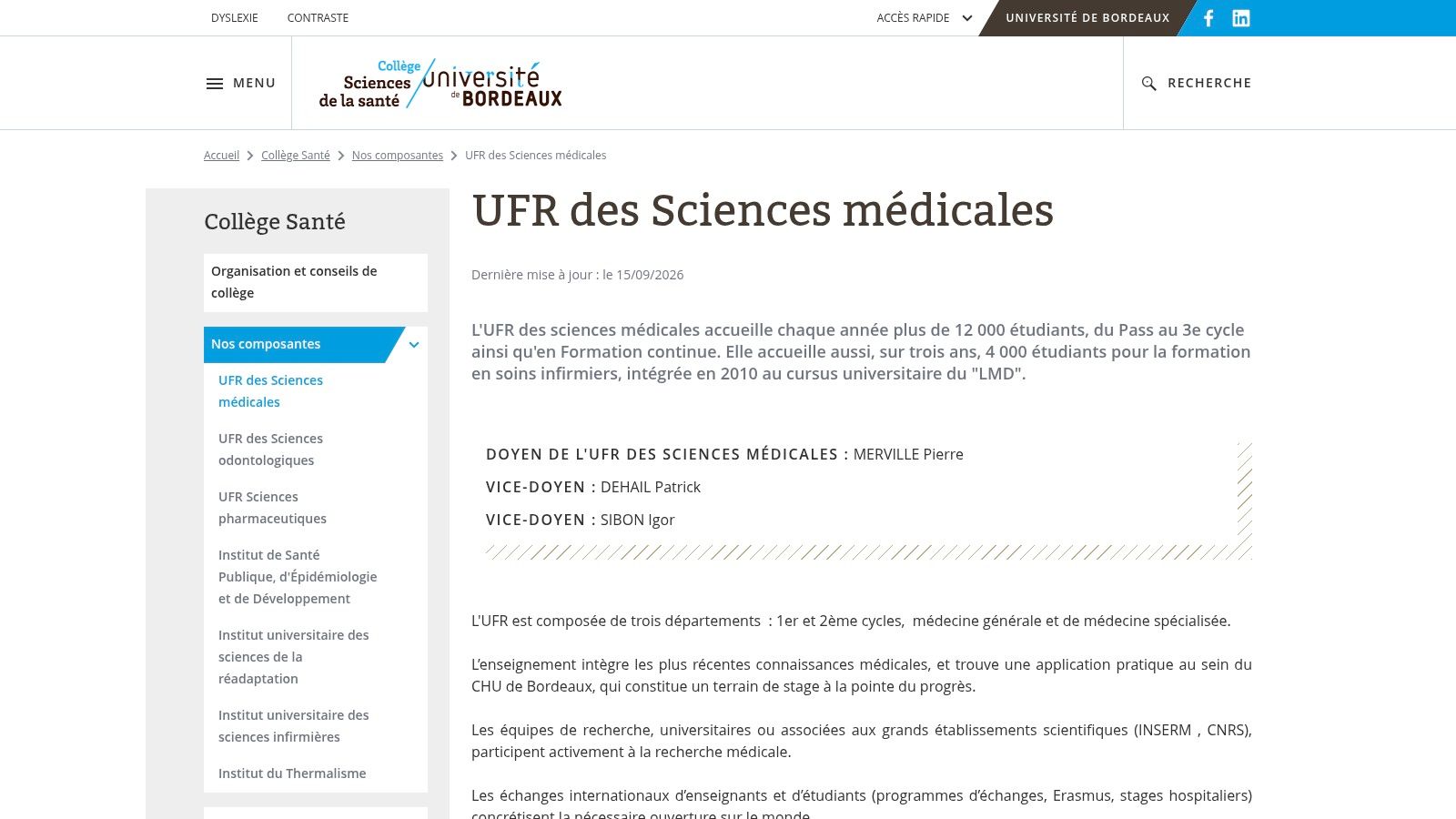
The most useful thing about Bordeaux is that it often feels more manageable than the mega-cities while still giving you a major university-hospital setup. That can be a real quality-of-life advantage during the first years, especially when you're also managing French-language pressure and the intensity of the PASS or LAS route.
Practical insight: Bordeaux is a strong fit if you want a serious French medical degree without building your daily life around a huge capital-city commute.
The admissions reality is still selective, and French remains the working language. French B2 is typically the baseline expectation for French-taught tracks, but in practice you'll want more than that if you're planning to talk to patients, read notes, and move through ward life without losing time. For international applicants, that language readiness is part of the admission strategy, not a separate side project.
7. Université de Montpellier, Faculty of Medicine
Montpellier has a special place in any serious discussion of the best medical universities in France because it combines history with a modern admissions structure. Its medical school is the world's oldest operating medical school tradition, but the current faculty is organized across modern campuses in Montpellier and Nîmes, which means the legacy doesn't come at the cost of practical infrastructure. That matters more than people think when they're comparing schools from abroad.
The school is also unusually clear in how it communicates with students. Transparent academic calendars, structured admissions information, and a broad continuing-education catalog make it easier to understand what you're walking into. In a system as selective as French medicine, clarity is a real asset.
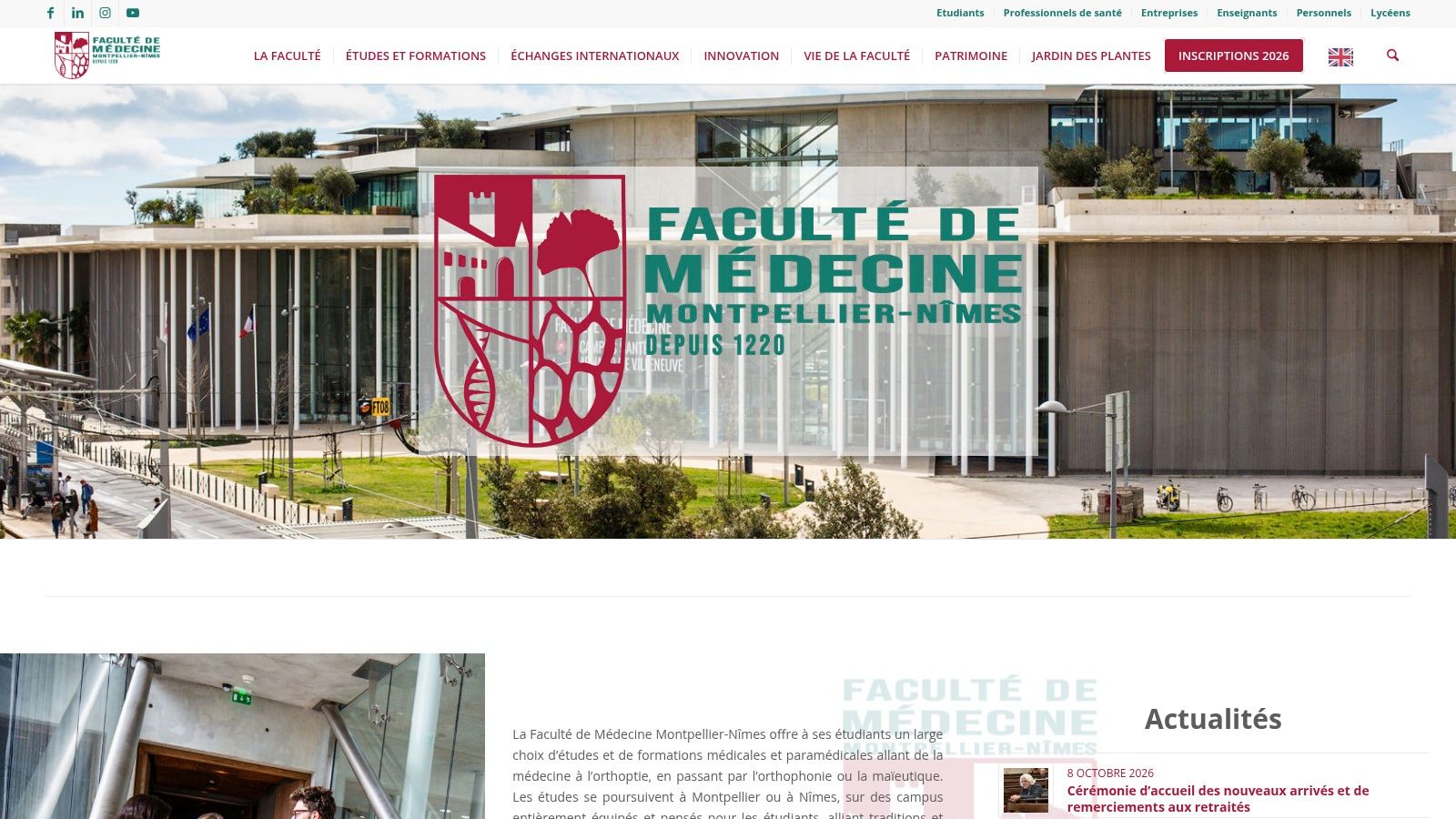
Montpellier also offers a nice balance of scale and livability. You're not sacrificing the seriousness of the training, but you're getting a city that's easier to move around than the largest French metros. For many applicants, that reduces the strain of the first years and leaves more room for language study and clinical adjustment.
Practical rule: Montpellier is a strong choice if you want tradition, structure, and a city that won't swallow your entire routine.
The admissions path is still the national PASS/LAS model, and French proficiency remains essential. If you're mapping a move into French medical study, Montpellier is a school where language preparation and application timing should be coordinated early, not left until after you've picked a degree route. For many students, that's exactly where a consultation and a personalized study plan become useful.
Top 7 Medical Universities in France, Comparison
| University | 🔄 Implementation complexity | ⚡ Resource requirements | 📊 Expected outcomes | 💡 Ideal use cases | ⭐ Key advantages |
|---|---|---|---|---|---|
| Sorbonne University, Faculty of Medicine (Paris) | 🔄 High, large multi‑site rotations; very competitive PASS/LAS | ⚡ Very high, major AP‑HP hospitals, extensive research units; French B2–C1 | 📊 Very high, unmatched case volume, tertiary‑care experience, strong research output | 💡 Students seeking maximal clinical exposure, specialty depth and international research links | ⭐ World‑class clinical diversity and leading specialty/research programs |
| Université Paris Cité, Faculty of Health (UFR Médecine) | 🔄 High, multiple AP‑HP networks and coordinated rotations; rigorous admissions | ⚡ Very high, central Paris hospitals and research hubs; French proficiency expected | 📊 Very high, broad specialty coverage, strong pediatrics/transplant/oncology centers | 💡 International/Erasmus entrants or those wanting central Paris hospital access | ⭐ Strong research environment and clear support for international students |
| Université Paris‑Saclay, Faculty of Medicine (Kremlin‑Bicêtre) | 🔄 Moderate‑High, campus‑embedded with network rotations; PASS/LAS entry | ⚡ High, close ties to Inserm/CNRS/CEA, translational research infrastructure | 📊 High, early clinical exposure with strong translational research outputs | 💡 Students focused on translational medicine and close faculty–hospital proximity | ⭐ Strong national research ecosystem and compact hospital‑integrated campus |
| Université Claude Bernard Lyon 1, Faculty of Medicine & Maieutics Lyon‑Sud | 🔄 Moderate, hospital‑adjacent campus with national admissions process | ⚡ Moderate‑High, HCL network, simulation centers, medical English modules | 📊 High, high clinical volume and specialty training (oncology, transplant) | 💡 Learners wanting simulation training and balanced campus–hospital life | ⭐ Robust specialty centers, simulation resources and practical English practice |
| Aix‑Marseille Université, Faculty of Medical and Paramedical Sciences | 🔄 Moderate‑High, multi‑site city spread can complicate logistics | ⚡ High, multiple AP‑HM hospitals, large student body, paramedical integration | 📊 High, wide rotations and strong interprofessional experience | 💡 Students seeking breadth across specialties and paramedical collaboration | ⭐ Extensive rotation options and strong interprofessional learning |
| Université de Bordeaux, UFR des Sciences Médicales (College of Health) | 🔄 Moderate, regional CHU partnership with selective admissions | ⚡ Moderate, solid hospital/institute partnerships; focus on digital/public health | 📊 High, active research momentum, growing IHU initiatives | 💡 Those interested in public‑health, digital‑health and manageable city living | ⭐ Strong hospital‑institute links and emerging specialized research projects |
| Université de Montpellier, Faculty of Medicine (Montpellier–Nîmes) | 🔄 Moderate, historic faculty with modern campus structure and clear timelines | ⚡ Moderate, good simulation and clinical infrastructure; continuing‑education options | 📊 High, balanced training, accessible faculty and reliable student support | 💡 Students valuing tradition, clear guidance and strong continuing education | ⭐ Longstanding pedigree combined with modern facilities and transparent administration |
Build Your French Level Before Your Application Window Opens
The smartest way to choose among the best medical universities in France is to start with your French level, then pick the route that fits your profile. If you're already close to clinical French, Sorbonne, Paris Cité, Paris-Saclay, Lyon 1, Bordeaux, Marseille, or Montpellier can all make sense, but the right choice depends on how much language work you still need before your first patient-facing setting. If your French is not there yet, you need a prep plan before you commit to a university name.
That's why we usually advise students to set a DELF or DALF target, choose a realistic start date, and build the application around that timeline rather than around prestige alone. France's admissions system is route-specific, highly competitive, and tied to the reality of French-taught wards, so the best school on paper isn't always the best school for your actual start date. A careful match between language readiness and entry route reduces avoidable risk.
I've seen students make the wrong move by applying too early, then struggling with the first-year pressure because they treated French as a future problem. The students who do better are the ones who treat language as part of the admission strategy. That's especially true if you're planning around PASS, LAS, or a transition year.
Documented learner story: one of our learners at Elite French Tutoring, a UN mission staff member, built confidence through private French lessons and used the preparation to handle demanding professional communication more comfortably. That kind of focused work is exactly what medical applicants need when they're trying to move from classroom French to real institutional French.
If you want a plan that fits your target school, we can help you map it. Our free 20-minute consultation at Elite French Tutoring looks at your objectives, current level, and learning style, then shapes DELF/DALF preparation and medical French lessons around your timeline. If you're serious about medicine in France, book the consultation before the next application window opens.