
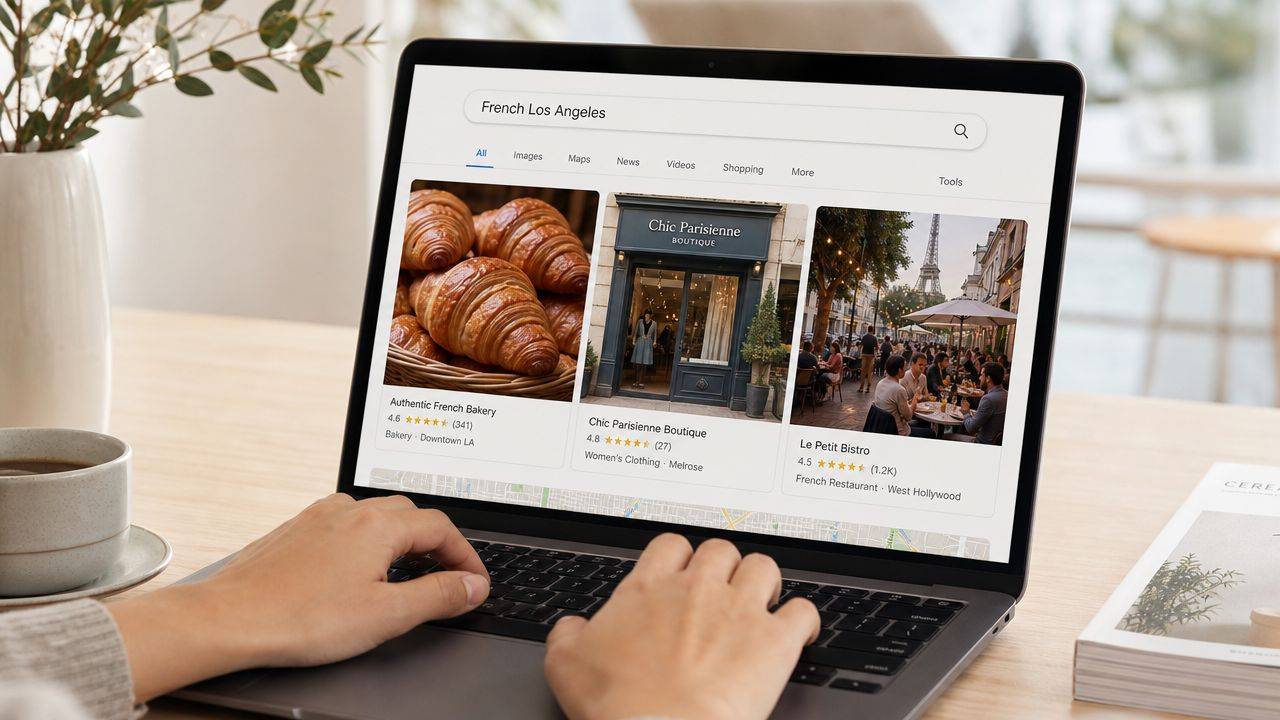
You searched for French Los Angeles because you want lessons, not another roundup of macarons, patios, and “Paris in LA” clichés.
That frustration is real. Most search results lean hard into lifestyle. They show restaurants, boutiques, and cultural stops, while the actual learning options get buried. If you're a parent trying to find structured support, a professional who needs usable French for work, or an adult who wants a serious plan instead of dabbling, that's a bad user experience and a bad way to choose a program.
I'm going to be blunt. In Los Angeles, casual French culture and serious French study are not the same thing. You need to separate immersion activities from instruction, and you need to choose a format based on your outcome, not on whatever ranks first in search.
Table of Contents
- Finding Your French Path in Los Angeles
- Comparing French Learning Formats in LA
- Choosing the Right Program for Your Goals
- How to Immerse Yourself in French Culture in LA
- What to Expect for Pricing Scheduling and Next Steps
- Frequently Asked Questions About Learning French in LA
- Is Alliance Française enough if I want to become conversational?
- What's the best option for a child in a French or bilingual school?
- Can I learn French seriously online from Los Angeles?
- Is cultural immersion in LA enough without classes?
- How do I know whether I need a group class or a tutor?
- Is French in Los Angeles actually useful professionally?
- What should I do first?
Finding Your French Path in Los Angeles
If your first search for French in LA gave you bakery lists and neighborhood guides, that tracks with what's already out there. One of the biggest gaps in what's out there regarding French Los Angeles is practical guidance. Existing guides often spotlight dining, shopping, and francophile experiences, while structured learning resources are harder to spot, as noted in France Today's Los Angeles French culture guide.
That matters because people typing this query usually have one of a few concrete needs:
- They need classes. Not a wine bar. Not a museum event. Actual instruction.
- They need the right level. Beginner, school support, exam prep, or professional fluency.
- They need a format that fits LA life. Commutes are long. Schedules change. Convenience matters.
- They need a decision, not inspiration. You're trying to choose a program, not build a mood board.
The first choice is not teacher versus school
The first choice is goal clarity.
If you don't know whether you need conversation practice, school-aligned support, DELF or DALF prep, or business French, you'll waste time comparing the wrong options. I see this constantly. Adults enroll in a pleasant group class when they actually need speaking intensity. Parents sign up for generic lessons when their child needs curriculum-specific help. Professionals look for “French culture” and end up nowhere near the vocabulary they need for meetings.
Practical rule: If you can't describe what success looks like in one sentence, you're not ready to pick a program.
What a smart search should actually sort for
Use these filters before you book anything:
Outcome
- conversation
- school support
- exam preparation
- professional communication
Format
- group classes
- academic programs
- private tutoring
- online or hybrid lessons
Constraints
- evening availability
- child-friendly scheduling
- travel time
- consistency over several months
Los Angeles is a serious learning market, not a niche hobby scene. The city was founded on September 4, 1781 by 44 settlers, incorporated on April 4, 1850, and has grown into a global hub with about 3.9 million people in the city, about 10 million in the county, and county output of $807 billion, according to Los Angeles background data summarized here. In a city and region of that scale, French learning isn't just cultural garnish. It's relevant to school decisions, international business, and cross-border life.
Comparing French Learning Formats in LA
Most learners in Los Angeles end up choosing between three models. Language schools, community or university programs, and private tutoring. They each solve a different problem. The mistake is assuming they're interchangeable.
Here's the quick comparison I'd use with a client before they spend money.
French Learning Options in Los Angeles at a Glance
| Feature | Language Schools (e.g., Alliance Française) | Community/University Programs | Private Tutoring (e.g., Elite French Tutoring) |
|---|---|---|---|
| Structure | Clear curriculum and level-based classes | Academic and course-based | Built around the student |
| Schedule | Fixed calendar | Fixed semester or term schedule | Flexible |
| Pacing | Group pace | Group pace, often slower to change | Fully adjustable |
| Speaking time | Shared with classmates | Shared with classmates | Highest direct practice time |
| Best for | Learners who want community and routine | Students who like academic structure | Busy adults, exam candidates, targeted goals |
| Weak spot | Less individual attention | Less flexible, more rigid timelines | Requires strong teacher match and commitment |
| Culture access | Often strong | Varies by program | Depends on tutor and student plan |
Language schools work well for routine
If you want a structured environment and you like learning alongside others, a language school can be a good fit. In Los Angeles, Alliance Française is the major name people should know if they want formal classes rather than lifestyle browsing.
The upside is obvious. You get placement, a defined level, and a community. If your main problem is “I need to stop procrastinating and show up every week,” this format can work.
The downside is just as obvious. You move at the class pace, not your pace. If you're shy, busy, or trying to fix a very specific weakness, you may not get enough targeted speaking time.
Community and university programs suit academic learners
These options usually appeal to people who like syllabi, course dates, and traditional progression. Some learners thrive in that environment. If you want a classroom feeling and don't mind fixed timelines, this can be a solid choice.
But I wouldn't recommend this route for someone whose schedule changes constantly, or for someone who needs immediate practical use. These programs tend to be less adaptable. They're often stronger on formal progression than on rapid personalization.
Private tutoring is the fastest route for specific outcomes
Private tutoring wins when the goal is narrow and important. Exam prep. Job-related speaking. Support for a child in a bilingual or French program. Catch-up work. Accent correction. Meeting confidence. Interview prep.
That's because the teacher can cut everything that doesn't matter and build around what does. If your listening is fine but your speaking freezes under pressure, that should shape the lesson. If your child needs help with written production, grammar review, and oral presentation practice, that should shape the lesson.
Group classes are good at serving a level. Private lessons are good at serving a person.
If you're considering remote options because LA logistics are rough, it's also worth comparing different ways to learn French online. That comparison helps people see whether they need live instruction, self-paced material, or a hybrid approach.
My direct recommendation
Choose language schools if you want consistency and social energy.
Choose community or university programs if you want an academic structure and can commit to a fixed timetable.
Choose private tutoring if the goal has consequences. School performance. Certification. Work communication. Fast progress. Confidence under pressure.
Choosing the Right Program for Your Goals
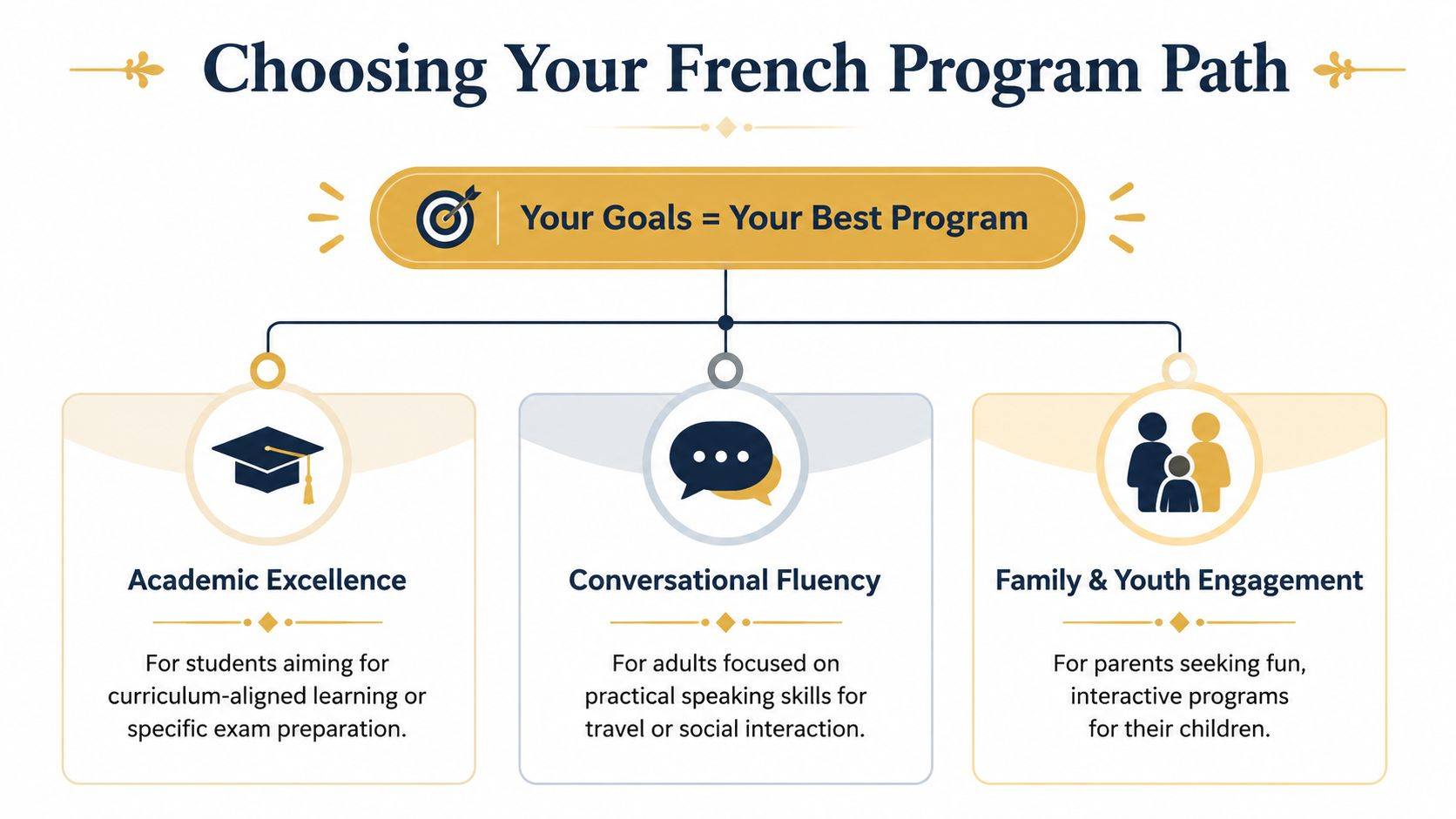
I don't choose programs by asking, “What's the best French class in Los Angeles?” I ask, “What does this learner need to be able to do?” That question changes everything.
For parents and school families
Parents often come in with a broad request. “My child needs help with French.” That's too vague to be useful.
A child might need:
- Curriculum support for reading, writing, grammar, or oral work
- Confidence building if they understand more than they can say
- Consistent exposure so the language doesn't slide between school terms
- Targeted catch-up before assessments or presentations
For younger learners, personality fit matters almost as much as content. A technically qualified teacher who can't keep a child engaged won't get far. For teens, the balance shifts. They usually need accountability, smarter feedback, and a teacher who can connect school requirements to real language use.
For exam candidates and serious students
If you're preparing for DELF, DALF, AP-level work, or another formal benchmark, don't choose a program because it feels cultured. Choose one that knows how to prepare for a test.
That means:
- Level diagnosis first
- Practice tied to task type
- Corrections that are specific
- A study rhythm you can maintain
Learners in this category should also understand where they sit on the proficiency ladder. A practical explanation of French CEFR levels and what each stage means can help you avoid signing up for a class that's either too easy or too advanced.
For professionals in LA
The true value of French is often underestimated by many. In Los Angeles, professional French is not just a cultural add-on. It connects to international business, media, education, and cross-border work. The French-speaking business world also plugs into a wider innovation network. La French Tech is a government-backed ecosystem of more than 25,000 startups, public institutions, corporations, and investors, as described by La French Tech's overview.
If you work in tech, investment, media, fashion, luxury, law, academia, or international partnerships, that matters. You may not need literary French. You may need concise meeting language, negotiation phrasing, email tone, and confidence on live calls.
Don't buy a general conversation course if your real need is professional performance.
A real student example
One of my favorite examples was a film executive in Burbank who needed to lead calls with production partners in Paris. She wasn't looking for hobby lessons. She needed command, speed, and the right register.
We built her program around three things:
- meeting language she would use
- industry-specific vocabulary
- role-play built around negotiation and discussion flow
Within three months, she was leading those calls in French. That result didn't come from generic worksheets. It came from matching the curriculum to the job.
The simplest decision framework
If you're trying to decide quickly, use this filter:
| Goal | Best fit |
|---|---|
| Child needs school support | Private tutoring or a youth-focused structured program |
| Adult wants social learning | Language school group class |
| Exam prep matters | Private tutoring or a clearly exam-oriented course |
| Professional use is the priority | Private tutoring with business-focused customization |
| You need flexibility more than campus feel | Online private lessons or hybrid options |
One practical option in this category is Elite French Tutoring, which offers customized private online instruction for adults, students, families, and professional learners. For Los Angeles readers, the relevant part is the remote format and goal-based planning rather than local in-person access.
How to Immerse Yourself in French Culture in LA
Classes build the system. Immersion makes it stick.
That's especially true in Los Angeles, where French culture has deep roots. The French presence in the city dates to 1827, when Louis Bouchet became the first French person to settle there permanently. By 1844 to 1845, a thriving French community and enclave were established in San Pedro and Los Angeles, and from 1850 to 1880 the French population became influential enough that the period has been described as a local “golden age,” with a French Benevolent Society, French-language newspapers, and a business district around Alameda and Aliso, according to PBS SoCal's history of early French Los Angeles.
Use culture to reinforce lessons, not replace them
A lot of learners overrate passive exposure. Going to a French café is pleasant. It is not a learning plan.
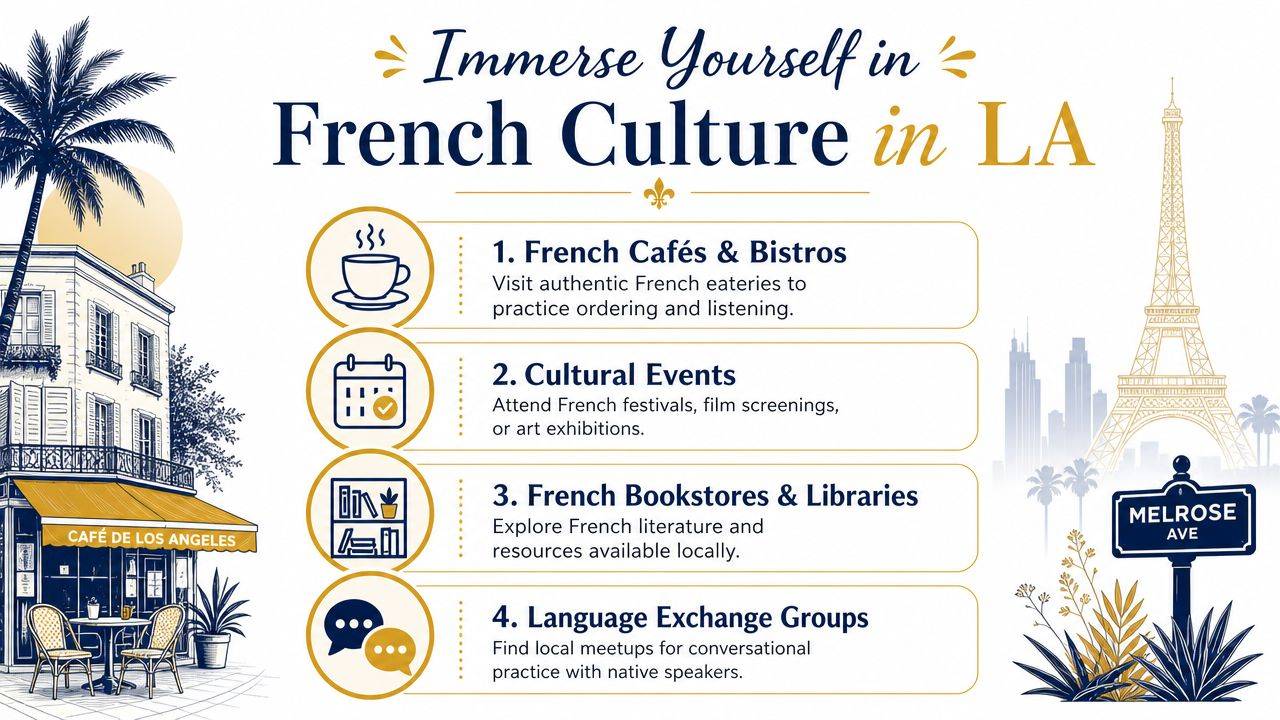
Use immersion with a task:
- At a café or bistro: order in French and prepare two follow-up questions
- At a cultural event: listen for a phrase you can reuse later
- At a meetup: aim to hold one short conversation without switching to English
- At home after the event: review the vocabulary the same day
That's how immersion becomes useful. You connect the experience back to active language.
Pick venues that match your level
Beginners should choose low-pressure settings. Ordering food, greeting people, or attending a film screening with context clues is manageable.
Intermediate learners should push harder. Conversation groups, guided discussions, and event-based networking are better because they force retrieval and spontaneous speaking.
If you want ideas beyond classes, a guide on where to start with a French immersion program can help you think in terms of exposure plus structure, not exposure alone.
Culture helps memory. It doesn't fix weak grammar, weak pronunciation, or weak speaking habits by itself.
My recommendation for LA learners
Build one recurring immersion habit. Just one. A weekly meetup, a film event, a French-speaking errand, or a standing conversation exchange. Keep it small and repeatable.
That approach works better than chasing a different “French” experience every weekend and calling it progress.
What to Expect for Pricing Scheduling and Next Steps
Many individuals wait too long to ask practical questions. They compare vibes, websites, and branding before they compare logistics. That's backwards.
In Los Angeles, the right French program is often the one you can attend consistently.
The real cost is mismatch
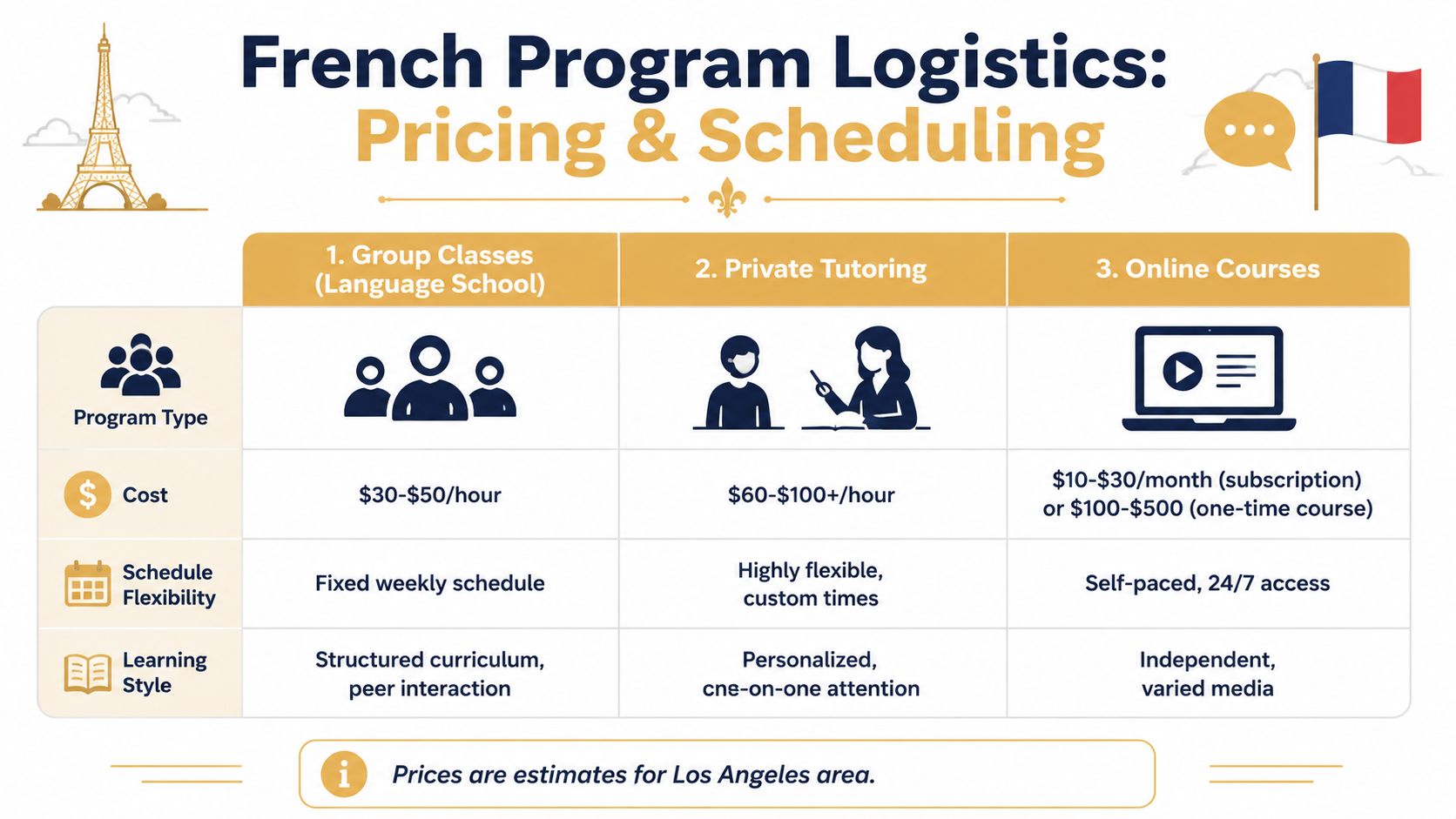
A cheaper class is not cheaper if it doesn't fit your schedule, level, or goal. A more expensive format can be the better buy if it saves time, keeps you consistent, and removes material you don't need.
I care less about sticker price than these questions:
- Will you show up weekly
- Will you get enough speaking time
- Will the teacher adjust to your pace
- Will the program still make sense in two months
That's the value test.
Scheduling matters more in LA than people admit
Los Angeles pushes many learners toward flexible and hybrid formats. That shift is visible in the market. Physical institutions still matter, but providers are also advertising online classes and live workshops across Los Angeles, Malibu, and beyond, indicating stronger demand for flexible and hybrid learning, as shown by GoodFrenchTips' class offerings.
If you live in a city where moving across town can wreck your evening, schedule design is not a minor detail. It affects consistency, and consistency affects results.
What to choose if your calendar is messy
If your work hours move around, or you're managing family logistics, I'd rank options like this:
- Private online lessons if you need the most flexibility
- Hybrid learning if you still want some live community element
- Fixed group classes only if your schedule is reliably stable
For many LA adults, a rigid weekly commute to class becomes the reason they quit. The format looked good on paper. The city got in the way.
A better way to decide before paying
Before you commit, ask the provider these questions:
| Question | Why it matters |
|---|---|
| How do you place students by level? | You don't want to waste weeks in the wrong class |
| What happens if my schedule changes? | Flexibility determines long-term consistency |
| How much live speaking will I get? | This affects confidence and progress |
| Can the program target my specific goal? | General classes often miss the real need |
Then compare your options against a local service overview such as French classes available for Los Angeles learners. Even if you don't choose that route, it gives you a useful benchmark for what a goal-based program should explain clearly.
If you're still deciding, the smartest next move is simple. Compare two or three formats side by side and choose the one that fits your actual goal, weekly schedule, and tolerance for travel. If you want a personalized route, booking a short consultation with a tutor or program director is usually the fastest way to avoid the wrong purchase.
Frequently Asked Questions About Learning French in LA
Is Alliance Française enough if I want to become conversational?
It can be, if you like group learning and your main need is structure and community. If you need fast speaking gains or highly targeted practice, private tutoring is usually a better fit.
What's the best option for a child in a French or bilingual school?
Usually, personalized support. School learners often need curriculum alignment, homework help, oral practice, and writing feedback. Generic adult group classes won't solve that.
Can I learn French seriously online from Los Angeles?
Yes. For many LA learners, online lessons make more sense than adding another cross-city trip to the week. The key is choosing live instruction with feedback, not only self-paced content.
Is cultural immersion in LA enough without classes?
No. It helps, but it doesn't replace structured learning. Cafés, film events, and meetups are great for reinforcement. They're weak as a stand-alone strategy.
How do I know whether I need a group class or a tutor?
Choose a group class if you want routine, community, and a lower-pressure environment. Choose a tutor if your goal is specific, time-sensitive, or tied to school, work, or an exam.
Is French in Los Angeles actually useful professionally?
Yes. LA is an international city, and French can matter in media, education, business, and cross-border work. For some professionals, it's a cultural asset. For others, it's a practical communication tool.
What should I do first?
Start with a clear sentence: “I need French for X.” If you can define X, you can choose the right format. If you can't, don't buy a program yet. Clarify the goal first.