
You're about to call a French school, a supplier in Lyon, or a client who already sounds slightly impatient on email, and the line goes quiet in a way that makes your stomach drop. The problem usually isn't vocabulary. It's tempo, timing, and knowing when a polite pause is normal instead of a sign that you've lost the call.
French telephone etiquette rewards callers who sound calm, brief, and properly identified. It also punishes the most common English-language habit on phones, filling every second, rushing to the request, and treating silence like a failure. That's why a script alone rarely lands a callback, while a few well-timed phrases and a steadier pace often do.
Table of Contents
The Moment the Call Goes Sideways
A bilingual executive once told me the call felt normal until the French speaker paused after a question. She answered too quickly, then over-explained, then rushed again. The rest of the exchange never recovered, not because her French was bad, but because she treated the pause like a problem instead of part of the rhythm. That's the hidden trap in French telephone etiquette, the call rarely breaks at the greeting, it breaks at the first moment of uncertainty.
That difference matters because France is highly connected, yet call-answering is selective. An INSEE-based report says more than 99% of people in France have a phone, but 17% never answer landline calls and another 26% only answer when they recognize the caller's number. On mobile phones, 2% ignore calls outright and 30% answer only known callers, which means about one in five French residents filters or systematically ignores calls. INSEE-based survey report on French phone-answering habits
What that means in practice
If your call sounds confused, rushed, or oddly familiar, the other side may never give you a second chance. I see this most often with relocation calls, school admissions, and business follow-ups, where one missed exchange delays everything that comes after. The good news is that the fix is not complicated. A clean opening, a measured pace, and the right level of formality carry much more weight than perfect grammar.
Practical rule: on French calls, sound slower than you think you need to sound. That often reads as composed, not hesitant.
The other reason people lose confidence is that they start with the request instead of the greeting. In English, directness can sound efficient. In French, it often sounds abrupt. If you want a safer model for recovery after a stumble, keep a short backup script ready, then reset the tone instead of pushing ahead. For a useful way to bounce back after an embarrassing language slip, I often point clients to this recovery guide for awkward language mistakes.
The Three-Beat Opening Every French Call Starts With
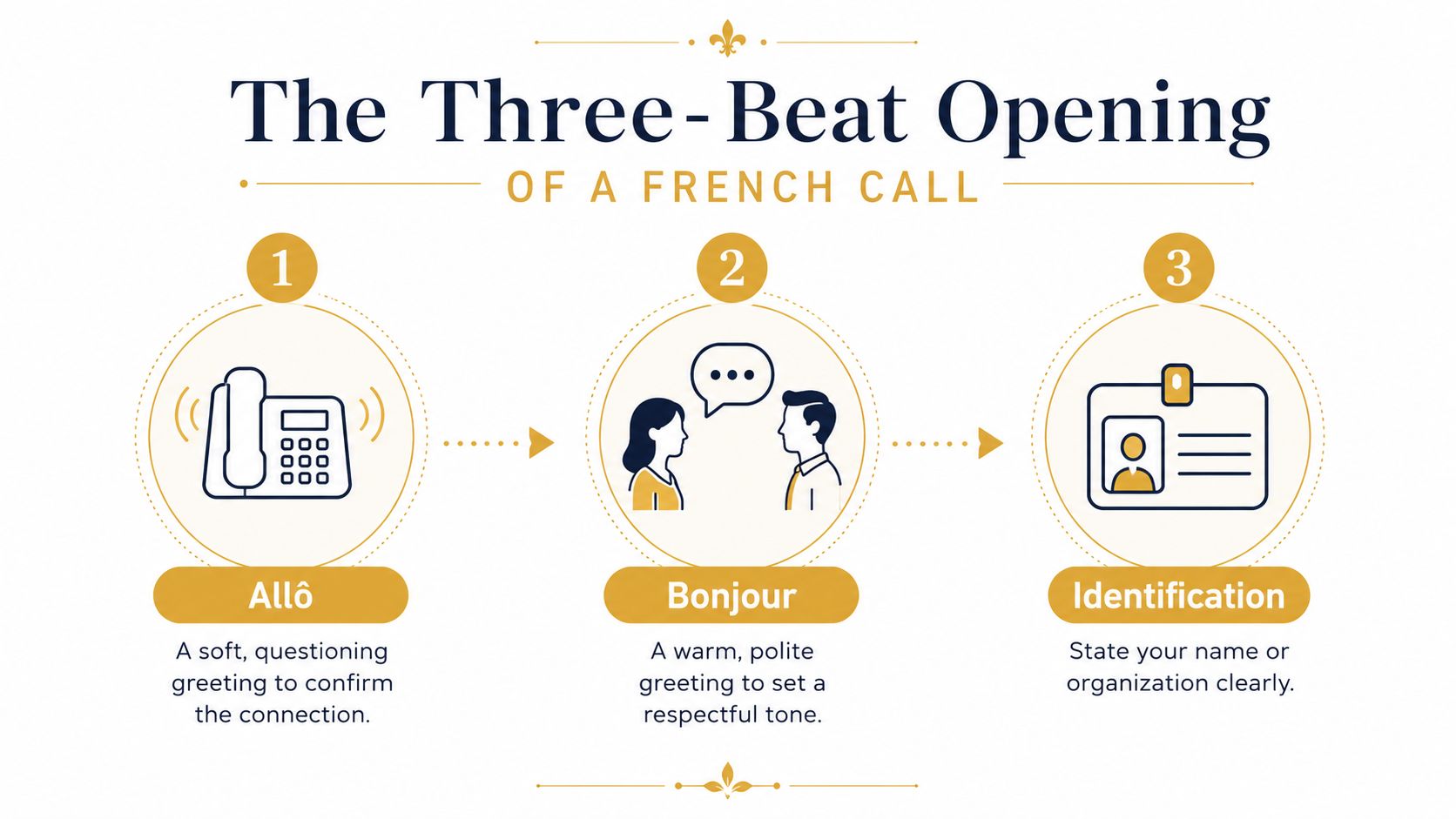
A French phone opening works best as a short sequence, not as one rushed line. First comes Allô to check that the line is live. Then Bonjour to set the tone. After that, identify yourself clearly, with your name, your company, or both. Practical guides to French phone etiquette describe this pattern for a reason, it keeps the opening polite without sounding stiff. French phone call phrases and openings
The sequence to use every time
Use Allô ? as a quick line check, then move straight into Bonjour and your identification. A professional opening can sound like Bonjour, c'est Marie Dupont or Bonjour, Cabinet Martin. If you answer for an office or reception, Bonjour, j'écoute is a polished option that fits a work setting. French phone call openings in practical contexts
For personal calls, keep the wording plain. Bonjour, c'est Thomas is enough if the other person already knows you. For business calls, I usually prefer a fuller form, such as Bonjour, Société X, Thomas à l'appareil. It gives the other person a clear anchor and reduces confusion, especially when calls are screened or transferred. If you are speaking formally, use vous by default, since the phone removes the visual cues that would normally soften a first exchange.
What sounds natural and what sounds off
Allô ? Bonjour works because it sounds like an actual call, not a memorized drill. What sounds awkward is jumping straight to your request, or packing the opening with too many words before the other person has even responded. French speakers often expect clarity first, warmth second, and only then the purpose of the call. That matters in business and in private calls alike, because the first few seconds tell the listener whether the exchange will feel controlled or chaotic.
Practical rule: if you can say your opening in one calm breath, it usually sounds more natural than a heavily scripted version.
Professionals also need to choose the level of opening that fits the call, not the one that sounds most complete on paper. Casual calls can stay short and friendly. Work calls need a clear identity, a respectful tone, and vous unless the other person explicitly shifts the exchange into tu. If you are building that habit for client work, a focused French for business program helps you practice the opening as a live exchange, not just as a list of phrases.
A Live Business Call From Hello to Goodbye
A supplier in Lyon picks up on the third ring. Anna starts with Bonjour, c'est Anna Miller de NovaTech, je vous appelle au sujet de la commande de mardi. The line works because it does three jobs at once. It greets, identifies, and states the reason for the call without sounding stiff or overprepared.
Where the call usually wobbles
The supplier asks for a reference number Anna does not have in front of her. Many English speakers rush at that point. Anna slows down, says Un instant, je vérifie, and repeats the number carefully. That reset matters more than sounding clever. French business calls often reward calm confirmation over speed, especially when details matter.
The conversation then falls into a short silence while the supplier checks a file. Anna waits. She does not fill the gap with chatter, because that can make her sound nervous. When the supplier comes back, she repeats the key detail once, then asks the next question. That back-and-forth is cleaner than the habit of over-explaining every sentence before the other person has finished.
Many learners make the mistake of entering with the request. If Anna had opened with I need to know about the order instead of the greeting sequence, the exchange would have sounded off. French call etiquette prefers a human opening before the task. In professional settings, that difference can affect whether the other person sees you as someone easy to work with. For more workplace-specific phrasing, I'd point clients to this French for business resource.
The closing that sounds finished
When the supplier confirms the next step, Anna closes with Merci beaucoup, au revoir. That sounds complete. It does not sound like a rushed exit, and it does not leave the other person guessing whether the call is over. In professional settings, the ending should feel settled, especially if the other party is still mentally tracking the task. If the call involved a next action, I also like a brief summary line before the farewell, because it helps both sides leave with the same understanding.
The strongest business calls sound measured, not theatrical. They are clear, polite, and a little slower than an English-language instinct would suggest. That is what makes them feel trustworthy.
Formal Versus Informal Phrasing at a Glance
The same call can sound either polished or oddly intimate depending on register. On first contact, vous is the safer choice, and that applies even when the relationship may later become warmer. The issue isn't coldness. It's that the phone strips away the visual cues that usually signal closeness, so formality protects you from sounding presumptuous. A good reference point for this distinction is this overview of French language rules and etiquette.
| Call Moment | Formal Register (vous) | Informal Register (tu) | When Each Fits |
|---|---|---|---|
| Opening | Bonjour, c'est Madame Dupont | Salut, c'est Julie | Formal for first contact, informal with close friends or people who already invited familiarity |
| Asking for someone | Puis-je parler à Monsieur Martin ? | Je peux parler à Paul ? | Formal for offices, schools, service providers, informal with close contacts |
| Ending the call | Merci beaucoup, au revoir | Merci, salut | Formal when the purpose is professional, informal among peers who already use tu |
The pivot points that matter
The first pivot is the greeting. Bonjour is almost always safer than a casual opener when you don't know the other person well. The second pivot is how you ask for someone. Puis-je parler à… sounds respectful and controlled. The third pivot is the closing, where au revoir stays useful even in short calls because it doesn't imply over-familiarity.
There is a real role for informality, though. Close clients, recruiters who explicitly switch tone, or a teacher you already know well may invite a lighter register. The key is not to decide that yourself too early. If you're in doubt, stay formal until the other side makes the switch obvious. That's the safest commercial choice, and it avoids the awkwardness of sounding too familiar on a first call.
Practical rule: default to vous on first contact, then mirror the other person only after they clearly change register.
Voicemail, Transfers, and Message-Taking the French Way
When nobody picks up, the call isn't over, it moves into message mode. In French workplaces, taking or leaving a message is part of the service flow, not a nuisance. A clean voicemail or transfer script can save a school office, a clinic, or a receptionist from awkward repetition.
Three scripts that cover most situations
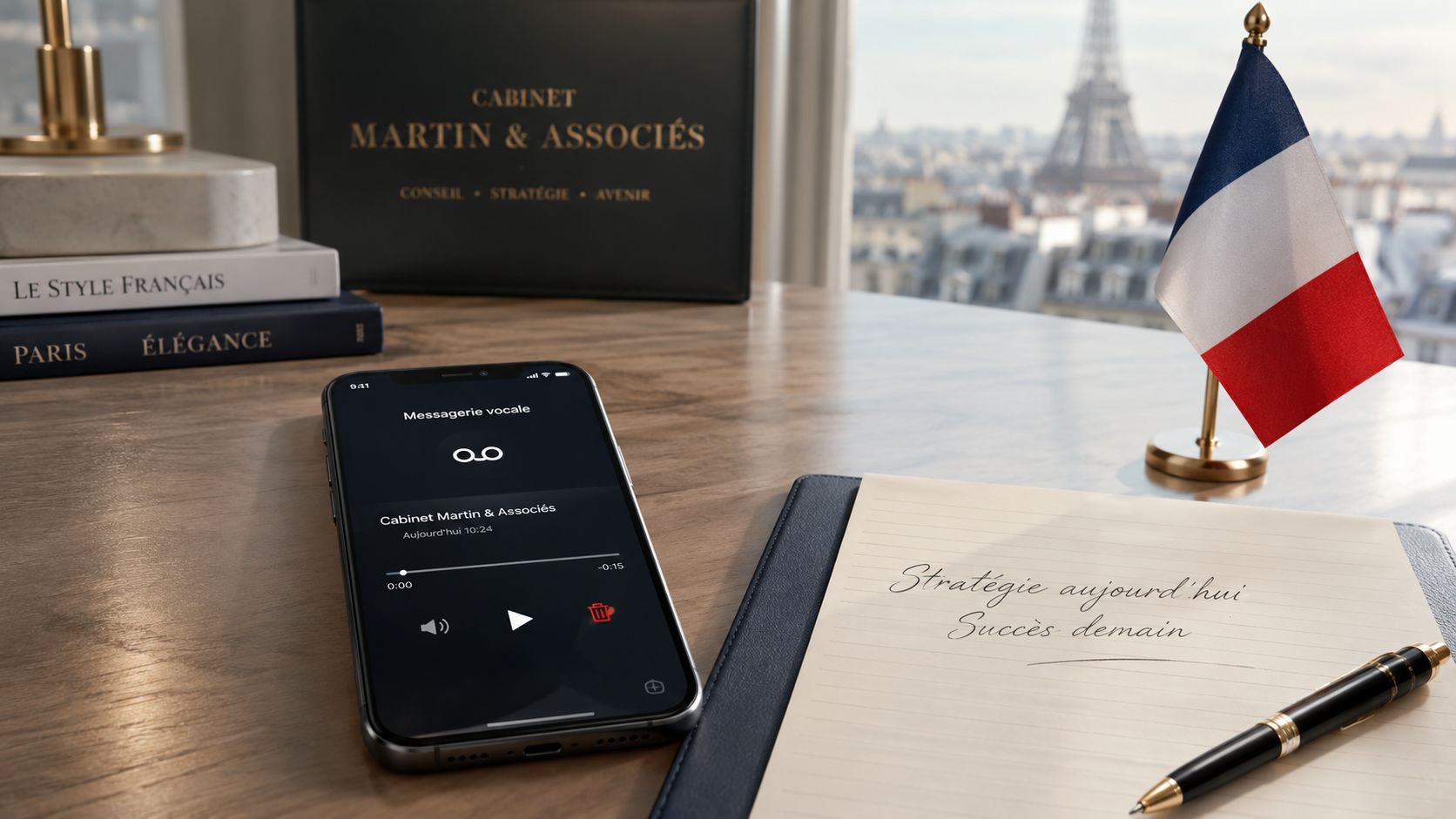
If you're leaving a voicemail, keep it tight. Bonjour, c'est Anna Miller de NovaTech. Je vous appelle au sujet de la commande de mardi. Merci de me rappeler. Au revoir. That's enough. You don't need a long explanation unless the matter is complicated.
If you answer and the other person asks to speak to someone who's unavailable, Puis-je prendre un message ? is the clean, standard response. It tells the caller you're handling the call professionally rather than stalling. If you're the one unavailable and want the other person to know you'll return the call, Je rappellerai plus tard works naturally and avoids overpromising. French phone etiquette phrases for messages and transfers
If you need to pass along a message, Pourriez-vous lui dire que Marie a appelé ? is straightforward and polite. It works especially well in offices and school settings where someone needs a quick relay of information. This is one of the most useful patterns for parents calling French schools, because the call often ends with a receptionist or secretary instead of the teacher or administrator directly.
What not to do
Don't ramble through voicemail like you're drafting an email. French message-taking is efficient. Keep the name, reason, and call-back request visible in your own mind before you dial, and the exchange becomes much smoother. I also tell clients to have names, dates, numbers, and one keyword ready before they pick up the phone, because it removes the panic that often comes from searching for details mid-call.
For anyone comparing lesson formats, message-taking is a good test case. If a tutor can help you handle voicemails, call transfers, and brief office exchanges without making you sound scripted, that's a better sign than a class that only drills greetings.
Why Silence on the Line Is Not Awkward
English speakers often treat silence like a problem to be solved immediately. On French calls, that instinct backfires. French speakers often take time to think before answering, and silence can be normal rather than tense. A realistic phone-call guide from learners' material makes the same point, and it adds an important correction to the usual advice, over-scripting every second of the call can make you sound less natural, not more. Realistic French phone call pacing and silence
The better tempo
A slower tempo helps in two ways. First, it gives the other person room to process your request. Second, it keeps you from sounding panicked when the call shifts direction. That matters in business settings, but it also matters when you're calling a school secretary or a clinic receptionist, where one unclear detail can send you back to the start.
Preparation does most of the work here. Before you dial, write down the name, the appointment date, the reference number, and the one or two keywords you can't afford to lose. That's not glamorous, but it changes the whole feel of the call. Instead of scrambling, you're confirming.
Practical rule: French phone confidence usually comes from preparation plus pauses, not from speed.
I also coach people to resist filling every gap with filler words. A short pause after a question sounds thoughtful. Jumping in too quickly can read as pushy. That's the contrarian part many learners miss, because they assume fluency means constant movement. In French phone etiquette, fluency often sounds more like calm control than verbal density.
The result is a call that feels grounded. Not stiff. Not rushed. Just steady enough for the other person to trust you with the next step.
Putting It All Together With Your Quick-Reference Phrases
One executive I coached had the vocabulary already, but her tone kept flattening the call. After a month of monthly practice, then a second month of short call drills, her openings got cleaner and her pace settled. The difference wasn't dramatic theater, it was that she sounded like someone who expected the call to go well. That kind of change is what a personalized lesson plan often does best, and it's exactly why a rigid script rarely beats coached practice. For broader travel and everyday phrase support, a common French phrases guide for travelers can also help reinforce the basics.
Keep these seven phrases ready, Allô ?, Bonjour, C'est…, Je vous appelle au sujet de…, Puis-je parler à… ?, Puis-je prendre un message ?, Au revoir. Practice them once a day for a week, aloud, with your actual name and real situation. If you want a stronger next step, book a free 20-minute consultation with Elite French Tutoring and compare the best lesson path for your call goals, whether that's business French, school communication, or relocation calls.