You've found a promising French film, but the practical problems appear immediately. It may be difficult to locate in the United States, too advanced to follow without constant pausing, or simply mismatched with your goal, whether that's understanding teenagers, discussing cinema at work, or preparing for a French conversation lesson.
This guide ranks new French movies by both cinematic appeal and usefulness for learners. I've separated films available now from titles with limited, pending, or projected U.S. releases, then compared level, dialogue style, themes, and viewing fit. Availability can change, especially for festival and art-house titles, so check the distributor before planning a group screening.
Subtitles, repeat viewing, and a focused lesson can turn film night into useful speaking practice. Passive watching alone won't create fluency, but a short scene watched twice, a few expressions recorded, and one theme discussed aloud can give you practical material for your next conversation.
Table of Contents
- 1. La Gradiva
- 2. Two Pianos
- 3. Sacred Heart
- 4. The Unknown
- 5. Iron Boy
- 6. Nouvelle Vague
- 7. The Electric Kiss
- 7 New French Films Comparison
- Choose Your Film, Then Turn Watching Into Progress
1. La Gradiva
Best for natural teenage French and cultural discussion
If you want contemporary French that sounds spontaneous rather than polished, start with La Gradiva. Marine Atlan's debut follows a French high-school class on a trip to Naples and Pompeii, giving learners a setting where friendship, curiosity, embarrassment, and cultural discovery naturally generate conversation. The film won the Cannes Critics' Week Grand Prix, which gives it strong art-house appeal as well as serious classroom potential. You can follow updates through the official La Gradiva film website.
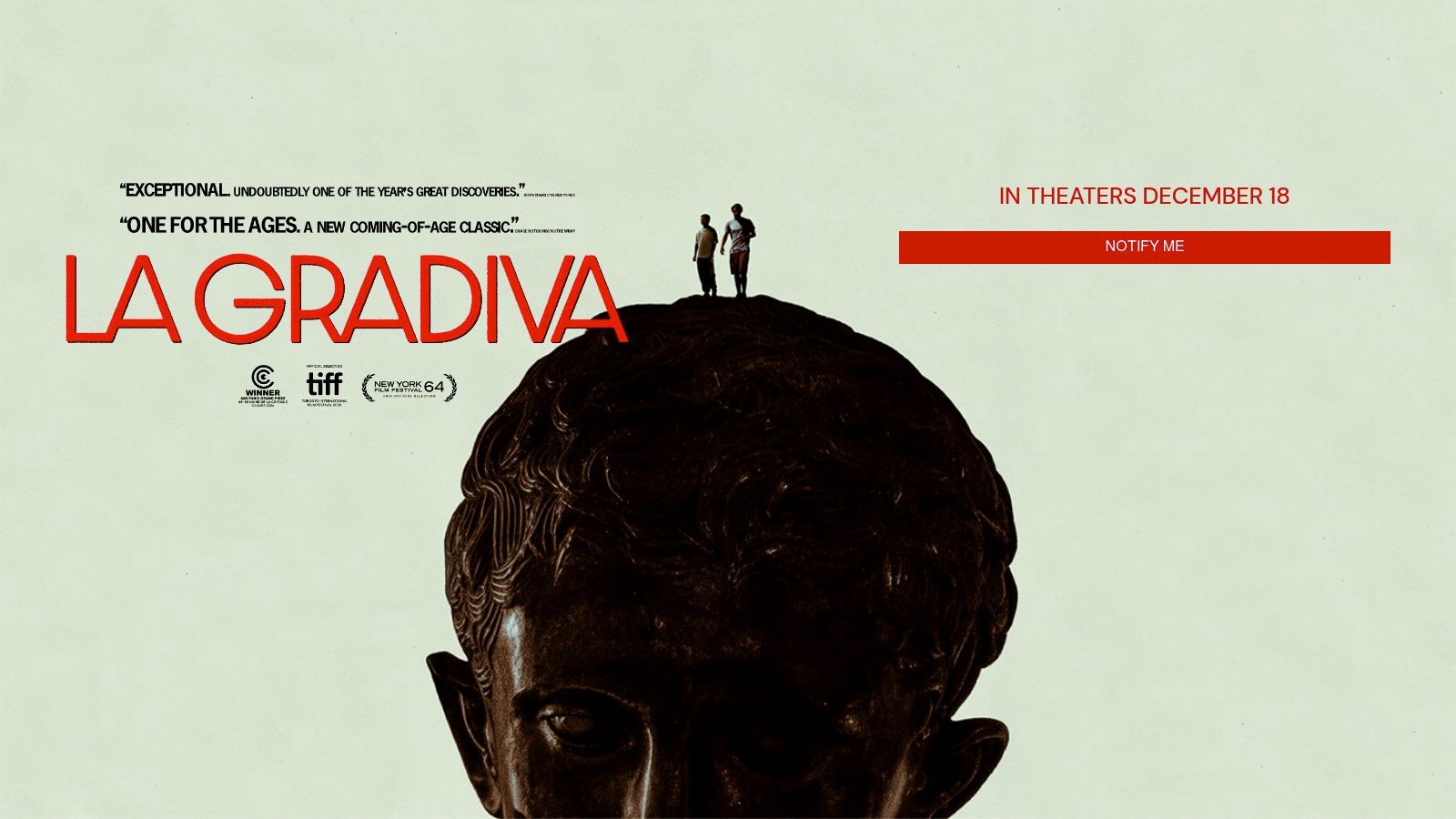
The dialogue profile is naturalistic teenage French, so this is a better choice for advanced learners than complete beginners. Expect conversational shortcuts, emotional reactions, and exchanges that may be less carefully articulated than formal adult dialogue. The reward is vocabulary you can use when discussing school life, travel, friendships, art, history, and personal awakening.
The U.S. rollout is scheduled to begin in New York on December 18, 2026, through boutique distributor 1-2 Special, with availability expected to vary by city and release window. Since the film runs for 145 minutes, I recommend treating it as a two-session project rather than forcing yourself to understand every line in one sitting.
Practical rule: Watch one scene first with English subtitles, then repeat it with French subtitles. Focus on how the students interrupt, react, and soften their opinions.
For a lesson, bring three expressions about travel or group dynamics and retell one classroom exchange in your own words. Choose La Gradiva when your priority is listening to authentic youth dialogue and connecting French with art and cultural history.
2. Two Pianos
Best for precise adult dialogue and music vocabulary
Two Pianos, or Deux pianos, is the strongest choice for learners who want elegant, controlled French rather than fast informal speech. Directed by Arnaud Desplechin, this romantic melodrama follows a virtuoso pianist returning to Lyon to perform with a former mentor. Charlotte Rampling and François Civil lead the cast, and the music-centered story creates a useful vocabulary set around rehearsal, interpretation, performance, ambition, and professional relationships. The Kino Lorber page for Two Pianos is the right place to monitor U.S. access.
The film's French is formal and precise, making it well suited to advanced students, professionals, and adults who want to discuss nuanced relationships. It's less useful if your immediate goal is casual slang or rapid everyday exchanges. It's especially good for learners who need to explain opinions, describe artistic choices, or speak about pressure and responsibility in a polished way.
Kino Lorber holds the U.S. rights, with a New York theatrical run scheduled for May 2026, followed by national art-house play and a later digital and streaming path through the Kino Film Collection. Outside major metropolitan areas, you may need to wait for home viewing rather than rely on a local theater.
Use the film actively. Choose a rehearsal or performance scene, write down language for agreement and disagreement, then explain what each character wants and why. If music helps you remember sound patterns, pair the film with the best songs to learn French and compare sung French with spoken dialogue.
Two Pianos is my recommendation for learners who want adult conversation practice with artistic and professional vocabulary. It offers a more demanding listening experience, but the careful dialogue gives you excellent material to imitate.
3. Sacred Heart
Best for accessible narration and cultural vocabulary
For a learner who finds dramatic dialogue overwhelming, Sacred Heart, or Cœur Sacré, offers a more approachable entry point. This French docudrama explores devotion to the Sacred Heart and recent stories of religious revival. Its narrated format supports comprehension because the film can explain its subject directly instead of relying entirely on rapid character exchanges. Visit the official Sacred Heart film website for screening information and event materials.
The best language goals here are clear listening, belief and values vocabulary, community discussion, and cultural understanding. Narration can still introduce unfamiliar terms, but it usually gives you more time to process meaning than a crowded dinner scene or a fast comedy. That makes Sacred Heart a reasonable choice for intermediate learners who want to build confidence before tackling more idiomatic films.
The U.S. release used limited, ticketed event screenings through Fathom Entertainment in June 2026. That model is convenient when an event is available near you, but it also means dates and locations are restricted. A wider on-demand schedule isn't firmly established, so check the official film materials before promising a screening to a class, church group, or workplace.
For study, watch a narrated section once for the main idea. On the second viewing, note connective phrases such as cause, contrast, and conclusion, then give a short spoken summary without reading from a script. Learners interested in cultural context can also use French traditions and cultural immersion to choose related conversation topics.
Choose Sacred Heart when accessible narration matters more than informal dialogue. It's also the clearest selection for faith-based or community audiences who want a film that can support a shared discussion.
4. The Unknown
Best for advanced learners who want difficult themes
The Unknown, or L'Inconnue, is the boldest recommendation on this list. Arthur Harari's psychological fantasy centers on body-swapping and identity, with Léa Seydoux and Niels Schneider in the leading roles. The premise gives advanced learners immediate material for discussing identity, embodiment, relationships, consent, and perception. The film's Cannes page for L'Inconnue provides a reliable starting point for festival and film information.
The language challenge comes from more than speed. Psychological and philosophical films often leave meaning unstated, so you'll need to infer motives, interpret ambiguity, and explain your reading of a scene. That makes it a poor first choice for a learner who still depends on English subtitles, but an excellent choice for a student preparing for high-level discussion or a professional who wants to stretch beyond practical travel French.
NEON holds North American rights and is preparing a U.S. release after festival play, including Cannes and the New York Film Festival. That creates a promising path to theatrical or streaming access, but the release is likely to remain limited rather than reach every market at once. Mature and provocative themes also make it unsuitable for younger learners or family classes.
Try a discussion-first viewing plan:
- Before watching: Learn vocabulary for identity, appearance, memory, and emotional reaction.
- During viewing: Mark scenes where a character's words and behavior seem to conflict.
- After watching: State one interpretation, then support it with two moments from the film.
Don't pause every few seconds. Watch a short sequence for overall meaning, then revisit only the lines that carry the argument. Choose The Unknown when you want advanced thematic conversation and are comfortable accepting ambiguity rather than chasing a simple plot summary.
5. Iron Boy
Best for families and visually supported comprehension
Families learning French together should put Iron Boy, also known as Le Corset, at the top of their release watchlist. This hand-painted animated feature comes from Louis Clichy, co-director of Asterix, and was selected for Cannes in Un Certain Regard. Its visual storytelling gives children and developing learners more contextual support than a dialogue-heavy realist drama. The Sony Pictures Classics website is the best place to watch for North American release news.
Animation doesn't automatically mean easy French, but clear visual action helps learners connect words with events. That makes Iron Boy useful for family vocabulary, movement, clothing, emotions, and problem-solving. Parents can pause after a scene and ask children to describe what happened, predict what comes next, or name the characters' feelings.
Sony Pictures Classics acquired North American rights and plans a U.S. release, but the date remains to be announced. Availability may not arrive until late 2026 or early 2027, so this is a film to track rather than an immediate movie-night purchase. Don't build a lesson around a date that the distributor hasn't confirmed.
Once it's available, use French subtitles if they're offered. Ask younger learners to choose three visual details and explain them in simple French. Older students can compare the film's hand-painted style with another animated feature and practice giving opinions.
For fashion-related vocabulary, pair the viewing with fashion terms in French, especially if clothing and design become useful discussion points. Iron Boy is my clear recommendation for a family-friendly contemporary French film, provided you're willing to wait for confirmed U.S. access.
6. Nouvelle Vague
Best for immediate U.S. access and film-history discussion
If you want to watch one of these films tonight, choose Nouvelle Vague. Richard Linklater's French-language, France-produced homage follows the making of Jean-Luc Godard's Breathless, combining a period setting with accessible cultural references to mid-century Paris and the French New Wave. It's streaming now in the United States on Netflix, so you won't need to wait for a festival booking or staggered art-house release. Check the Nouvelle Vague listing on Netflix for current availability in your account.
The film uses clear recorded French with subtitles, which makes it particularly useful for intermediate learners who want to combine listening practice with cultural discussion. You'll encounter language connected to actors, directors, scripts, cameras, rehearsals, creative disagreement, and Parisian life. Some references may assume prior knowledge of Nouvelle Vague cinema, but that also gives you a concrete topic to research and discuss in French.
Start with French subtitles rather than English if the speech feels manageable. Select a short exchange about filmmaking, copy two useful sentence patterns, and use them to describe a film you've watched. On a second viewing, listen for tone. Period dialogue, professional disagreement, and informal exchanges can sound different even when the vocabulary is familiar.
The main trade-off is its identity. It's French-language and France-produced, but it isn't an exclusively France-only production because Linklater is an American director. That doesn't reduce its value for French practice, but it matters if you're choosing specifically for French national cinema.
Use French-language movies that make learning fun to build a follow-up viewing plan. Nouvelle Vague is the best purchase-free recommendation for immediate access, clear audio, and film-history conversation.
7. The Electric Kiss
Best for period vocabulary and romantic-comedy appeal
The Electric Kiss, or La Vénus électrique, is the pick for learners who enjoy romance, history, and a lighter tone. Pierre Salvadori's film is set in 1928 Paris and follows a grieving painter and a resourceful medium. Pio Marmaï, Anaïs Demoustier, and Gilles Lellouche lead the cast, while the historical setting creates vocabulary around art, grief, performance, belief, society, and urban life. The Diaphana page for La Vénus électrique includes official trailers and distributor materials.
The film opened Cannes 2026, giving it strong festival visibility, but U.S. access remains uncertain. It was released first in France through Diaphana, and no U.S. distributor has been confirmed. Festival screenings or a later distribution deal are possible, but you shouldn't assume a domestic release timetable until one is announced.
That uncertainty makes The Electric Kiss better for planning a future study unit than choosing a film for an immediate lesson. Use the official trailer as a preview exercise if you need material now. Watch it twice, first for the story and then for period details. Ask learners to describe the characters' clothing, social roles, and surroundings, then compare those details with contemporary Paris.
The romantic-comedy format may feel more approachable than an experimental drama, but historical language and social conventions can still require explanation. Intermediate and advanced learners will get the most from it, especially those interested in French culture beyond present-day conversation.
Choose The Electric Kiss when your goal is period vocabulary with broad cinematic appeal, and confirm the U.S. distributor before purchasing tickets or scheduling a group class.
7 New French Films Comparison
| Title | Complexity (🔄) | Availability & Resources (⚡) | Expected outcomes (📊) | Ideal use cases (💡) | Key advantages (⭐) |
|---|---|---|---|---|---|
| La Gradiva | 🔄 Moderate–high: 145‑min art‑house pace may challenge some audiences | ⚡ Limited, staggered U.S. theatrical rollout (1‑2 Special); boutique distributor | 📊 Strong festival/critical buzz; niche art‑house impact | 💡 Advanced French classes, cultural studies, festival programs | ⭐ Festival‑winning debut; vivid, naturalistic teen dialogue |
| Two Pianos (Deux pianos) | 🔄 Moderate: music‑centered, formal adult dialogue | ⚡ Confirmed U.S. theatrical (Kino Lorber May 2026) then digital/home platforms | 📊 Reliable art‑house reception; useful for performance vocabulary | 💡 Music/performance courses, adult language learners | ⭐ Star cast; dependable U.S. access via Kino Lorber |
| Sacred Heart (Cœur Sacré) | 🔄 Low: docudrama with narrated, accessible French | ⚡ Event‑style U.S. screenings via Fathom; community screening materials available | 📊 Strong appeal to faith/cultural audiences; event turnout potential | 💡 Faith groups, community events, intro language classrooms | ⭐ Accessible narration; straightforward event distribution |
| The Unknown (L'Inconnue) | 🔄 High: provocative, mature themes and complex identity premise | ⚡ NEON holds N.A. rights; festival play → likely limited theatrical/streaming | 📊 High critical discussion potential; festival prestige impact | 💡 Advanced film seminars, identity/psychology discussions | ⭐ High‑profile cast; conversation‑sparking premise |
| Iron Boy (Le Corset / Iron Boy) | 🔄 Low: family‑friendly animated storytelling, visually clear | ⚡ Sony Pictures Classics N.A. rights; U.S. release date TBA (promising distribution) | 📊 Good family box‑office/awards potential; accessible learning resource | 💡 Family screenings, youth language learners, animation study | ⭐ Distinctive hand‑drawn animation; Cannes selection |
| Nouvelle Vague | 🔄 Moderate: approachable period piece but assumes some film‑history knowledge | ⚡ Immediately available on Netflix (streaming now, wide access) | 📊 Broad classroom impact; strong film‑history learning value | 💡 Film history classes, national classroom viewing, vocabulary work | ⭐ Immediate, nationwide availability; rich cultural references |
| The Electric Kiss (La Vénus électrique) | 🔄 Moderate: period rom‑com with historical detail | ⚡ France release now; U.S. distribution likely but TBA (materials available from Diaphana) | 📊 Festival visibility may translate to future U.S. screenings | 💡 Rom‑com units, period/cultural discussions, preview clips for teaching | ⭐ Cannes Opening Film status; ready press/teaching materials |
Choose Your Film, Then Turn Watching Into Progress
Use the decision guide below to make the choice quickly.
- Choose Nouvelle Vague if you need immediate U.S. access, clear audio, and a strong topic for film-history discussion.
- Choose Iron Boy for a visually supported family introduction to contemporary French cinema, once its U.S. release is confirmed.
- Choose La Gradiva if you want naturalistic youth dialogue connected to travel, school life, art, and cultural discovery.
- Choose Two Pianos for precise adult French, music vocabulary, and discussion of professional relationships.
- Choose Sacred Heart if narration and accessible listening matter more than spontaneous everyday conversation.
- Choose The Unknown for advanced learners ready to discuss identity, ambiguity, and provocative themes.
- Choose The Electric Kiss for historical and artistic vocabulary, but only after U.S. access is confirmed.
The film itself is only the starting point. Pick a segment short enough to replay without frustration. Watch it once for meaning, then watch it again with French subtitles and record useful expressions, not every unfamiliar word. Select language you can imagine using in a conversation, such as agreeing with a character, challenging a decision, describing an emotion, or summarizing a scene.
Finish by speaking for a few minutes about one theme. A professional might explain how a character handles pressure. A parent and child might describe a character's choices. A DELF or DALF student might compare two viewpoints and support an opinion. Keep the task specific, because “discuss the movie” usually produces less useful practice than “explain why the character changed their mind.”
A private lesson can make this process more targeted. Elite French Tutoring offers customized in-person and online lessons, including online options for learners across the United States and worldwide. Its free 20-minute consultation can help match film-based speaking practice to your level, learning style, and goals.
If you want personalized speaking practice built around French cinema, compare Elite French Tutoring lesson options or book the free consultation before your next film night. Bring one short scene and three expressions, and your instructor can turn them into focused conversation practice rather than another movie you watched but never used.