Ever found yourself staring at a wall of French wine and realizing the bottle labels make sense only after a long dinner, not before it? That's exactly where the right book changes the experience. As a French tutor, I've watched students move from hesitant guesses about Bordeaux, Burgundy, and Champagne to confident conversations once they stop trying to learn everything at once and start with the right reference for their goal. The key isn't buying the “most famous” title. It's choosing the book that matches how you want to use French wine knowledge, whether that means planning a trip, studying for an exam, or building the vocabulary to talk about terroir in French. In that sense, the best French wine books work like a curriculum, not just a reading list.
Table of Contents
2. For the Bordeaux Specialist Inside Bordeaux by Jane Anson
3. For the Burgundy Scholar Inside Burgundy Second Edition by Jasper Morris MW
5. For the Story-Driven Traveler Adventures on the Wine Route by Kermit Lynch
6. For the Adventurous Palate Wines of the French Alps by Wink Lorch
7. For the Practical Taster The Sommelier's Atlas of Taste by Rajat Parr and Jordan Mackay
1. For the Modernist The New French Wine by Jon Bonné
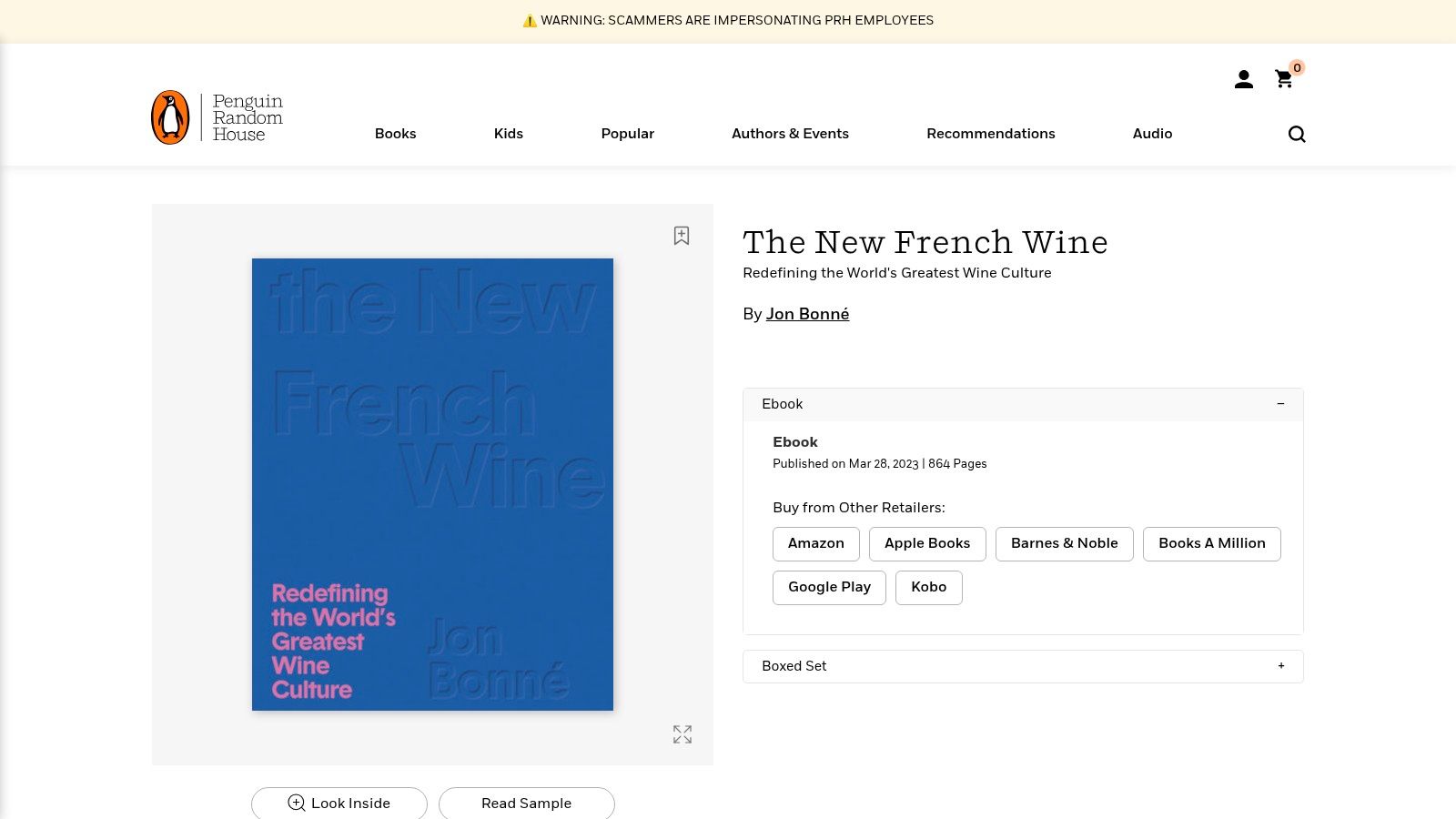
Start here if you want a current, wide-angle view of French wine that still gives you practical footing. The New French Wine reads like a modern map of the country's wine scene, and it does a better job than most books of linking regions, producers, and style shifts into one coherent picture. The publisher presents it as a region-by-region survey with photography, maps, and reference material, and that combination matters because it helps you move from reading to choosing bottles with less guesswork. If you want to compare formats before buying, Jon Bonné's official book page is a useful place to check.
Why it works for learners
The strength of this book is range without confusion. A traveler can use it to get oriented, while a serious enthusiast can use it to decide what to taste next and which regions deserve more attention. The trade-off is plain. A premium boxed set is not a pocket guide, and its focus on the “new” side of French wine means some readers will still want a more traditional benchmark after they finish it.
Practical rule: Buy this when you want to understand the current French wine scene, not when you need a small field manual for a single weekend trip.
For a learner who is also studying French, this book naturally generates vocabulary. You pick up appellation names, producer names, and region names that matter in real conversation, not just in a classroom. If you want to turn that reading into speaking practice, our Learning French with Wine page connects wine reading with tutoring sessions and vocabulary building in a structured way.
Best fit and limits
Best for: readers who want a modern survey of France rather than a narrow deep dive.
Works well for: collectors, motivated beginners, and curious travelers.
Less ideal for: people who need a lightweight reference they can carry into a cellar or shop.
Watch for: a stronger focus on contemporary producers than on older canonical touchstones.
2. For the Bordeaux Specialist Inside Bordeaux by Jane Anson
A Bordeaux shelf rewards readers who want precision, and Inside Bordeaux is written for that exact purpose. It is a terroir guide first, a broad overview second, and its strength comes from how far it goes into the region's structure. Estate-by-estate study, detailed maps, and practical buying context give the book real use for collectors and exam candidates who need more than a general survey.
For a learner, that detail matters.
Bordeaux often changes your buying decision at the château level, so a book that helps you separate the Left Bank from the Right Bank, then distinguish one estate from the next, keeps earning its place on the shelf. The official product page at Sotheby's Wine presents it as a hardcover reference meant for repeated consultation, which matches how a serious Bordeaux book should function.
Broad summaries of Bordeaux date quickly. Estate-level detail stays useful longer.
I have seen students move through Bordeaux labels faster once they start with region-specific material instead of general wine books. The reason is simple. Bordeaux trains you to notice structure, place, and hierarchy at the same time. For French learners, that also means the vocabulary sticks in a useful way, because you are reading real regional terms in context rather than memorizing isolated wine words. If you want to connect that reading with speaking practice, our French wine vocabulary tutoring page is a practical next step.
Best fit and limits
Best for: Bordeaux buyers, collectors, and students preparing for serious regional study.
Works well for: readers who want château-level guidance and buying context.
Less ideal for: anyone looking for a France-wide overview.
Watch for: availability that can vary at some retailers.
3. For the Burgundy Scholar Inside Burgundy Second Edition by Jasper Morris MW
Burgundy is where many wine books become either too vague or too technical. Inside Burgundy avoids both traps by being unapologetically detailed while still organized enough to use in real study. The second edition expands and corrects earlier material, and the scale is serious. It covers 1,200+ vineyards, 300 villages, and about 700 domaines profiled, alongside maps and historical context, which is why so many professionals treat it as a benchmark English-language reference. Those are not casual-reading numbers, they are signs of a book built for long-term consultation, as seen on the publisher's edition page.
Use it as a working reference, not a book to race through. Burgundy rewards attention to detail, and this title gives you enough of it to make sense of why prices, reputations, and styles diverge so sharply from village to village. I have found that readers get more from it when they keep it beside tasting notes and return to the same entries after a bottle or two, because the structure starts to click once the names are no longer abstract.
Burgundy also gives French learners something concrete to work with. Village names, climat language, domaine naming patterns, and producer distinctions all appear in a real regional setting, so pronunciation practice becomes tied to actual wine knowledge instead of isolated vocabulary drills. If you want to connect that reading with speaking practice, our French wine vocabulary tutoring page is a practical next step.
Best fit and limits
Best for: advanced learners, professionals, and collectors with a real Burgundy focus.
Works well for: repeated use during tastings and buying decisions.
Less ideal for: beginners who want a lighter first book.
Watch for: a dense format that rewards patience more than speed.
4. For the Champagne Lover Champagne by Peter Liem
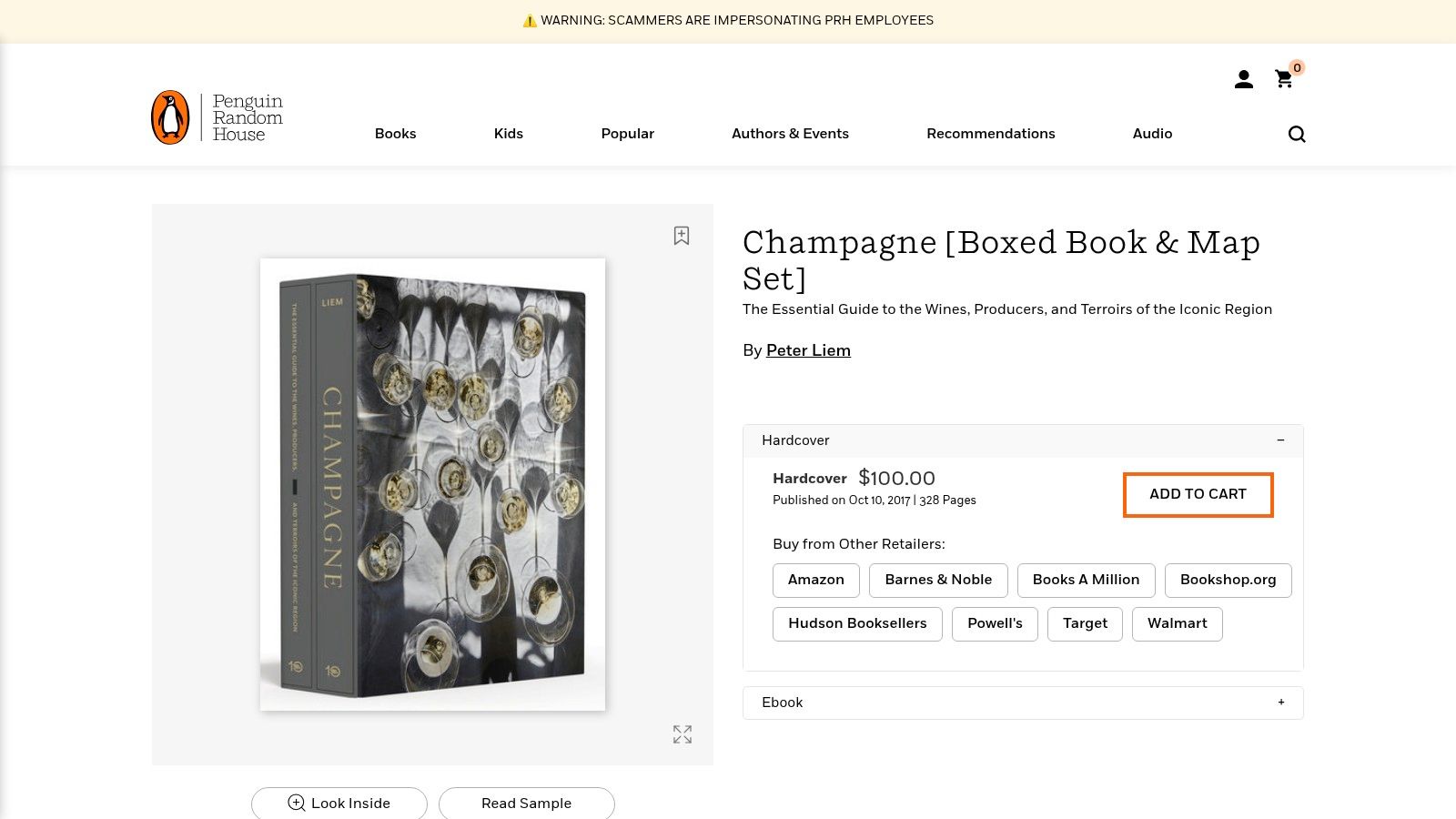
If someone tells me they love Champagne but still cannot explain why one bottle feels brisk and minerally while another feels rounder and more generous, I point them to Champagne by Peter Liem. It moves past the celebratory image and gives you producer profiles, grower context, and terroir in a way that changes how you read the glass. The boxed set also includes historic vineyard maps, which helps when you are comparing villages or trying to understand the region's geography. The official edition page at Penguin Random House shows why so many readers treat it as the modern standard reference.
The book also fits naturally into French study. Champagne vocabulary comes up in restaurants, tastings, and travel conversation, so the terminology has immediate use instead of feeling academic. I have found that pairing this kind of reading with a pronunciation guide, such as French pronunciation for English speakers, helps learners handle the names with more confidence because many of them can trip up even fluent speakers.
What it gives you in practice
Its main strength is that it teaches you to taste with intention. Champagne stops being a single style and starts becoming a set of choices shaped by producer and place. That shift matters for buying, because once you understand the region more clearly, you can choose bottles that suit both your budget and your palate.
A student once told me she only opened Champagne for special occasions and could never keep the styles straight. We worked through one chapter, then practiced short speaking exercises around it, and she reached the point where she could explain grower-driven bottles and house styles in French well enough to use at dinner. That is the value here. The book gives you language, not just information.
For learners who want to talk about travel as well as wine, I also send them to common French phrases for travelers. Champagne naturally leads into restaurant orders, train trips, village visits, and tasting-room conversations, so the vocabulary sticks when it is attached to a real setting.
Best fit and limits
Best for: Champagne fans who want a clear regional framework.
Works well for: tastings, comparative study, and gift buying.
Less ideal for: readers who want a broad France-wide book.
Watch for: a premium format and a single-region focus.
5. For the Story-Driven Traveler Adventures on the Wine Route by Kermit Lynch
A technical atlas is not the right starting point for every reader. Some people need a book that makes French wine feel human first, and Adventures on the Wine Route does that with unusual warmth and detail. It is a travel-and-culture book, which is exactly why it still earns a place among the best French wine books. The prose gives you atmosphere, personalities, and a sense of place that reference-heavy books often leave aside, and that matters if your real goal is to build interest as well as knowledge. You can find the book directly through Kermit Lynch's shop.
Why this book still matters
The trade-off is clear. You should not expect it to function as a cellar-by-cellar buying guide, and it is not written for exam-style memorization. What it offers instead is cultural instinct, which is often the missing piece for readers who feel unsure around French wine. It is approachable, easy to gift, and practical for a motivated beginner who wants to keep reading without feeling buried by data.
I often recommend it to students who want French wine to feel alive rather than abstract. The book helps people see how regions, growers, and history fit together, and that makes later study easier because the facts are tied to a story. That same quality also helps with travel language, especially for learners who want to talk about markets, restaurants, road trips, and tasting visits. For readers who want to connect wine knowledge with French food culture, a useful next step is learning how the French eat and stay fit, since the book naturally leads into everyday meals and regional habits.
Practical rule: Read this before a trip, not after you think you already know the region.
For French learners, I would pair it with short speaking practice around travel phrases, food, and tasting notes. If that sounds useful, our common French phrases for travelers page is a natural next step after the book.
Best fit and limits
Best for: readers who want a narrative entry point into French wine.
Works well for: travelers, gifting, and cultural orientation.
Less ideal for: people who need technical data quickly.
Watch for: a storytelling style that will not satisfy reference-book shoppers.
6. For the Adventurous Palate Wines of the French Alps by Wink Lorch
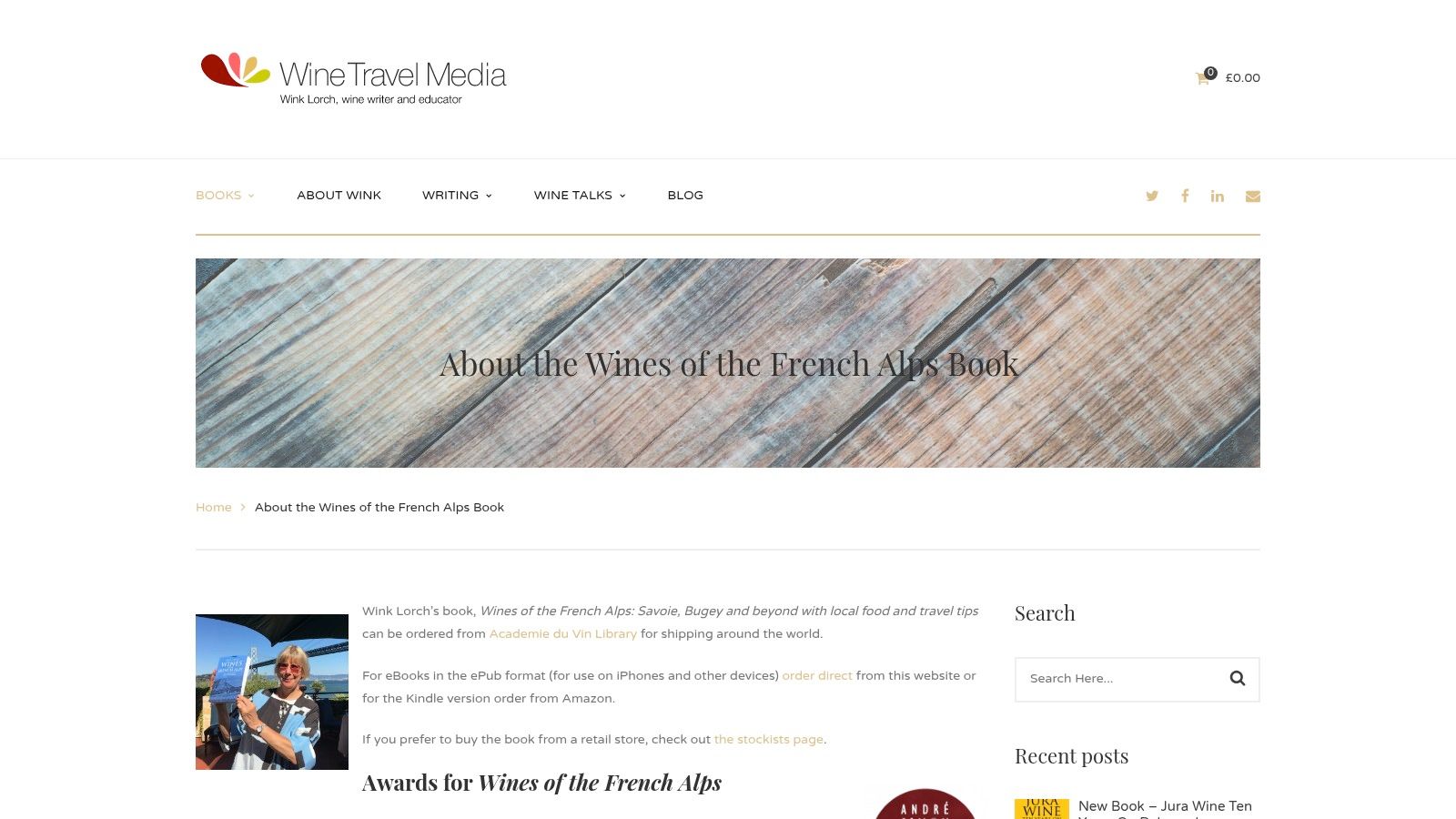
If your shelf already covers the famous French names, this book takes you somewhere more specific and, for many readers, more useful. Wines of the French Alps focuses on the Alpine regions, including Savoie and Bugey, and that narrower scope is exactly what gives it value. Instead of trying to cover all of France at once, it stays close to producer profiles, terroir, grapes, and the food-and-travel context that helps those details make sense. The book's own information page at Wine Travel Media gives a clear sense of how region-bound it is.
Why niche can be better
I recommend this kind of book to sommeliers, educators, and curious travelers who are ready to move past the usual shortlist. You do give up broad coverage of Bordeaux or Burgundy, but you gain a sharper understanding of a region many readers barely know. That trade-off matters, because a narrow focus often teaches you how to read a region more closely rather than just name it.
It also suits language learners well, since niche regions push you to work with unfamiliar place names and food terms. That kind of vocabulary sticks because it has a clear use in conversation, tastings, and travel. If you want to speak more confidently about French food and drink, pair this book with our French food habits and culture page and build a more complete cultural vocabulary. For learners who stumble over the names themselves, French pronunciation for English speakers is a practical follow-up.
Best fit and limits
Best for: adventurous tasters and professionals building a regional deep dive.
Works well for: travel planning and less mainstream wine study.
Less ideal for: anyone who wants a one-book overview of France.
Watch for: shipping and retail differences depending on where you buy.
7. For the Practical Taster The Sommelier's Atlas of Taste by Rajat Parr and Jordan Mackay
This is the book for readers who keep asking the most useful question in any tasting room, what should this taste like, and why? The Sommelier's Atlas of Taste answers that in a direct, usable way. It links soil, appellation, and producer philosophy to flavor, which makes it especially strong for learners trying to move from abstract knowledge to real sensory vocabulary. The publisher's page at Penguin Random House is worth checking if you want to compare formats before buying.
Where it fits in a study plan
This isn't the deepest single-region encyclopedia on the list, and that's fine. Its strength is clarity. If you're building confidence in tasting notes, restaurant ordering, or basic professional conversation, the book gives you a strong bridge between theory and the glass in front of you. It's also one of the easiest books here to use daily, because you don't need to carve out hours to get value from it.
I like pairing this kind of book with pronunciation practice, since tasting vocabulary falls apart quickly if you can't say it smoothly. Our French pronunciation for English speakers resource fits that need neatly, especially for learners who are already reading wine books and want to speak with more confidence.
Practical rule: Choose concise tasting books when you want action, not just background.
Best fit and limits
Best for: tasters who want an actionable vocabulary builder.
Works well for: daily use, note-taking, and conversation practice.
Less ideal for: readers seeking deep coverage of one French subregion.
Watch for: a broader European scope that leaves some French areas less fully developed.
7-Book Comparison: Best French Wine Books
| Item | 🔄 Complexity | ⚡ Resources & format | 📊 Expected outcomes | 💡 Ideal use cases | ⭐ Key advantages |
|---|---|---|---|---|---|
| For the Modernist: The New French Wine by Jon Bonné | 🔄 High, two-volume, research-heavy reference | ⚡ High, large boxed set, premium price, printed maps/photos | 📊 Broad, up-to-date national overview; practical producer guide | 💡 Learners wanting a contemporary, region-by-region survey | ⭐ Most current, wide coverage (~800 producers, 7,000+ wines) |
| For the Bordeaux Specialist: Inside Bordeaux by Jane Anson | 🔄 High, château-by-château, terroir detail | ⚡ Moderate, hardcover; demand can affect stock | 📊 Deep terroir understanding and vintage/buying guidance for Bordeaux | 💡 Collectors, exam candidates, Bordeaux-focused professionals | ⭐ Strong regional expertise with detailed maps and profiles |
| For the Burgundy Scholar: Inside Burgundy (2nd Ed.) by Jasper Morris MW | 🔄 Very high, dense, reference-style tome | ⚡ High, single heavy volume, select availability, premium price | 📊 Unrivaled vineyard-level depth for Côte d'Or and wider Burgundy | 💡 Advanced learners, trade professionals, collectors | ⭐ Comprehensive benchmark: extensive vineyards, domaines, maps |
| For the Champagne Lover: Champagne by Peter Liem | 🔄 Moderate, narrative + specialized map set | ⚡ High, boxed set with pullout historic maps; premium cost | 📊 Thorough region-specific reference for producers and terroir | 💡 Champagne specialists, comparative tasting leaders | ⭐ Considered the modern standard with valuable historic maps |
| For the Story-Driven Traveler: Adventures on the Wine Route by Kermit Lynch | 🔄 Low, narrative, anecdotal format | ⚡ Low, affordable paperback; widely available | 📊 Cultural/contextual insight that builds intuition about French wine | 💡 Travelers, beginners, readers seeking inspiration | ⭐ Engaging storytelling that fosters practical regional understanding |
| For the Adventurous Palate: Wines of the French Alps by Wink Lorch | 🔄 Moderate, focused regional guide | ⚡ Moderate, niche print/ebook; possible shipping costs | 📊 Detailed coverage of underrepresented Alpine appellations and producers | 💡 Sommeliers, curious travelers, regional specialists | ⭐ Fills a gap with focused, otherwise hard-to-find Alpine content |
| For the Practical Taster: The Sommelier's Atlas of Taste by Rajat Parr & Jordan Mackay | 🔄 Low–Moderate, concise, practical chapters | ⚡ Low, compact format, easy daily use | 📊 Actionable tasting framework linking terroir to flavor | 💡 Students, sommeliers, anyone building tasting vocabulary | ⭐ Highly usable in tastings; concise bridge between theory and palate |
Your Next Chapter in French Wine and Language
Whether you picked a broad atlas, a region-specific reference, or a story-driven travel book, the smartest move is to read it actively. Mark the producer names, practice saying the appellations out loud, and turn each tasting note into a short French sentence. That's how a wine book stops being a purchase and becomes part of your speaking life.
If you're serious about French wine, I'd treat these books as a curriculum. Start with the title that matches your current level, then build outward, from narrative to reference, from region to terroir, from English reading to French conversation. That sequence keeps you from drowning in jargon while still giving you enough depth to sound informed when it matters.
I've seen that approach work in real lessons. One student came to us for travel French and ended up using wine reading as her motivation tool. She began with a story-driven book, then moved into tasting vocabulary, and soon she could discuss a Burgundy bottle with far more confidence than she expected. The shift wasn't magic. It was structure, repetition, and material she cared about.
If you want to do the same, Elite French Tutoring offers private French lessons built around your goals, including travel French, adult conversation, and exam prep, with online options available in the U.S. and worldwide. Our Learning French with Wine page is a good place to start if you want to connect reading with real language practice. Book a free 20-minute consultation, tell us which wine books you're reading, and we'll help you turn that interest into French you can use.