Skip to content

You've got Paris hotels open in one browser tab, train tickets in another, and a growing suspicion that your holiday budget won't stretch to the trip you imagined. You could book the cheapest room, squeeze in every famous sight, and spend your evenings recovering from the journey back to your hotel. Or you could change the city, the neighborhood, or both.
The best cities to visit in France aren't interchangeable bookings. Paris suits museum lovers who want plenty of choice, Lyon rewards travelers who plan around meals, and Nice makes sense when the sea matters as much as sightseeing. Within each city, your address determines whether you can stroll home after dinner or need to organize transport around everyone's energy levels.
I'd choose your neighborhood before committing to a hotel category. A modest room near the places you'll visit can be a better purchase than a beautiful apartment across town, especially with children or limited mobility.
These recommendations pair each city with a traveler profile, practical accommodation trade-offs, transport advice, and French phrases you can use immediately. The comparison below will help you narrow your shortlist. For stay length and cost, think in terms of what you're buying: a focused city break, a longer regional base, or an ambitious itinerary with extra transport expenses.
Book fewer bases, leave room for ordinary life, and learn the words your particular trip requires.
Table of Contents
- 1. Paris for First-Time Visitors and Repeat Travelers
- 2. Nice for a French Riviera Stay
- 3. Lyon for Food Lovers and Culture Seekers
- 4. Marseille for Coastal Culture and Distinctive Neighborhoods
- 5. Bordeaux for Wine, Architecture, and a Relaxed Pace
- 6. Strasbourg for Canals and European Character
- 7. Nantes for Creative Energy and Regional Exploring
- 8. Lille for Rail Connections and a Northern City Break
- 9. Montpellier for a Sunny Mediterranean Base
- 10. Toulouse for Aerospace Interests and Southern City Life
- 10 Best Cities to Visit in France at a Glance
- Your Next Step Is to Choose the City, Then Learn the Words That Matter
1. Paris for First-Time Visitors and Repeat Travelers
Paris is the choice I'd recommend for a first visit built around art, monuments, and neighborhood walks. Its appeal also creates booking pressure: 48.7 million tourists visited the Paris Region in 2024, according to Choose Paris Region, as reported by TravelAge West.
Choose the Marais for lively streets, restaurants, and walks toward the Seine. Saint-Germain suits café culture and museum-focused days, while residential pockets of the 15th arrondissement deserve consideration when family space matters more than a postcard address.
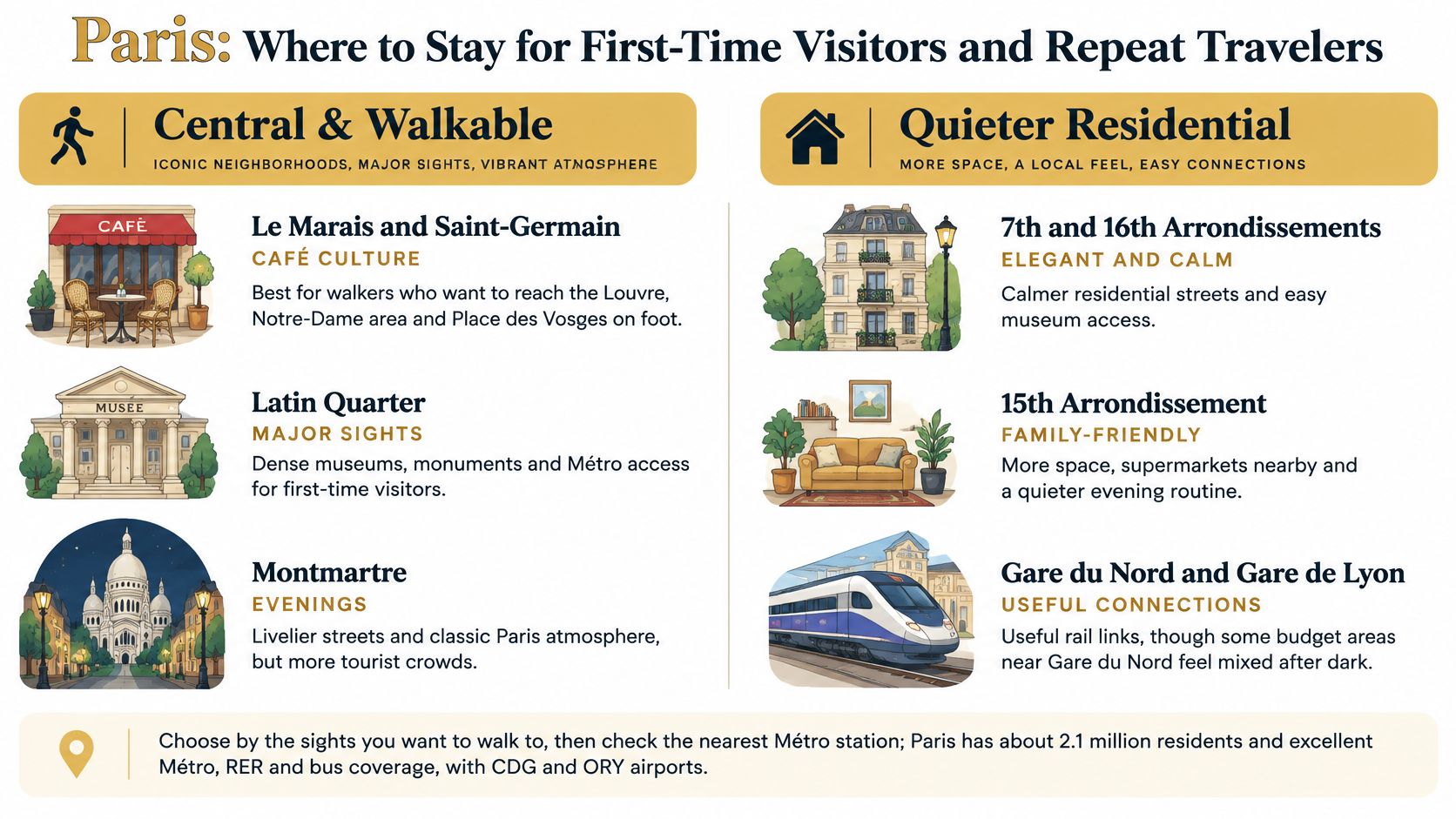
Buy walkability, not just a famous postcode
Say you're traveling with children and planning museums alongside playground breaks. An apartment near a useful Métro line, supermarket, and bakery may serve you better than a smaller room beside a landmark.
Check the actual walking route to the station, whether the property has a lift, and recent comments about street noise. Our Paris vacation guide can help you connect your accommodation choice with your itinerary.
Practice Bonjour before every request, followed by Est-ce qu'on peut laisser nos bagages ?, meaning “Can we leave our luggage?” For breakfast, Est-ce que le petit-déjeuner est compris ? asks whether it's included, a useful question before comparing apparently similar room rates.
2. Nice for a French Riviera Stay
If your ideal morning involves a market rather than a museum queue, I'd put Nice high on your shortlist. Vieux Nice suits travelers who want dining and atmosphere outside their door; the Carré d'Or works for a polished hotel stay near the waterfront.
Cimiez offers a more residential alternative, but don't book a hillside address assuming you'll stroll everywhere. Check the bus connection and your return route after dinner, especially if anyone in your group struggles with slopes.
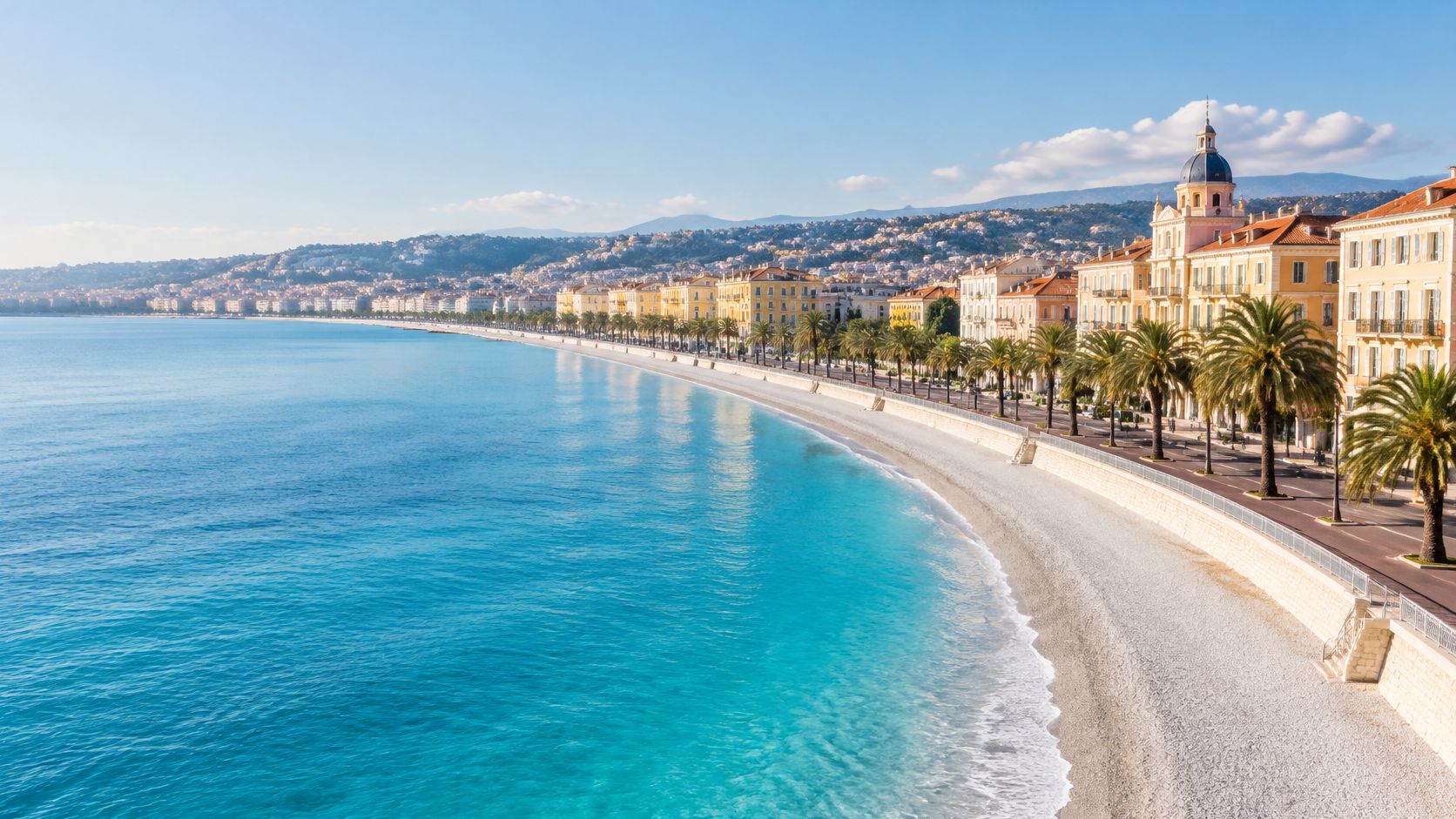
Booking priority: In Nice, decide whether you're paying for a sea view, beach access, or neighborhood atmosphere. They aren't the same purchase.
For a couple planning market mornings and relaxed dinners, Vieux Nice is appealing, provided the room has suitable cooling and noise protection. For Riviera excursions, compare access to the railway station rather than choosing solely by distance from the beach.
Pack water shoes for the pebbles, and compare spring or autumn dates against your summer shortlist rather than assuming every seaside stay requires peak-season travel.
Useful phrases include Est-ce que la chambre donne sur la rue ?, “Does the room face the street?” and Une table en terrasse, s'il vous plaît, “A table outside, please.” Our customized travel lessons can rehearse the restaurant and hotel exchanges you'll need.
3. Lyon for Food Lovers and Culture Seekers
Choose Lyon when dinner is part of the itinerary, not something squeezed between attractions. Its historic environment rewards exploration beyond restaurants: France.fr describes approximately 2,000 years of history, with Roman, medieval, Renaissance, and later urban layers.
The Presqu'île, between the Rhône and Saône, is my default recommendation for a food-focused stay. Vieux Lyon offers historic atmosphere, while Croix-Rousse suits travelers who prefer a neighborhood routine and don't mind managing hills.
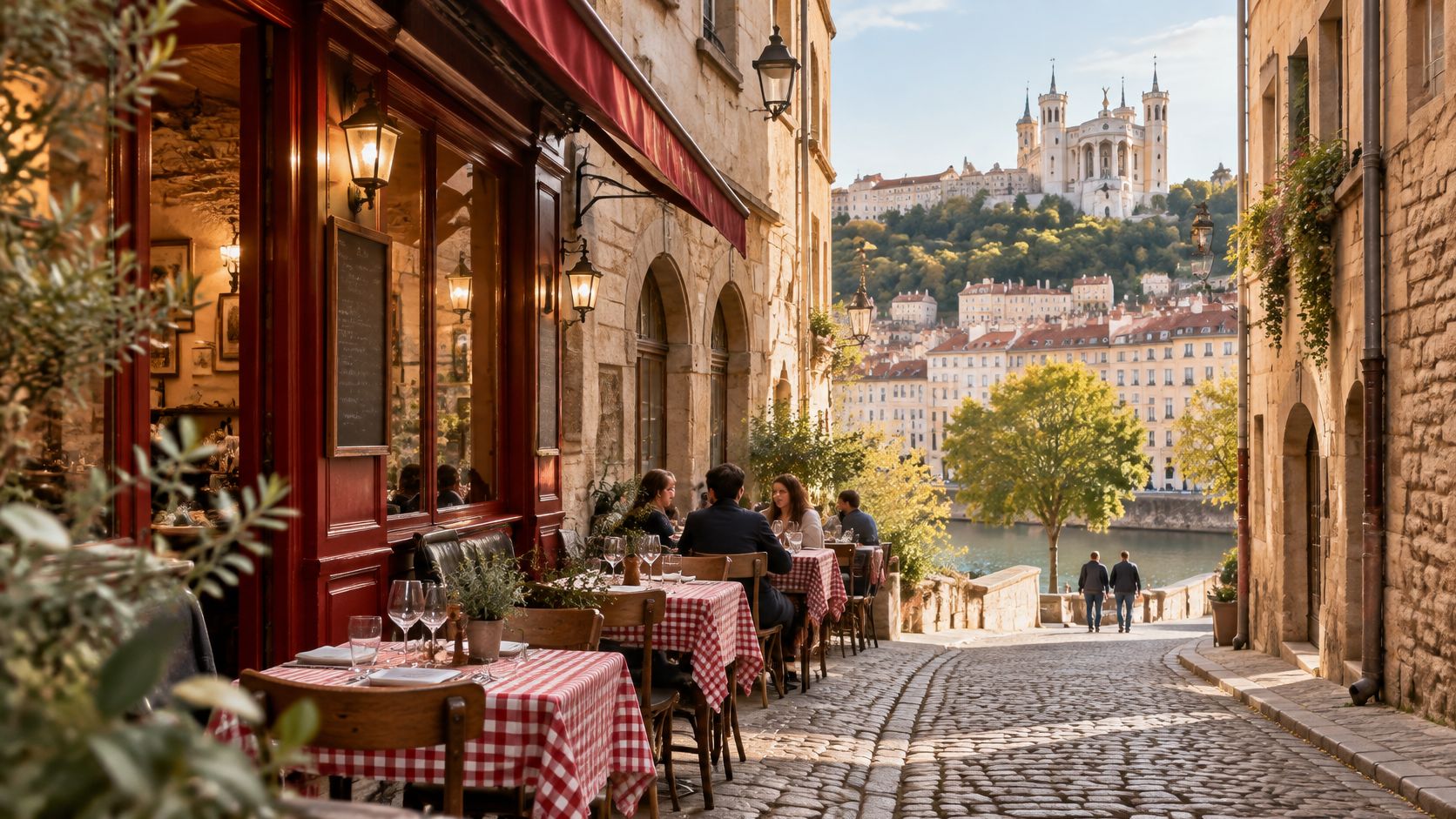
Leave room between restaurant reservations
A couple staying on the Presqu'île could alternate a reserved bouchon meal with a market visit and an unplanned café lunch. Booking elaborate meals throughout your stay leaves little appetite or flexibility for discoveries.
- Reserve deliberately: Check opening days and menus before choosing your hotel around a particular restaurant.
- Check the return route: A picturesque downhill walk doesn't guarantee an enjoyable uphill journey after dinner.
- Prepare for the menu: Qu'est-ce que vous nous conseillez comme spécialité lyonnaise ? means “Which Lyon specialty would you recommend?”
Read our French dining etiquette guide before departure. For allergies, practice a clear statement such as Je suis allergique aux noix, “I'm allergic to nuts,” rather than relying on a vague preference or an unfamiliar menu translation.
4. Marseille for Coastal Culture and Distinctive Neighborhoods
Your Marseille booking should start with a question: do you want harbor convenience, neighborhood character, or nightlife? The Vieux-Port is a practical base for waterfront walks and boat departures, Le Panier offers atmospheric lanes, and Cours Julien suits travelers who prioritize restaurants, creative spaces, and evenings out.
Don't choose a lively district and then expect resort-style quiet. Check the property's exact street, bedroom orientation, and late-night reviews rather than judging an entire neighborhood from its photographs.
For a sense of the city before narrowing your accommodation search:
Keep coastal plans flexible
A traveler based in Le Panier might explore locally in the morning and reserve a Calanques excursion for another day. Check departure points, weather-related cancellation terms, and current access conditions before paying; boat trips and land visits require different planning.
Est-ce que la sortie est maintenue avec ce vent ? means “Is the excursion still going ahead in this wind?” At the harbor, D'où part le bateau ?, “Where does the boat leave from?” is more useful than just knowing the operator's name.
Use our French travel itinerary guide to avoid filling every day with fixed departures. I'd leave an uncommitted afternoon for the waterfront or a neighborhood meal, particularly when coastal conditions could change your plans.
5. Bordeaux for Wine, Architecture, and a Relaxed Pace
Bordeaux works best when you separate city enjoyment from vineyard logistics. Stay in Saint-Pierre for central dining and evening walks, or choose Chartrons if galleries, wine shops, and a less concentrated sightseeing atmosphere better match your plans.
I wouldn't rent a car because the trip involves wine. First compare a guided excursion, rail access to your chosen destination, and the transport needed between individual estates.
Book the tasting before building the day around it
Say you choose Chartrons and want a Saint-Émilion excursion. Reserve the tasting, confirm its language and meeting point, then organize transport around that appointment rather than assuming every estate welcomes walk-ins.
- Compare total cost: Include transfers and meals when weighing a wine tour against independent travel.
- Check the experience: A cellar visit, technical tasting, and vineyard walk aren't interchangeable.
- Keep a city day: Bordeaux deserves time for its riverfront and neighborhoods, not just departures into wine country.
For accommodation, check the tram route from the airport and the final walk with luggage. A stop that looks close on a map may still leave an awkward arrival across pedestrian streets.
Ask Faut-il réserver la dégustation ?, “Do we need to reserve the tasting?” During the visit, Je préfère un vin moins tannique, “I prefer a less tannic wine,” gives your host something concrete to work with.
Our private lessons can focus on describing preferences without turning your preparation into a technical wine course.
6. Strasbourg for Canals and European Character
Grande Île is the accommodation choice I'd favor for a walking-focused Strasbourg stay. Near the cathedral, you can build days around the historic center; around Petite France, the canal setting becomes part of the experience rather than an excursion across town.
Travelers arriving with heavy luggage should also compare hotels between the station and the center. A beautiful address inside a pedestrian area may involve a less convenient arrival than its listing suggests.
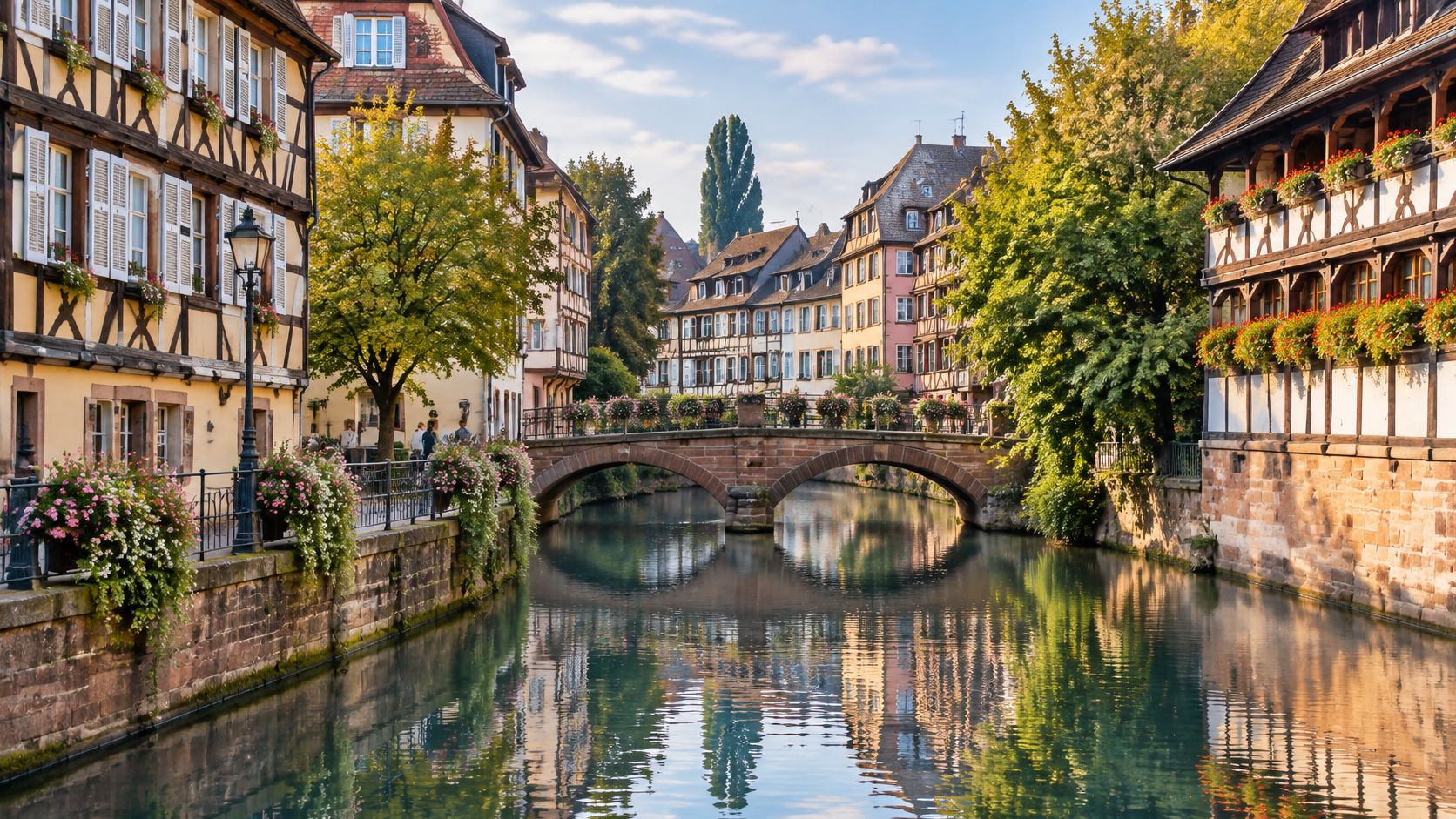
A canal view is worth paying for only if you'll enjoy the room. Check stairs, access, and evening noise before paying an atmosphere premium.
For a Christmas-market trip, compare cancellation conditions as carefully as the location. Families should confirm bed arrangements and arrival instructions before committing, especially when several properties appear equally central.
A couple staying near the cathedral could explore on foot, stop for an Alsatian meal, and keep a regional outing optional rather than prebooking every day.
At a traditional winstub, try Qu'est-ce que vous conseillez comme plat alsacien ?, “Which Alsatian dish do you recommend?” Est-ce que cette portion peut se partager ?, “Can this portion be shared?” also helps when you want to try choucroute or flammekueche without ordering more than you'll enjoy.
7. Nantes for Creative Energy and Regional Exploring
Nantes is a strong choice when your group wants culture without a monument-heavy schedule. Choose Graslin for a polished central base or Bouffay for historic streets and lively dining, then check nearby tram connections before comparing hotel extras.
The Château des ducs de Bretagne, the Voyage à Nantes trail, and Les Machines de l'île offer different kinds of outings. Check current schedules and reservation requirements before promising children a particular mechanical attraction.
Give regional excursions a realistic budget
For a family, I'd prioritize a central apartment with practical sleeping arrangements over a stylish property requiring repeated cross-city trips. You can follow part of the creative trail, return for a break, and head out again without treating the day as an endurance test.
Nantes can also support outings toward the Loire or Brittany, but don't treat every château or coastal destination as an effortless day trip. Check the complete journey, including the connection from the station to the attraction.
- For tickets: Faut-il réserver un créneau ? means “Do we need to reserve a time slot?”
- For children: Est-ce adapté aux enfants ? means “Is it suitable for children?”
- For directions: Quel arrêt est le plus proche ? means “Which stop is closest?”
We can build family lessons around these exchanges, with children practicing their own requests rather than leaving every conversation to a parent.
8. Lille for Rail Connections and a Northern City Break
Lille makes sense when your arrival and onward journey matter as much as sightseeing. Vieux-Lille suits travelers who want historic streets and cafés, while Euralille is worth comparing when station convenience is the priority.
Wazemmes offers another option for market-focused travelers, but inspect the transport connection and exact street before booking. A neighborhood's personality doesn't tell you whether a particular room will be quiet.
Compare the railway station, not just the city name
A professional combining meetings with leisure might choose a station-area hotel and walk into the older center for dinner. A couple on a relaxed break may prefer Vieux-Lille and accept a longer luggage transfer.
For onward planning, SNCF Connect says TGV INOUI tickets are generally available up to four months before departure. Compare the actual services for your dates, and don't assume a day trip to Paris, Bruges, or elsewhere will be good value once fares and connections are included.
Our French travel tips can help you prepare for the practical exchanges around those journeys.
Ask De quel quai part le train ?, “Which platform does the train leave from?” If something changes, Est-ce que ce billet est valable dans le prochain train ?, “Is this ticket valid on the next train?” is a question to ask staff, not an assumption to make.
9. Montpellier for a Sunny Mediterranean Base
Montpellier is a city stay with beach possibilities, not a beachfront holiday. That distinction matters when choosing between a central hotel and accommodation closer to the coast.
Stay in l'Écusson for pedestrian streets, dining, and easy access to central life. If uninterrupted sleep is a priority, examine reviews for bars, deliveries, and late-night noise rather than assuming a car-free street will be quiet.
Choose the old town for evenings, not direct beach access
A couple based near Place de la Comédie could spend mornings exploring the center and reserve a separate outing for the sea. Check the final connection carefully: a tram journey toward the coast doesn't necessarily deliver you onto your preferred beach.
For a Camargue excursion, compare a guided outing with the full independent transport plan. Sète may suit a rail-based day, while countryside destinations can require more coordination than their map distance suggests.
- Accommodation: Confirm cooling and luggage access before choosing an upper-floor old-town apartment.
- Beach transport: Ask Où est-ce qu'on prend le bus pour la plage ?, “Where do we catch the bus to the beach?”
- Evening meals: Est-ce que vous servez encore ? means “Are you still serving?”
I'd choose Montpellier for travelers who want cafés, regional outings, and conversational practice alongside sunshine. Choose somewhere directly on the coast if daily beach access is the nonnegotiable purchase.
10. Toulouse for Aerospace Interests and Southern City Life
Toulouse suits families who want aerospace attractions alongside an enjoyable city base, and adults who prefer neighborhood life to an intensive sightseeing circuit. Its brick architecture, Garonne riverfront, and café culture give you reasons to leave gaps between reservations.
Stay near the Capitole for central convenience, consider Saint-Cyprien for a neighborhood-focused stay across the river, or compare addresses near the Canal du Midi if walks and onward transport shape your plans. Check the exact location rather than treating the whole canal corridor as equally convenient.
My recommendation: Book for the trip you'll repeat each morning, not the attraction you'll visit once.
A family visiting the Cité de l'espace could stay centrally and organize transport for that outing. Confirm opening arrangements, ticket conditions, and the journey before making it the centerpiece of a tightly scheduled day.
For Carcassonne, compare regional train options and the connection onward to the medieval citadel. For the Pyrenees, choose a specific destination before deciding whether Toulouse is the right base.
Quel est le moyen le plus simple pour y aller ? means “What's the easiest way to get there?” For family attractions, Est-ce qu'on peut sortir et rentrer avec ce billet ?, “Can we leave and re-enter with this ticket?” can help you plan meals and breaks without surprises.
10 Best Cities to Visit in France at a Glance
| City | Best for | Typical stay length | Relative cost | Getting around |
|---|---|---|---|---|
| Paris | First-time visitors, museums, nightlife | 4 to 7 nights | Very high | Excellent metro coverage |
| Nice | Beaches, relaxed sightseeing, sunshine | 3 to 6 nights | High in summer; moderate in shoulder season | Tram and walking; car optional |
| Lyon | Food, history, walking | 3 to 5 nights | Moderate to high | Excellent metro and tram network |
| Marseille | Coast, street culture, food | 3 to 5 nights | Moderate | Metro and walking; boats for the coast |
| Bordeaux | Wine, architecture, relaxed travel | 3 to 4 nights | Moderate to high | Walking and tram |
| Strasbourg | Christmas markets, canals, Alsatian food | 2 to 4 nights | Moderate | Walking and tram |
| Nantes | Creative culture, Loire day trips, value | 2 to 4 nights | Moderate | Tram and walking |
| Lille | Rail travel, value, Flemish charm | 2 to 3 nights | Moderate | Metro and walking |
| Montpellier | Mediterranean beaches, student energy, regional day trips | 3 to 4 nights | Moderate | Tram and walking |
| Toulouse | Aerospace museums, southern food, Pyrenees access | 3 to 4 nights | Moderate | Metro, tram, and walking |
Your Next Step Is to Choose the City, Then Learn the Words That Matter
Start with your traveler profile, not the longest attraction list. Choose Paris for cultural breadth, Lyon for dining, Nice for Riviera time, or Bordeaux for a city-and-wine combination; consider Nantes, Lille, Montpellier, Strasbourg, Marseille, and Toulouse according to the neighborhood life and regional access you want.
Then compare actual accommodation. Put the room configuration, transport connection, cancellation terms, and likely noise beside the nightly price. A cheaper hotel isn't necessarily cheaper once you add transfers, and a central apartment isn't automatically convenient if you can't manage its stairs.
Reserve flexibility where it matters
Crowding and housing pressure deserve a place in that decision. RFI's reporting on French tourism identifies Paris, Nice, Marseille, and other popular destinations among places experiencing substantial tourism strain, a reason to compare timing and neighborhoods rather than booking by reputation alone.
For rail travel, compare available fares through SNCF Connect's high-speed train booking page, including baggage and other applicable conditions. Buy the journey that fits your itinerary, not just the cheapest headline offer.
- Set your base: Choose somewhere that supports your ordinary mornings and evenings.
- Protect your priorities: Reserve the museum, restaurant, tasting, or excursion you'd be disappointed to miss.
- Prepare your conversations: Practice hotel questions, food requirements, transport problems, and polite requests for clarification.
Match your French preparation to your purpose
Our students' goals show why personalized preparation matters. David, a marketing professional relocating to Paris for work, became fluent in French in 90 days through an intensive course. That's his individual outcome, not a timetable every learner should expect.
Lucas used online DELF preparation to achieve his goal of studying in France. His preparation served a different purpose from a holiday course, just as a family's restaurant practice should differ from a professional's relocation lessons.
You don't need to prepare for every possible conversation before traveling. Start with the exchanges most likely to affect your comfort, then practice responding when someone asks an unexpected follow-up question.
If you'd like to arrive conversation-ready, book a free 10–20 minute level-assessment call with Elite French Tutoring. Our fully customized online lessons are available worldwide at times that suit you, so we can focus your preparation on the city you've chosen, the people traveling with you, and the French you'll use in daily life.