
Your child wants a French activity, but you need one that won't end with a dangerous pan, an untouched plate, or a vocabulary exercise that feels like homework. The best French food for kids to make should match the child's age, confidence, attention span, and need for adult supervision.
This progression starts with a quick breakfast win and moves toward a demanding pastry project. The comparison table helps you choose by age, time, difficulty, language-learning value, and supervision. Families that want consistent speaking practice can also compare customized children's lessons from Elite French Tutoring, including a free 20-minute consultation.
The best recipe is the one your child can safely repeat and describe aloud.
Table of Contents
- 1. Crêpes Suzette for Building French Culinary Confidence
- 2. French Onion Soup for Teaching Patience
- 3. Ratatouille for a Colorful Vegetable Project
- 4. Pain Perdu as a Quick Confidence Builder
- 5. Croque Monsieur for Intermediate Learners
- 6. Quiche Lorraine for Developing Technique
- 7. Macarons for a Serious Pastry Challenge
- 7 Kid-Friendly French Recipes: Skills & Difficulty Comparison
- Turn One Recipe Into a Repeatable French Practice
1. Crêpes Suzette for Building French Culinary Confidence
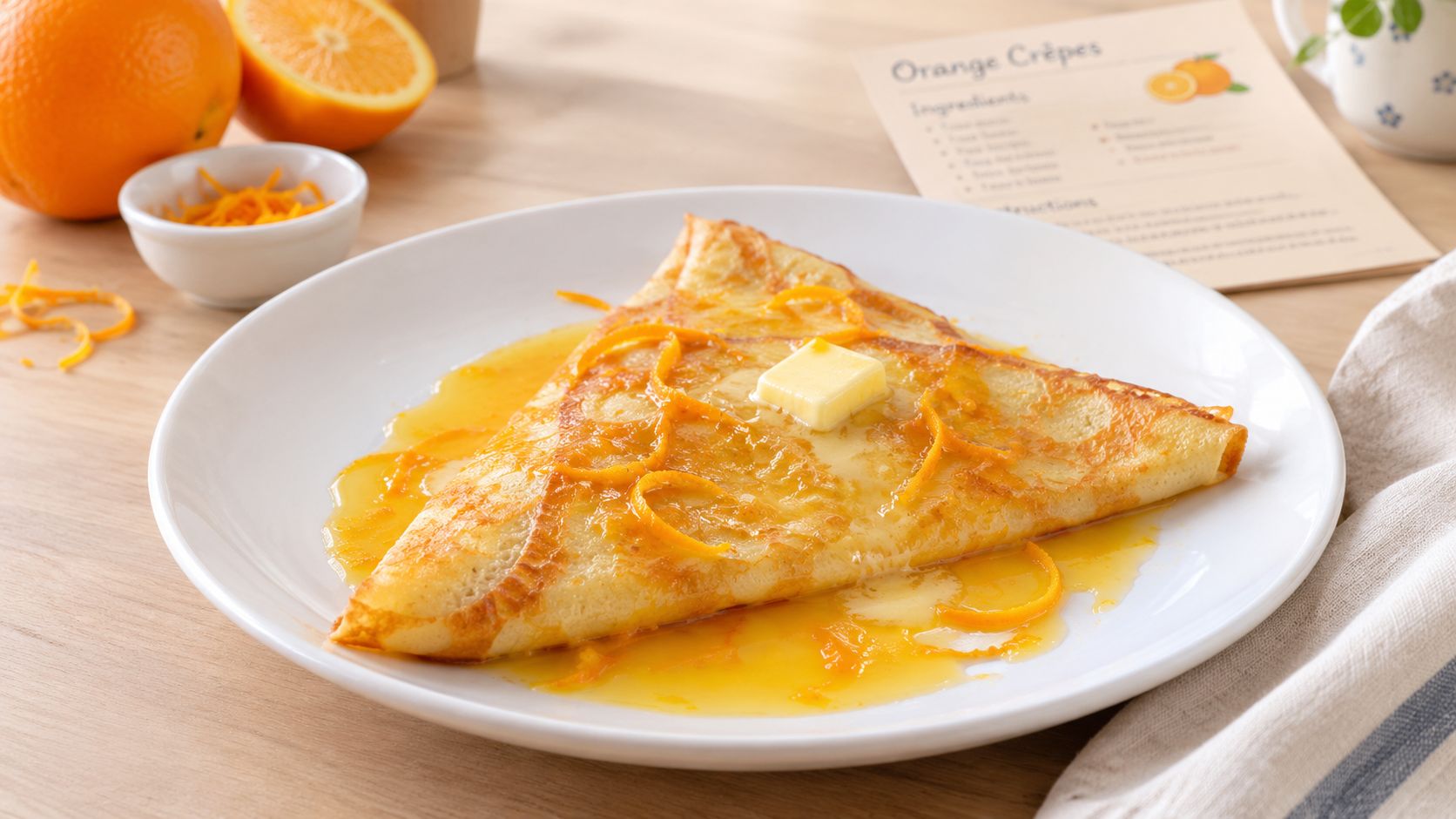
Crêpes Suzette is an excellent first project because children can whisk batter, organize toppings, and practice a small set of useful words while working toward an exciting result. The classic version combines thin crêpes with butter, sugar, and orange sauce, but younger children should leave the hot pan and any flambé technique entirely to an adult.
A kid-friendly approach starts with vocabulary: une crêpe, le beurre, le sucre, and une orange. Have your child name each ingredient before adding it, then narrate simple actions such as mélanger, verser, and retourner. The benefits of children acquiring a second language become more tangible when language is attached to a movement the child is performing.
For the batter, a practical family guide recommends resting it for 20 minutes at room temperature, then cooking in a 25 cm non-stick pan over medium heat. Each crêpe takes about 60 seconds on the first side and 30 seconds after flipping, according to this child-friendly crêpe method. An adult should control the stove, while the child pours, spreads toppings, folds finished crêpes, and describes the result.
Practical rule: Let the child own the preparation and narration. Let the adult own the heat.
Use a “crêpes station” with fruit, yogurt, or a small amount of orange zest. The first crêpe can be a test, not a performance. That reduces frustration and gives your child a natural reason to say, Encore une fois.
2. French Onion Soup for Teaching Patience
French onion soup is less about speed and more about watching ingredients change. Sliced onions soften, darken, and develop a deeper flavor before broth, bread, and melted cheese complete the dish. That makes it a useful project for children who are ready to understand that good cooking sometimes requires waiting.
I recommend it for children around eight and older, with an adult managing the knife, stovetop, and hot bowls. Your child can measure broth, stir onions with close supervision, arrange bread, and add cheese before the final heating step. The main trade-off is clear: the recipe offers rich sensory and language practice, but it isn't a suitable unsupervised after-school activity.
Turn waiting into French practice
Before cooking, build a sensory vocabulary list. Ask your child to describe the onion's smell, the changing color, the bread's texture, and the soup's temperature. Useful prompts include Ça sent comment?, De quelle couleur sont les oignons?, and C'est chaud ou froid?
A child preparing for a French assessment can also write the recipe in French before starting. Keep the writing short and functional. A sequence of verbs, ingredient labels, and observations will usually produce more usable language than copying a long paragraph.
The dish has cultural value without requiring a lecture. Talk about how simple ingredients can become a familiar French comfort food, then let your child lead a pretend restaurant description: une soupe à l'oignon avec du pain et du fromage. This works especially well during a family meal because the child has a finished dish to point to and explain.
For safety, don't let children taste directly from a spoon used near raw ingredients, and don't allow them to carry a steaming bowl. If your family wants to turn the activity into structured speaking practice, pair it with a personalized lesson rather than adding more worksheets to the kitchen.
3. Ratatouille for a Colorful Vegetable Project
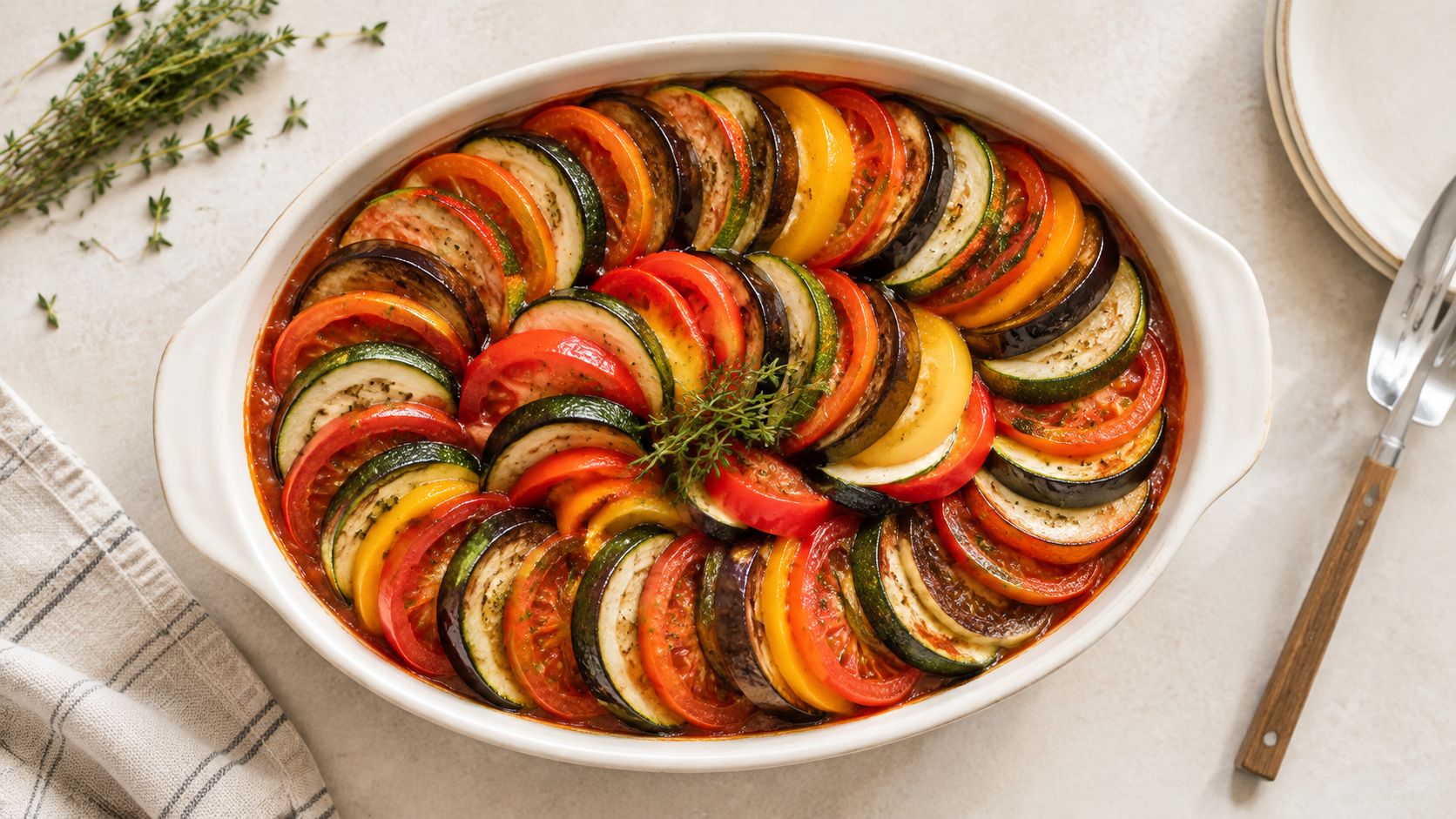
Ratatouille gives younger cooks something valuable, visible ownership. Bowls of tomatoes, zucchini, eggplant, peppers, onions, and herbs create an easy sorting and naming activity before an adult handles the knife and heat. The finished vegetable dish is forgiving, so children can focus on colors, textures, and preferences instead of chasing perfect presentation.
For children around six to eight, I'd assign tasks according to motor skills. A child can wash produce, place pre-cut vegetables into labeled bowls, arrange ingredients by color, and stir only when an adult says the pan is safe. Younger children shouldn't handle sharp knives or move cookware. Older children can practice careful cutting with an adult who stays close.
Make the language concrete
Label the bowls les tomates, les courgettes, les aubergines, and les poivrons. Then add colors such as rouge, vert, violet, and orange. Ask questions that invite opinions: Qu'est-ce que tu préfères? and Aimes-tu les tomates? The child doesn't need advanced grammar to participate meaningfully.
Ratatouille also opens a regional conversation about Provence, seasonal produce, and the way vegetables can form the center of a meal. A “vegetable passport” can record an ingredient's French name, color, texture, and whether the child likes it raw or cooked.
Families adapting meals for dietary needs may find vegetable-based French cooking easier to modify than recipes built around pastry, but the adult should still check every packaged ingredient for allergy concerns. For younger learners, French teaching ideas for preschoolers can help turn ingredient naming and repeated questions into a consistent routine.
4. Pain Perdu as a Quick Confidence Builder
Pain perdu, or “lost bread,” is the most practical choice when your child needs success quickly. Bread, eggs, milk, and cinnamon create a forgiving breakfast activity with limited preparation. Children can whisk, dip, count, and describe the finished toast without taking on complicated pastry technique.
The recipe suits younger children who still need frequent wins, but an adult should supervise the pan and any egg handling. A five-year-old might tear bread, help measure milk, whisk with a stable bowl, and dip slices. A more capable child can monitor a timer while the adult controls the cooking surface.
Repeat the same words every week
Use a laminated French recipe card with short verbs: casser l'œuf, mélanger le lait, tremper le pain, and faire cuire. Ask, Combien de minutes? while the food cooks, then invite descriptions such as c'est sucré, c'est croustillant, or c'est moelleux.
Repetition is the strength of this recipe. A family that makes pain perdu on a regular weekend morning can reuse the same vocabulary while changing one topping or texture. That gives the child a stable language frame without making every cooking session feel identical.
The main limitation is nutritional variety. Pain perdu is best treated as a breakfast or snack activity, not the only French cooking project in the household. Balance it with savory and vegetable recipes, and consider fruit as a topping rather than making the activity entirely about sweetness.
For families building a home library around cooking vocabulary, children's books for French learners can extend the same food words into reading time. The child gets one familiar topic in two settings, the kitchen and the page.
5. Croque Monsieur for Intermediate Learners
Croque Monsieur feels like a real café order, which gives older children a strong reason to speak. Layering bread, ham, cheese, and a topping before grilling teaches assembly, sequence, and visual judgment. It also creates a natural role-play opportunity: the child can describe the sandwich as a server, take a pretend order, and explain ingredient preferences.
This is a good fit for children around eight to twelve who already understand basic kitchen rules. The adult should manage the oven, broiler, or stovetop and handle the hot tray. The child can prepare a visual assembly diagram, count slices, spread ingredients with a blunt utensil, and check whether the cheese has melted only after an adult confirms the dish is safe.
Choose this over pain perdu when
Croque Monsieur is the better choice when your child is ready for a savory meal and needs vocabulary for preferences. Practice avec jambon, sans jambon, avec fromage, sans fromage, grillé, doré, and fondu. These phrases support practical conversations about ordering and describing food.
The sandwich also introduces a useful trade-off. It's more satisfying as a meal and more culturally connected to café food, but it creates greater heat risk than cold assembly recipes. Don't ask a child to carry the finished sandwich or reach into a hot oven just to make the activity feel independent.
Write a short French menu description together, then let your child present it aloud. A New Jersey family, for example, could turn the meal into a monthly “French café day,” with the child preparing the order, greeting family members, and explaining what makes the sandwich croustillant.
6. Quiche Lorraine for Developing Technique
Quiche Lorraine marks the point where children need a staged plan rather than a loose collection of tasks. Eggs, cream, bacon, cheese, and pastry introduce mise en place, filling consistency, pastry handling, and oven management. The dish is rewarding, but it combines several hazards, including raw eggs, sharp tools, hot cookware, and a heavy pan.
I recommend it for children around ten and older, with an adult present from preparation through serving. The child can read the recipe, gather ingredients, measure, prepare labels, and pour the filling. The adult should handle raw meat as appropriate, supervise pastry work, operate the oven, and decide when the quiche has cooled enough to slice.
Use the recipe as a language sequence
Break the session into stages and attach a small vocabulary set to each one:
- Mise en place: préparer, mesurer, couper
- Filling: tempérer, verser, mélanger
- Baking: cuire, surveiller, laisser reposer
A written recipe in French makes the activity useful for reading practice, while bilingual captions for progress photographs create a concrete record of the child's work. Older learners can compare quiche Lorraine, quiche aux épinards, and quiche aux champignons as variations on the same basic structure.
The recipe also rewards honest coaching. Pastry can crack, fillings can spill, and an attractive tart may still need more cooling time than the child expects. French speaking guidance for children can complement the activity when your child needs help turning cooking actions into complete spoken sentences.
7. Macarons for a Serious Pastry Challenge
Macarons belong at the end of the progression, not the beginning. Their shells depend on precision, texture, timing, and careful handling, so the recipe can expose gaps in measuring, patience, and troubleshooting. A child who has already completed several simpler dishes may find the challenge absorbing. A beginner may experience it as an expensive and confusing failure.
For children around twelve and older, choose macarons only when they want a pastry project and can follow a detailed process. An adult should supervise the oven, food processor, piping, hot equipment, and allergy-sensitive ingredients. The child can weigh ingredients with help, observe texture changes, pipe under supervision, keep notes, and analyze the finished shells.
Treat failure as part of the project
The strongest language practice comes from troubleshooting. Build a French vocabulary bank around texture and technique, then ask what happened when shells spread, cracked, or failed to develop the expected finish. The child can write a short journal after each attempt, using phrases such as la pâte est trop liquide, il faut mélanger davantage, or le four est trop chaud.
Macarons also provide a route into French pastry culture. Research Pierre Hermé and Ladurée, compare flavors, and discuss why precision matters in pastry. A family can use a French pastry video as an observation exercise, asking the child to identify equipment and verbs before attempting the recipe.
Plan for repeated practice rather than one dramatic afternoon. The family French cooking kit from Eat2Explore demonstrates how cooking can connect with geography, history, music, art, and language, a useful model for turning a difficult recipe into a broader cultural project.
For a supervised technique discussion, this macaron demonstration can help an older child observe piping, texture, and timing before beginning.
7 Kid-Friendly French Recipes: Skills & Difficulty Comparison
| Recipe | Complexity 🔄 | Resources & Time ⚡ | Expected outcomes ⭐ / Impact 📊 | Ideal use cases 💡 | Key advantages |
|---|---|---|---|---|---|
| Crêpes Suzette | Low, simple steps, beginner flips (🔄) | Low, 5 ingredients; 20 min + 30 min rest (⚡) | High ⭐⭐⭐, ~15+ vocabulary, confidence-building (📊) | Bilingual households, beginner immersion projects | High success rate; multisensory and customizable |
| French Onion Soup | Moderate, slow technique, careful caramelization (🔄🔄) | Moderate, few ingredients; 15 min prep + 45+ min cook (⚡) | Very High ⭐⭐⭐⭐, extended conversational practice (📊) | Ages 8+; DELF prep; cultural projects | Teaches patience, deep cultural context, sustained French dialogue |
| Ratatouille | Low-Moderate, many components but forgiving (🔄) | Moderate, 6–8 vegetables; 20 min prep + 45 min cook (⚡) | High ⭐⭐⭐, color & veg vocabulary; visual learning (📊) | Ages 6–8; early learners; school showcases | Flexible ingredients; low technical risk; healthy focus |
| Pain Perdu (French Toast) | Very Low, basic coating and pan work (🔄) | Very Low, common pantry items; 5 min prep, 10 min cook (⚡) | Moderate-High ⭐⭐⭐, routine vocabulary, sensory descriptors (📊) | Ages 5–7; quick confidence-building; busy families | Fast wins; near‑100% success; great for repetition |
| Croque Monsieur | Moderate, assembly and stovetop timing (🔄🔄) | Low-Moderate, common ingredients; 10 min prep, 10 min cook (⚡) | High ⭐⭐⭐, intermediate vocabulary; practical scenarios (📊) | Ages 8–12; intermediate learners; café roleplay | Teaches assembly and ordering language; culturally authentic |
| Quiche Lorraine | High, pastry, tempering, oven management (🔄🔄🔄) | Moderate-High, pastry work; 30 min prep + 30 min cook (⚡) | Very High ⭐⭐⭐⭐, advanced technique vocabulary (📊) | Ages 10+; DELF B1 prep; advanced culinary lessons | Develops precision, mise en place, and technical French terms |
| Macarons | Very High, precision, troubleshooting, expert timing (🔄🔄🔄🔄) | High, specialty ingredients, multi‑attempts, aging (⚡) | Exceptional ⭐⭐⭐⭐⭐, advanced vocabulary, chemistry & persistence (📊) | Ages 12+; capstone projects; DELF B2 or advanced pastry study | Teaches mastery, resilience, and professional pastry language |
Turn One Recipe Into a Repeatable French Practice
The right choice depends less on whether a recipe looks impressive and more on whether your child can participate safely and speak during the process. Pain perdu works well for a quick recurring routine. Ratatouille is a strong option when you want vegetables, colors, and flexible participation. Crêpes build confidence, but the adult must control the pan. Croque Monsieur, soup, and quiche suit children who can follow sequences and accept closer supervision. Macarons are a capstone for experienced young cooks, not a first lesson.
Family cooking also needs to fit real schedules. ANSES reports that children aged 0 to 10 consume about 1.6 kg of food and beverages per day, while people in France overall consume roughly 2.9 kg daily, or around 2,200 kcal. The same material says cereal products, dairy, meat, fish, eggs, and fruits and vegetables provide about 55% of total energy intake, a useful reminder that child-friendly French cooking can center familiar staples rather than desserts alone. See the ANSES-related overview of French cuisine and eating habits for that context.
Home cooking remains an opportunity. Homemade foods account for 22% of foods consumed by children aged 0 to 17, compared with 48% for adults aged 65 to 79, according to the same source. Families don't need elaborate projects every week. A short, repeatable recipe with a few spoken phrases can do more for confidence than an ambitious dish that never gets made again.
Use the same four-part routine each time:
- Name ingredients: Point, identify, and repeat the French words.
- Narrate steps: Say the action before performing it.
- Describe the dish: Use color, texture, temperature, and taste.
- Reflect afterward: Ask what changed and what your child would adjust.
Children who help prepare a snack or meal are more likely to try it, and about 29% of children make their own dinner at times, according to family cooking guidance from North Dakota State University. That supports a practical progression based on participation, not forced tasting. Since only about one-third of families eat together at least once a day, a short cooking routine can also create a manageable point of connection when a full family meal isn't realistic.
Choose one recipe, set a predictable French speaking routine, and repeat it until your child can lead more of the process safely. For personalized support with children's or teen French lessons, explore Elite French Tutoring's customized programs or schedule the free 20-minute consultation to discuss your child's goals, current level, and learning style.