Skip to content

Your teenager has sat through years of school French, can probably conjugate a few verbs on paper, and still freezes the moment someone asks a real question. That's the problem parents keep running into, the child has “done French” for years, but can't use it. If that sounds familiar, you don't need a gentler worksheet, you need a smarter plan.
I've watched hundreds of teens hit the same wall. They're not lazy, and they're not bad at languages. They're stuck in a setup that rewards quiet compliance, not speaking, confidence, or exam readiness. The right French for teenagers plan has to match how teens learn, crowded schedules, school pressure, and a need to see progress fast enough to care.
Table of Contents
- Why French Lessons for Teenagers Need a Different Approach
- How French Learning Progresses for Teenagers by Age and Level
- Comparing the Main French Options for Teenagers
- Lesson Formats That Keep Teenagers Engaged
- A Teenage French Learner's Real Journey from Reluctant to Confident
- How Parents Can Choose the Right Personalized French Tutor
- Finding the Right French Program for Your Teen This Year
Why French Lessons for Teenagers Need a Different Approach
A parent watches a 14-year-old stare at a grammar worksheet after three years of school French, then freeze when asked to speak. The words are there on the page, but nothing comes out. That usually happens because the lesson method does not match how teenagers learn.
Teenagers do not need a watered-down adult course. They need lessons built around real speaking, clear relevance, and quick visible wins. Adult-style French often spends too long on translation, slow grammar explanation, and passive note-taking. Teens lose interest fast when the class gives them little interaction and no reason to care about the sentence in front of them.
The three things that usually break teen progress
The first problem is too little speaking time. In crowded classrooms, a teen may only produce a few full sentences in a lesson, which is nowhere near enough repetition to build confidence. The second problem is exam pressure, especially for families aiming at school tests or DELF Junior, which is built for teenagers aged 12 to 18 and offered at A1, A2, B1, and B2 levels (AF Hong Kong on DELF Junior). The third problem is time. Teenagers are already balancing homework, sport, clubs, travel, and family obligations, so a slow, unfocused program loses momentum fast.
Practical rule: if a teen is not speaking in most lessons, they are paying for exposure, not progress.
Parents need to judge school classes, group tutoring, and private tutoring by that standard. School French usually gives structure, but it often leaves speaking practice thin. Group lessons can help with confidence and peer pressure, yet they still spread attention across several students. Private tutoring gives the cleanest path when a teen has gaps, exam goals, or a packed timetable, because the lesson can focus on the exact weak points that keep blocking progress.
That is also why the method matters. A serious lesson structure should put the teen in active use of French early and often, not leave them waiting for grammar to become useful later. If the current setup is not improving speaking or test performance, change it. Keep reading our French tutoring methodology to judge what a serious lesson structure should look like.
How French Learning Progresses for Teenagers by Age and Level
Teen French works best when you stop guessing and start mapping goals to level. The CEFR scale gives you a practical benchmark, and the hours matter too. Independent sources estimate roughly 80 to 100 hours for A1, 180 to 200 for A2, 350 to 400 for B1, and 500 to 600 for B2 (CCFS Sorbonne on French language levels). For a teen studying 2 to 3 hours a week, that means steady progress, not a quick sprint.
What each age band should really aim for
For 11 to 13-year-olds, I want A1 to low A2. The priorities are pronunciation, basic conversation, and short reading that feels fun, not childish. Comics, song lyrics, and short dialogues work because they build listening confidence before bad habits harden. At home, you should hear short answers becoming longer, and you should notice less hesitation when they greet people or ask for simple things.
For 14 to 16-year-olds, I push toward solid A2 to B1. This is the phase for past tenses, opinion writing, and exam technique. If your teen can talk about their day, explain a preference, and answer follow-up questions without panicking, they're on track. That's also the right time to start shaping lessons around school assessments or DELF Junior.
For 17 to 19-year-olds, the target is usually B1 to B2, especially if they're heading toward university, IB French, or a move abroad. They need argument essays, authentic media, and discussion that forces them to defend an opinion. A teen at this stage should be able to handle class topics, media clips, and more complex classroom tasks without translating every sentence in their head.
Home milestone to watch for: when your teen starts self-correcting out loud, the language is no longer just stored knowledge. It's becoming usable speech.
| Age Group | CEFR Target | Core Objectives | Weekly Study | Home Milestones |
|---|---|---|---|---|
| 11 to 13 | A1 to low A2 | Pronunciation, basic conversation, short reading | 2 to 3 hours | Short answers, clearer accent, more listening confidence |
| 14 to 16 | A2 to B1 | Past tenses, opinion writing, exam technique | 2 to 3 hours | Can explain choices, handle simple debates, survive oral questions |
| 17 to 19 | B1 to B2 | Essays, authentic media, discussion fluency | 3 hours or more | Can argue a point, summarize content, speak with less hesitation |
If you're comparing tutoring models against level targets, the guide to CEFR levels for French proficiency is the right place to sanity-check where your teen is, and where they need to go.
Comparing the Main French Options for Teenagers
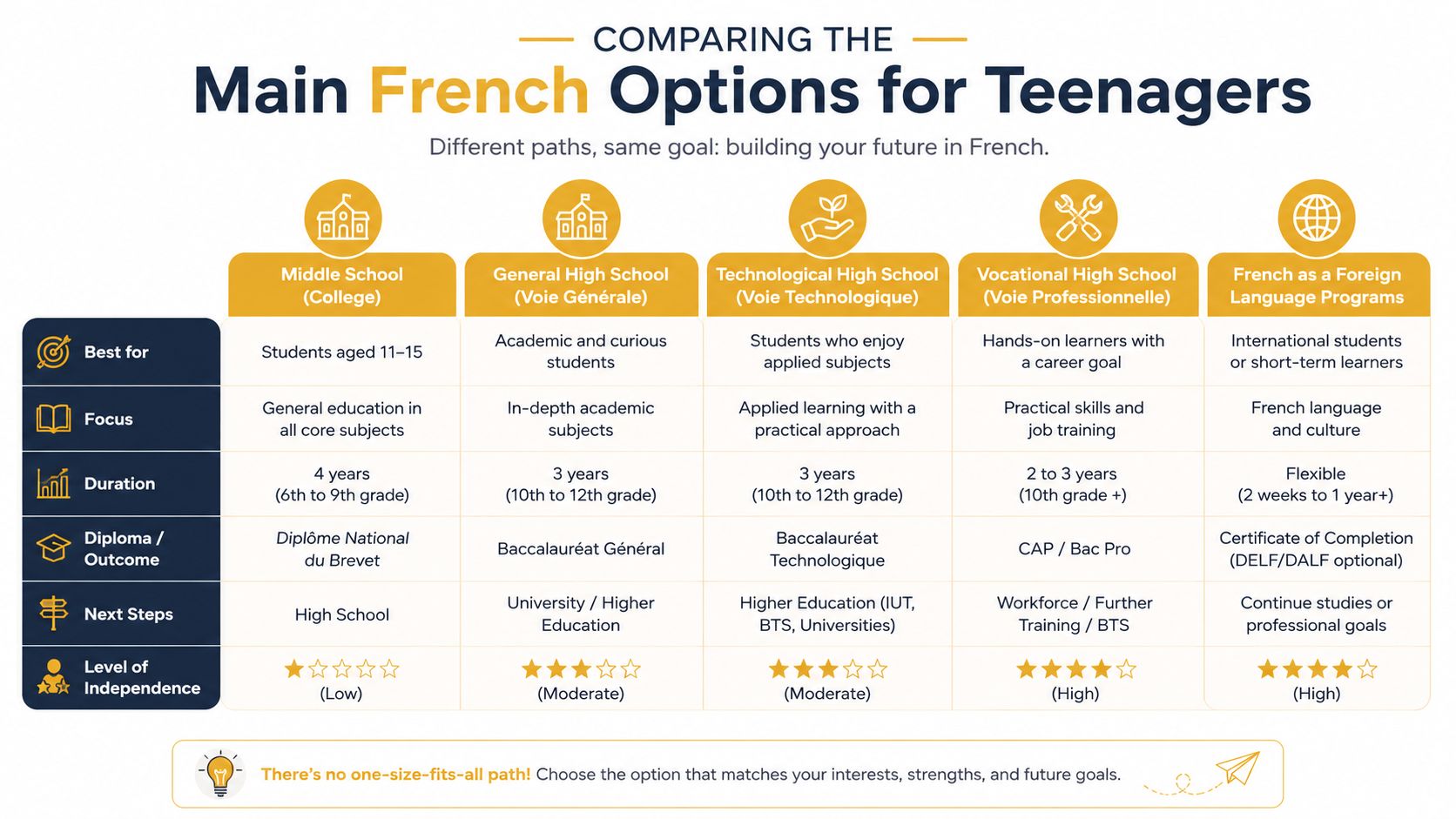
A parent usually asks me which option is best. The better question is which gap your teen is facing right now. If the problem is weak grades, school support matters. If the problem is frozen speaking, a classroom alone will not fix it. If the problem is a packed week, flexibility becomes the deciding factor.
| Option | What It Does Well | Where It Falls Short | Best For |
|---|---|---|---|
| School French | Gives structure, grades, and curriculum continuity | Conversation time is often limited, and pacing is fixed | Teens who need syllabus support and exam alignment |
| Group Classes | Adds peer energy and a lower-pressure social setting | The class moves at the pace of the group, not the teen | Motivated learners who need routine and community |
| Online Platforms | Offers flexibility and easy practice access | Feedback is thin, and speaking accountability is weak | Teens who need lightweight daily exposure |
| Private Tutoring | Adapts to goals, level, and weak spots | Costs more per hour | Teens who need exam prep, confidence, or fast correction |
School French is the backbone for many teens, but it rarely gives enough speaking time to break hesitation. Group classes help motivation, and they can be a good fit for teens who need peers around them. The downside is pace, because the class still moves as a group. Online platforms keep French in front of a teen between lessons, but they do not correct mistakes in the moment.
Private tutoring fills the gaps left by the other formats. It works best when the teen needs targeted speaking practice, sharper exam preparation, or fast correction on recurring errors. If you want a clear framework for evaluating online choices, how to find the best online French classes for kids, teens, and adults gives a useful checklist for what matters.
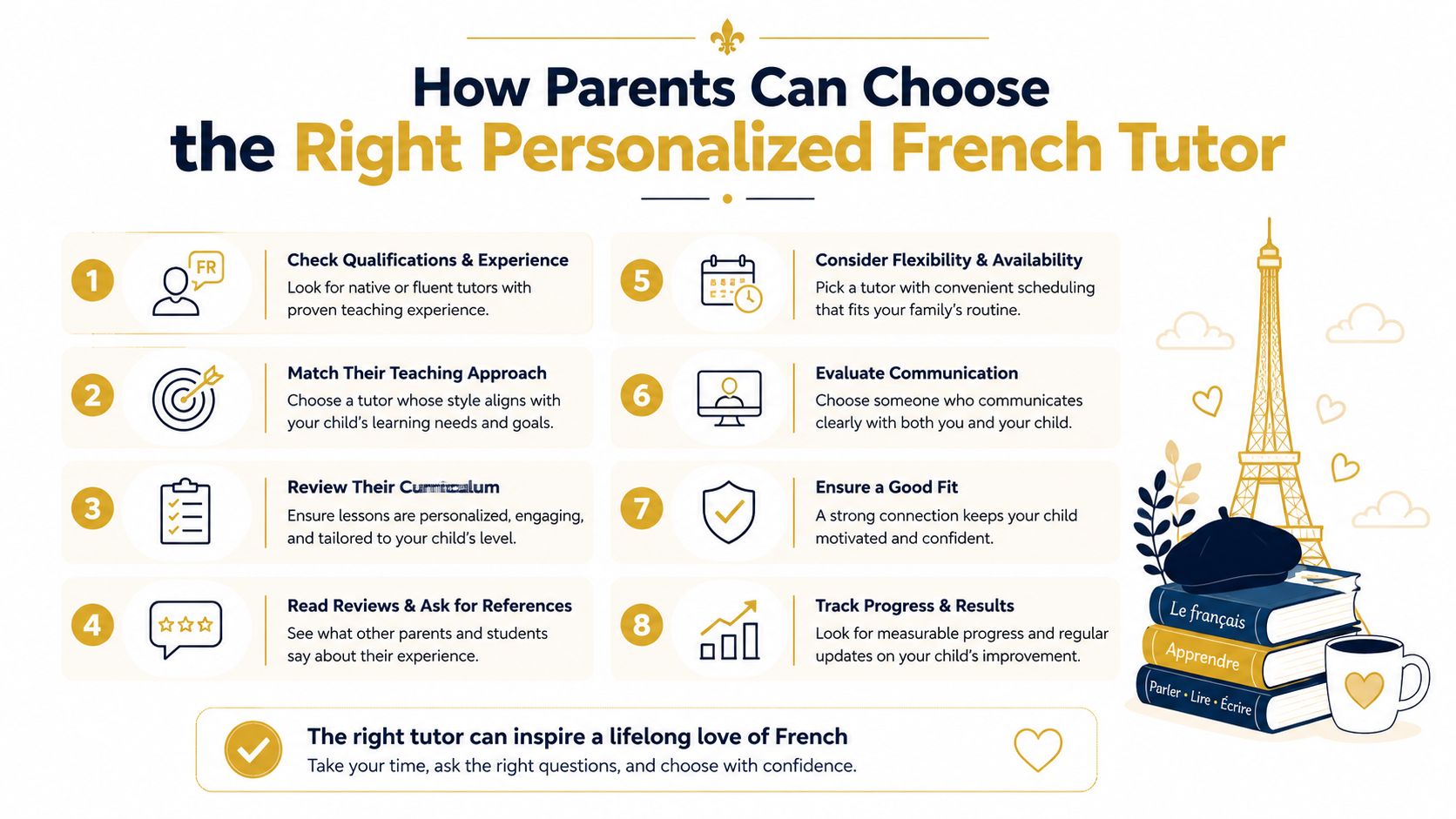
Families also choose tutoring for a very practical reason. The Institut français youth study points to lack of real-life practice, course cost, and poor prior school experience as major barriers. That matches what I see every week. Teens do not need more French theory. They need a place to speak, get corrected, and try again without embarrassment.
If school is already carrying the exam load, use tutoring to build oral confidence. If group classes keep your teen engaged but not accurate, add focused one-to-one work. If your teen needs structure and flexibility, combine school with online practice, then add tutoring when progress stalls. The right setup is the one that fixes the weak point, not the one with the nicest label.
Lesson Formats That Keep Teenagers Engaged
Teenagers stay engaged when the lesson feels active, not ceremonial. I do not stick to one format for long, because no single activity fixes every weakness. Strong programs rotate speaking, listening, pronunciation, and exam work so the teen never feels trapped in one lane.
The four formats I keep coming back to
Timed conversation drills are the fastest way to break hesitation. I use short prompts that force a teen to answer before they overthink, because spontaneous replies show what they can use on the spot. These drills are not about perfect grammar. They are about getting a sentence out without freezing.
Media-based immersion works because teens care more when the content feels current. French TV clips, music, and short transcripts give them language with rhythm, slang, and context. I scaffold the harder parts so they can follow the meaning without drowning in every unknown word.
Shadowing exercises are underrated and extremely effective for pronunciation. In one classroom study of 19 fourth-year high school French students, video-based shadowing and tracking exercises used three times per week over a semester improved read-aloud and oral free-response performance, with the strongest gains on read-aloud accuracy (Wiley study). I use shadowing because teens hear the sound, copy the sound, then notice where their mouth and ear disagree.
Structured exam prep matters when the teen has a fixed target, like school tests or DELF Junior. I build this around the four exam skills, listening, reading, writing, and speaking, because the exam itself evaluates all four and candidates must take the full exam, not split it up (Alliance Française Canada on DELF Junior).
The best weekly rhythm mixes pressure, recovery, and a clear target for the next session.
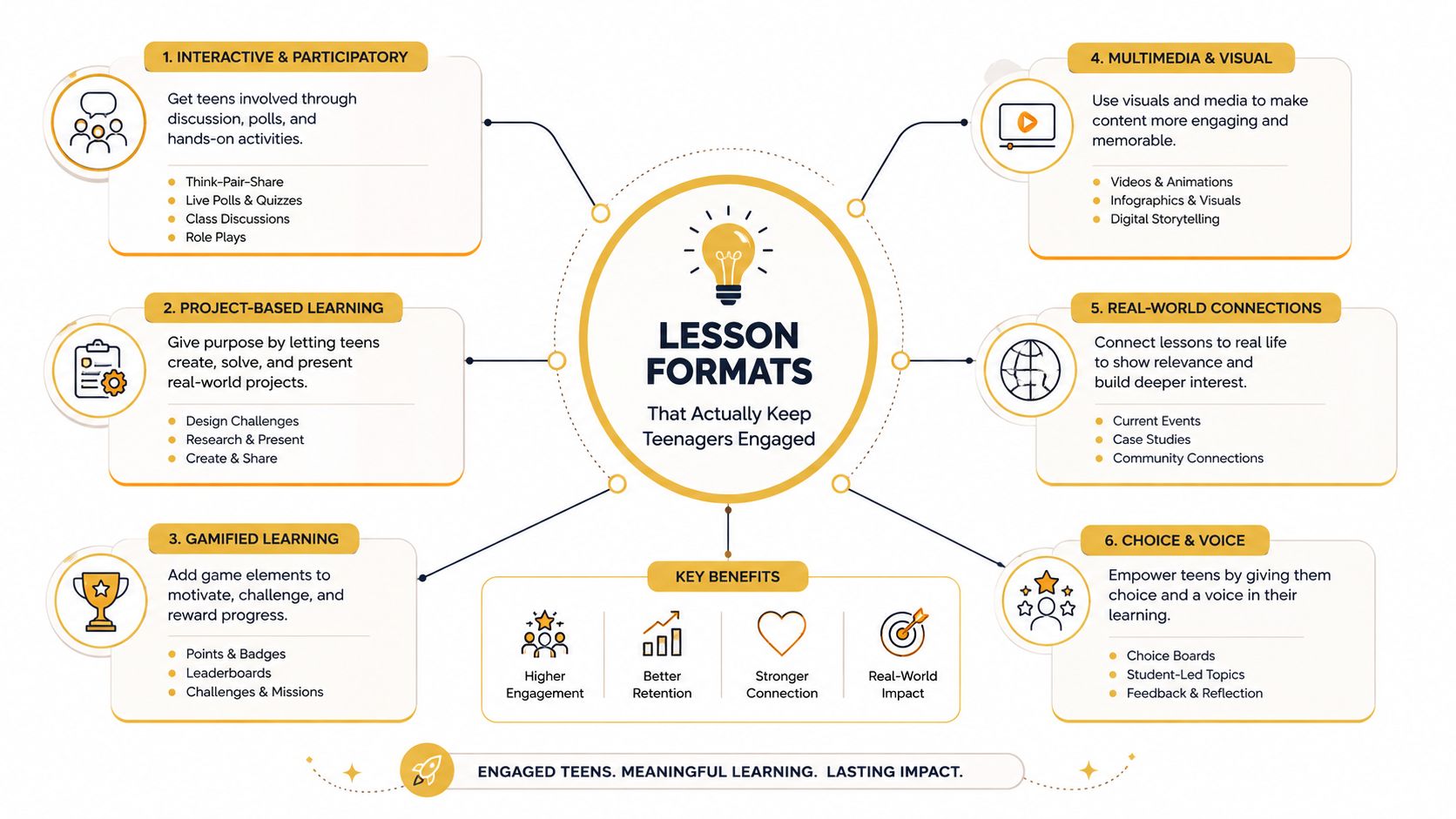
For balance, I would rather see a teen spend a week with one real conversation session, one pronunciation-focused segment, and one media or exam session than churn through endless worksheets. That mix keeps confidence rising while still respecting how busy the school week already is. If you are comparing speaking options, our page on French conversation practice online gives a clear view of what online practice can do.
A Teenage French Learner's Real Journey from Reluctant to Confident
Maya was 14 when she came to us. She had done two years of school French and still couldn't string together a sentence without pausing after every second word. Her mother said she could recognize vocabulary on a worksheet, but speaking made her go silent. That was the core issue, not grammar knowledge.
What changed first
We started with short conversation drills and French music transcripts. Maya liked music, so I used that to pull her into the language instead of pushing her through it. The first term was messy, because she still guessed at endings and mixed up basic structures, but she finally began answering without translating every word in her head.
Mid-year, she hit the usual wall. The closer the DELF Junior A2 mock became, the more her grammar anxiety rose, and she began second-guessing simple sentences she had already learned. I didn't let her retreat into passive study. We kept the oral work steady, tightened the corrections, and used exam-style practice to show her that she could handle pressure even when she didn't feel ready.
By summer, everything clicked during a short exchange in Lyon. She ordered meals without rehearsing them beforehand, asked for directions, and even argued about football with another teen in French. That shift mattered because it proved the language wasn't just something she could do in lessons. It was something she could use when the moment demanded it.
Her mother told me the breakthrough wasn't one dramatic session. It was the accumulation of moments where Maya stopped expecting perfection before speaking. That's exactly how teen confidence grows, slowly, then all at once.
How Parents Can Choose the Right Personalized French Tutor
A good tutor for a teenager is not just fluent in French. They need to understand teen pacing, school pressure, and the difference between a confident guess and a real weakness. If a tutor can't tell you how they'll handle your child's speaking anxiety, syllabus overlap, and exam deadline, keep looking.
What to verify before you book
Start with credentials and fit. I want to know whether the tutor is a native speaker or highly fluent, whether they have teaching experience, and whether they've worked with the teen's level before. Then I want a consultation about the school syllabus, exam timeline, and the exact weak points, because one teen needs oral fluency and another needs writing control.
Ask how lessons are structured. A serious tutor should be able to explain the balance between speaking, correction, homework, and review. If the answer is vague, the lessons will be vague too.
Check for red flags early:
- Overpromising quick fixes: A tutor who guarantees fast fluency is selling fantasy, not teaching.
- Generic worksheets only: If every lesson looks the same, your teen will plateau.
- No measurable checkpoint: You need a benchmark at around 8 to 12 weeks so progress is visible, not assumed.
- Ignoring the school syllabus: If your teen has an oral assessment coming, the tutor should be working toward that.
For families who want a customized route, Elite French Tutoring offers private French lessons for children and teenagers with native, expert instructors, including online sessions and a free 20-minute consultation to assess level, goals, and learning style.
My rule for consultations: if the tutor doesn't leave the call with a plan for the first month, you didn't get a consultation, you got a sales pitch.
You're not just buying lessons. You're buying structure, accountability, and a better chance that your teen speaks French in the next term.
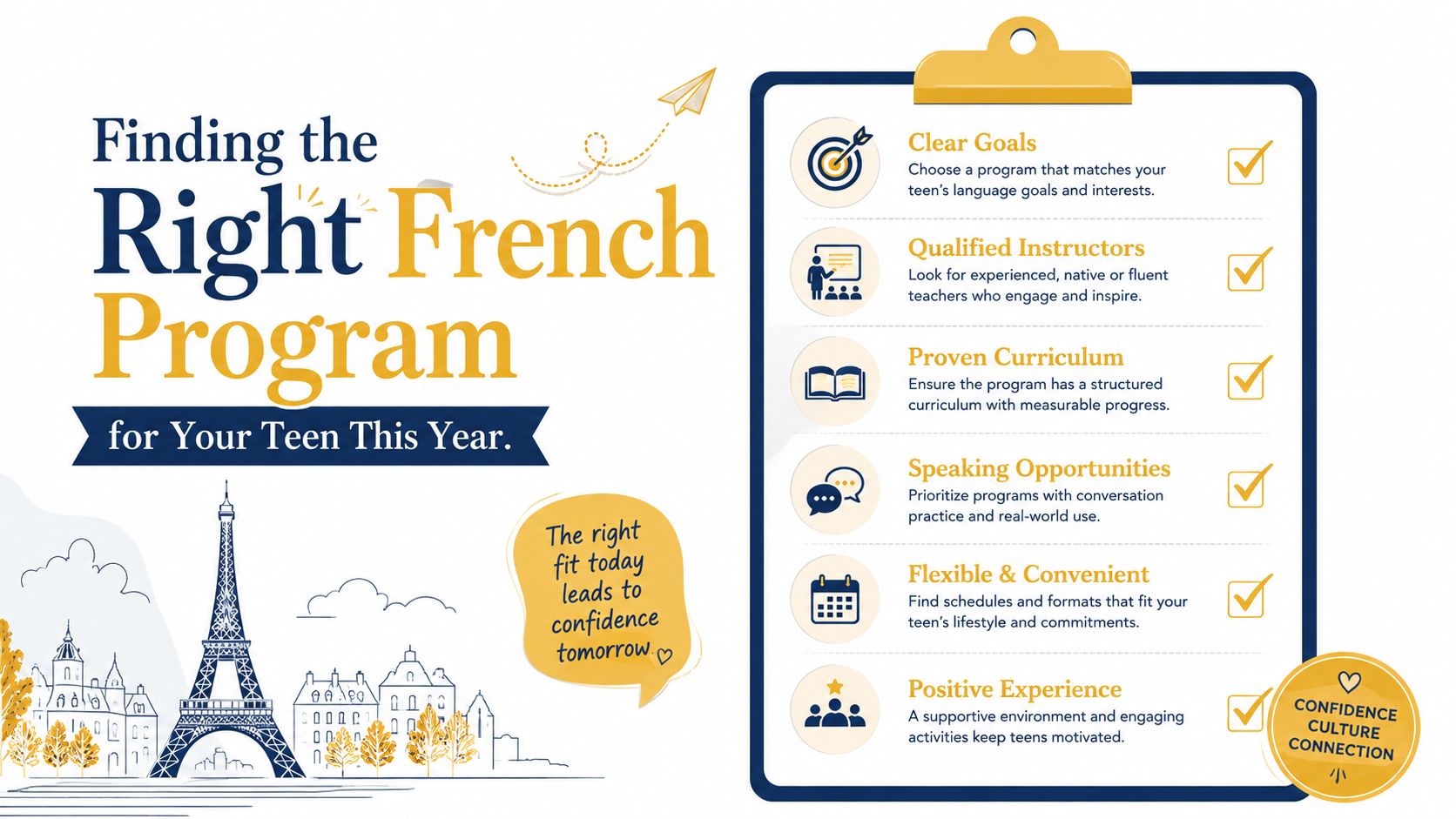
Finding the Right French Program for Your Teen This Year
If your teen is plateauing in school, asking for native French content, or aiming at DELF Junior, the time to act is this term, not “sometime soon.” Waiting usually means paying for another cycle of worksheets, low confidence, and last-minute exam panic. I'd rather see parents make one clear decision now than three half-decisions later.
My three-step decision path
First, clarify the goal. Decide whether your teen needs school support, speaking confidence, or exam preparation. Don't try to fix every issue at once.
Second, audit the current setup. If school French is already covering grammar but not speaking, don't add more of the same. If your teen is already reading at a stronger level, stop feeding them beginner apps that don't match where they are.
Third, book a trial lesson with two or three tutors. That comparison will tell you more than any marketing page. You'll hear how each tutor handles correction, how they pace the session, and whether your teen relaxes enough to speak.
The most common mistake I see is over-investing in a beginner-friendly app when the teen needs conversation, exam strategy, or higher-level reading practice. The second mistake is assuming motivation will return on its own. It usually doesn't. It returns when the teen feels progress in class and at home.
If you want the lowest-risk next step, book a consultation with a tutor whose lesson style fits your teen's level and goals. A short trial is usually enough to tell you whether the match is right, and that's a much better decision than guessing for another school term.