You're trying to pick one best book French Revolution title, but the problem is sharper than that. You don't just need a famous book, you need the right one for your goal, whether that's sounding informed before a Paris posting, preparing for a French exam, or building the kind of cultural fluency that makes French conversations feel less intimidating. I read French history with students for exactly this reason, and I've learned that the “best” choice changes completely depending on whether you want narrative, analysis, biography, or a broader view of how the Revolution still shapes French identity.
Table of Contents
- 1. A Tale of Two Cities by Charles Dickens
- 2. The French Revolution A History by Simon Schama
- 3. Marie Antoinette The Journey by Antonia Fraser
- 4. The Oxford History of the French Revolution by William Doyle
- 5. All the Light We Cannot See by Anthony Doerr
- 6. The Coming of the French Revolution by Georges Lefebvre
- 7. A History of the French Revolution 1774-1814 by Thomas Carlyle
- 8. The French Revolution in a Global Context by David Armitage and Sanjay Subrahmanyam
- 9. The Revolutionary Calendar
- 10. French Revolution-Themed Documentary Collections
- Top 10 French Revolution Books, Quick Comparison
- Turn Reading Into Fluency Your Next Steps
1. A Tale of Two Cities by Charles Dickens
If you want one book that makes the Terror feel human instead of abstract, start here. Dickens gives you emotion, pace, and unforgettable characters, and that combination is why I often recommend it first to readers who want a strong cultural entry point without jumping straight into academic history. It also works beautifully for language learners, because the novel gives you a rich sense of period expression, moral vocabulary, and the contrast between English and French political imagination.
Practical rule: read this with a notebook open for words tied to justice, sacrifice, fear, and public anger. Those themes come up constantly in French cultural conversation, and they're easy to recycle in speaking practice.
A Manhattan attorney I tutored used this novel before her firm's Paris expansion, and she told me it gave her a way to talk about French legal philosophy with much more confidence. I've seen the same effect with parents preparing teens for Lycée Français work, because the book makes themes from the French Revolution feel memorable rather than dry.
If you want to pair it with structured learning, I'd link it to a guided literature program like Elite French Tutoring's online French literature courses. That is the fastest way to turn a classic into useful speaking material.
Why it works for learners
- Accessible entry point: You can follow the story without already knowing the full chronology of 1789.
- Strong conversation fuel: The themes are easy to discuss in English first, then in French.
- Good bridge text: It helps you move from story-based reading to historical analysis.
One more reason I keep this on my shortlist, it gives you emotional vocabulary you can use in meetings, interviews, and tutoring sessions.
2. The French Revolution A History by Simon Schama
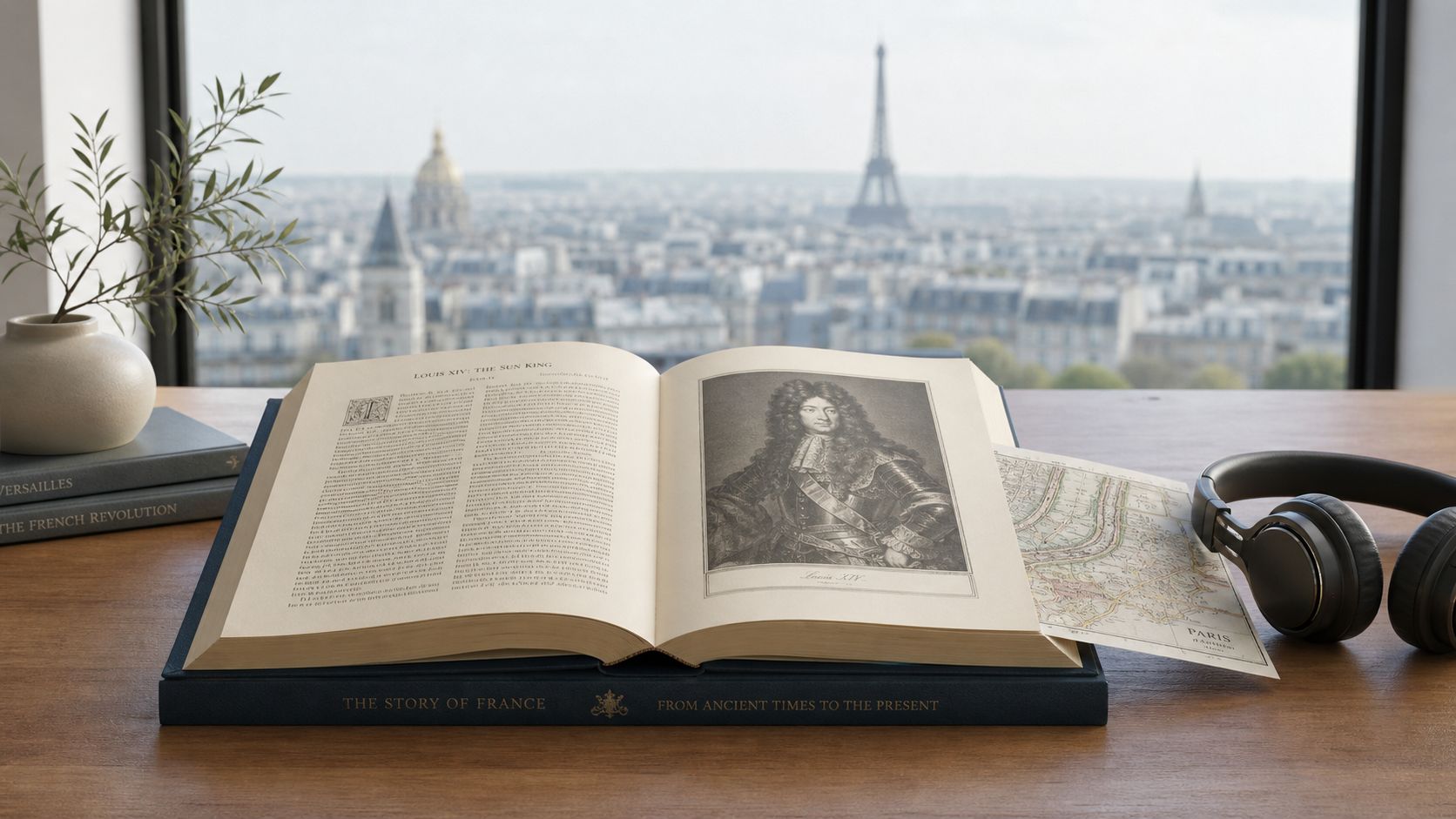
Schama is the book I point serious learners to when they want a sweeping, intellectually confident account of the Revolution. The full version is substantial, and that's exactly why it earns a place on a best book French Revolution list for professionals and ambitious students. It doesn't flatten the Revolution into a simple moral story, it gives you layered narrative, social texture, and enough historical movement to sound grounded in advanced discussion.
Full reading or audio
For busy professionals, the abridged audio edition is the practical choice. It's a smart way to absorb Schama's major themes while commuting or fitting listening into a packed week, and it suits executives who want cultural seriousness without abandoning their schedule. When I work with clients heading into senior French-facing roles, I like this option because it keeps the historical frame broad enough for real conversation, not just memorized facts.
A UN diplomat I worked with used Schama's analysis to prepare for negotiations with French colleagues, and the difference showed in how naturally he could reference historical figures and French Revolution tension. A Manhattan District Attorney later used the abridged audio on her commute, then brought the ideas into tutoring conversations with far more confidence.
Listen once for the argument, then listen again for the names and tensions. French conversation gets easier when the Revolution feels like a map, not a pile of dates.
Pairing this with conversation lessons is ideal, especially if your goal is to discuss French politics, memory, and values without sounding superficial. I'd also use it alongside targeted speaking practice so the ideas don't stay trapped on the page.
3. Marie Antoinette The Journey by Antonia Fraser
Fraser is the right pick if you want the Revolution seen through a human, political, and surprisingly nuanced lens. Marie Antoinette is often reduced to a caricature, but this biography pushes you to see her as a woman operating under severe constraint. That matters for readers who want cultural sophistication, because French historical discussion often turns on exactly this kind of interpretive nuance.
The book also helps learners avoid the oversimplified “heroes and villains” framing that can derail conversations with French colleagues. I've watched clients become much better listeners after reading it, because they stop assuming that monarchy, gender, and public image can be explained in one blunt sentence.
Best use case
Read this after you already know the basic timeline. It's best when you want to deepen, not replace, your foundational knowledge of the period.
- For teens in bilingual schools: It sharpens essay writing by giving them a richer view of leadership and gender.
- For executives: It improves cultural judgment when French colleagues refer to monarchy, symbolism, or public authority.
- For language learners: It gives you specific vocabulary around court politics, reputation, and biography.
A mother preparing her daughter for Lycée Français told me this book changed how her teen approached essays. A corporate client said it transformed her understanding of French attitudes toward leadership and femininity.
If you want to widen the cultural angle even further, I've also found it useful to keep reading alongside Elite French Tutoring's French culture blog, especially when you're trying to compare English and French narratives of the same historical figure.
4. The Oxford History of the French Revolution by William Doyle
I reach for this one when I want the serious version of the French Revolution. Doyle is the scholarly pick, and I recommend it to advanced learners who want precision over drama. If you are preparing for DELF or DALF, this is the kind of book that rewards disciplined note-taking, careful reading, and a sharp memory for structure.
What makes it so useful for professionals is the way it matches how educated French readers often talk about the Revolution. Doyle focuses on causes, consequences, and long-term significance, so you learn to speak about history with more control and less theatrics. That matters if you are preparing for academic work, policy discussion, or any French setting where historical literacy shapes the conversation.
A law school professor getting ready for a Paris sabbatical used this volume to align her lectures with French scholarship. A student preparing for DALF certification studied it systematically and wrote essays that were far more analytical than before.
How to study it well
- Take section-by-section notes: This is not a book to skim.
- Track causal arguments: Doyle rewards readers who follow the logic of change.
- Discuss each major section in French: That is where the language gains really appear.
- Cross-reference with a more narrative book: Schama works well alongside it.
I hand this book to readers who tell me, “I want the serious version.” It gives them exactly that, and it does it with discipline and clarity.
5. All the Light We Cannot See by Anthony Doerr
Doerr isn't a Revolution book in the direct sense, and that's exactly why I include it. If you want to understand France as a living historical identity, not just a Revolution event frozen in the past, this novel gives you a post-Revolution frame shaped by war, memory, and resilience. It shows how later trauma interacts with older ideals, which is useful for readers trying to understand modern French self-image.
The setting in Nazi-occupied France makes the cultural background feel immediate. For learners, that matters because it connects broad historical memory to tangible human choices, place, and national feeling. I often suggest it to clients who need a broader picture of France before relocation or long-term work assignments.
A diplomat preparing for a French post told me this novel deepened her understanding of French resilience and national pride. Parents have also told me it helps them talk about French history with children in a way that goes beyond textbook chronology.
Best reading approach
Read this after you already have a basic historical map in place. Then use it to talk about identity, wartime memory, and cultural continuity during advanced conversation lessons. The audiobook is also a strong choice if you want listening practice with a story that's emotionally engaging enough to keep you moving.
This is the sort of book that helps French discussion sound less memorized and more human.
6. The Coming of the French Revolution by Georges Lefebvre
Lefebvre is foundational. If you want to understand the Revolution as a historical process shaped by economic crisis, class structure, and intellectual change, this is one of the most important books you can read. It's not light reading, but it's rewarding, especially if your goal is to speak and write about the Revolution in a way that French academics would respect.
I recommend it to advanced students and professionals who need more than a narrative summary. If you're preparing for work with French government agencies or academic circles, Lefebvre helps you understand the assumptions sitting underneath a lot of French historical conversation.
A graduate student preparing for a semester abroad in Paris told me this book reframed French political discourse for her. A professional working with French government agencies found it essential for understanding the logic behind policy thinking.
Practical rule: read Lefebvre after you've already built a story-based foundation. His arguments land much better when you can place them on an existing timeline.
Take notes on every causal claim, then explain them back in French. That single habit can turn a dense history book into a speaking tool. It's also where your vocabulary gets sharper, because you're forced to move beyond general adjectives and into precise historical language.
7. A History of the French Revolution 1774-1814 by Thomas Carlyle
Carlyle belongs on this list for a different reason. It's not the most accurate guide to the Revolution, but it's one of the best windows into how English-speaking culture historically imagined it. If you care about comparative reading, literary style, or the history of interpretation, it has real value.
The prose is ornate and unmistakably Victorian. That makes it useful for readers who want to understand not just the Revolution itself, but also the older Anglo habit of mythologizing it through personality and drama. I wouldn't hand this to someone looking for a clean modern overview, but I absolutely would recommend it to readers who want cultural literacy with a literary edge.
A literature professor used Carlyle to teach 19th-century portrayals of major upheaval. A cultural historian used it to trace the divergence between English and French narratives.
Use it this way
Read it after you know the basic facts of the Revolution. Then treat it as an interpretation, not a fact sheet.
- Watch for bias: Carlyle is revealing even when he's wrong.
- Compare with French historians: That contrast is where the insight lives.
- Use it for literary discussion: The prose itself is part of the lesson.
If your real goal is to understand why English-language culture talked about the Revolution the way it did, this book still earns its place.
8. The French Revolution in a Global Context by David Armitage and Sanjay Subrahmanyam
If you want to understand the French Revolution as more than a Paris story, this is the book I put in your hands. It shows how the Revolution's ideas, conflicts, and consequences moved across the Americas, the Caribbean, Asia, and other regions, and that wider frame matters for diplomats, international professionals, and anyone whose work crosses borders. I recommend it because it trains you to see the Revolution the way a serious French reader should, as part of a larger global conversation, not an isolated national event.
I also value the format. Because this is an edited collection, you can read essay by essay instead of pushing through one long argument, which makes it easier to match the book to your own purpose. If your interest is tied to a specific region, a policy question, or a professional assignment, that flexibility saves time and gives you sharper historical insight.
An international relations professional used this book before postings in France and French-speaking Africa. A CEO managing French and Latin American operations found it useful for understanding how history still shapes regional relationships.
How to get the most from it
Start with the introduction, then choose essays that match your work or curiosity. If you are discussing the Revolution in French lessons, this book gives you more than stock talking points, because you can speak about empire, transfer, and comparison with real precision.
It also helps your French sound more informed in professional settings. When you can connect the French Revolution to global change instead of treating it as a purely national story, your comments carry more weight, and your vocabulary becomes more exact. For a language-focused pairing, I like using this book alongside French language movies for historical and cultural context, because the two together build both cultural range and practical speaking material.
9. The Revolutionary Calendar
A focused study of the Revolutionary calendar is one of the smartest ways to show depth without trying to master every corner of the Revolution at once. This topic reveals how leaders tried to reorganize time itself and strip out religious reference, which makes it a brilliant lens for understanding ideology. If you want a specialized topic that also gives you a lot of usable French vocabulary, this is a strong choice.
I recommend this route especially for advanced DELF and DALF candidates, academics, and professionals who want to sound precise. It's a narrow subject, but that narrowness is an advantage, because it pushes you into exact language and specific historical concepts.
If you want to go further, I'd pair an overview article with archival work and French academic reading. Elite French Tutoring's French traditions resource can also help you place the calendar inside broader cultural conversations.
Why specialists love it
- It links ideology to daily life: Timekeeping becomes political.
- It builds advanced vocabulary: You need terms that don't show up in casual textbooks.
- It supports presentation practice: It's easy to turn into a short talk or seminar explanation.
This is the kind of topic that impresses colleagues because it feels specific, intelligent, and culturally aware.
10. French Revolution-Themed Documentary Collections
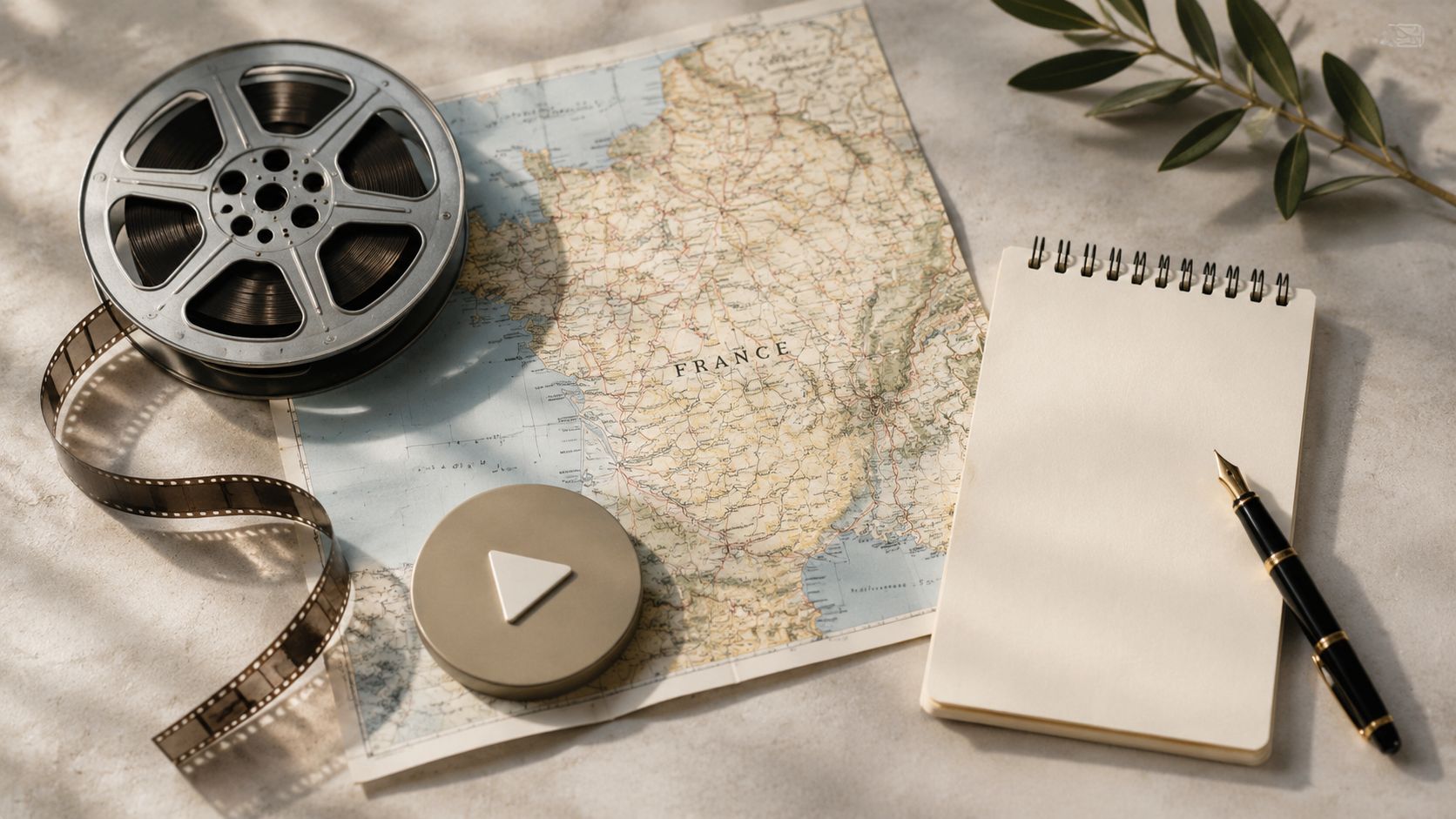
Documentaries are the fastest way to make the Revolution feel visual, memorable, and discussable. If dense reading slows you down, or if you learn better by seeing maps, reconstructions, and expert narration, documentary collections give you a practical entry point. I don't treat them as replacements for books, but I do use them to lower the barrier before a more serious read.
They're also excellent for language learning because you can pause, repeat, and note down recurring historical terms. That makes them especially helpful for busy executives, teens, and adults returning to French after a long break.
A teen struggling with French history reading found that documentaries made assigned reading far more manageable. A busy executive watched documentaries during workouts, then brought the material into tutoring sessions.
My recommendation
Use documentaries as a supplement, not a shortcut. Watch with note-taking in mind, then compare what you saw with a book chapter or a discussion in French. French-language productions on France.tv and Arte are especially valuable when you want authentic phrasing and perspective.
If you'd like a softer media-based pathway into French history, Elite French Tutoring's French language movies page is a smart companion resource.
Top 10 French Revolution Books, Quick Comparison
| Item | Complexity 🔄 | Resources & Speed ⚡ | Expected outcomes ⭐📊 | Ideal use cases | Key advantages 💡 |
|---|---|---|---|---|---|
| A Tale of Two Cities, Dickens | Moderate 🔄 Victorian prose may slow modern readers | Low ⚡ ~370 pages; widely available; moderate time | ⭐⭐📊 Strong cultural empathy; improved advanced vocabulary and narrative context | Corporate professionals before Paris assignments; intermediate–advanced learners | Emotional engagement; accessible bridge to Revolutionary values |
| The French Revolution: A History, Simon Schama | High 🔄 Dense, long-form narrative (full text) | High ⚡ Full text ~900pp or abridged audio 12–14h | ⭐⭐⭐📊 Deep narrative + analysis; high cultural literacy | Executives, diplomats, serious history enthusiasts | Comprehensive synthesis; audio option for busy professionals |
| Marie Antoinette: The Journey, Antonia Fraser | Moderate 🔄 Biographical but substantial | Medium–High ⚡ ~600pp; primary sources included | ⭐⭐📊 Nuanced empathy; cultural sophistication in gender and court contexts | Women professionals, parents of Lycée students, intermediate–advanced | Humanizes monarchy; engaging prose for cultural insight |
| The Oxford History of the French Revolution, William Doyle | High 🔄 Scholarly, analytical structure | High ⚡ ~600pp; requires note-taking and focused study | ⭐⭐⭐📊 Scholarly credibility; reliable reference for precision | DELF/DALF candidates, academics, professionals needing authoritative sources | Balanced analysis; excellent for exam and professional preparation |
| All the Light We Cannot See, Anthony Doerr | Low–Moderate 🔄 Readable dual narrative | Medium ⚡ ~472pp; audiobook available | ⭐⭐📊 Emotional modern context; deeper sense of national identity | Professionals relocating to France, literature lovers, families | Vivid contemporary cultural empathy; complements Revolutionary study |
| The Coming of the French Revolution, Georges Lefebvre | Very high 🔄 Dense theoretical and causal analysis | High ⚡ ~550pp; translation available; demanding study time | ⭐⭐⭐📊 Foundational analytical framework used in French historiography | Graduate students, academics, policy professionals | Deep causal analysis; aligns with French scholarly thought |
| A History of the French Revolution, Thomas Carlyle | High 🔄 Ornate Victorian style; interpretive reading | High ⚡ 400–500pp (abridged) but slow paced | ⭐⭐📊 Insight into Anglo portrayals; comparative cultural perspective | Literature scholars, cultural historians | Shows 19th-century Anglo mythologizing; stylistic study |
| The French Revolution in a Global Context, Armitage & Subrahmanyam (eds.) | Medium–High 🔄 Essay synthesis required | Medium ⚡ ~350+pp; selective reading possible | ⭐⭐📊 Comparative/global insights; diplomatic relevance | International business professionals, diplomats, academics | Selective topicality; contemporary scholarship across regions |
| The Revolutionary Calendar (articles & archives) | Very high 🔄 Research-intensive; archival work | Very high ⚡ Requires database/archive access and time | ⭐⭐⭐📊 Specialized ideological and linguistic depth; advanced vocabulary | DELF/DALF advanced candidates, researchers, academics | Demonstrates sophisticated ideological understanding; impressive specialization |
| Documentary Collections (Netflix, PBS, YouTube, Arte) | Low 🔄 Easy, episodic consumption | Low ⚡ 45–90 min episodes; streaming access | ⭐⭐📊 Strong visual context; quick foundational understanding | Visual learners, busy professionals, families, beginners | Accessible entry point; complements reading and builds engagement |
Turn Reading Into Fluency Your Next Steps
Reading about the French Revolution is one of the best ways to build real cultural context, but the payoff gets much bigger when you can discuss it in French. A book like Schama gives you scope, Doyle gives you structure, Fraser gives you human nuance, and Dickens gives you emotional entry. The next step is making that knowledge speakable, because that's where history stops being passive and starts becoming useful.
One of our students, a lawyer preparing for a move to Paris, used A Tale of Two Cities as the starting point for lessons with us. We worked through themes of justice and sacrifice in French, and she didn't just gain vocabulary, she also gained the kind of cultural confidence that made her feel at ease with French colleagues. That's the true value of pairing reading with guided conversation.
If you're choosing the best book French Revolution title for your goals, I'd be direct. Pick Dickens if you want a gateway, Schama if you want breadth, Doyle if you want scholarly clarity, Fraser if you want human insight, and Lefebvre if you want the deep intellectual backbone. If you want to turn any of those books into fluent conversation, book a free 20-minute consultation with Elite French Tutoring and we'll build a reading-based French program around your level, your schedule, and the kind of conversations you want to have.