Skip to content
Finding the right French class for your toddler in NYC usually starts the same way. You want something warm, playful, and useful, then you open ten tabs and every program sounds perfect. One says immersion. Another says bilingual. A third looks adorable on Instagram but doesn't tell you whether your child will be in a tiny group, a noisy mixed-age room, or a caregiver class that doesn't fit your workweek.
As a parent and language professional, I look at these programs through two filters. First, will a toddler enjoy showing up each week? Second, will the format give them enough meaningful French to build comfort, not just momentary entertainment? In New York, the strongest options tend to separate clearly into two lanes: enrichment classes for exposure and routine, and fuller immersion programs for families who want French woven into everyday life.
That distinction matters more than the marketing. Some of the best French classes for toddlers in NYC are ideal for a child who just needs a weekly playful introduction. Others make sense only if you're ready for a bigger commitment. Below, I've narrowed the field to seven strong options, with practical recommendations based on schedule, learning goals, and your toddler's personality.
Table of Contents
- 1. French Institute Alliance Française (FIAF) – à petits pas
- 2. Tribeca Language – French For Toddlers & Baby & Me
- 3. International School of Brooklyn (ISB) – Baby & Me
- 4. Language & Laughter Studio (LLS) – Mini Maternelle & Enrichment
- 5. Bilingual Birdies – Caregiver-and-Child French Music & Language Classes
- 6. French for Little Ones (FFLO) – French Immersion Playschool
- 7. Petits Poussins (VHG Group) – French English Bilingual Daycares & Preschools
- 7-Program Comparison: French Toddler Classes in NYC
- Making the Right Choice for Your Family
1. French Institute Alliance Française (FIAF) – à petits pas
If you want a classic Manhattan option with a strong reputation and a very clear toddler pathway, FIAF is one of the easiest yeses on this list. Its kids' French programs at FIAF are built for early exposure, and the toddler track sits inside a larger institution that has been serving families for years.
What I like most is the fit between the age group and the teaching style. L'Alliance New York serves children starting at age 1, and its toddler track spans ages 1 to 5 through immersion-style activities like games, songs, and arts and crafts rather than formal grammar instruction, according to L'Alliance New York kids programs. That's exactly how toddler French should look.
Best fit
FIAF works best for families who want structure. The youngest children attend with a caregiver, which is a real advantage if your child needs time to warm up, tends to cling in new environments, or learns best when you model participation.
It also suits parents who want continuity. Seasonal sessions and school-break programming make it easier to keep French in the routine instead of treating it like a one-off trial.
Practical rule: Choose FIAF if you want a dependable weekly rhythm and you're comfortable being part of the class during the earliest stage.
A few buying-guide notes matter here:
- Choose this for early starters: If your child is very young and you're prioritizing comfort over independence, the caregiver format helps.
- Plan enrollment early: Popular session-based programs in Manhattan fill fast.
- Use it for exposure, then reassess: After a season or two, you'll know whether your child is ready for a stronger immersion model.
Parents who are also weighing long-term bilingual development may want to read more about the benefits of bilingual education for children. It gives useful context for what a strong early foundation can support later on.
2. Tribeca Language – French For Toddlers & Baby & Me
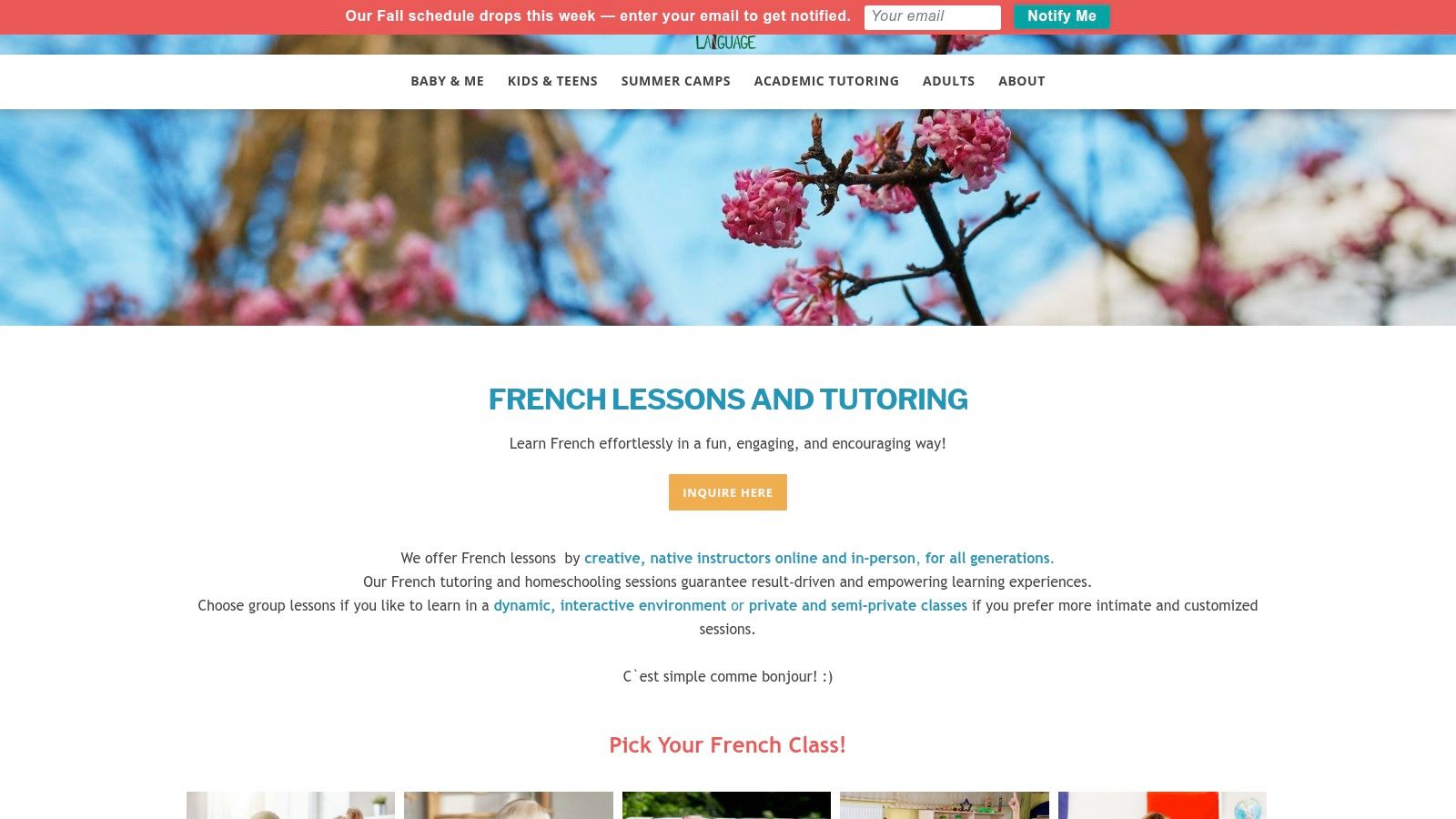
Tribeca Language stands out for one reason. Flexibility. If your family's schedule changes every month, or you already know a standard weekly class won't be enough, this is one of the most adaptable options in the city. You can explore its French lessons and children's offerings at Tribeca Language.
This program is also where we get the clearest class-size benchmark in the NYC toddler market. Tribeca Language lists toddler classes with 3 to 6 students per class on its French for Toddlers page, and it uses sing-alongs, puppets, arts and crafts, and movement. For toddlers, that's not a small detail. It's one of the strongest indicators that the class is designed for actual interaction, not crowd control.
Why I recommend it for busy families
Tribeca Language gives parents more ways to make French stick. Group classes, pods, and customized formats create a smoother bridge from baby classes into preschool-prep years.
That matters because not every child in NYC gets French at home. Tribeca's broader children's programming explicitly serves mixed backgrounds, including native speakers, partial speakers, and complete beginners, as described on its French group classes for children page. I appreciate that honesty. It reflects a real parent concern: weekly exposure is helpful, but fluency usually depends on dosage and consistency beyond class.
The best fit here is the family that wants options now and room to scale later.
If you're comparing classes versus custom support, it's also worth looking at kids' language classes and private support options. For some toddlers, especially those with irregular schedules, that route is easier to sustain.
3. International School of Brooklyn (ISB) – Baby & Me
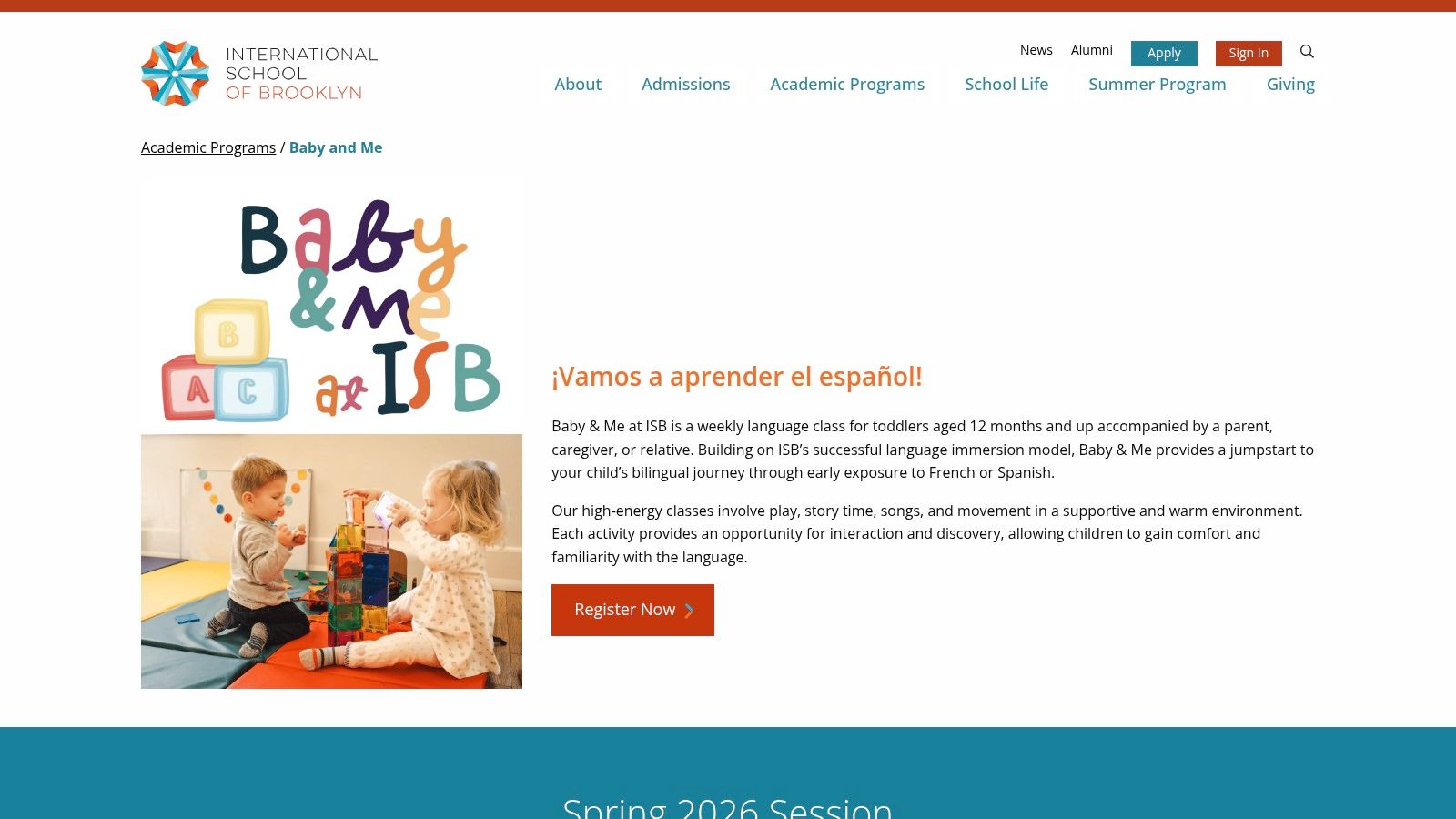
Some toddlers do best in spaces that feel calm, school-ready, and gently structured. That's where the Baby & Me program at the International School of Brooklyn makes sense.
ISB's appeal isn't flashy. It's the school environment. If you're already thinking ahead to bilingual or immersion preschool, this kind of caregiver-and-child class can be a smart first step. Your toddler gets exposure to songs, stories, movement, and classroom rhythm without the pressure of a full separation experience on day one.
Who should book ISB first
I recommend ISB most often to Brooklyn families who want a school-connected experience rather than a stand-alone enrichment class. The educators understand immersion culture, and the setting gives parents a feel for what a more formal bilingual environment can look like.
This matters for children who need predictability. A toddler who's overwhelmed by loud, highly performative classes may settle more easily into a steady routine with familiar rituals and a consistent educational tone.
A few things to keep in mind:
- Best for school-minded families: If you're researching future preschool options, this can be a useful on-ramp.
- Less ideal for parents wanting drop-off freedom: This is still caregiver-and-child.
- Strong for quieter toddlers: The format tends to suit children who engage slowly and observe before participating.
For parents who want to reinforce what happens in class at home, I like pairing this type of program with ideas from how to teach French to preschoolers. Small routines between classes often make a bigger difference than parents expect.
4. Language & Laughter Studio (LLS) – Mini Maternelle & Enrichment
The Language & Laughter Studio has a very Brooklyn kind of appeal. It's intimate, arts-forward, and clearly centered on early childhood rather than trying to be everything to everyone.
If your child lights up around creative play, pretend scenarios, movement, and hands-on projects, this is a strong contender. I especially like that the studio offers multiple pathways, including mini-maternelle and enrichment formats, because many families don't know at the start how much French they want to commit to.
Why arts-based learning works well for toddlers
Toddlers rarely show you progress by translating words on command. They show it through participation. They start responding to routines, joining in songs, naming familiar objects, or using a French word in pretend play.
An arts-integrated setting supports that kind of growth naturally. A child who won't repeat vocabulary in a circle may happily absorb it while painting, gluing, dancing, or acting out a story.
Small, imaginative classes often work better than more academic-looking programs for this age.
Language & Laughter Studio is a good buy for parents who want a boutique feel and who care about atmosphere as much as curriculum. I would confirm current toddler offerings before enrolling, especially if you need a specific day, caregiver format, or drop-off arrangement. This is the kind of place where fit matters more than brand recognition, and for the right child, that's a huge advantage.
5. Bilingual Birdies – Caregiver-and-Child French Music & Language Classes
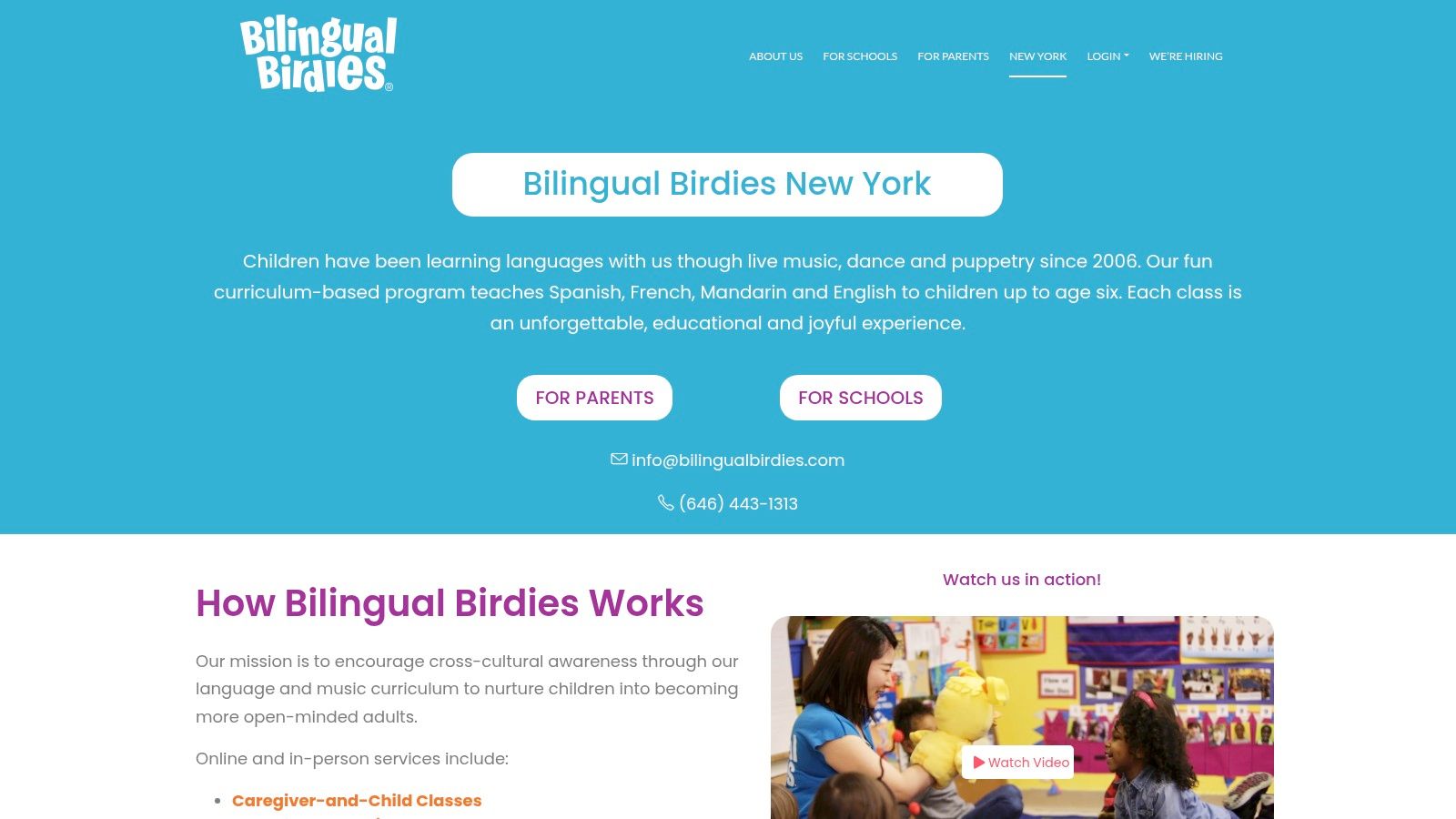
If your toddler does not want to sit still, skip the classes that expect them to. Bilingual Birdies NYC classes are one of the easiest recommendations for high-energy kids because the whole format leans into movement, music, puppetry, and short-attention-span learning.
I often suggest Bilingual Birdies to parents who are nervous about whether their child is "ready" for French. That's the wrong question for most toddlers. The better question is whether the class format matches how they naturally engage. For a lot of little New Yorkers, dancing and singing are the entry point.
Best for wiggly, social toddlers
This program is especially practical if you want low-friction exposure. Multiple neighborhood options and private group formats make it easier to test French without overcommitting to a school-style setup.
The take-home materials are also useful. Anything that helps parents replay songs or revisit vocabulary between classes makes a weekly enrichment model more valuable.
Here's where I'd place it in a buying guide:
- Pick this for energy: Great for children who learn through motion and imitation.
- Pick this for convenience: Helpful if you want a public class before considering a larger commitment.
- Don't pick this if you want full immersion: This is enrichment, not an all-day bilingual environment.
For many families, Bilingual Birdies is the best "starter class" among French classes for toddlers in NYC. It keeps the barrier low, which often means parents stick with it.
6. French for Little Ones (FFLO) – French Immersion Playschool
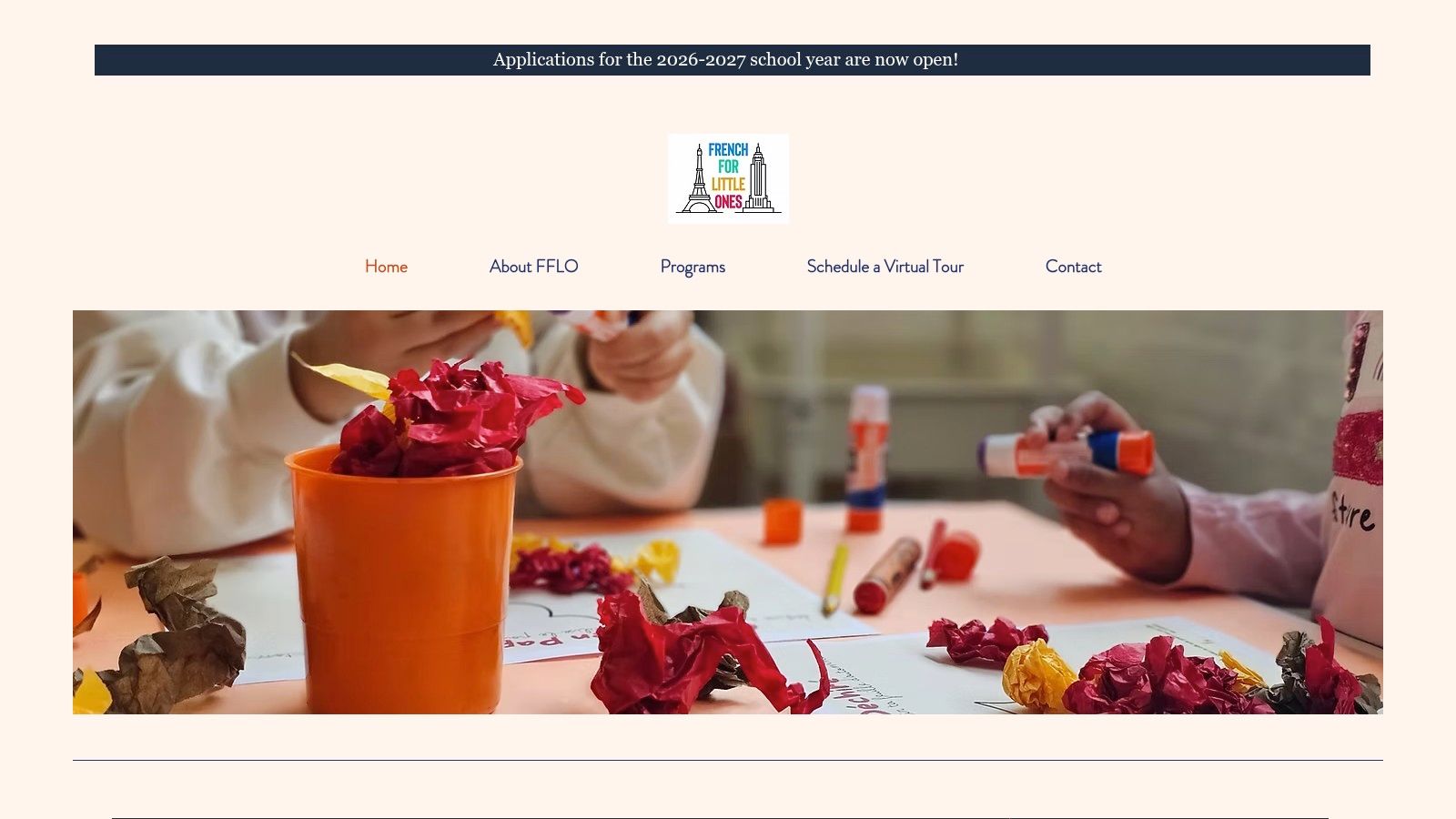
French for Little Ones is for families who don't want a casual sampler. They want immersion to be part of everyday life. You can explore admissions and program details through French for Little Ones in Greenpoint.
This kind of playschool format creates a completely different language experience from a weekly enrichment class. Children hear recurring instructions, transitions, songs, and social language inside a predictable routine. That's where real comfort grows.
When a playschool makes more sense than a class
If your child is around preschool age and you're serious about continuity, FFLO is one of the strongest options on this list. It starts around age 2, which means it's not for infants, but for many families that's exactly when the decision becomes practical.
I recommend this route when parents tell me any of the following:
- We want more than exposure: A full French environment matters more than a once-a-week class.
- Our child benefits from repetition: Daily routines create stronger language memory.
- We're ready to plan ahead: Admissions timelines and tours are part of the process.
This is a commitment purchase, not an impulse one. But if your goal is sustained immersion in a small, community-oriented setting, FFLO deserves a serious look.
7. Petits Poussins (VHG Group) – French English Bilingual Daycares & Preschools
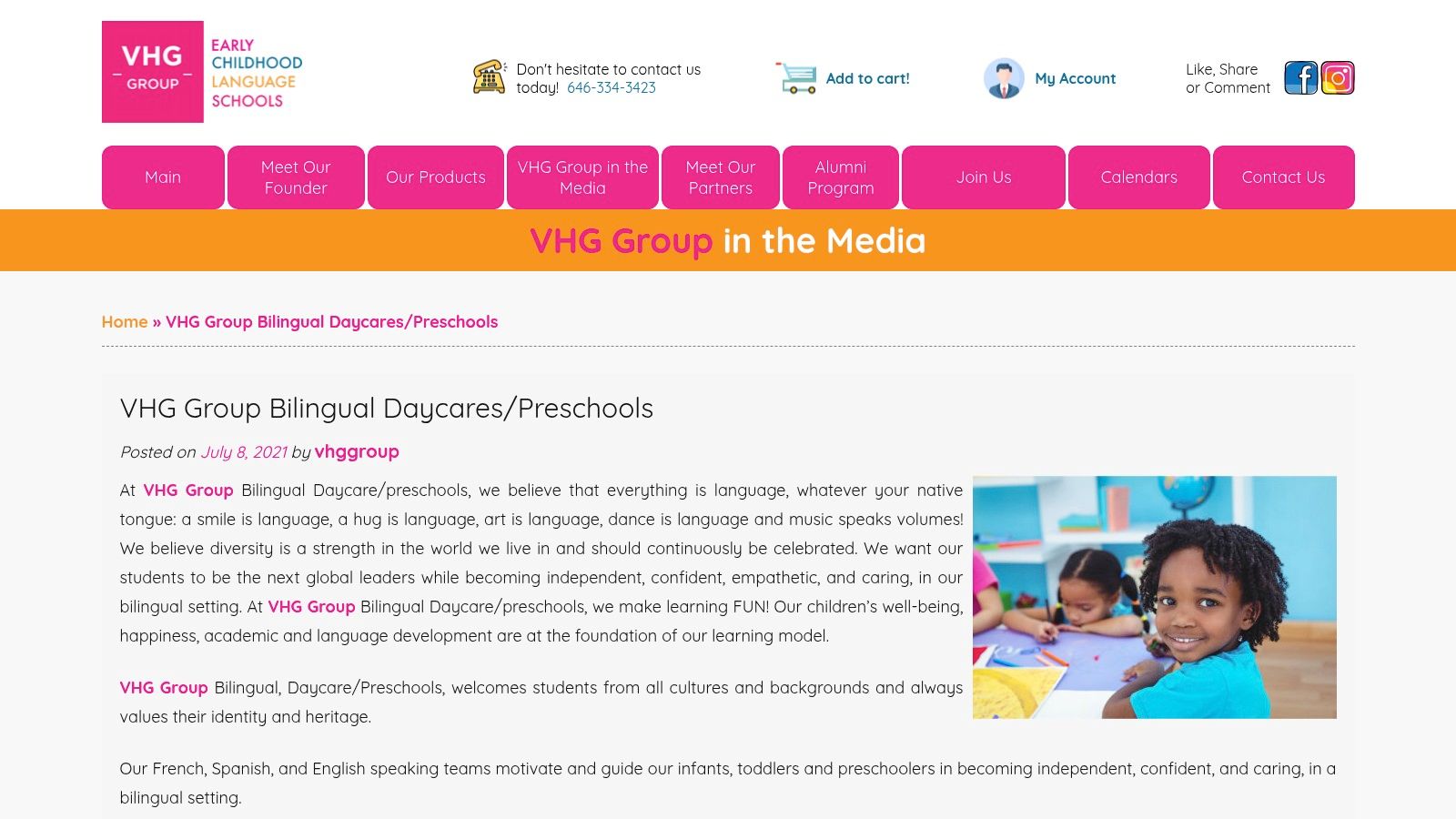
Petits Poussins is the right answer for a very specific parent need. You don't just want a French class. You need childcare or preschool, and you'd like French built into the day from the start. The VHG Group bilingual daycare and preschool network offers that broader lifestyle fit.
This isn't an enrichment buy. It's a family logistics decision. If you're comparing commute, coverage, age continuity, and daily exposure, Petits Poussins belongs in a different category from the once-a-week programs above.
Best for families who need full-day consistency
I like this option for parents who know that scattered enrichment won't be enough. Daily French and English exposure inside a daycare or preschool routine gives toddlers repeated contact with the language in social, practical moments.
That includes the language of arrival, meals, songs, transitions, play, and comfort. For toddlers, those ordinary moments often matter more than anything that looks formally academic.
If your childcare needs are nonnegotiable, prioritize the quality of the daily environment over the charm of a weekend class.
Petits Poussins also helps families who want continuity through the early years rather than restarting the search every time a child ages out of one program. If you're in Brooklyn and comparing local child-focused options more broadly, this guide to French lessons for children in Brooklyn can help you think through neighborhood fit.
7-Program Comparison: French Toddler Classes in NYC
| Program | Implementation complexity 🔄 | Resource requirements ⚡ | Expected outcomes ⭐📊 | Ideal use cases 💡 | Key advantages ⭐ |
|---|---|---|---|---|---|
| French Institute Alliance Française (FIAF) – à petits pas | Low–Moderate, seasonal sessions; caregiver participation for under-3s | Moderate, session fees, commute to UES; planned enrollment | Solid early vocabulary and routine exposure; preschool on-ramp | Caregiver–child bonding; families near UES seeking structured seasonal classes | Longstanding institution; specialized early-childhood teachers; consistent schedule |
| Tribeca Language – French For Toddlers & Baby & Me | Low, flexible formats (in-studio, in-home, online) but requires scheduling | Variable, pricing and format dependent; private pods cost more | Variable intensity, can support steady progression to preschool prep | Families needing schedule flexibility, private pods, or summer continuity | Highly flexible delivery; customizable private/semi-private options |
| International School of Brooklyn (ISB) – Baby & Me | Low, weekly caregiver-and-child classes; term-based schedule | Low, weekly time commitment; local Carroll Gardens location | Gentle transition into immersion preschool; exposure consistent with ISB style | Families aiming for an immersion-school pathway and community connection | Immersion-experienced educators; direct link to bilingual school community |
| Language & Laughter Studio (LLS) – Mini Maternelle & Enrichment | Moderate, varied year-round offerings; class type may be drop-off or caregiver-inclusive | Moderate, studio attendance in Clinton Hill; term-dependent schedules | Arts-integrated, play-based language growth; preschool readiness | Families seeking arts-focused enrichment and small, progressive classes | Purpose-built intimate space; strong early-childhood reputation since 2006 |
| Bilingual Birdies – Caregiver-and-Child Music & Language Classes | Very low, drop-in friendly public classes; private bookings available | Low, short, movement-heavy sessions across neighborhoods; low barrier to start | High engagement and reinforced vocabulary; enrichment rather than full immersion | Sampling French via music for very young or active toddlers; easy routine starter | Music-led, highly engaging format; take-home materials to reinforce learning |
| French for Little Ones (FFLO) – French Immersion Playschool | High, admissions/process, fixed daily schedules; age-specific cohorts | High, full-day playschool tuition; apply early; daily attendance (starts ~2) | Strong, rapid acquisition from consistent daily immersion | Families seeking a neighborhood immersive playschool (age 2+) | 100% daily French immersion; small classes; strong parent feedback |
| Petits Poussins (VHG Group) – Bilingual Daycares & Preschools | High, daycare/preschool enrollment, campus-specific policies and waitlists | High, full-day tuition, multiple campus options; infant care available | True bilingual routines with continuity from infancy through preschool | Families needing full-day bilingual daycare/preschool and long-term continuity | Multiple NYC campuses; continuity across age groups; full-day immersion routines |
Making the Right Choice for Your Family
The best choice here isn't the one with the prettiest classroom photos. It's the one your child will attend happily and that you can maintain without turning French into a weekly stress point.
Start with the fundamental question. Do you want exposure or immersion? A weekly caregiver class can be wonderful for building comfort, songs, and positive association. A playschool, daycare, or preschool model gives your child a very different level of consistency. If your family doesn't use much French at home, that distinction matters even more.
Then look at logistics with total honesty. Commute, nap timing, caregiver participation, and whether you need drop-off are not side issues. They're often the deciding factors that determine whether a program lasts past the first session.
A Success Story: We once worked with a family whose 3-year-old, Leo, was too shy for a group class. By creating a custom in-home program built around his love for dinosaurs and trains, our private tutor helped him blossom. Within months, he was happily singing French songs and asking for his “dinosaures”. It’s a powerful reminder that sometimes, the best “class” is one designed just for you.
I also want parents to feel permission to choose based on temperament. A social, high-energy toddler may thrive in something musical and lively like Bilingual Birdies. A quieter child may do better in a smaller, calmer setting such as ISB or FIAF. And if your goal is serious continuity, FFLO or a bilingual daycare model may be the smarter investment.
Don't be shy about asking for a trial, a tour, or a detailed description of how the class runs. Ask who stays with the youngest children, how transitions are handled, and whether the program is best viewed as exposure or a stronger immersion pathway. Those answers tell you more than any marketing copy.
If none of the group options quite fits your schedule or your child's personality, private lessons are a valid alternative, not a fallback. At Elite French Tutoring, families can arrange personalized French lessons for children in person in New York or online, with scheduling built around real life rather than a preset class calendar.
If you're narrowing down options now, compare a few group programs first, then consider whether a private French lesson or custom small-group setup would fit your family better.