Skip to content
Feeling overwhelmed by French apps, courses, podcasts, and tutors that all promise fluency? I get it. Most learners don't have a motivation problem. They have a selection problem. They try a little of everything, make some progress, then stall because nothing in the mix matches their real goal.
I saw this with a client who was preparing for a secondment in Paris. He was bright, disciplined, and already using popular apps every day, but his speaking still froze up in meetings. Once we replaced his random resource stack with a blended plan that paired app practice with targeted tutoring, he started speaking with far more confidence. That's why I don't recommend a single "best" option for everyone.
The right learn French resources depend on what you need next. Passing DELF isn't the same as helping a child keep up at school. Business French isn't the same as beginner travel French. Below, I'm giving you direct recommendations, not a generic roundup, so you can choose faster and build a toolkit that is effective.
Table of Contents
- 1. Elite French Tutoring
- 2. Alliance Française
- 3. Lingoda
- 4. Babbel
- 5. Pimsleur
- 6. Kwiziq French
- 7. TV5MONDE
- 8. Yabla French
- 9. Berlitz
- 10. Duolingo
- Top 10 French Learning Resources Comparison
- Your Next Step to French Fluency
1. Elite French Tutoring
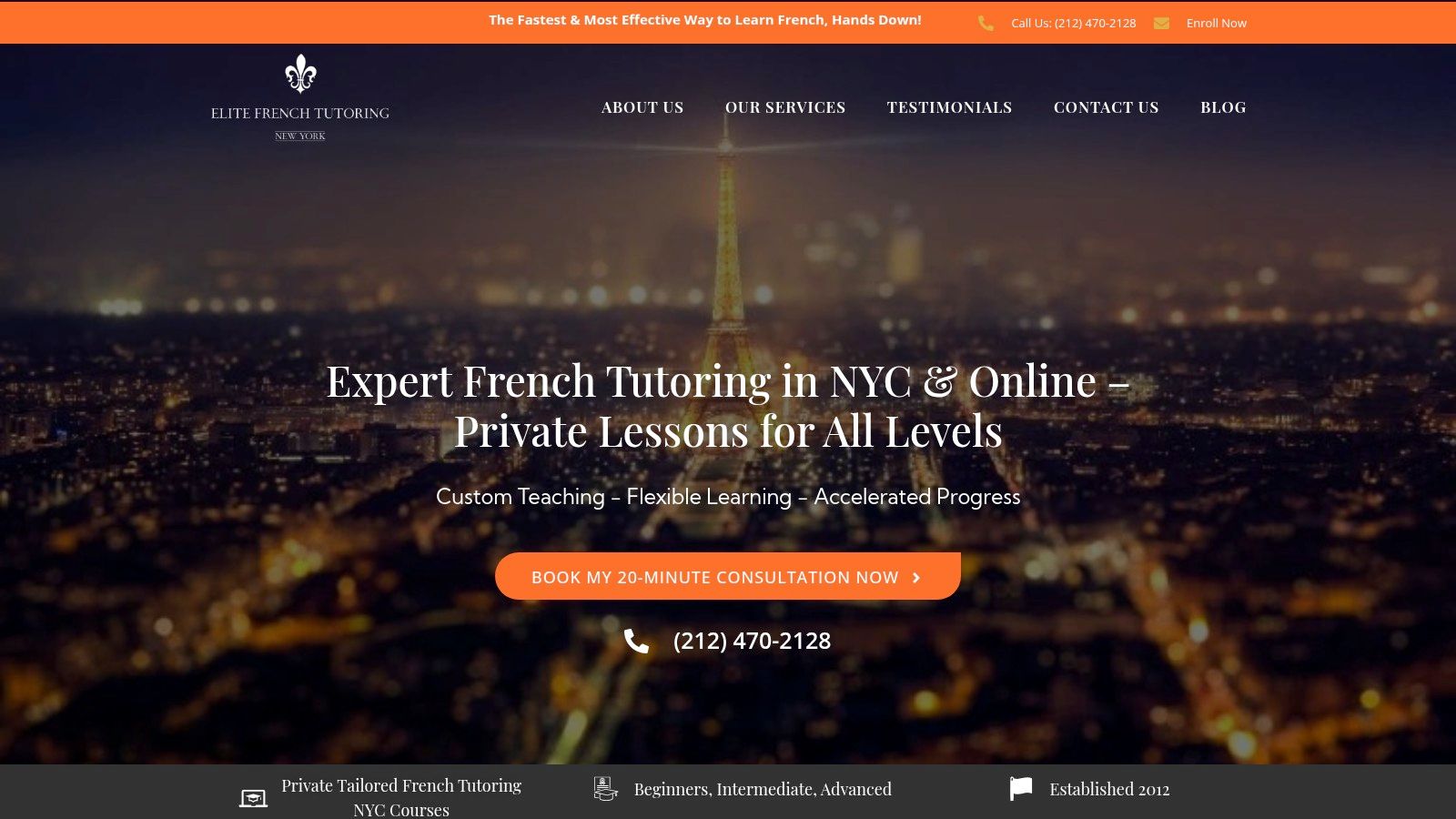
You need to handle a client call in French, pass an exam, or help your child keep up in school. In that situation, a generic app is rarely enough. Elite French Tutoring is a strong option for learners who need French to perform under real pressure, not just fill spare minutes on a phone.
The biggest advantage is customization. Lessons are built around your level, goal, and schedule, which makes this a practical fit for business French, relocation, school support, exam prep, and conversation coaching. You can take lessons online worldwide or in person in New York, with some availability in Washington, D.C.
I recommend private tutoring most when the goal is specific and time-sensitive. If you need corrective feedback, pronunciation work, or accountability, live instruction solves problems that self-study usually leaves untouched.
Practical rule: If you keep studying but still freeze when speaking, you need feedback, not more passive input.
Best fit
Elite French Tutoring makes the most sense for:
- Professionals who need polished speaking and writing for meetings, presentations, or client communication
- Exam candidates preparing for DELF, DALF, TCF, or school assessments
- Families and students who need targeted academic support
- Adults with a deadline such as relocation, travel, or an upcoming interview
I would not use it as a standalone resource unless you want a fully guided path. The smarter move is to pair tutoring with one listening resource and one review tool. That combination gives you strategy during lessons, then repetition between sessions.
If you also want immersive practice outside formal lessons, compare a few French immersion program options before you commit.
The tradeoff is simple. Pricing is not listed publicly, so you need to ask for a quote. For serious learners with a clear goal, that extra step is reasonable.
2. Alliance Française
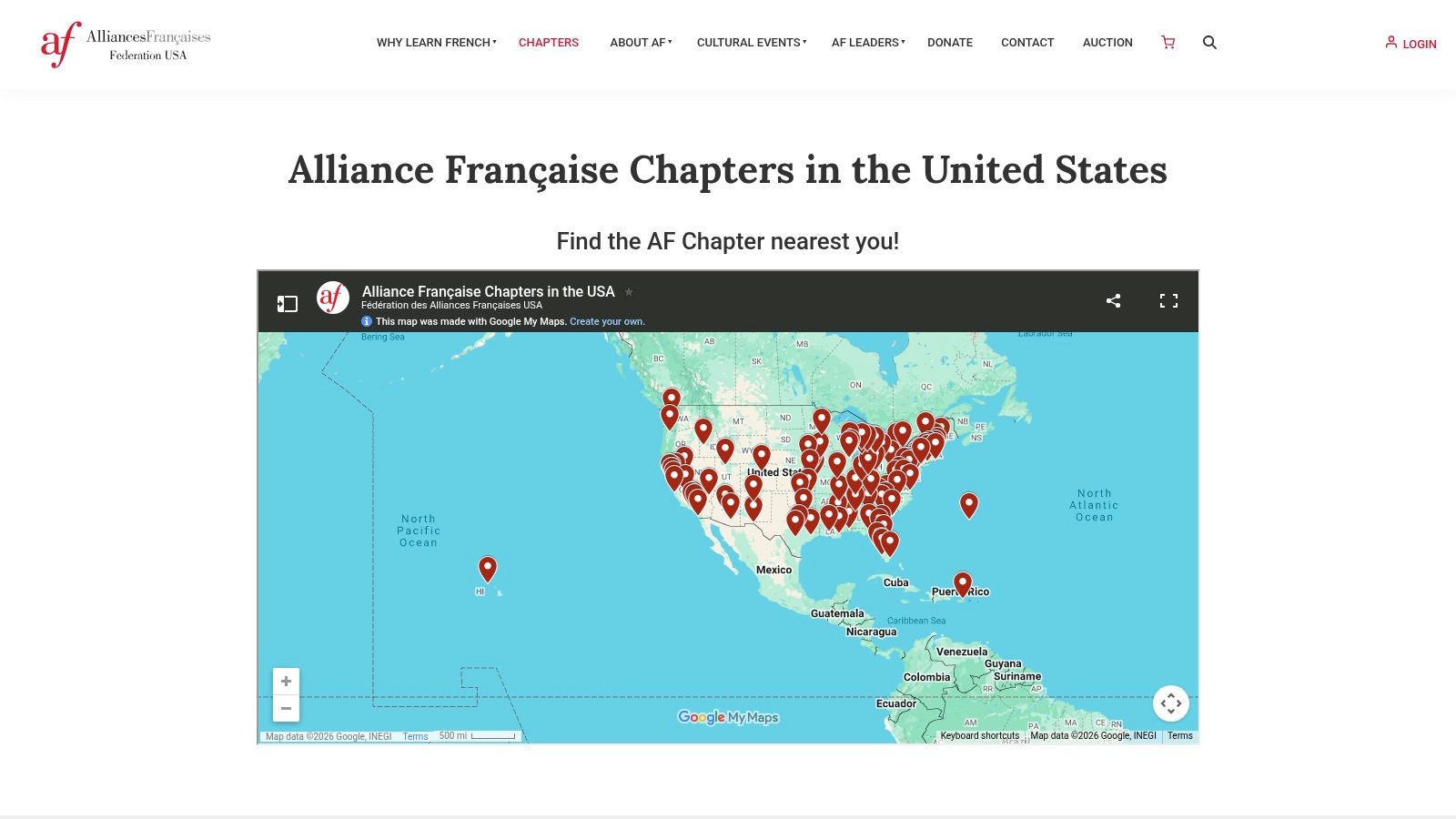
If you want structure, community, and an established path toward recognized exams, Alliance Française is a strong choice. I recommend it most for learners who like a classroom rhythm and want French to be part of their weekly routine, not just an app on their phone.
The U.S. chapter network offers local and online options, and many chapters connect classes with cultural events, conversation groups, and exam pathways. That combination matters because motivation improves when French exists beyond homework.
Best fit
Alliance Française is a smart buy for three groups:
- Adult learners who want a recognized course structure
- Parents looking for children's classes and local enrichment
- Exam-focused students who want DELF/DALF or TEF proximity
Many learners also want a more immersive experience outside standard lessons. If that's your priority, compare your options with this guide to French immersion programs.
Community can carry you through the weeks when motivation alone won't.
I especially like Alliance Française for people who need external structure but don't need fully private instruction. The downside is inconsistency. Pricing, scheduling, and teaching quality can vary by chapter, so I always tell clients to evaluate the local branch, not just the brand name.
Visit the Alliance Française U.S. chapter network and check the chapter closest to you before committing.
3. Lingoda
Lingoda is one of the better live online schools for adults who want speaking practice on a schedule they can maintain. If you work irregular hours or want the option to book lessons throughout the day, it solves a real problem that many traditional schools don't.
Its biggest advantage is flexibility. You can choose group classes or 1:1 sessions, and the CEFR-based curriculum gives your learning a cleaner structure than random conversation apps.
Who should buy Lingoda
I recommend Lingoda for professionals who want regular live classes but aren't ready to invest in premium private tutoring. It's also a strong middle ground if you want teacher interaction without needing a local school.
The market context matters here. Online language learning is no longer niche. Grand View Research estimated the global online language-learning market at USD 22.12 billion in 2024, with projected growth through 2030, which tells you buyers now expect polished digital delivery, flexible access, and technology-supported learning from the platforms they pay for in the Grand View Research online language-learning market report.
That expectation fits Lingoda well. It feels built for adults who want convenience without dropping into pure self-study.
- Buy this if: You want scheduled speaking practice and adult-only classes.
- Skip this if: You need children's lessons or intensive writing correction.
- Use it best with: A grammar tool or private tutor for targeted feedback.
Lingoda's pricing page is the right place to compare formats and bundles: Lingoda pricing and plans.
4. Babbel
Babbel is the app I recommend to beginners who need a practical daily habit, not an elaborate study system. The lessons are short, approachable, and built around useful dialogues, so it's easy to keep going even when your schedule is tight.
For many adults, that's the critical buying decision. Not "What's the most complete product?" but "What will I regularly use four or five times a week?"
Where Babbel works best
Babbel is best as your base layer. It gives beginners a manageable on-ramp, and Babbel Live can add conversation practice if you want more than app-only study.
I don't recommend relying on it alone once your goals become more specific. If you want stronger self-study structure, this guide on how to learn French on your own gives a much better framework than extending app time.
Babbel is a good starter engine. It isn't the whole vehicle.
I'd buy Babbel if you're in one of these situations:
- Absolute beginner: You need guided lessons that don't feel intimidating.
- Busy professional: You want bite-sized practice between meetings or on your commute.
- Cautious buyer: You want a lower-commitment way to test whether you'll stick with French.
Babbel becomes less compelling when you need advanced speaking, exam strategy, or detailed correction. For that, I'd add live lessons.
You can compare plan options on the Babbel website.
5. Pimsleur
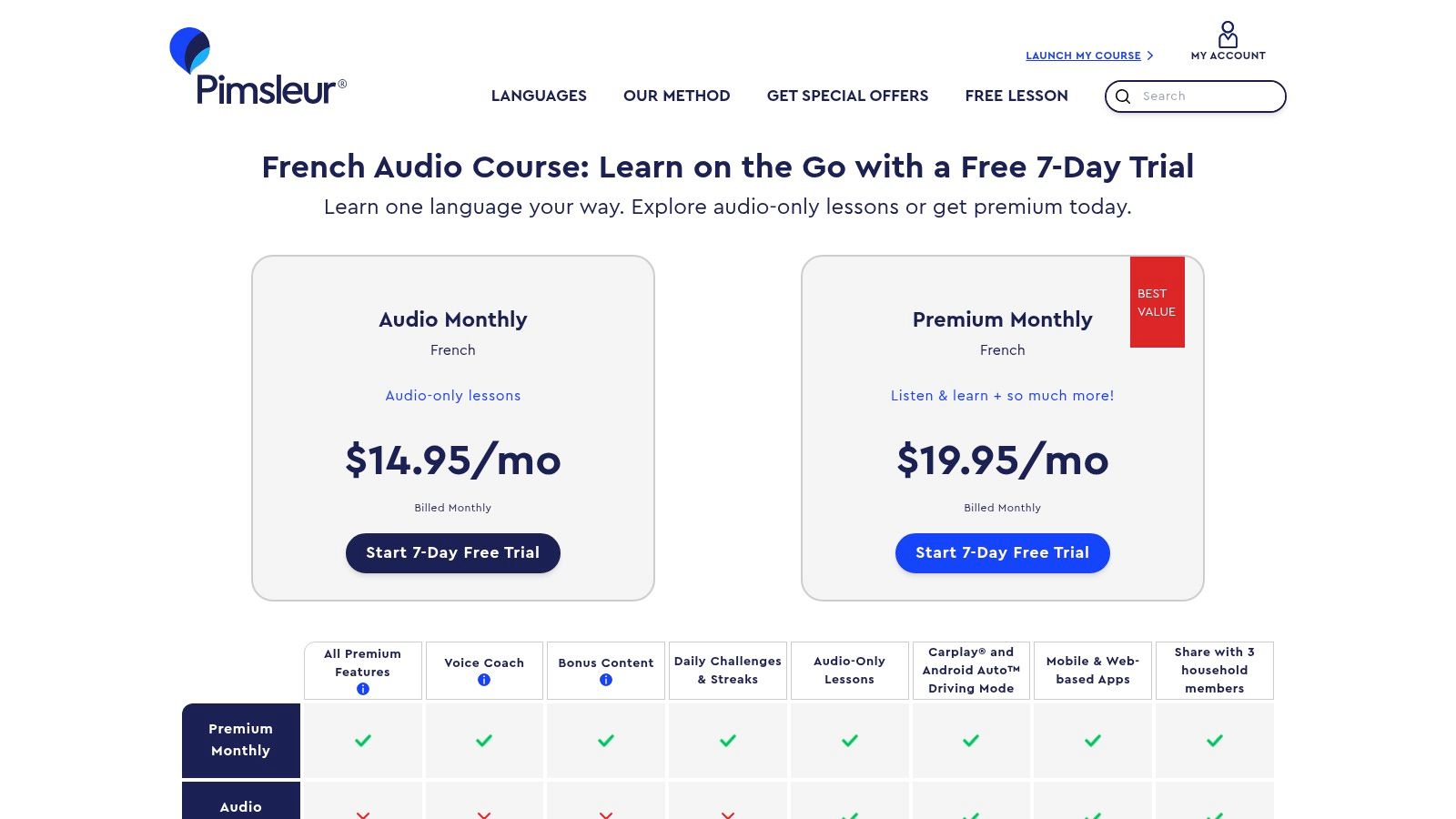
Pimsleur is my favorite pick for learners who say, "I don't have study time," but do have walking time, commuting time, or household-task time. It turns dead time into speaking practice.
The method is audio-first and repetitive in a useful way. That makes it excellent for pronunciation, listening, and quick functional phrases, especially in the early stages.
My honest take
Pimsleur is strong when your main bottleneck is getting your mouth moving in French. It is not strong as a full curriculum for reading, writing, or nuanced grammar control.
That means I'd recommend it as a supplement, not a full replacement for classes or guided study. It works especially well for travel learners and adults who resist screens after work.
A simple pairing works best:
- Pimsleur plus tutor: Best for speaking confidence
- Pimsleur plus grammar tool: Best for balanced self-study
- Pimsleur plus app: Best for beginners who need both audio and visual reinforcement
If you learn best by hearing and repeating, start with the Pimsleur French subscription options.
6. Kwiziq French
Kwiziq French is what I use when a learner's grammar gaps are blocking progress. It diagnoses weak spots, maps lessons to CEFR levels, and gives you a more precise plan than most apps.
This is a great buy for exam candidates, students in school-based French programs, and adults who can already speak a bit but keep making the same mistakes. It's less exciting than a flashy app, but far more useful if you're aiming for accuracy.
Best for exam prep and school support
Kwiziq works because it doesn't ask you to guess what to study next. It identifies the gaps and sends you there directly.
I especially like it for DELF/DALF prep, where loose familiarity isn't enough. You need control. You also need a way to see whether your grammar knowledge is broad or patchy.
The one caution is obvious. It won't build fluent speaking by itself.
- Use Kwiziq for: Grammar repair, exam prep, written accuracy
- Don't use it alone for: Conversation, pronunciation, spontaneous speaking
- Best combination: Kwiziq plus tutoring or conversation lessons
You can explore the platform at Kwiziq French.
7. TV5MONDE
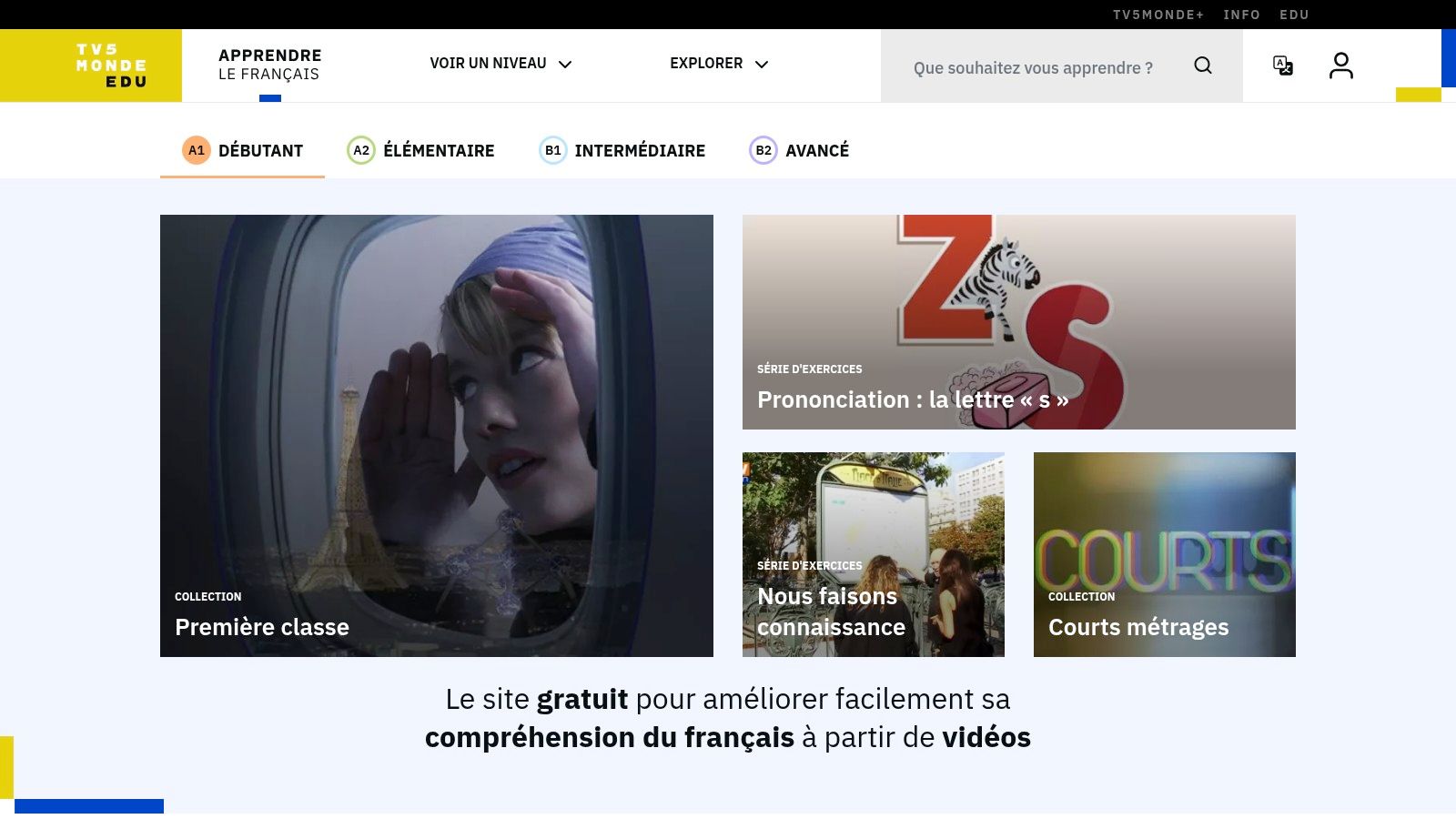
TV5MONDE is the best free listening resource on this list for learners who want authentic French without jumping straight into content that's too hard. I recommend it constantly for intermediate learners who need better listening range and richer vocabulary.
Québec's official French-learning portal highlights TV5MONDE Learn French as one of the major free tools available to learners, and McGill's resource hub points to a very large ecosystem that includes more than 4,000 online exercises on TV5MONDE and over 16,000 links aggregated by Le Point du FLE in the Québec learn-French tools and resources portal. That tells you two things. First, free digital support for French is now extensive. Second, content availability is no longer the main problem.
What TV5MONDE is great at
TV5MONDE is excellent for listening comprehension, cultural familiarity, and exposure to real-world French across topics like news, music, and current affairs. It's much more useful than random YouTube browsing because the material is graded.
I wouldn't use it as your only learning tool. It gives input, not feedback.
Free resources are abundant. What most learners still need is correction, sequencing, and accountability.
If you're already in classes or tutoring, TV5MONDE is one of the best free additions you can make. Start at your level and use it to widen your ear.
The platform is here: TV5MONDE Apprendre le français.
8. Yabla French
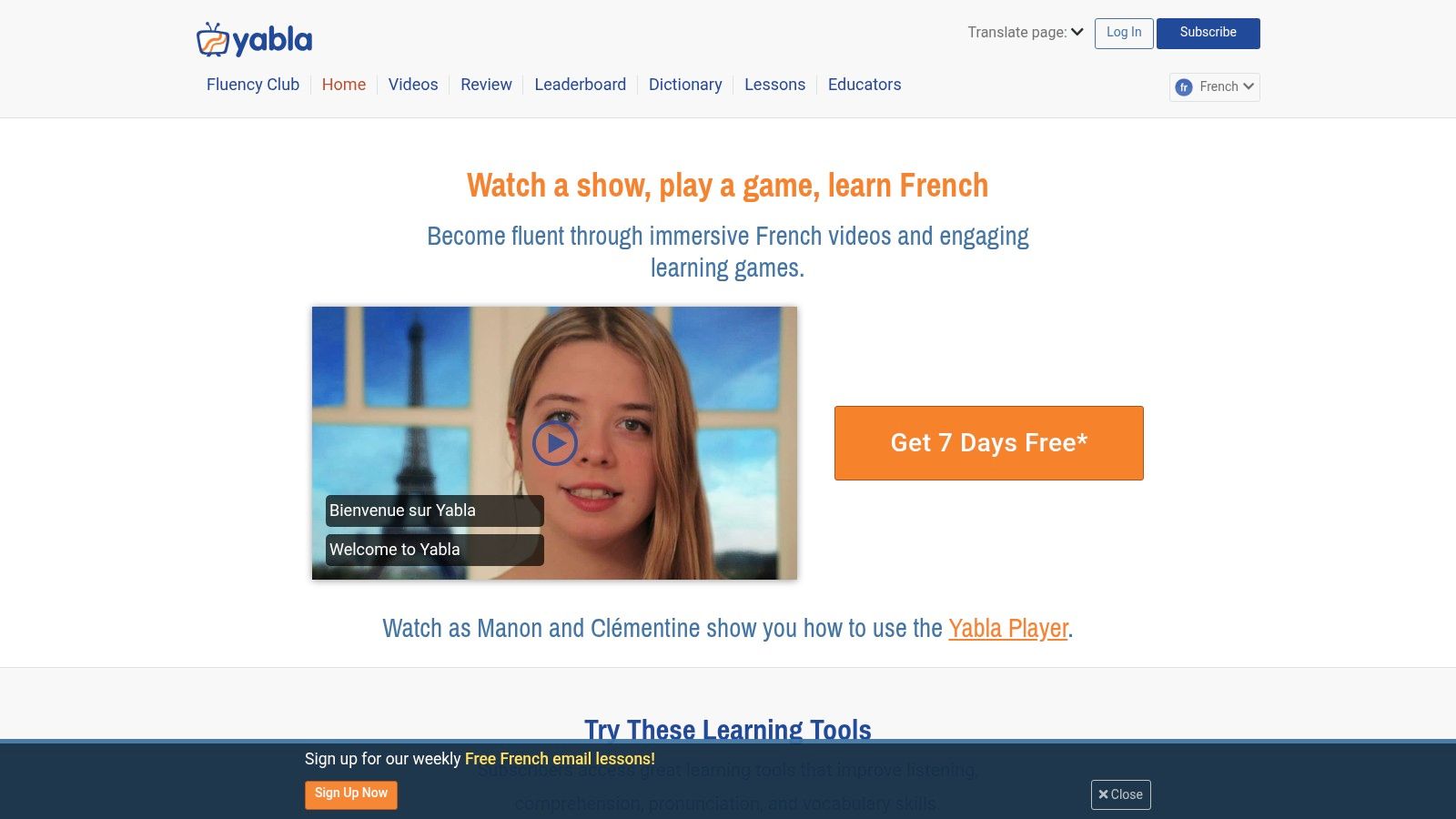
Yabla is a paid immersion tool for learners who want more control over authentic video. If normal French video content feels too fast, Yabla solves that problem with slow playback, looping, subtitles, and built-in activities.
I like it most for intermediate learners, AP or IB students, and adults trying to sharpen listening without sitting through dry textbook audio. It turns native-speaker content into something you can work with.
When I'd choose Yabla over free video
I'd pay for Yabla when you know video works for you and you want less friction. Free video is everywhere, but it often wastes time because you spend half your session searching, replaying, and trying to decode speech with no support.
Yabla reduces that friction. You get authentic language, but with learner-friendly controls that make repetition easier.
It is still a supplement. I wouldn't buy it as your only French product unless your primary need is listening comprehension.
- Best buyer: Intermediate learner who wants authentic listening with support
- Less ideal buyer: Absolute beginner who needs a clear curriculum
- Best combo: Yabla plus tutoring or a structured course
See the platform at Yabla French.
9. Berlitz
Berlitz is the corporate buy on this list. If you're purchasing French training for a team, need reporting, or want role-specific professional language support, Berlitz belongs on your shortlist.
This isn't the platform I'd send a casual beginner to. It makes more sense for employers, HR teams, relocation programs, and professionals who need job-relevant language training at scale.
Strong fit for enterprise buyers
The broader market explains why providers like Berlitz matter. The global language-learning market reached an estimated USD 68.87 billion in 2024 and is projected to reach USD 188.70 billion by 2030 in the Mordor Intelligence language-learning market report. A lot of that demand is tied to corporate training, international mobility, and workforce development.
That lines up directly with Berlitz's strengths. It offers scalable delivery, customization, and a business-oriented training environment.
I'd look at Berlitz when you need:
- Corporate rollouts: Multiple learners, shared standards, centralized reporting
- Role-based content: French for meetings, client communication, or relocation
- Managed delivery: A formal vendor relationship instead of assembling tutors one by one
The main limitation is that pricing is usually quote-based. That's common in enterprise language training, but it slows comparison shopping.
If you're evaluating vendors for a company, start with Berlitz corporate language training.
10. Duolingo
Duolingo is the easiest entry point on this list. It's accessible, habit-forming, and good at getting people started when they would've otherwise done nothing.
I recommend it as a starter or supplement, not as your main engine if you need serious speaking progress. It works best for beginners, students, and casual learners who need a daily nudge.
Good for habit, weak for depth
Duolingo's strength is consistency. If you're trying to build a French habit from zero, it lowers the barrier beautifully.
Its weakness is obvious once your goals become concrete. The biggest underserved problem in learn French resources isn't finding more content. It's knowing when self-study stops being enough and when you need coached feedback for speaking, exams, or workplace performance, a gap reflected in broader guidance on French learning resources in the Library of Congress online French resources guide.
If Duolingo is your current base, don't just do more of it. Build a real plan around it. This structured French study plan is a good next step.
Duolingo is excellent at helping you show up. It isn't excellent at preparing you for a high-stakes conversation.
Use Duolingo if you want a free, low-friction start. Upgrade your stack when your goal becomes specific.
Top 10 French Learning Resources Comparison
| Service | Core features ✨ | Quality ★ | Best for 👥 | Standout ✨ | Price / Value 💰 |
|---|---|---|---|---|---|
| Elite French Tutoring 🏆 | Fully customized private lessons; native expert tutors; in‑person NYC + online; DELF/DALF & corporate prep; free 20‑min consult | ★★★★★ Rapid pronunciation gains; proven results | 👥 CEOs, professionals, busy families, exam candidates | ✨ Deep personalization; immersive, career‑focused coaching; named‑tutor testimonials | 💰 Custom quote (premium); free assessment |
| Alliance Française (U.S. chapters) | CEFR‑aligned group & private classes; cultural events; DELF/DALF exam centers | ★★★★ Recognized credentialing; community support | 👥 Learners seeking structured courses & certification | ✨ Local immersion, cultural programming & official exams | 💰 Varies by chapter; moderate/group rates |
| Lingoda | Live 60‑min group & 1:1 classes; CEFR curriculum; 24/7 booking; AI self‑study tools | ★★★★ Consistent speaking practice; scalable intensity | 👥 Busy professionals needing scheduled speaking time | ✨ 24/7 booking, CEFR certificates, trial options | 💰 Transparent per‑class pricing; promo bundles |
| Babbel | Short app lessons with spaced review; practical dialogues; Babbel Live add‑on | ★★★ Practical habit‑building for beginners | 👥 Absolute beginners & casual learners | ✨ Bite‑sized daily lessons + optional live classes | 💰 Low monthly subscriptions; region‑dependent |
| Pimsleur | Audio‑first 30‑min speaking lessons; hands‑free learning; emphasis on pronunciation | ★★★★ Excellent oral & listening focus | 👥 Commuters and time‑pressed adults | ✨ Conversation‑first, graduated recall audio method | 💰 Subscription or purchase; mid‑tier cost |
| Kwiziq French | AI grammar diagnostic ('Brainmap'); thousands of CEFR lessons & kwizzes | ★★★★ Precise grammar remediation & analytics | 👥 Exam prep students, teachers, serious learners | ✨ Adaptive diagnostics and targeted grammar practice | 💰 Free tier; paid plans for unlimited practice |
| TV5MONDE – Apprendre le français | Authentic news/culture videos with graded interactive exercises (A1–B2+) | ★★★★ High‑quality listening & cultural content | 👥 Intermediate learners & classroom use | ✨ Free authentic‑media library and exercises | 💰 Free |
| Yabla French | Native‑speaker video clips with slow play, dual subtitles, games & dictation | ★★★★ Strong for listening comprehension & vocab | 👥 Intermediate learners, AP/IB students, classrooms | ✨ Video immersion + SRS tools and teacher features | 💰 Paid subscription; 7‑day trial |
| Berlitz | Corporate & private programs; portals, reporting & customizable dashboards | ★★★★ Enterprise‑grade training; quality varies locally | 👥 Corporate teams and role‑specific training | ✨ Scalable corporate delivery with reporting | 💰 Custom enterprise quotes; premium pricing |
| Duolingo | Gamified bite‑size lessons with spaced review; mobile‑first experience | ★★ Good for habit formation; limited speaking depth | 👥 Beginners, K–12, casual learners | ✨ Free core experience and strong gamification | 💰 Free core; Super/Family paid tiers |
Your Next Step to French Fluency
You open three tabs, download two apps, save a YouTube playlist, and still have the same problem a week later. You do not need more French resources. You need a plan that fits the reason you're learning French in the first place.
I tell learners to start with the job French needs to do. A parent helping a child through school needs structure and accountability. A DELF or DALF candidate needs grammar feedback, timed practice, and speaking correction. A professional who needs French for meetings or presentations should choose live, targeted training instead of collecting random free tools. A busy beginner should pick one resource that is easy to sustain, then add conversation practice before weak pronunciation and passive habits settle in.
Here is the simplest way to choose:
- For fast, guided progress: Elite French Tutoring plus one listening tool
- For budget-conscious structure: Alliance Française or Lingoda plus TV5MONDE
- For beginner self-study: Babbel or Pimsleur plus occasional tutoring
- For exam candidates: Kwiziq plus live correction and mock speaking practice
- For corporate buyers: Berlitz or a private tutoring provider with business specialization
A realistic, consistent plan is more effective than intense but sporadic effort. CEFR levels help because they give you a clear target and make it easier to combine the right tools in the right order. Use one core resource for structure, one resource for input, and one form of live feedback. That mix works better than jumping between ten apps.
I also want to be blunt about something generic roundup posts usually miss. The right resource mix for a teenager, a relocation-driven adult, an executive, and an exam candidate is not the same. Broader commentary on that mismatch appears in this discussion of free French resource lists. I agree with the core problem, but I would go further. Stop buying based on popularity. Buy based on your goal, your schedule, and the skill that is holding you back.
If apps have taken you as far as they can, the next upgrade is usually a personalized study plan with real feedback. Elite French Tutoring offers private online and in-person French lessons built around your level, schedule, and goals. If you want a more targeted path than app-based self-study, it's worth exploring their custom French lesson options.