

You've got the tabs open, the dates half-chosen, and a growing suspicion that booking a Paris, France vacation is harder than it should be. That's normal. Paris isn't a city where you can throw together a cute hotel and a few museum tickets and hope for the best, because the decisions are about where to stay, when to go, how much to spend, and how much of the city you can realistically enjoy without burning out.
Treat Paris like a buying decision, not a sightseeing checklist. Once you do that, the noise drops away fast, and you can choose a trip that fits your budget, your energy, and the reason you're going in the first place.
Table of Contents
- Planning a Paris France Vacation You Will Actually Enjoy
- Choosing the Right Neighborhood to Stay In
- When to Go and How Long to Stay
- A Day-by-Day Paris Itinerary That Actually Works
- Budgeting the Trip Without Losing the Magic
- Getting There, Getting Around, and Booking Smart
- Day Trips, Family Travel, and a Real Client Story
- Your Paris Booking Checklist and Next Step
Planning a Paris France Vacation You Will Actually Enjoy
You're probably staring at a browser full of Paris tabs right now, and none of them agree with each other. One says Le Marais, another says Saint-Germain, a third tells you to stay near the Eiffel Tower, and all of them pretend you'll somehow fit the Louvre, Versailles, and half of Montmartre into one neat weekend. You won't. The smarter move is to decide what kind of trip you're buying before you book anything.
Start with the trip type, not the attractions
A good Paris France vacation starts with intent. If you want romance, you want atmosphere, late dinners, and a base that looks good after dark. If you want family ease, you want shorter transfers, parks, and a neighborhood that doesn't punish you for early nights.
Practical rule: choose your base first, then build the rest of the trip around it. Paris rewards travelers who make one clean decision and stop second-guessing themselves.
The best filter is simple, budget, dates, energy level. Those three things decide almost everything else. Budget tells you whether you can buy centrality or need to be strategic. Dates tell you whether you're dealing with crowd pressure. Energy level tells you whether you should book a packed itinerary or leave whole afternoons open.
Match your style to the trip you want
| Trip Type | Best Base | Ideal Length | Energy Level |
|---|---|---|---|
| Romantic escape | Saint-Germain or Le Marais | 3 to 5 days | Moderate |
| First-time city break | 1st, 4th, or 6th arrondissement | 4 to 5 days | Moderate to high |
| Family trip | 9th, 11th, or a quieter Left Bank base | 5 to 7 days | Moderate |
| Cultural deep dive | 1st, 4th, 6th, or 9th | 5 to 7 days | High |
Use that table as a booking filter, not a fantasy board. If you're still unsure how Parisians move through the city day to day, this guide on how to be a Parisian is worth a quick look because it helps set expectations about pace and etiquette without turning your trip into a performance.
The main mistake I see is people trying to buy “Paris” in the abstract. That's how you end up paying for a view you don't use, a neighborhood that's inconvenient, and a schedule too tight to enjoy the trip you wanted.
Choosing the Right Neighborhood to Stay In
Where you sleep in Paris shapes the whole trip. It decides how early you leave, how often you use the Métro, whether you stop for coffee at a place you would never have picked online, and whether you finish each day feeling organized or drained. Paris sits on two banks of the Seine, the Right Bank and Left Bank, connected by 37 bridges according to Paris Insiders Guide, and that geography matters more than most hotel filters admit.
My neighborhood picks
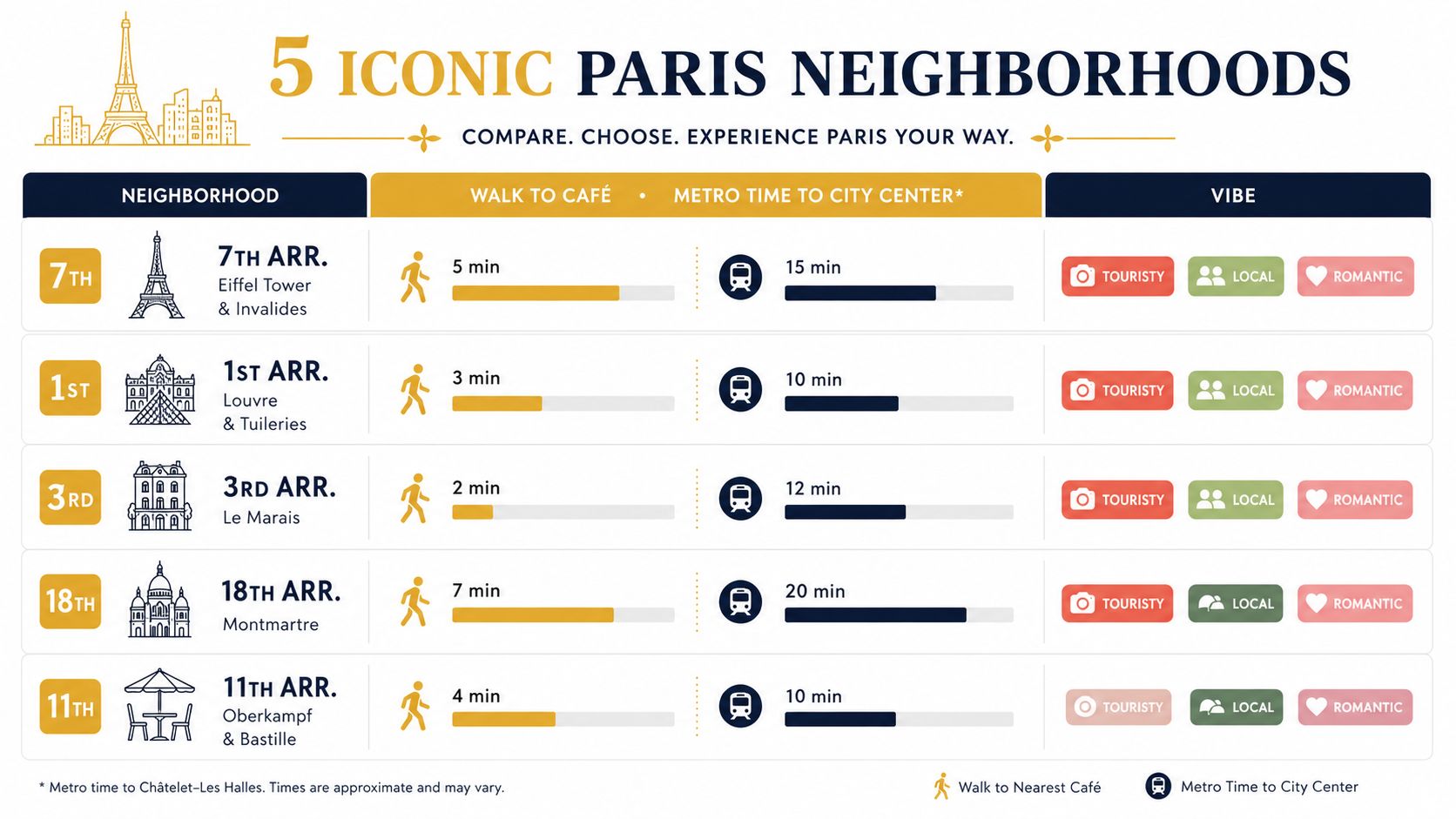
Le Marais is the first choice for many first-timers because it gives you walkability, style, and easy access to central sights. It feels lively, central, and it is usually the cleanest answer when you want Paris without chaos.
Saint-Germain is the quieter, more polished Left Bank option. I would choose it if you care more about long meals, cafés, and a softer evening rhythm than about standing in the middle of every tourist stop.
The 1st and 8th are about landmark proximity and a more formal, upscale feel. Here you pay for convenience and polish, not discovery.
The 9th is where I send travelers who want better value, strong dining, and a less predictable hotel zone. It is a smart compromise if you want a good base without overpaying for a postcard address.
The 11th feels more local and less staged. If you like energy, neighborhood restaurants, and a trip that does not revolve around monuments, this is a strong call.
What to prioritize when you book
Book near a Métro node, not a famous street. A pretty address is nice, but a short walk to the train saves more time and energy than most travelers realize.
Paris is compact enough that you do not need to stay beside every sight, but you do want friction to be low. A neighborhood near transit beats a famous block with awkward connections. That matters even more if you are landing tired, carrying luggage, or traveling with kids.
Montmartre suits travelers who prioritize atmosphere, though it gives up convenience on a short stay. It is memorable, but it is not my top pick unless the vibe is the reason you came. If you want a practical base first and romance second, choose somewhere central and connected.
The cleanest booking strategy is simple. Pick the neighborhood that matches your travel mood, then check the distance to the nearest Métro stop before you compare room photos. That one habit prevents a lot of regret.
When to Go and How Long to Stay
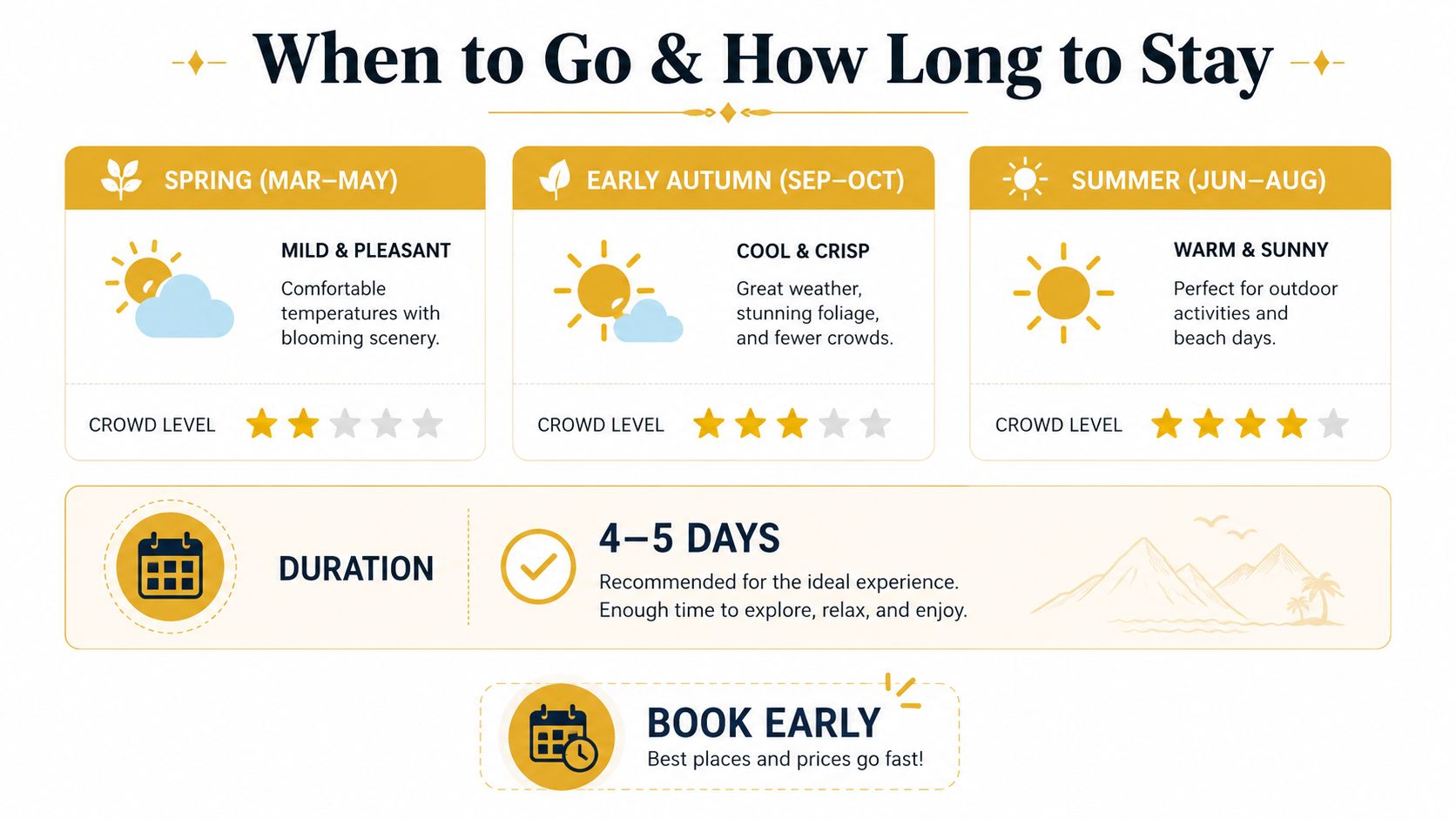
A Paris trip gets easier when you stop asking “when is the best time?” and start asking “what trade-off am I willing to accept?” Spring and early autumn usually give you the best balance of weather, light, and crowds, while summer brings the biggest pressure on queues and winter gives you value with shorter days. I would not book blindly around a season label. I'd book around the kind of day you want to have.
What the calendar is really buying you
Paris handled 48.7 million tourists in 2024, with 26.1 million French visitors and 22.6 million international visitors, and tourist spending reached €23.4 billion, up 8% from 2023 and 7% above 2019, according to the Paris Region's official results (official tourism release). That volume explains why crowd management matters so much in practice.
The same release says international tourism was still 2% below 2019, which is a useful reminder that Paris is highly recovered, but not perfectly “back to normal” in every segment. For you as a traveler, that means you should still expect booking pressure, especially around headline attractions and popular dining slots.
My rule: book the flight after you've chosen the neighborhood and checked the crowd profile of your dates. Paris punishes vague planning.
How long to stay
A 3-day trip is for first-timers who want the essentials and don't mind moving fast. You'll see the major sights, but you'll spend less time lingering in neighborhoods.
A 5-day stay is the sweet spot for most travelers. It gives you enough room for a day trip or a slower museum day without turning the itinerary into a sprint.
A 7-day stay is where Paris starts to feel lived-in. You can slow down, revisit areas you liked, and stop treating each day like a race.
Book the Eiffel Tower, the Louvre, and at least one dinner reservation before you finalize the flight. That order matters because the trip usually fails on booking availability, not on inspiration.
A Day-by-Day Paris Itinerary That Actually Works
The best Paris days follow a rhythm. Get the big-ticket sight done early, spend the middle of the day in one neighborhood, and end with a meal or a walk that doesn't require another transit puzzle. That pattern keeps the trip calm without making it boring.
Three days for a first visit
On day one, I'd start with the Eiffel Tower area and a Seine-side walk, then finish the evening with a booked dinner and a night view. The tower matters, but the surrounding riverfront is what makes the day feel like Paris instead of a queue.
On day two, do Île de la Cité, Notre-Dame, Sainte-Chapelle, and the Louvre area. Don't try to “do the Louvre” like a checklist item unless you've accepted that you're buying exhaustion. Focus on a few rooms, the architecture, and the experience of being there.
On day three, choose Montmartre in the morning and the 9th arrondissement in the afternoon for a shift in mood. That combination gives you atmosphere, a more local lunch, and one last round of shopping or coffee without crossing the whole city.
Five days for the version I'd recommend
A five-day stay lets you breathe. Day one can be the river and tower zone, day two the central historic core, day three Montmartre and the 9th, day four a day trip, and day five a slower neighborhood day in Le Marais or the Left Bank.
The key is not packing every famous sight into every day. Paris gives you more value when you stop early enough to enjoy dinner properly and leave room for the unexpected pastry shop, gallery, or square that looks better than the thing you were “supposed” to see.
Seven days for a slower, better trip
A week lets you do Paris with a more civilized pace. I'd use the extra time for a museum, a second café district, and one unhurried evening that's mostly about being outside. That's the difference between a trip you survived and one you remember well.
For trip pacing and outfit choices, especially if you're mixing sightseeing with dinners and a nicer hotel, this guide to fashion terms in French is a useful addition if you want the trip to feel more prepared and less guesswork-driven.
Budgeting the Trip Without Losing the Magic
Paris turns into a bad-value trip when travelers try to buy perfection in every category. That is the mistake to avoid. Pick one place to splurge, hotel, dinner, or a special experience, then keep the rest disciplined.
Build the budget around daily behavior
One source places typical visitor spend near €101 per day, while another estimates €95 to €265 per day depending on travel style (Paris travel stats). I'd treat that as a useful planning band rather than a fixed expectation. Your real total depends on lodging, how often you sit down for meals, and whether you book reserve-ahead experiences.
If you travel light and stay outside the most competitive areas, your day stays more controllable. If you want a central room, an elegant dinner, and a paid museum or tower visit, the number rises quickly.
Language matters here too. If you can handle a few common French phrases for travelers, you spend less time hesitating in cafés, taxis, and smaller shops, and the trip feels smoother immediately.
Daily budget tiers I'd use
| Category | Backpacker | Mid-Range | Treat-Yourself |
|---|---|---|---|
| Lodging | Small room, less central | Good central hotel or apartment | Prime location or standout hotel |
| Meals | Bakery, market, casual cafés | Mix of casual and sit-down | Booked bistro and one splurge meal |
| Sightseeing | Fewer paid entries | A few timed entries | Private or premium experiences |
| Transit | Métro and walking | Métro, walking, occasional taxi | More flexibility, less transit friction |
A trip feels more affordable when you decide where the money goes before you leave. I'd book one excellent dinner and keep the rest of the week simple. That gives you a better trip than pretending every meal needs to be a highlight.
My experience-based advice: Paris budgets go off the rails when travelers pay for convenience twice. If your hotel is central, you do not also need taxis for every move.
Keep your payment life simple, too. Use card where it is accepted, keep some cash for smaller purchases, and avoid an ATM that pushes a poor exchange option onto your card. The city rewards travelers who stay deliberate with money and do not improvise every purchase.
Getting There, Getting Around, and Booking Smart
Paris trips rise or fall on logistics. The city is easy to move through once you understand the pattern, but if you land tired and unbooked, the first half-day can turn messy fast. I want the practical bookings handled before you fly.
Choose the arrival that fits your tolerance for friction
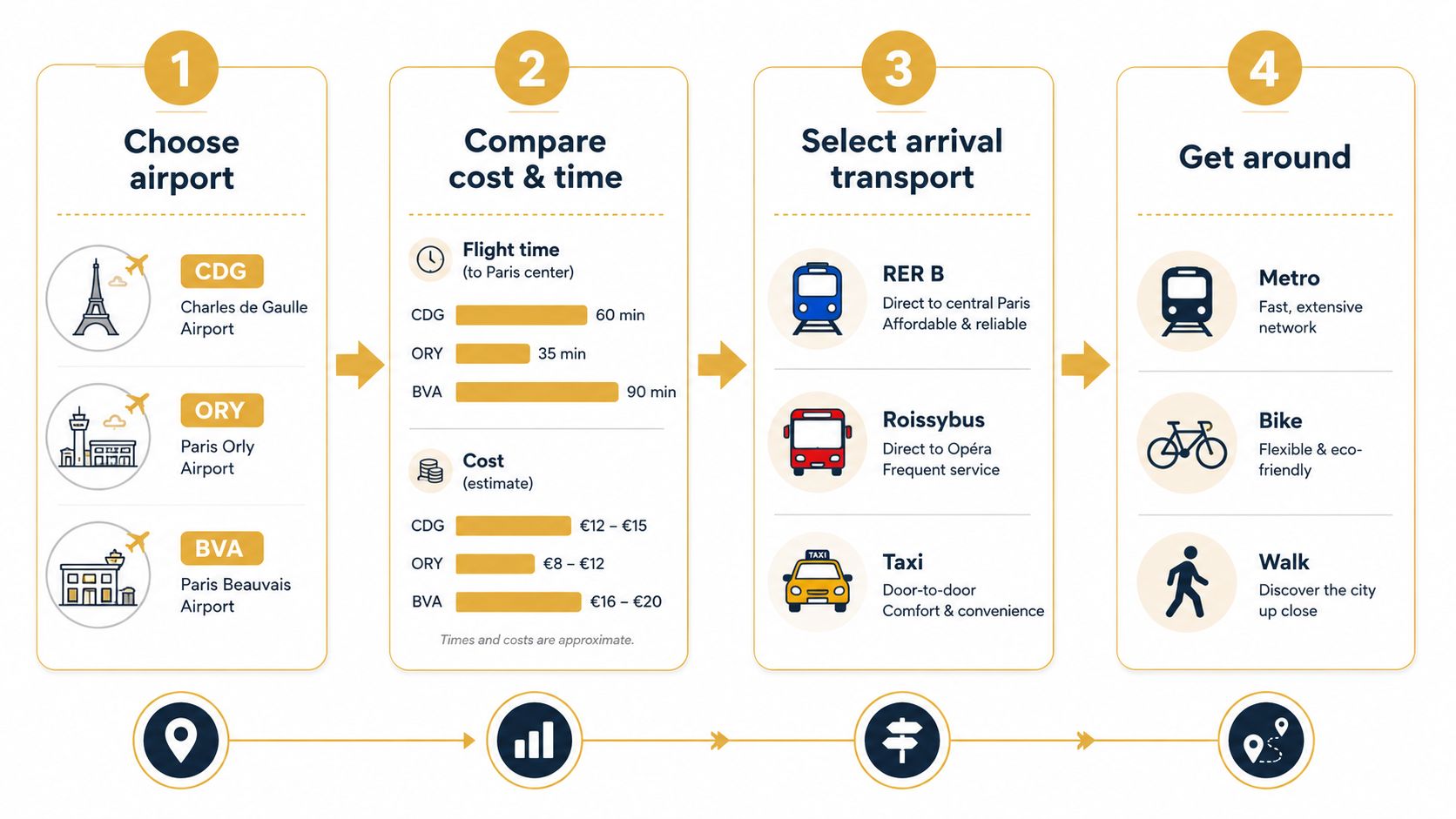
If you're coming from another European city like London or Amsterdam, a connection can make sense. If you're flying long-haul, Charles de Gaulle, Orly, and Beauvais each create a different arrival experience, and you should choose transport based on how much stress you want to avoid.
From CDG, the RER B is the budget option, but a taxi or pre-booked transfer is usually easier if it's your first trip or you're dragging luggage. The métro is the workhorse once you're in the city, and that should be the backbone of most movement.
Get the reservations that matter
If you only pre-book a few things, make them these, museum time slots, Eiffel Tower access, one dinner reservation, and one day trip. Paris rewards people who plan the pressure points and keep the rest loose.
The Eiffel Tower's scale is one reason to think ahead. The climb to the top involves 1,665 steps if you don't take the elevator, and the tower was built for the 1889 World's Fair as a temporary installation intended to stand for 20 years (World Strides). Pick the ticket type that matches your legs and your patience.
Move through the city the easy way
The Métro plus walking covers most of what you'll do. It is faster than trying to solve every trip by taxi, and it keeps the day flexible. Stay close to a station if you want the city to feel easy.
For basic trip language, signage, and the kind of phrases that make café, taxi, and hotel interactions smoother, keep common French phrases for travelers handy before departure. That small bit of prep helps more than people expect.
Day Trips, Family Travel, and a Real Client Story
Paris gets even better when you stop assuming the city boundary is the whole trip. A good day trip adds contrast, and a good family rhythm turns a supposedly difficult destination into a very manageable one. I'd rather see travelers do one strong side trip well than cram three weak outings into a rushed week.
Which day trip is worth your time
Versailles is the easiest first choice if you want classic grandeur and don't mind a full day. Giverny is softer and more garden-focused, and Reims makes sense if the goal is a city-plus-regions contrast rather than a palace day. I still think Versailles is the best fit for a first Paris vacation because it gives you an unmistakable sense of scale.
If you're traveling with children, the main issue isn't whether Paris is family-friendly, it's whether the pace is. The city works very well with kids when you choose parks, one or two signature museums, and a neighborhood base that reduces unnecessary transit.
A family story that gets this right
One family I worked with prepared their children before departure with targeted French lessons, and the trip changed once the kids could greet shopkeepers and order their own pain au chocolat. The parents told me the difference wasn't just practical, it changed the tone of the whole week. The children stopped feeling like passive passengers and started participating.
That's the part most trip planning misses. A little language readiness makes restaurants, bakeries, and small interactions feel cooperative instead of performative. It doesn't turn you into a local, and it doesn't need to.
What I'd do with kids in Paris
Choose a stroller-friendly base, use parks as reset points, and keep one museum day modest rather than ambitious. Don't try to impress anyone with how much you can cover. A family trip gets better when the adults stop chasing the full list and start protecting the mood.
For families mapping the trip in advance, this French travel itinerary guide is a sensible starting point if you want the language side to support the itinerary instead of lagging behind it.
Your Paris Booking Checklist and Next Step
If you want the trip to feel smooth, keep the booking order simple. Dates first, neighborhood second, transit third, and only then the nice extras. That sequence keeps you from overpaying for the wrong convenience.
The checklist I'd use myself
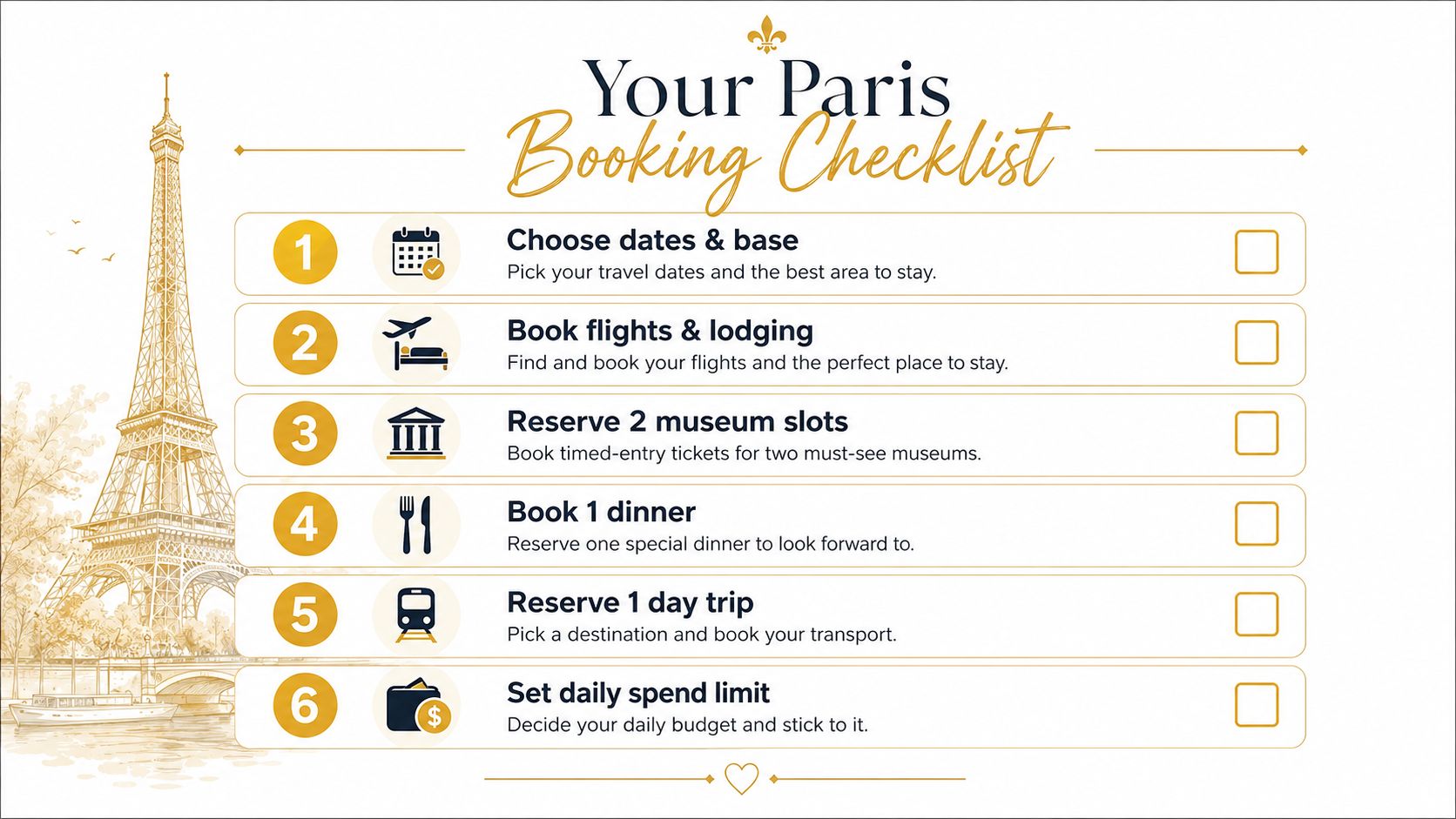
- Choose your dates and base. Pick a neighborhood that matches your trip style before you compare pretty hotel rooms.
- Book flights and lodging. Lock the arrival logistics and stay near a Métro stop.
- Reserve two museum slots. Don't leave the biggest entries to chance.
- Book one dinner. One good reservation beats five vague restaurant ideas.
- Reserve one day trip. Versailles is the safest first pick.
- Set your daily spend limit. Decide what you'll splurge on before you land.
The biggest mistake people make is waiting to “feel ready.” Paris rewards people who make the first booking and then let the trip become real. Once the base is set, everything else gets easier.
If you want to speak a little more confidently on this trip, and on the next one too, I'd start with a personalized lesson plan rather than another generic app. A free 20-minute consultation with Elite French Tutoring is the cleanest next step if you want French lessons timed to your departure and built around what you need in Paris.