Skip to content
You're standing at a café counter while the queue behind you moves quickly. The menu offers un café, un allongé, un chocolat chaud, local beer, several wines, and names you recognize only vaguely. Later, a restaurant server asks whether you'd like red, white, or sparkling wine, and at an evening gathering someone offers l'apéro. Knowing the names is useful, but knowing what to choose in the moment is what makes travel easier.
This guide takes a practical route through 10 popular drinks in France, from morning coffee and family-friendly hot chocolate to wine with dinner, Champagne at a celebration, pastis before a meal, cider in Normandy or Brittany, and beer in regional bars. You'll find the trade-offs that matter when buying or ordering, along with phrases you can use immediately.
The comparison table at the end is designed as a quick decision tool. Use it to match each drink with an occasion, flavor, region, and buying context. The phrase bank will help you greet staff, ask for recommendations, describe what you like, and avoid ordering more than you intended.
Table of Contents
- 1. French Wine Selection for Travel and Conversation
- 2. French Wine Buying Guide
- 3. French Coffee Culture and Café Etiquette
- 4. French Hot Chocolate and Specialty Coffee
- 5. Champagne and Sparkling Wine
- 6. Champagne Buying and Tasting Guide
- 7. Pastis and Digestifs
- 8. French Cider and Apple Products
- 9. French Beer Selection
- 10. Beverage Ordering Phrases and Etiquette
- Comparison of 10 Popular French Drinks
- Choose Your Drink, Then Practice the Order
1. French Wine Selection for Travel and Conversation
Wine remains culturally central, but it shouldn't be treated as the only answer to the question of popular drinks in France. INSEE reports that French households spent 2.9% of their budget on beverages consumed at home in 2018, compared with 6.4% in 1960. The same source records annual household spending of 476 euros on non-alcoholic beverages and 707 euros on alcoholic beverages, while noting that France was the eighth-largest consumer of pure alcohol per person in the European Union in 2016. These figures show a long transition, not a frozen wine stereotype. INSEE's household beverage data is useful context before you choose what belongs in your own glass.
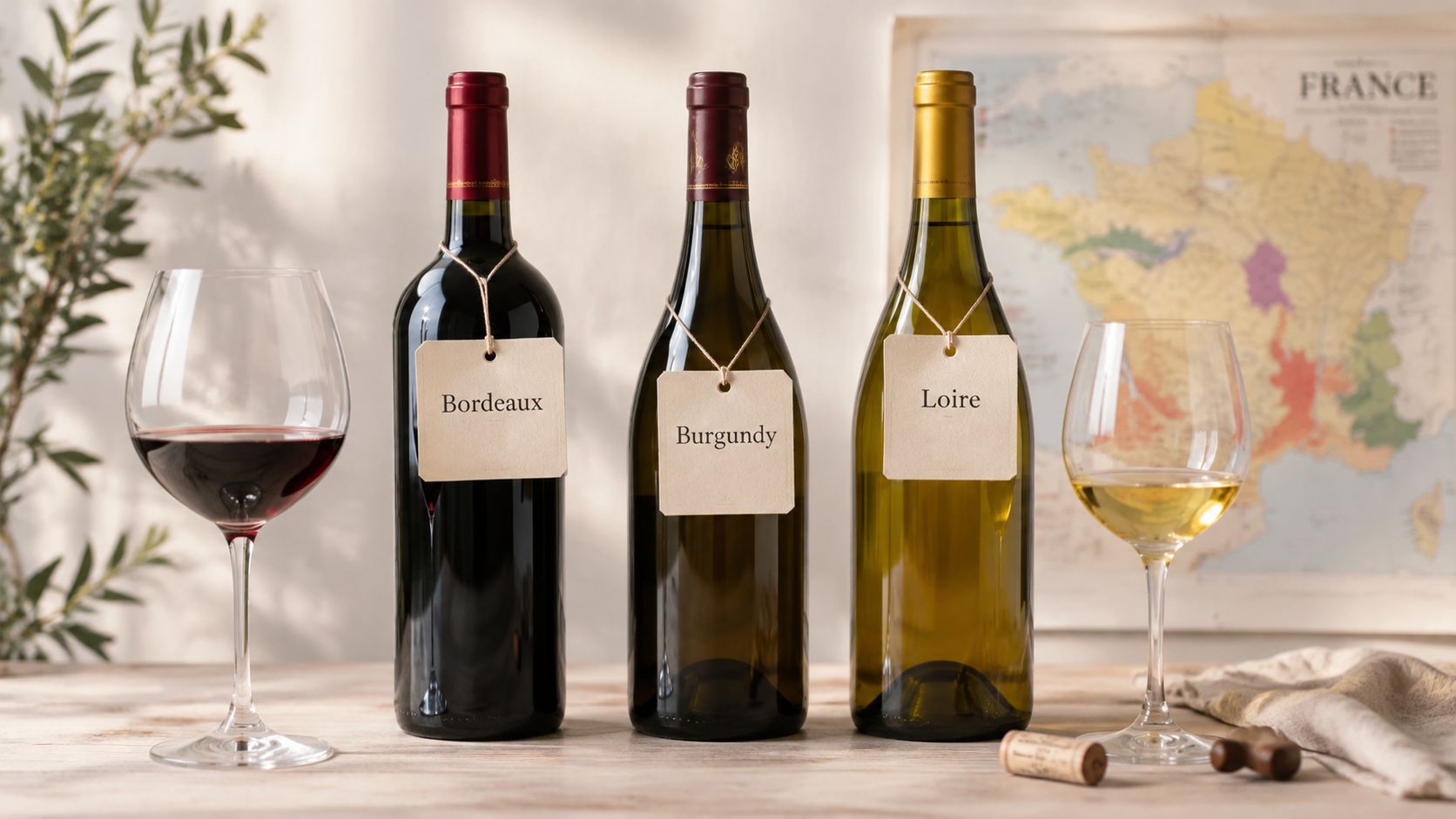
For travel, start small. Pick one region, learn a few representative styles, and practice describing them without trying to memorize every appellation. In Lyon, for example, a traveler interested in Northern Rhône wines can ask about Côte-Rôtie while keeping the conversation focused on body, acidity, and food pairing.
Order with a useful level of confidence
Try:
- For a red: Je voudrais un vin rouge léger, s'il vous plaît.
- For guidance: Qu'est-ce que vous recommandez avec ce plat ?
- For a regional suggestion: Avez-vous un vin de la région ?
Wine vocabulary becomes easier when it serves a real decision. The guide to learning French through French wine can help you connect regional knowledge with conversation practice rather than studying isolated terminology.
A structured tasting, whether at a local wine shop, wine club, or virtual event, gives you a reason to compare bottles aloud. Ask for a recommendation, taste one style carefully, and make notes in French. That approach works better than buying several unfamiliar bottles without knowing what you're trying to learn.
A short visual introduction can also help you recognize the language used around French wine:
2. French Wine Buying Guide
Buying French wine is easier when you separate occasion, food, and budget before you look at labels. For a casual meal, a lesser-known appellation may offer a better fit than a famous name chosen only for prestige. For a business dinner, reliable service and a clear food pairing often matter more than showing off an expensive bottle.
At a wine shop, give the staff a usable brief. Say what you're eating, whether you prefer red or white, and whether you want something light, dry, fruity, or structured. Je cherche un vin blanc sec pour accompagner le poisson tells the adviser far more than “I need a French white.”
Make the bottle earn its place
Use this buying sequence:
- Start with the meal: Ask for a wine that supports the dish instead of competing with it.
- Compare regions: Explore a less familiar area before assuming the most famous appellation is the best value.
- Check provenance: For a higher-priced bottle, confirm where it came from and how it was stored.
- Use online filters carefully: Region, vintage, and reviews can narrow the choice, but they shouldn't replace provenance checks for valuable bottles.
A wine shop is also a language-learning opportunity. You can ask, Quel vin français recommandez-vous pour commencer ? or Pouvez-vous me conseiller quelque chose de fruité ? The answer may introduce vocabulary you won't encounter in a standard lesson.
For deeper independent study, choose a resource that explains labels and regions in context. The best French wine books for building practical knowledge can support your preparation before a trip or tasting.
Don't buy a prestigious name just because you recognize it. A bottle that matches your meal and your palate is a better purchase than one selected for reputation alone.
3. French Coffee Culture and Café Etiquette
Coffee is often the safest first order when you need a low-pressure interaction. At a traditional café, un café generally means an espresso-style coffee. If you want a longer drink, ask for un allongé. For espresso with milk, un café crème is a useful phrase, especially around breakfast.
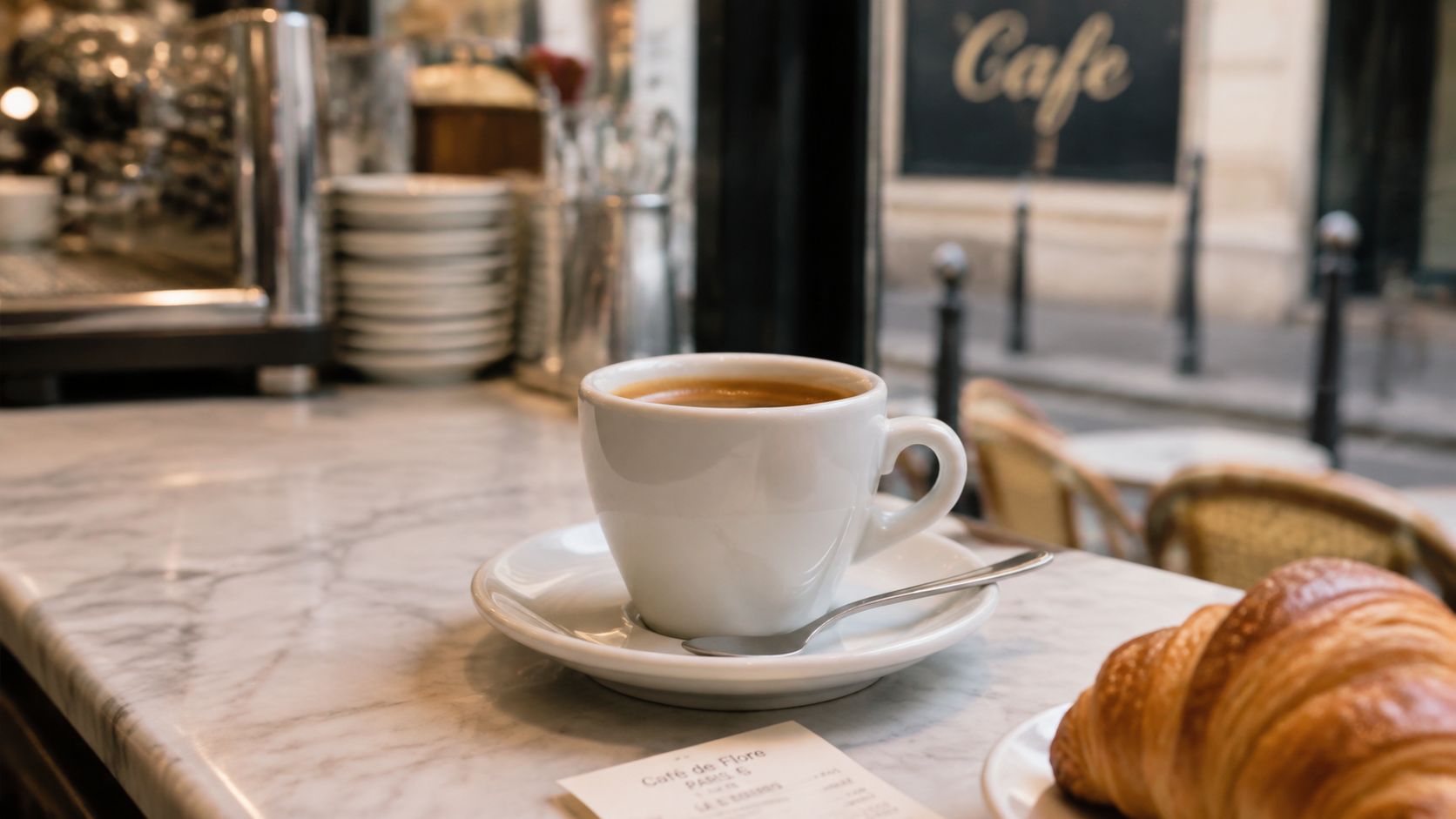
The interaction starts before the order. Say Bonjour when you enter, make eye contact, and avoid treating the person behind the counter as an obstacle between you and the drink. When you leave, say Au revoir. These small habits make your French sound more natural and help you read the rhythm of the room.
Choose the setting, not just the coffee
At the bar, the experience is usually faster and more economical. At a table, you can linger, observe, and practice conversation, but the price can be higher. A remote worker in Lyon might use the same neighborhood café repeatedly, order un allongé, and gradually build familiarity with staff and regulars. The value isn't only the coffee. It's the repeated chance to speak.
Useful phrases include:
- Simple order: Un café, s'il vous plaît.
- Longer coffee: Un allongé, s'il vous plaît.
- Milk coffee: Un café crème, s'il vous plaît.
- Polite clarification: C'est à quel prix ?
Don't overcomplicate your first order. Watch what nearby customers do, listen to the server, and choose a familiar phrase. The French café dialogue guide is a practical way to rehearse the exchange before you arrive.
A café becomes useful language practice when you return often enough to recognize people and routines. One visit helps you order. Several visits help you participate.
4. French Hot Chocolate and Specialty Coffee
French hot chocolate can be much thicker and more dessert-like than many travelers expect. If you want to try it, say Un chocolat chaud, s'il vous plaît. If you prefer to drink it immediately, add Pas trop chaud, s'il vous plaît. You can also ask whether it's thick, light, sweet, or prepared with milk.
The choice depends on what you want from the stop. A thick chocolat chaud suits a slow afternoon in a tearoom, particularly with a pastry. A lighter specialty coffee may be more practical if you're working, walking between appointments, or looking for a shorter visit.
Turn an order into a routine
The most useful café ritual includes what happens after the drink arrives. Sit down, take your time, and listen to the conversations around you. An expat family in Paris might make a weekly hot-chocolate outing part of its routine, using the same phrases each time and gradually adding small conversations with staff.
Try these variations:
- Temperature: Pas trop chaud, s'il vous plaît.
- Milk preference: Avec du lait, s'il vous plaît.
- Less sweetness: Pas trop sucré, s'il vous plaît.
- Recommendation: Quel chocolat chaud recommandez-vous ?
A famous tearoom may provide atmosphere and a memorable presentation, but a neighborhood café often offers a more relaxed setting for returning customers. The trade-off is straightforward. Choose the destination venue for the experience, and choose the local café for repeated practice and rapport.
Hot chocolate is also a strong family option because the order is simple and the ritual invites conversation. Children can practice bonjour, s'il vous plaît, and merci without the pressure of discussing a wine list.
5. Champagne and Sparkling Wine
Champagne is a celebration drink, but sparkling wine is broader than Champagne. The protected name refers to wine from the Champagne region, while other French sparkling wines belong to different regional categories. If the occasion calls for cultural precision, ask what the bottle is rather than using Champagne as a general word for every sparkling wine.
The label term brut usually points you toward a dry style. Extra brut is drier still, while sweeter dosage styles suit drinkers who prefer more noticeable sweetness. Taste matters more than memorizing the terminology, so ask a specialist to explain the bottle you're considering.
Buy for the occasion
For a formal celebration, an established house can make the purchase simple. Names such as Moët & Chandon, Veuve Clicquot, and Pol Roger are familiar choices, while Dom Pérignon is associated with a more prestige-oriented purchase. The right bottle depends on whether you're serving a toast, pairing sparkling wine with food, or giving a gift.
Keep the practical details in mind:
- Storage: Keep the bottle cool and away from light.
- Serving: Chill it properly before opening.
- Opening: Release the pressure carefully instead of creating a dramatic pop.
- Conversation: Ask whether the wine is dry, fresh, toasty, or suited to food.
Practical rule: Choose the bottle for the moment, then choose the French vocabulary that lets you explain the choice.
A parent preparing for a school gala might practice un Champagne brut pour célébrer and Quelle bouteille conseillez-vous ? A professional entertaining French partners may need more precise vocabulary about style and pairing. The drink provides a natural subject, but the conversation is the skill.
6. Champagne Buying and Tasting Guide
A good Champagne purchase begins with a service plan. Are you opening it immediately, carrying it to dinner, or storing it for a celebration? A bottle bought at the last minute may need careful chilling, while a gift requires attention to transport, light, and presentation.
At a wine shop, explain the use case in French:
Je cherche un Champagne brut pour un dîner.
Je voudrais une bouteille à offrir.
Quel Champagne accompagne bien les fruits de mer ?
The adviser can then guide you toward a style that fits the occasion. Established houses may be easier for a first purchase because their labels are familiar, but smaller producers can offer a more distinctive conversation when you have access to a knowledgeable shop.
Taste before you judge
Pour a small amount and observe the bubbles, aroma, and balance. Focus on whether the wine feels dry, fresh, creamy, lean, or rich. Don't assume a higher price automatically means you'll prefer it. A bottle that suits the food and the guests is more successful than a bottle chosen only for status.
If you're comparing dosage, taste the wines side by side when possible. This teaches your palate faster than reading label definitions alone. It also gives you useful phrases:
- Dry: C'est très sec.
- Balanced: C'est bien équilibré.
- Fresh: C'est frais et léger.
- Recommendation: Vous avez une alternative plus accessible ?
Chilling and storage affect the experience, so avoid leaving the bottle in direct sun or carrying it loosely through a hot journey. Buy from a reputable retailer, ask about storage, and plan the serving time before you pay.
7. Pastis and Digestifs
Pastis belongs to the apéritif, the social drink before a meal. Its anise character can be assertive, so it's a poor choice if you dislike licorice-like flavors. It can be an excellent choice when you're in Provence or another setting where the ritual matters as much as the beverage.
Order: Un pastis, s'il vous plaît. The server may provide water separately or bring it with the drink. Add water gradually until the flavor and strength suit you. A traditional mixing range is about one part pastis to three to five parts water, as described in practical French drinking guidance from Devour Tours' Paris beverage guide.
Understand the social timing
Pastis is not a substitute for wine with every meal. It's a before-dinner choice, often accompanied by small snacks and conversation. A digestif comes after the meal and may be a small serving of a spirit or liqueur. If you're offered one, you can accept a small portion or say, Non merci, je vais prendre un café.
If you're invited to l'apéro, ask what to bring. Qu'est-ce que je peux apporter ? is more useful than arriving with a random bottle. Wine, pastis, or a non-alcoholic alternative may all be appropriate depending on the host and group.
Ask about the local custom before ordering a strong drink. Curiosity is more useful than pretending you already know the ritual.
Pastis also works as a conversation opener. Ask, Comment le préparez-vous ? or Est-ce une spécialité de la région ? You'll learn more from the answer than from ordering the drink.
8. French Cider and Apple Products
French cider is especially associated with Normandy and Brittany, where it fits naturally alongside regional food and apple products. It's fermented and alcoholic, so don't confuse cidre with the sweet, non-fermented apple cider familiar in parts of the United States.
The basic choice is easy. Cidre doux is the sweeter option, while cidre brut is drier. If you're eating crêpes, galettes, cheese, or a regional dessert, cider may be a more locally connected purchase than a generic soft drink.
Order by style and place
Use:
- Sweeter cider: Un cidre doux, s'il vous plaît.
- Drier cider: Un cidre brut, s'il vous plaît.
- Local guidance: Quel cidre recommandez-vous ?
- Producer question: Cette bouteille vient d'où ?
A family visiting Normandy can make a cider tasting more meaningful by visiting a cidery and asking about apple varieties, fermentation, and aging. A manager working with Normandy colleagues might use the same knowledge as an easy opening for regional conversation.
The trade-off is between convenience and context. A supermarket bottle is practical for a picnic, but a farm shop or cidery can provide a clearer sense of place and a better chance to ask questions. If you don't know what to buy, ask for a regional recommendation rather than choosing by label design.
Cider is also a useful bridge for travelers who want an alcoholic drink but don't want the weight or ceremony of a full wine selection. Start with a style, then let the producer or server refine the choice.
9. French Beer Selection
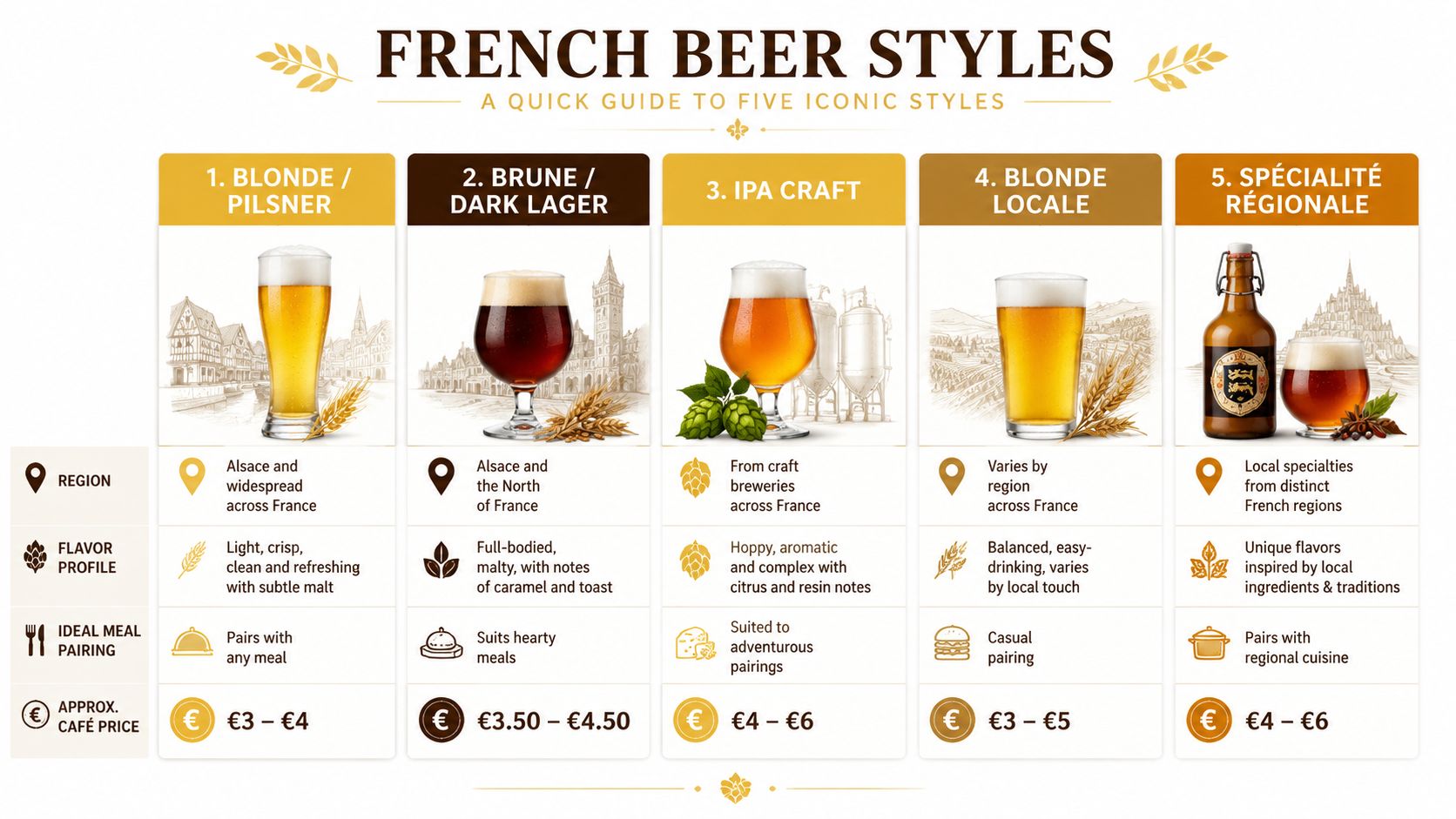
Beer has moved well beyond the old idea that France is only a wine country. The OFDT reports that in 2023, wine represented 52% of alcoholic drinks sold, compared with 25% for beer and 21% for spirits. The OFDT's alcohol overview also records pure alcohol sales at 10.35 litres per capita among people aged 15 and over in that year. The important practical point is that beer has a meaningful place in contemporary French drinking, especially in cafés, bars, and regional brewery scenes.
Alsace and northern France are strong places to explore beer culture. In Strasbourg, ask about a local beer rather than defaulting to an international brand. Quelle bière locale recommandez-vous ? gives the staff room to suggest something based on what you like.
Order by size and flavor
At the bar, une pression means draft beer. If you want a smaller serving, ask for une demi. Describe your palate with:
- Light preference: Je préfère les bières légères.
- Bitter preference: Je les préfère plutôt amères.
- Local option: Vous avez une bière de la région ?
Recent reporting describes a major shift in volume, with French beer reaching 22.1 million hectolitres compared with 22 million hectolitres for wine, the first reported year in which beer overtook wine by volume. The Vinetur report on beer and wine volume gives that comparison, while also describing beer's stronger position in at-home alcohol purchasing.
Beer works particularly well for informal professional conversation. A brewery visit in Strasbourg or a local beer recommendation in Lyon can create a more relaxed exchange than a formal wine discussion.
10. Beverage Ordering Phrases and Etiquette
The best ordering phrase is the one you can say comfortably. Start with Bonjour, place the order, and finish with merci. If you're unsure, Qu'est-ce que vous recommandez ? is polite and invites the server to help rather than forcing you to decode every option alone.
Keep this compact phrase bank available:
- Coffee: Un café, s'il vous plaît.
- Hot chocolate: Un chocolat chaud, s'il vous plaît.
- Wine: Je voudrais un vin blanc sec.
- Champagne: Je cherche un Champagne brut.
- Pastis: Un pastis avec de l'eau, s'il vous plaît.
- Cider: Un cidre brut, s'il vous plaît.
- Beer: Une pression, s'il vous plaît.
- Recommendation: Qu'est-ce que vous recommandez ?
- Budget: Je cherche quelque chose autour de ce prix.
Pay attention to where you sit
At a café, the bar is usually the quickest setting. A table gives you more time, but the price can be higher. A seated café order may carry a 30% to 50% markup compared with standing at the bar, according to the practical etiquette guidance supplied for this guide. Check the menu before settling in, especially in a heavily visited area.
Say Au revoir when you leave, even if the interaction was brief. Returning to the same café or bar can also make practice feel natural because you repeat familiar orders and gradually add questions.
For more travel-ready language, use this collection of common French phrases for travelers. Practice aloud before your trip, then keep your first real order short.
Comparison of 10 Popular French Drinks
| Title | Implementation Complexity 🔄 | Resource Requirements ⚡ | Expected Outcomes ⭐ | Ideal Use Cases 📊 | Key Advantages 💡 |
|---|---|---|---|---|---|
| French Wine Selection: Building Your Tasting Knowledge for Travel & Conversation | Medium 🔄🔄, requires repeated tastings | Moderate ⚡⚡, bottles, tastings, time | ⭐⭐⭐⭐⭐, confident ordering & terroir discussion | Travel, business dining, networking | Builds conversational fluency; budget-friendly options |
| French Wine Buying Guide | Low 🔄, shopping-focused guidance | Moderate ⚡⚡, purchasing budget varies | ⭐⭐⭐⭐, reliable purchasing decisions | Buying wine for events, gifts, collectors | Clear price brackets; sourcing and provenance tips |
| French Coffee Culture: Ordering Like a Local & Understanding Café Etiquette | Low 🔄, simple phrases & norms | Low ⚡, minimal cost, on-site practice | ⭐⭐⭐⭐, rapid conversational gains | Everyday travel, language practice, living abroad | High-impact basic vocabulary; immersive practice |
| French Hot Chocolate & Specialty Coffee: Crafting Authentic Café Conversations | Medium 🔄🔄, ritual and timing nuance | Low ⚡, café visits; occasional specialty shops | ⭐⭐⭐⭐, family-friendly café fluency | Family outings, afternoon social routines | Comforting, family-oriented vocabulary; social ritual access |
| Champagne & Sparkling Wine: Selecting, Tasting, and Discussing Premium Bottles | High 🔄🔄🔄, classification & tasting detail | High ⚡⚡⚡, premium bottles, storage needs | ⭐⭐⭐⭐⭐, signals credibility in formal settings | Celebrations, business entertaining, gifting | Producer/tasting knowledge; status and cultural credibility |
| Champagne Buying & Tasting Guide | Medium 🔄🔄, focused tasting & buying skills | High ⚡⚡⚡, investment for quality bottles | ⭐⭐⭐⭐, informed purchases & tasting literacy | Event purchasing, collectors, tastings | Dosage/vintage guidance; practical tasting notes |
| Pastis & Digestifs: Understanding French Aperitifs and After-Dinner Drinks | Low 🔄, simple rituals and phrases | Low ⚡, inexpensive per-glass costs | ⭐⭐⭐⭐, strong cultural ritual knowledge | Apéritif gatherings, after-dinner socializing | Memorable rituals; affordable cultural entry point |
| French Cider & Apple Products: Regional Varieties and Ordering Like a Local | Medium 🔄🔄, regional styles to learn | Low ⚡, generally affordable | ⭐⭐⭐⭐, builds regional rapport | Normandy/Brittany travel, local tastings | Regional specificity impresses locals; good conversation starter |
| French Beer Selection: Understanding Regional Breweries and Craft Beer Conversation | Medium 🔄🔄, basic brewing & vocab | Low ⚡, widely accessible | ⭐⭐⭐⭐, broadens cultural awareness | Casual socializing, craft-beer scenes, younger demographics | Demonstrates cultural range beyond wine; accessible connections |
| Beverage Ordering Phrases & Etiquette (Quick Reference) | Very Low 🔄, consolidated phrases | Very Low ⚡, no special resources | ⭐⭐⭐⭐⭐, immediate practical utility | Travelers, beginners, quick prep before outings | Portable cheat-sheet; high immediate ROI for real situations |
Choose Your Drink, Then Practice the Order
The right drink depends less on a fixed ranking than on the situation in front of you. For a quiet morning, coffee gives you the simplest interaction. Order un café at the counter if you want speed, or choose un café crème when breakfast and a longer pause are part of the plan. If you're nervous about speaking French, coffee is a forgiving starting point because the order is short and familiar.
For meals, wine remains the classic choice, but it isn't the only practical one. Ask for a regional bottle, describe the food, and let the server guide you. White wine may suit seafood, red wine may fit heartier dishes, and a lighter style can be easier to enjoy across a long meal. You don't need to know every appellation. One region, a few styles, and a handful of phrases are enough to begin a useful conversation.
Champagne belongs to celebrations, receptions, and moments when presentation matters. Choose a dry style if that suits your guests, protect the bottle from heat and light, and ask a specialist for a food pairing when the bottle will accompany a meal. Sparkling wine from outside Champagne can also be an intelligent alternative when you want bubbles without relying on the protected regional name.
Pastis is a social choice before dinner, especially in Provence. Mix it gradually with water and ask about local customs instead of assuming every region serves it identically. A digestif comes later and is usually a small portion. If alcohol isn't suitable, ask for coffee or another non-alcoholic option without apology.
Cider is the regional choice for Normandy and Brittany. Choose doux for sweetness and brut for dryness, then ask which bottle the producer or server recommends. Beer is especially useful in Alsace, northern France, and modern craft-beer settings. Order une pression or une demi, describe whether you like light or bitter beer, and ask for something brewed locally.
Hot chocolate is the most approachable family option, particularly when you want a slower café ritual. Expect a thicker drink in some tearooms, and use pas trop chaud if you want to drink it right away. French public-health law groups non-alcoholic beverages as drinks that are unfermented or contain no more than 1.2 degrees of alcohol after fermentation begins, and it specifically includes mineral or carbonated waters, fruit and vegetable juices, lemonades, syrups, infusions, milk, coffee, tea, and chocolate. The relevant French Public Health Code provision provides that useful category distinction.
Drink responsibly, especially when moving between an apéritif, a meal, and a digestif. French beverage confidence isn't about ordering the strongest or most prestigious option. It's about choosing intentionally, asking a clear question, and staying present in the conversation.
Before your trip, consider booking Elite French Tutoring's free 20-minute consultation to practice a customized café, restaurant, travel, or professional scenario. Private online and in-person lessons can focus on the exact interactions you expect, from ordering wine in Lyon to making small talk at a Paris café, so you arrive with phrases you can use.