A Babbel learner can finish lesson after lesson and still hesitate when a native speaker asks a simple question. The problem may not be motivation. You may need pronunciation correction, more speaking time, a clearer route to DELF or DALF certification, or a study format that fits an unpredictable work schedule.
The best Babbel alternative depends on the outcome you want, the time you can protect each week, your budget, and whether you're willing to practise live with another person. An app can be excellent for building a daily habit, but it may be the wrong investment if your main bottleneck is spontaneous conversation.
The comparison below looks at ten practical alternatives, from gamified apps and structured self-study courses to live classes, tutor marketplaces, and bespoke instruction. I'll compare each option by learning style, likely use case, pricing model, strengths, limitations, and the point at which private tutoring may become more efficient than adding another app.
Table of Contents
- 1. 10 Duolingo Alternatives for Every French Learner
- 2. Duolingo
- 3. Rosetta Stone
- 4. Pimsleur
- 5. Busuu
- 6. Memrise
- 7. Rocket Languages
- 8. Lingoda
- 9. italki
- 10. Mango Languages
- Top 10 Babbel Alternatives Comparison
- Choose the Tool That Removes Your Biggest Bottleneck
1. 10 Duolingo Alternatives for Every French Learner
The right alternative isn't necessarily the app with the most polished interface. It's the tool that fixes the skill holding you back.
A child in a bilingual school may need curriculum-aligned support. A traveller may need fast pronunciation and survival phrases. A professional may need business French for meetings, while a DELF or DALF candidate needs feedback on writing and speaking that an automated exercise can't reliably provide. These learners shouldn't all buy the same product.
The broader market helps explain why app-first products are so common. One market estimate values online language learning at USD 21.06 billion in 2025, with a projection of USD 50.82 billion by 2031 and a 15.83% CAGR. Another estimates USD 24.56 billion in 2025, rising to USD 63.43 billion by 2032. In one report, self-learning apps represented about 56.35% of revenue in 2025, while another found that self-learning apps held 64.2% of revenue in 2024. These figures come from different market methodologies, but both point to strong demand for flexible, on-demand learning tools. See the online language learning market analysis for the underlying estimates.
Match the tool to the result
- Daily habit building: Choose a gamified app such as Duolingo when consistency is your main obstacle.
- Structured progression: Consider Rosetta Stone, Busuu, or Rocket Languages when you want a defined self-study path.
- Pronunciation and listening: Pimsleur is better suited to learners who can study while commuting or walking.
- Vocabulary and phrase recall: Memrise can reinforce high-frequency language through short native-speaker clips.
- Live accountability: Lingoda provides scheduled teacher-led classes and a defined syllabus.
- Targeted outcomes: italki or bespoke tutoring makes more sense for exam preparation, business French, accent coaching, or rapid speaking development.
A cheap app can become an expensive choice if it leaves your main weakness untouched. Independent survey data on Duolingo illustrates the trade-off. Among 109 users, 64% rated their experience as good or excellent, while 30.7% reported drawbacks including limited speaking practice and repetitive content. The survey findings on language app use support a practical conclusion: convenience and engagement matter, but they don't automatically produce confident conversation.
Practical rule: Buy the tool that gives you the practice you're currently avoiding, not the one that merely makes study feel productive.
For French learners who need a personalised route, 10 Duolingo alternatives for every French learner offers a broader outcome-based comparison. It's useful when you're deciding whether to combine an app with tutoring rather than replacing one app with another.
2. Duolingo
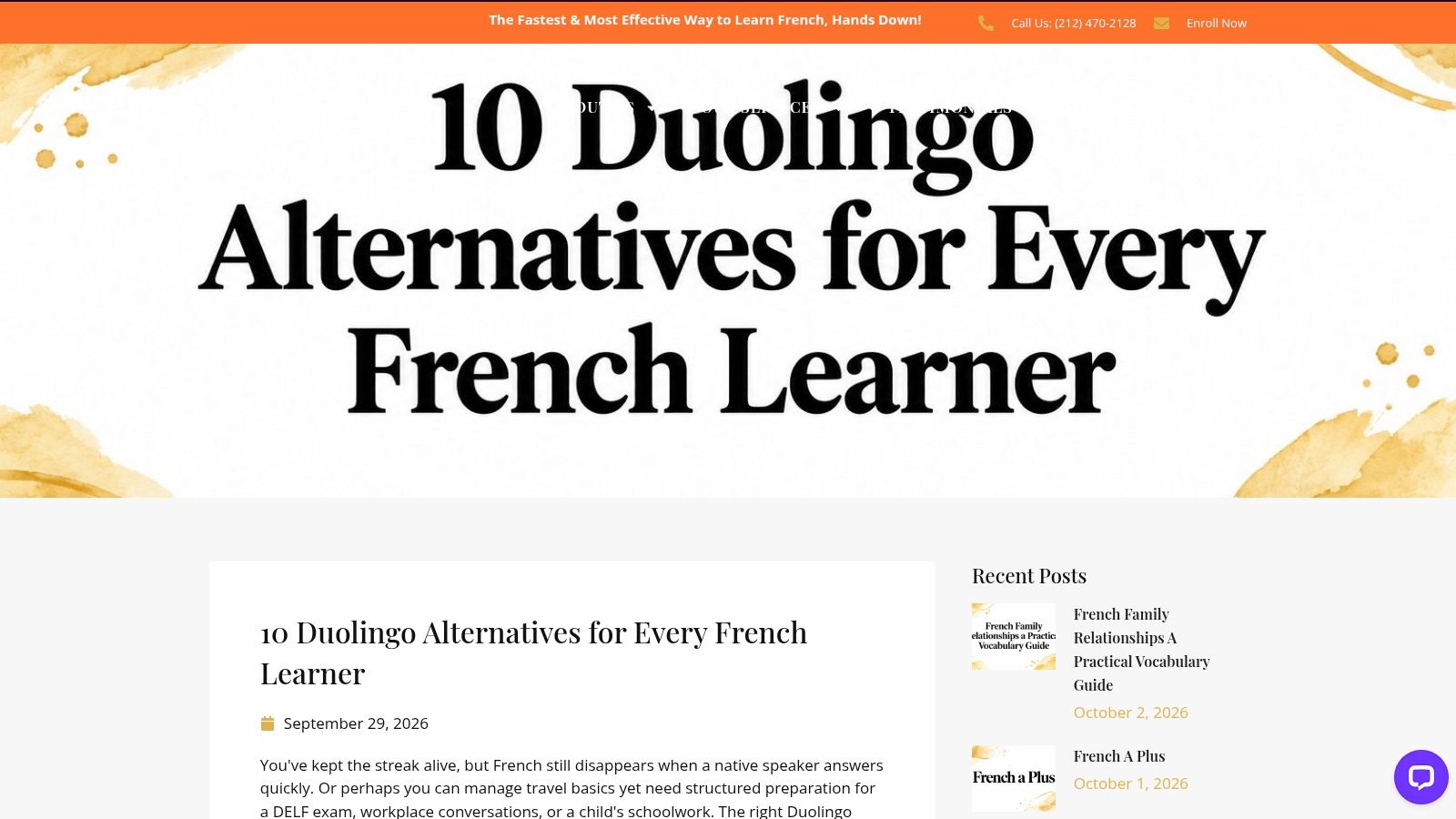
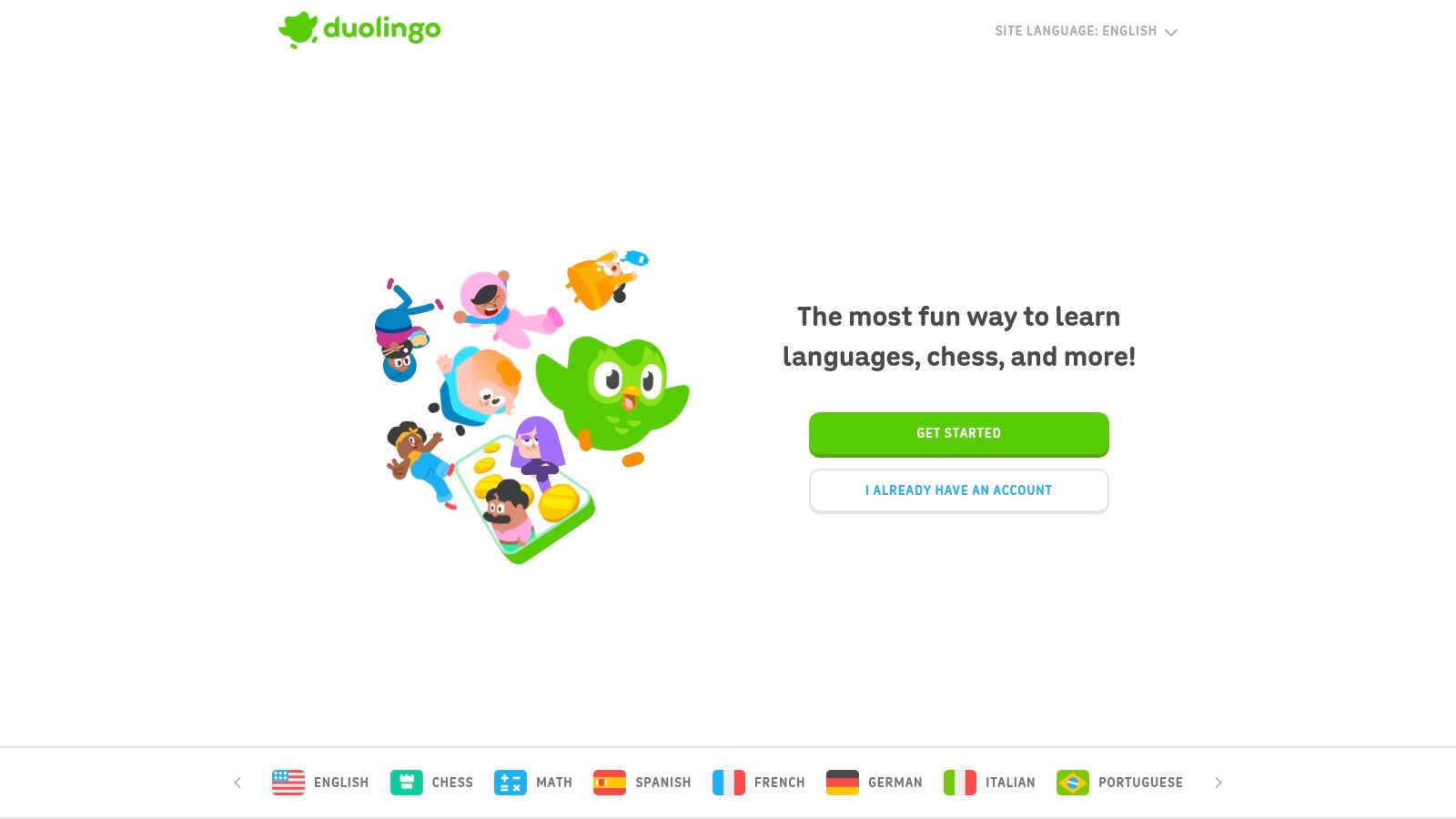
Duolingo is the easiest starting point for learners whose biggest problem is showing up. Its bite-size lessons, streaks, points, and leaderboards turn practice into a repeatable daily routine, and the free core experience removes much of the buying friction.
The mobile-first format works well for short sessions between other tasks. Super adds an ad-free experience and extra practice, while Max adds AI tutor features such as Roleplay and Explain My Answer in supported languages. Availability can depend on the language, platform, and region, so check the current offer before choosing a paid tier on the official Duolingo website.
The weakness appears when your goal moves beyond recognition and controlled exercises. A learner can know a fair amount of vocabulary yet struggle to answer a follow-up question, sustain a conversation, or receive a precise explanation of recurring pronunciation errors. Duolingo's community and gamification make it engaging, but engagement isn't the same as individual correction.
Best use for French learners
Use Duolingo as a habit-building layer, especially if you're restarting French or need a low-pressure way to maintain contact with the language. It can also complement a weekly tutor by keeping vocabulary and basic structures active between lessons.
Don't make it your only tool if you're preparing for an oral exam, leading meetings in French, or trying to speak spontaneously. In those cases, pair the app with online French lessons that include live feedback and guided conversation.
Best fit: Learners who need consistency first and depth second.
3. Rosetta Stone
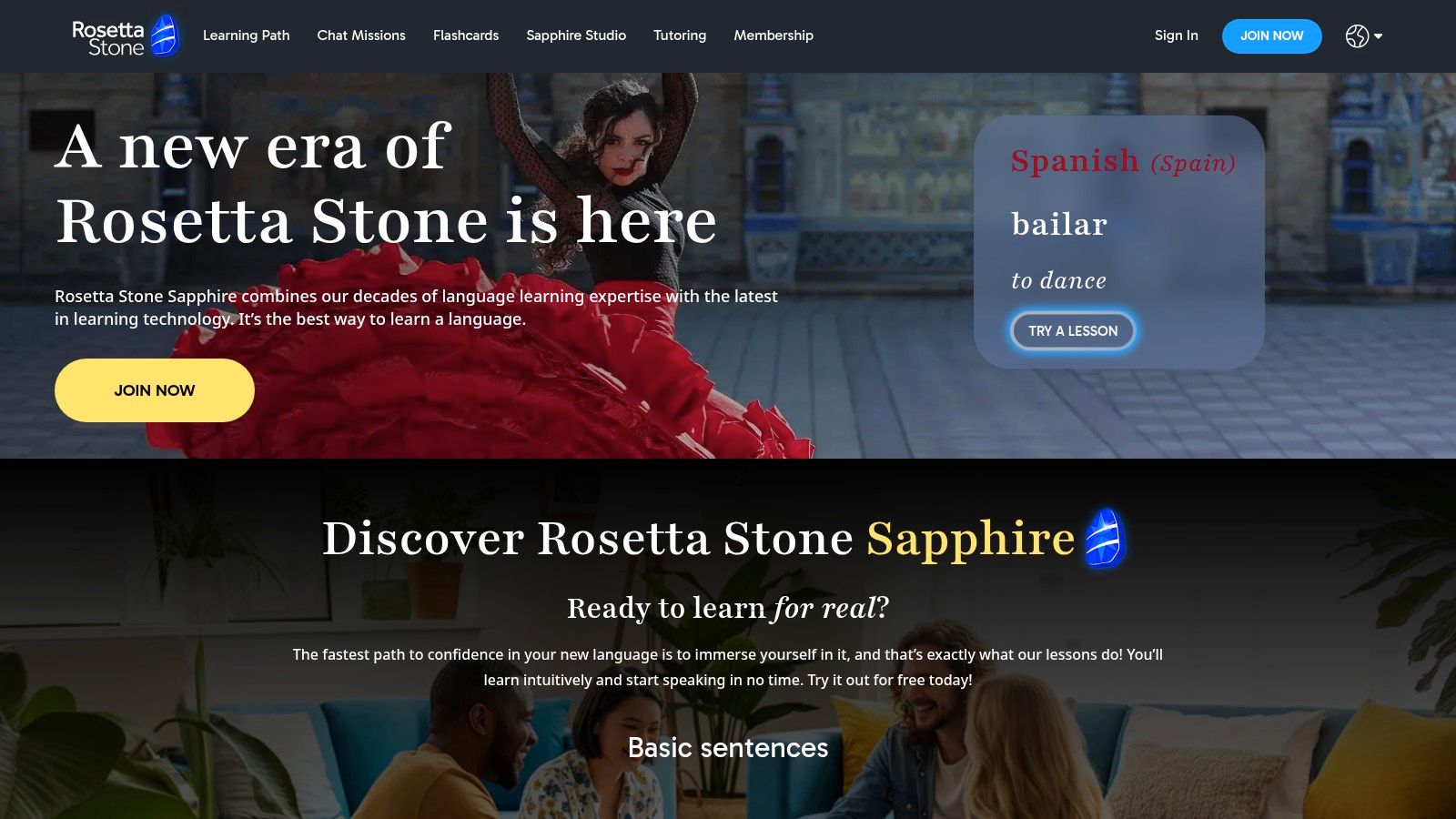
Rosetta Stone takes an immersion-first approach. Instead of presenting every word through an English equivalent, it uses pictures, patterns, and contextual repetition to encourage direct associations with French.
That method suits learners who dislike translating and prefer discovering meaning from examples. The course flow is cohesive across its mobile and desktop apps, and speech recognition gives you a way to practise pronunciation without immediately scheduling a live session. Optional tutoring sessions can add guidance when independent study starts to feel unclear. You can review the current packages on the Rosetta Stone language learning platform.
The trade-off is pace. A learner with a specific deadline may find the translation-light method slower than a course that explains grammar directly. If you're preparing for a particular school unit, business presentation, or exam task, you may need to supplement the programme with targeted instruction rather than follow the sequence without adjustment.
When Rosetta Stone makes sense
Choose it if you want a consistent immersion-style course and you're comfortable inferring patterns before receiving a full explanation. It can be especially useful for building a foundation without relying heavily on English prompts.
It's less suitable as a standalone solution when you need immediate conversation practice or detailed correction of written French. A tutor can identify whether your problem is pronunciation, grammar transfer, word order, or hesitation, then adapt the session instead of sending you to the next general lesson.
4. Pimsleur
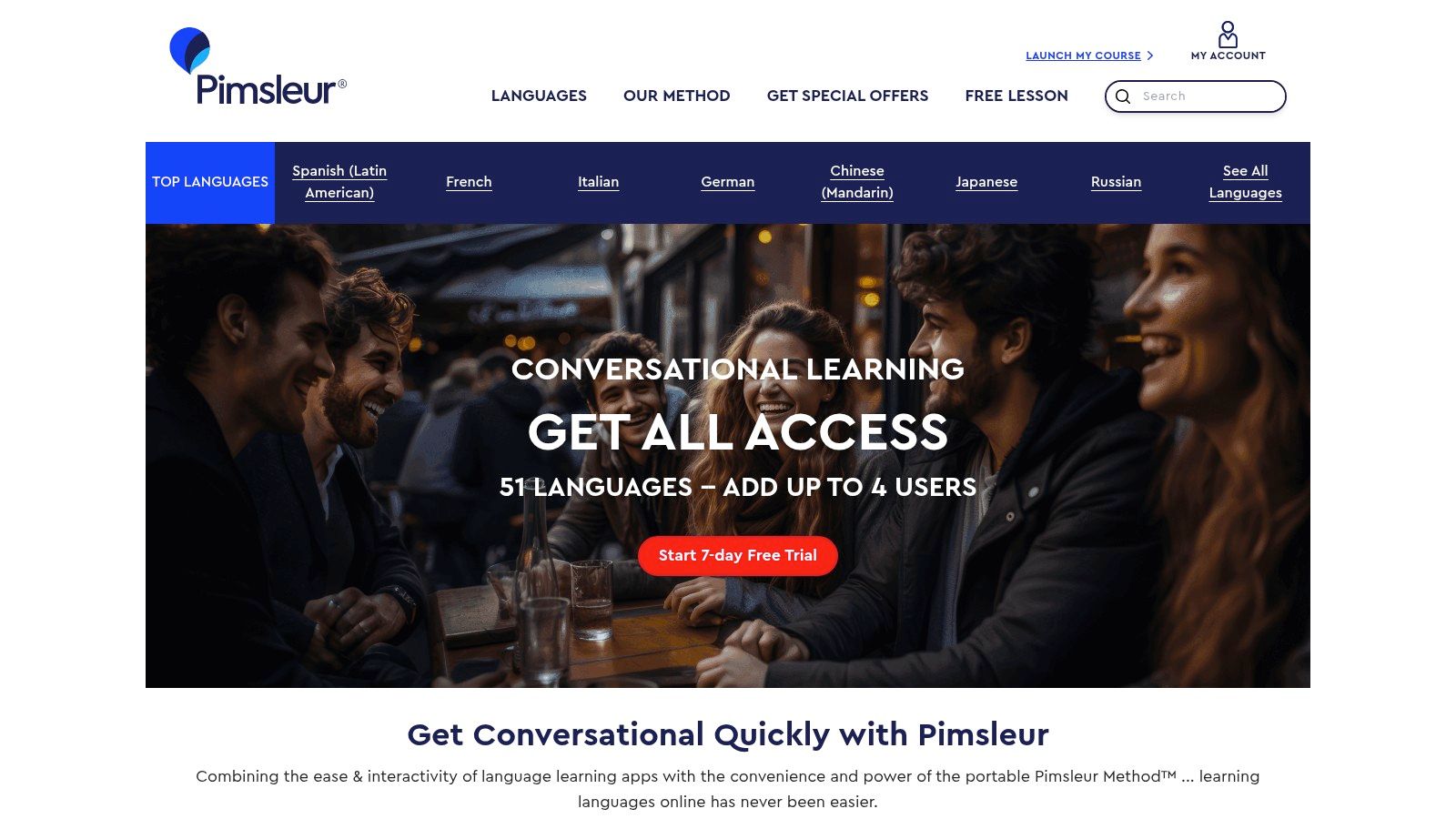
Pimsleur is built for the learner who has time to listen but not necessarily time to look at a screen. Its audio-led lessons use graduated recall, prompting you to retrieve words and phrases at planned intervals rather than only recognise them.
The format is practical for commuters, walkers, and busy professionals. Voice Coach provides pronunciation practice, while driving mode, CarPlay, Android Auto, and daily challenges make it easier to fit French into an existing routine. Audio-only and All Access tracks give learners different ways to use the Pimsleur French programme.
Pimsleur's strongest result is speaking and listening confidence, particularly for practical phrases. It trains your ear and asks you to produce language aloud, which makes it more active than tapping through translation exercises.
The gap you'll need to fill
Audio alone won't give you enough reading and writing depth for every objective. A learner preparing for DELF or DALF needs written production, reading strategy, and task-specific feedback. A professional may also need vocabulary for a particular industry, while a family may need help with school assignments.
Use Pimsleur as your pronunciation and listening engine. Add graded reading, written correction, or a live tutor when your goal requires accuracy beyond everyday exchanges. The French learning resources from Elite French Tutoring can help you extend audio practice with more targeted materials.
Best fit: Learners who want to improve pronunciation during screen-free time.
5. Busuu
Busuu offers a useful middle ground between an organised course and human input. Its guided lessons include grammar explanations, review activities, placement testing, and study plans, while its community allows users to submit writing and speaking exercises for correction by other learners and native speakers.
That combination is valuable for adults and teenagers who want more structure than a flashcard tool but more interaction than a purely automated course. CEFR-aligned progression also gives learners a clearer sense of where their course is heading. You can explore the current free and Premium options on Busuu.
The community feature is both the attraction and the limitation. Corrections can add natural phrasing and cultural nuance, but the quality and availability of feedback depend on who responds. You won't always receive the detailed explanation or consistent correction needed for an exam, a professional presentation, or a persistent grammar problem.
Choose Busuu for guided self-study
Busuu works well for a learner who wants to follow a plan, understand grammar, and receive occasional community feedback. It's a sensible choice for maintaining progress without committing to live class times.
Pair it with tutoring when you need dependable feedback. A teacher can track the same errors over several sessions, design practice around them, and make you produce French under realistic pressure. That difference matters when your goal is measurable speaking improvement rather than completion of another course unit.
6. Memrise
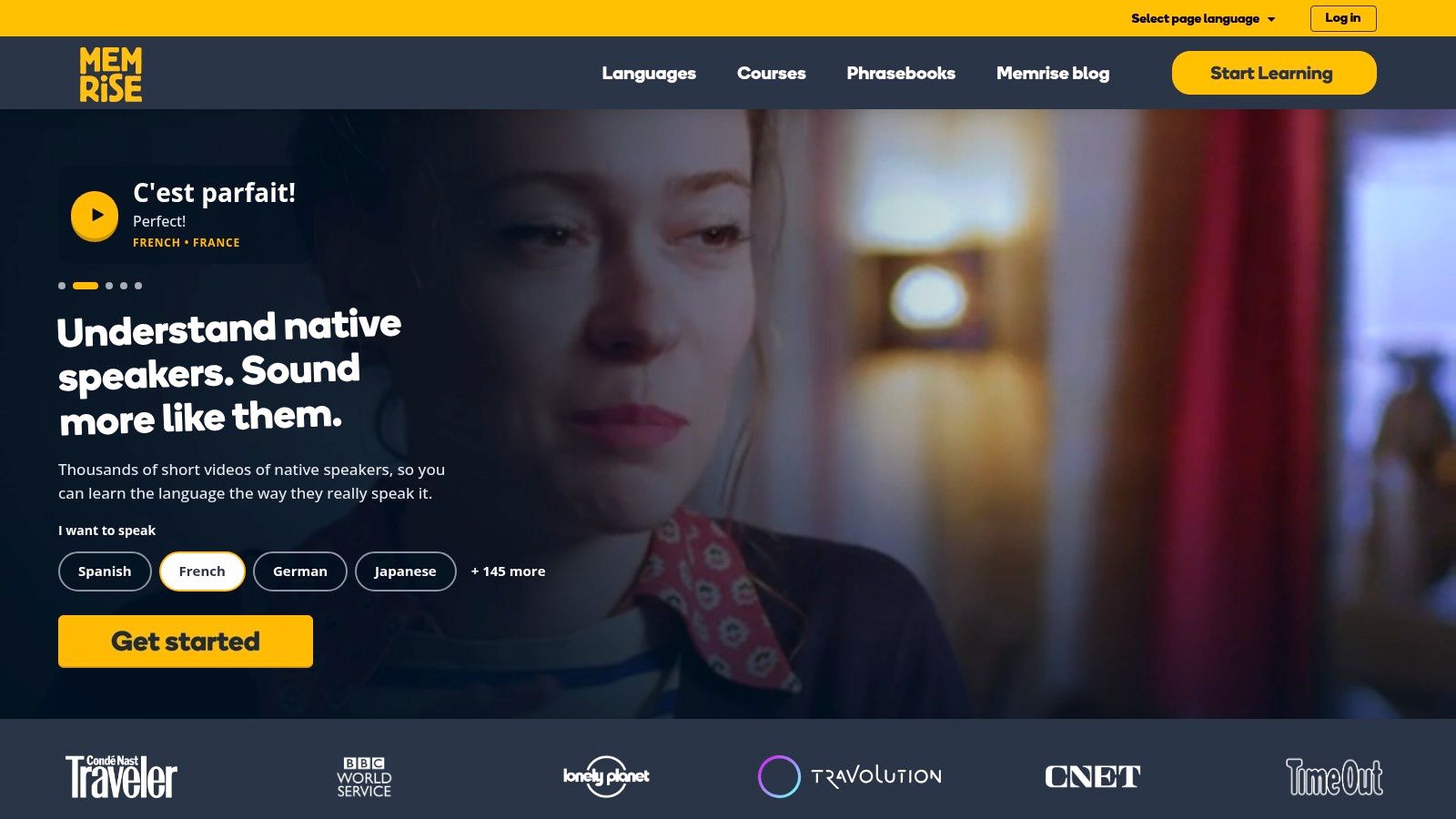
Memrise is a strong choice when vocabulary is the bottleneck. Its official courses combine spaced-repetition review with short videos of native speakers, exposing learners to phrases in voices and accents that feel less artificial than isolated word lists.
The format is engaging for travellers and early-stage learners who want to build usable vocabulary quickly. Native-speaker clips also help connect a phrase to natural rhythm and pronunciation, while AI personalisation can adjust review to what you appear to remember. Visit Memrise to check the current course structure and supported features.
Memrise is not a complete substitute for a course or teacher. Its grammar coverage is lighter, and the move of community courses to a separate site means the overall experience is less integrated for learners who want one central curriculum.
Use it to support, not replace, conversation
Memrise is particularly effective before a trip or alongside tutoring. You can build a bank of high-frequency words, then use live lessons to turn that passive knowledge into sentences and exchanges.
That combination solves a common problem. Learners often recognise a word in an app but can't retrieve it quickly when someone speaks to them. A tutor can force active use, correct the surrounding grammar, and show when a familiar phrase sounds unnatural in context.
Best fit: Learners who need fast vocabulary growth and more exposure to real accents.
7. Rocket Languages
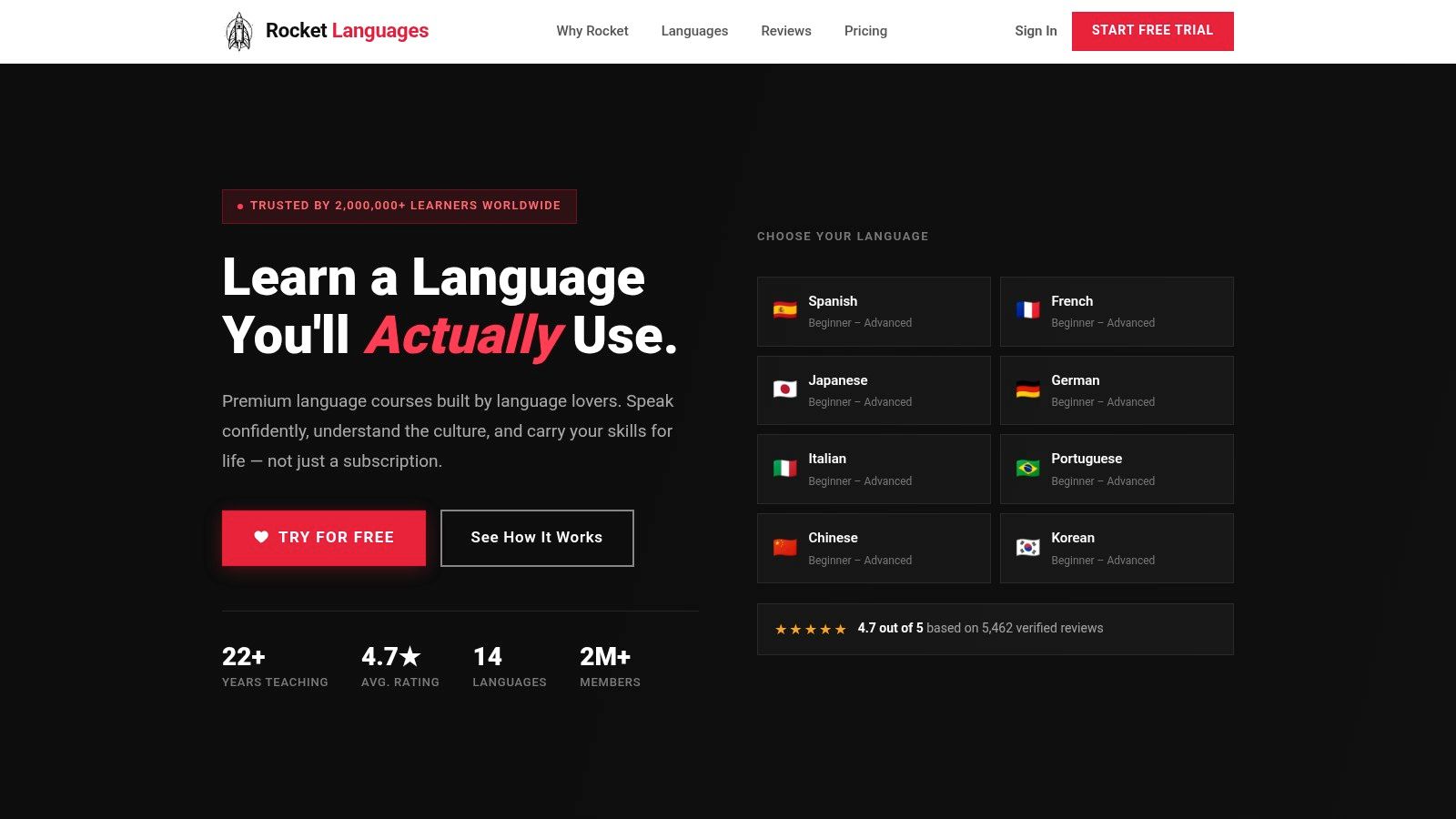
Rocket Languages suits self-directed learners who want a substantial course without an ongoing subscription. It uses interactive audio dialogues, pronunciation practice, grammar explanations, and cultural notes to create a more linear path than a vocabulary-only app.
The one-time purchase model includes lifetime access through the web and app, which can appeal to learners who dislike recurring payments. The upfront price can be higher than a monthly app, so the value depends on whether you will return to the course over time. Check the current purchase options on Rocket Languages.
A good choice for independent learners
Rocket's structure works for someone who wants to know what to study next and prefers explanations over discovery. The audio dialogues make the course more practical than a purely visual programme, while grammar and culture notes help answer the “why” behind common forms.
It's less compelling for learners who need accountability or a social environment. There are fewer community features than some competitors, and the course can't observe how you handle a live interruption, a follow-up question, or an unfamiliar speaking partner.
If you're disciplined and mainly need a structured self-study path, Rocket can be a sensible Babbel alternative. Add occasional tutoring when you want an external check on pronunciation, fluency, or readiness for a real-world deadline.
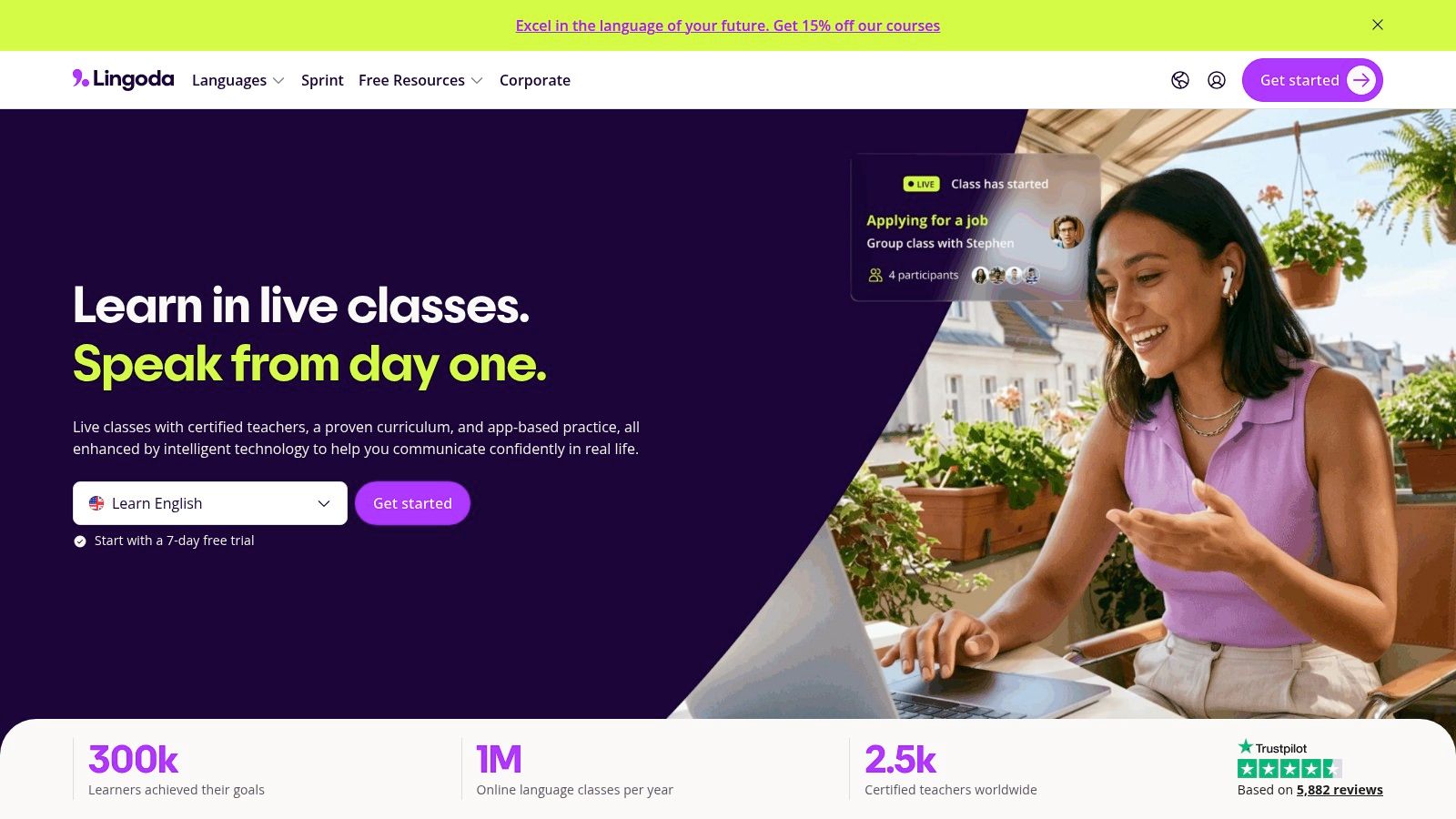
8. Lingoda
Lingoda is a better fit when you've discovered that independent practice doesn't create enough accountability. It provides live, CEFR-aligned classes with qualified teachers, available in small groups or as private lessons, across a range of schedules.
The class-credit model differs from Babbel's subscription approach. Learners buy credits rather than receiving a flat-rate unlimited class subscription. Lingoda's Language Sprints can return up to 50% of fees when every scheduled class is attended, so the attendance conditions matter before you commit. Review the current structure on the Lingoda language school website.
The main benefit is speaking volume with a predictable curriculum. You're not just reading a prompt and selecting an answer. You're listening to a teacher, responding aloud, and managing the pressure of a live exchange. Completion certificates may also be useful for some work or study contexts, although they shouldn't be confused with every external certification requirement.
When group classes work best
Lingoda suits learners who value scheduled accountability and a shared syllabus. It can work well for someone who enjoys learning with others and can maintain a regular class rhythm.
The limitation is personalisation. A group class has to serve learners with different weaknesses and speeds. If you need intensive DELF or DALF speaking preparation, business vocabulary for your role, or correction of a specific accent issue, one-to-one instruction may use your time more efficiently. For additional speaking practice outside group classes, consider online French conversation practice.
9. italki
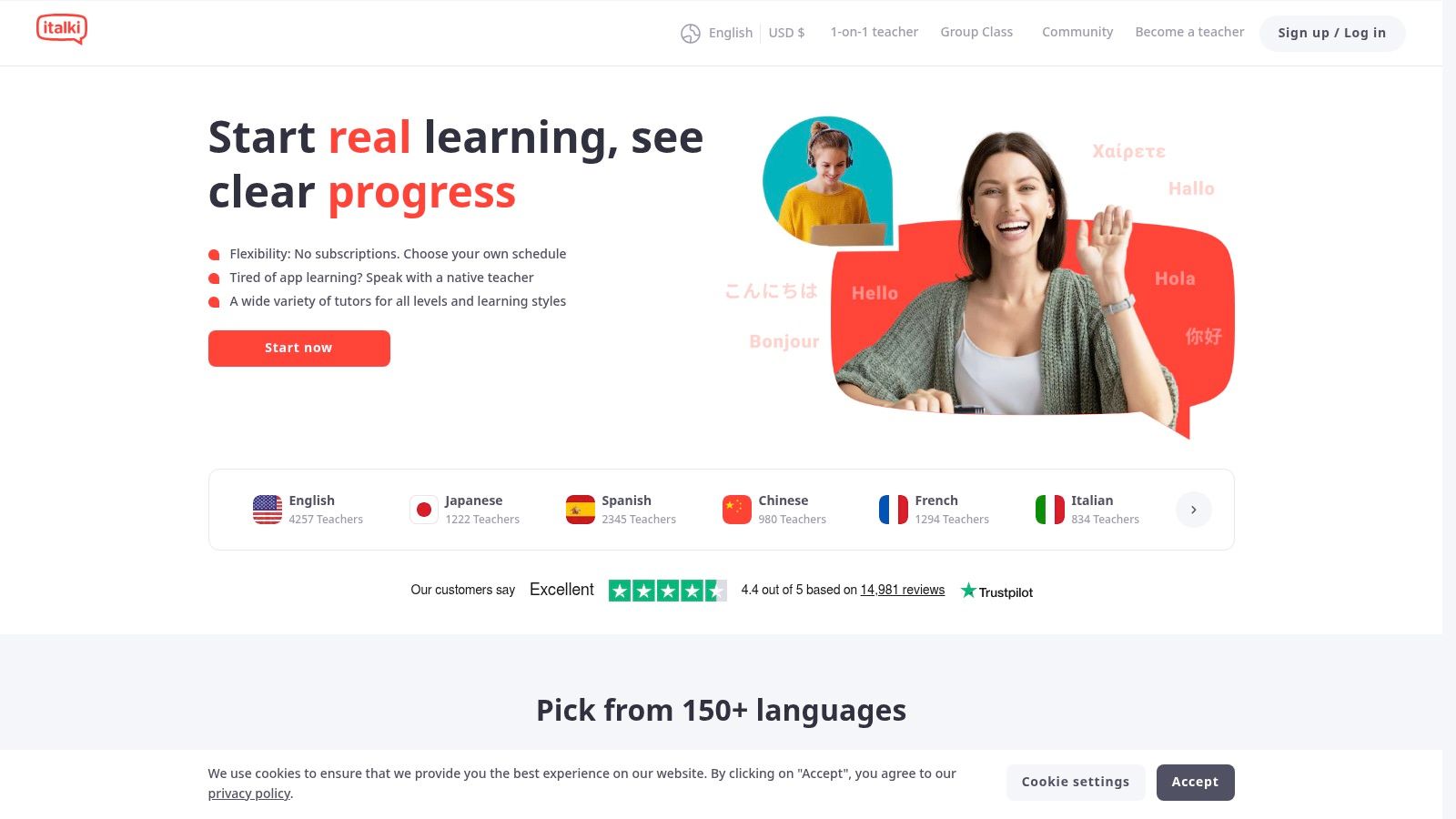
italki is designed for learners who want to choose the teacher, lesson style, schedule, and objective. The marketplace supports one-to-one and group classes across more than 150 languages, and French learners can filter tutors by availability, specialisation, teaching style, and experience.
Teachers set their own rates. Lessons start from $4, with many sessions costing $4 to $25 per hour, according to italki's guide to Babbel alternatives. Because the marketplace is flexible, you can book a trial lesson, buy packages, and adjust your schedule without taking on a conventional subscription.
Personalisation comes with a selection burden
italki is particularly useful for exam preparation, accent coaching, business communication, and rapid speaking progress. A tutor can build a lesson around your presentation, interview, school curriculum, or upcoming trip instead of asking you to complete a general unit.
The trade-off is that quality and fit vary by teacher. You may need to try more than one tutor before finding someone whose feedback style and expertise suit you. Pay-per-lesson flexibility also means you need to manage your own consistency.
A strong tutor relationship can be more valuable than another app when the issue is not knowledge but performance. If you freeze during conversation, a teacher can diagnose the trigger and create controlled practice that gradually becomes more spontaneous. Online French lessons with native speakers offer another route for learners who prefer a fully customised programme.
Best fit: Learners whose goals are too specific for a fixed app curriculum.
10. Mango Languages
Mango Languages focuses on practical phrases, pronunciation modelling, cultural notes, and conversational prompts. That makes it a natural fit for travellers, families, homeschool learners, and people who want useful language without committing to an intensive academic course.
The platform offers more than 70 languages and multiple English-as-a-second-language tracks. Individual and family plans are available, and participating US public libraries may provide full access at no direct cost to the library user. Check eligibility and the current catalogue on Mango Languages.
Mango's travel orientation is its advantage. Learners can practise phrases they're likely to use, hear pronunciation models, and gain cultural context that makes an exchange feel less mechanical. It can also be a useful bridge product for a family deciding whether children will engage with regular French practice.
Know where it stops
Course depth is lighter than tutor-led instruction or a more intensive structured programme. Review tools are also simpler than those of some competitors, so learners preparing for a formal exam or demanding professional role will likely need additional support.
Mango works well as a low-friction introduction or family supplement. Use it to establish basic vocabulary and confidence, then add reading, writing, and live speaking when the learner's objective becomes more demanding.
The best combination depends on the gap you can identify. Mango plus a tutor can serve a traveller who wants both practical phrases and pronunciation correction. For a child in a French or bilingual school, customised support may be more useful than asking the child to repeat general travel dialogues.
Top 10 Babbel Alternatives Comparison
| Product | Core features ✨ | Quality ★ | Best for 👥 | Value / USP 🏆 | Price 💰 |
|---|---|---|---|---|---|
| 10 Duolingo Alternatives for Every French Learner | Outcome‑driven roundup matching tool types to goals; buying guidance | ★★★★ | 👥 Goal‑driven learners (kids, travelers, pros, exam candidates) | 🏆 Practical, action‑oriented guidance + when to choose tutoring | 💰Free guide; price cues inside |
| Duolingo | Gamified bite‑size lessons, streaks, Roleplay/AI (Max) ✨ | ★★★★ | 👥 Beginners & daily practice users | 🏆 Habit‑builder with huge language catalog | 💰Free + Super/Max subscriptions |
| Rosetta Stone | Immersion, picture‑based drills, speech recognition ✨ | ★★★ | 👥 Inductive learners who avoid translation | 🏆 Cohesive immersion method; trusted brand | 💰Subscription; tutoring add‑ons |
| Pimsleur | Audio‑first 30‑min graduated‑recall conversations; Voice Coach | ★★★★ | 👥 Commuters & speaking/listening focus | 🏆 Excellent pronunciation & spoken fluency | 💰Subscription / course purchases |
| Busuu | CEFR‑aligned lessons, grammar points, community corrections ✨ | ★★★★ | 👥 Adults & teens seeking structured study + feedback | 🏆 Balanced course + native corrections | 💰Free tier; Premium plans |
| Memrise | Native‑speaker video clips + SRS vocab review ✨ | ★★★★ | 👥 Vocabulary & listening builders, travelers | 🏆 Fast retention; real‑accent exposure | 💰Free + Pro subscription |
| Rocket Languages | Linear, comprehensive audio & grammar; lifetime access | ★★★★ | 👥 Self‑study learners preferring non‑subscription | 🏆 One‑time purchase → lifetime access | 💰One‑time purchase (upfront) |
| Lingoda | Live CEFR‑aligned small‑group & 1:1 classes; certificates ✨ | ★★★★ | 👥 Learners wanting live practice & measurable progress | 🏆 Predictable curriculum + certification | 💰Subscription; regional pricing |
| italki | Large tutor marketplace; trial lessons & flexible scheduling | ★★★★ | 👥 Exam prep, business French, accent coaching | 🏆 Fully personalized 1:1 instruction | 💰Pay‑per‑lesson (wide range) |
| Mango Languages | Phrase‑based, cultural notes, pronunciation modeling | ★★★ | 👥 Travelers, families, K–12 & library users | 🏆 Often free via public libraries; family plans | 💰Individual/family plans; library access free sometimes |
Choose the Tool That Removes Your Biggest Bottleneck
Start with the skill you need to improve, not the brand you already recognise. If your problem is inconsistent practice, a gamified app can create the daily habit that makes every other resource more useful. If you want a guided self-study path, choose an immersion-based or structured course with a clear progression. If you spend long periods commuting, audio practice can turn otherwise unused time into listening and speaking work.
Vocabulary-focused video is useful when you recognise too few everyday phrases. It gives you repeated exposure to words in context, but you'll still need to retrieve those words in conversation. Live group classes are a stronger option when scheduled accountability keeps you moving, especially if you enjoy learning with other people and can attend regularly.
A tutor becomes the more efficient choice when your goal is specific or the cost of an error is high. That includes DELF or DALF preparation, professional communication, accent coaching, school support, relocation, and fast improvement in spontaneous speaking. A teacher can listen to how you respond, identify the exact point where communication breaks down, and adjust the next activity immediately. An app can reinforce the same material later, but it can't always provide that diagnosis.
The market also reflects this difference between self-study and human instruction. Live online tutoring is projected to reach USD 4.9 billion by 2035, while the tutoring segment is projected to grow at an 18.1% CAGR from 2025 to 2030, according to the research on live online tutoring. Those projections don't mean every learner needs private lessons. They do show why live instruction remains relevant as learners look for flexible ways to practise with another person.
A practical decision framework looks like this:
- Choose Duolingo if your main challenge is building a repeatable daily habit.
- Choose Rosetta Stone if you prefer immersion and translation-light learning.
- Choose Pimsleur if pronunciation and listening matter most during screen-free study.
- Choose Busuu if you want structured progression with occasional community correction.
- Choose Memrise if you need rapid phrase recall and exposure to native-speaker clips.
- Choose Rocket Languages if you want a substantial self-study course with lifetime access.
- Choose Lingoda if live classes and attendance accountability keep you engaged.
- Choose italki if you need flexible, personalised lessons for a specific outcome.
- Choose Mango Languages if you want practical travel or family learning support.
- Choose bespoke tutoring if your plan needs to follow your level, schedule, curriculum, exam, or professional context.
For French learners who need more than a general app pathway, Elite French Tutoring provides customised online and in-person lessons with native, expert instructors. Its programmes include adult conversation and travel, children and teens, corporate communication, and DELF or DALF preparation. The service offers a free 20-minute consultation to discuss your objectives, current level, learning style, and preferred schedule. It isn't automatically the right option for every learner, particularly if you only want casual vocabulary practice, but it can be a useful next step when you need direct feedback and a plan built around a real deadline.
Compare your goal and available study time with the French lesson options from Elite French Tutoring, then decide whether an app alone, an app plus tutoring, or a fully customised programme gives you the most practical path forward.