I still remember a student who could conjugate the subjunctive flawlessly, yet froze every time a French conversation drifted into history. The fix wasn't another grammar drill. It was giving her a book she could talk about, and French history turned out to be the fastest bridge between vocabulary, culture, and confident speaking.
Table of Contents
- 1. Citizens: A Chronicle of the French Revolution
- 2. The Oxford History of the French Revolution (3rd ed., 2018), William Doyle
- 3. The Coming of the Terror in the French Revolution, Timothy Tackett
- 4. France in the World: A New Global History, eds. Patrick Boucheron & Stéphane Gerson
- 5. A Concise History of France (3rd ed.), Roger Price
- 6. The Discovery of France: A Historical Geography from the Revolution to the First World War, Graham Robb
- 7. Peasants into Frenchmen: The Modernization of Rural France, 1870–1914, Eugen Weber
- Top 7 French History Books Comparison
- Turn Your Reading Into Fluent Conversation
1. Citizens: A Chronicle of the French Revolution
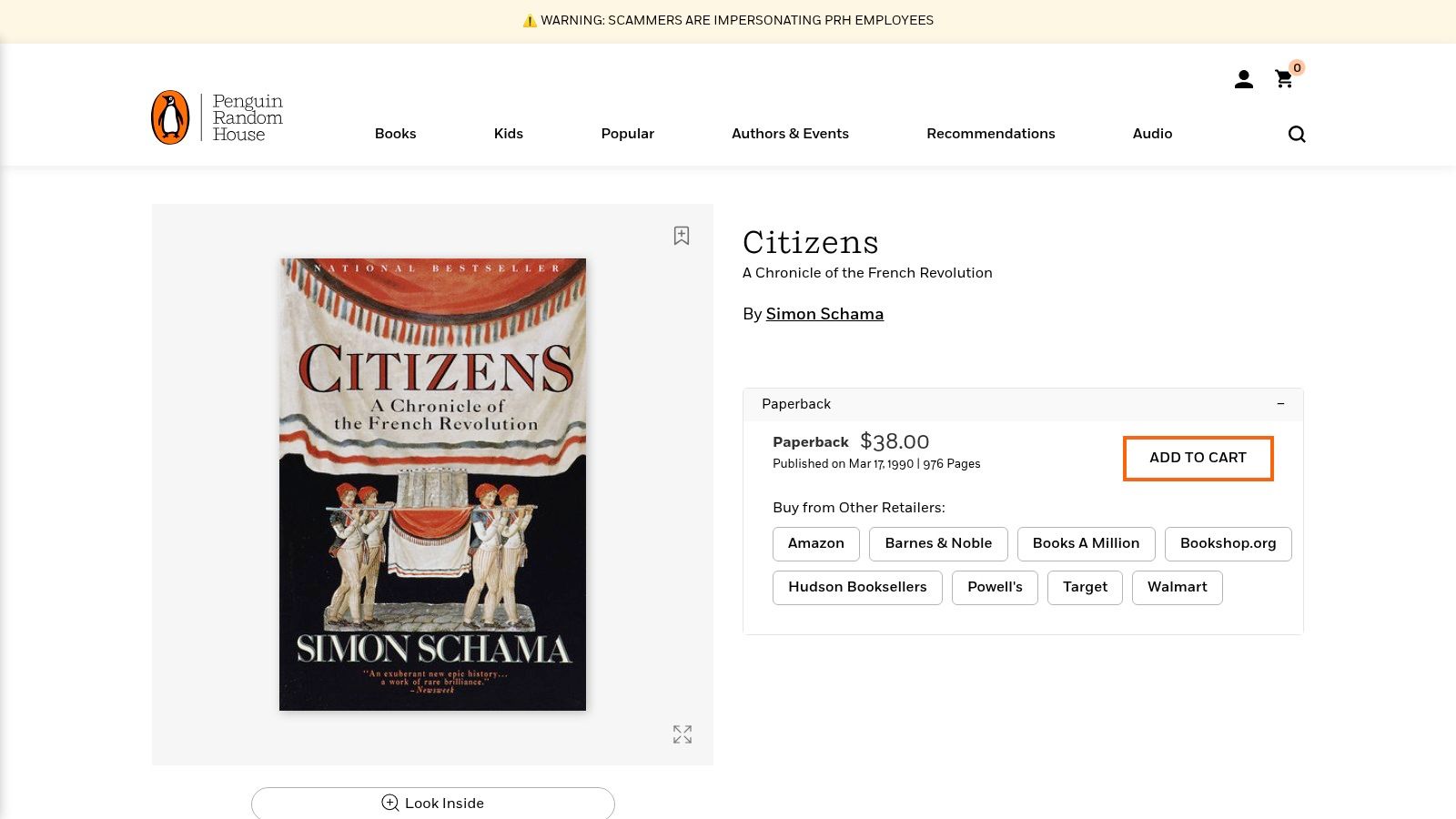
Simon Schama's Citizens is the book I hand to learners who want the French Revolution to feel alive instead of memorized. It moves like a novel, but it still gives you the political vocabulary and cultural texture that make discussion in French much easier. For anyone comparing the best French history books for language growth, this is the one that creates the most conversation pressure in a good way.
The payoff for tutoring is obvious. You can pause on scenes, motives, and reversals, then ask a student to retell events, defend a character's choices, or compare rhetoric with modern politics. That combination works especially well for learners who need an internal link between reading and speaking, and my Revolution lesson page at Best Book French Revolution fits naturally alongside this title.
Practical rule: use one chapter for comprehension, then force the same material into a two-minute spoken summary in French. The student who does this stops translating event by event and starts thinking in narrative chunks.
What works and what doesn't
The book's great strength is also its main limitation. It's long, 976 pages, so it's not the fastest entry point if someone wants a quick primer. The interpretive voice is strong too, which means it pairs best with learners who like debate, not with readers who want a flat textbook tone.
- Best for learners who enjoy story, conflict, and memorable figures.
- Use it for speaking prompts, debate, and vocabulary tied to institutions and public life.
- Avoid it if you need a short survey for a test next week.
- Keep it balanced with a more compact overview if your student gets lost in detail.
The publisher page at Penguin Random House's edition of Citizens is useful if you want to verify the edition before assigning it. For a learner who needs to talk about upheaval, legitimacy, and citizenship in French, this is still one of the smartest first buys.
2. The Oxford History of the French Revolution (3rd ed., 2018), William Doyle
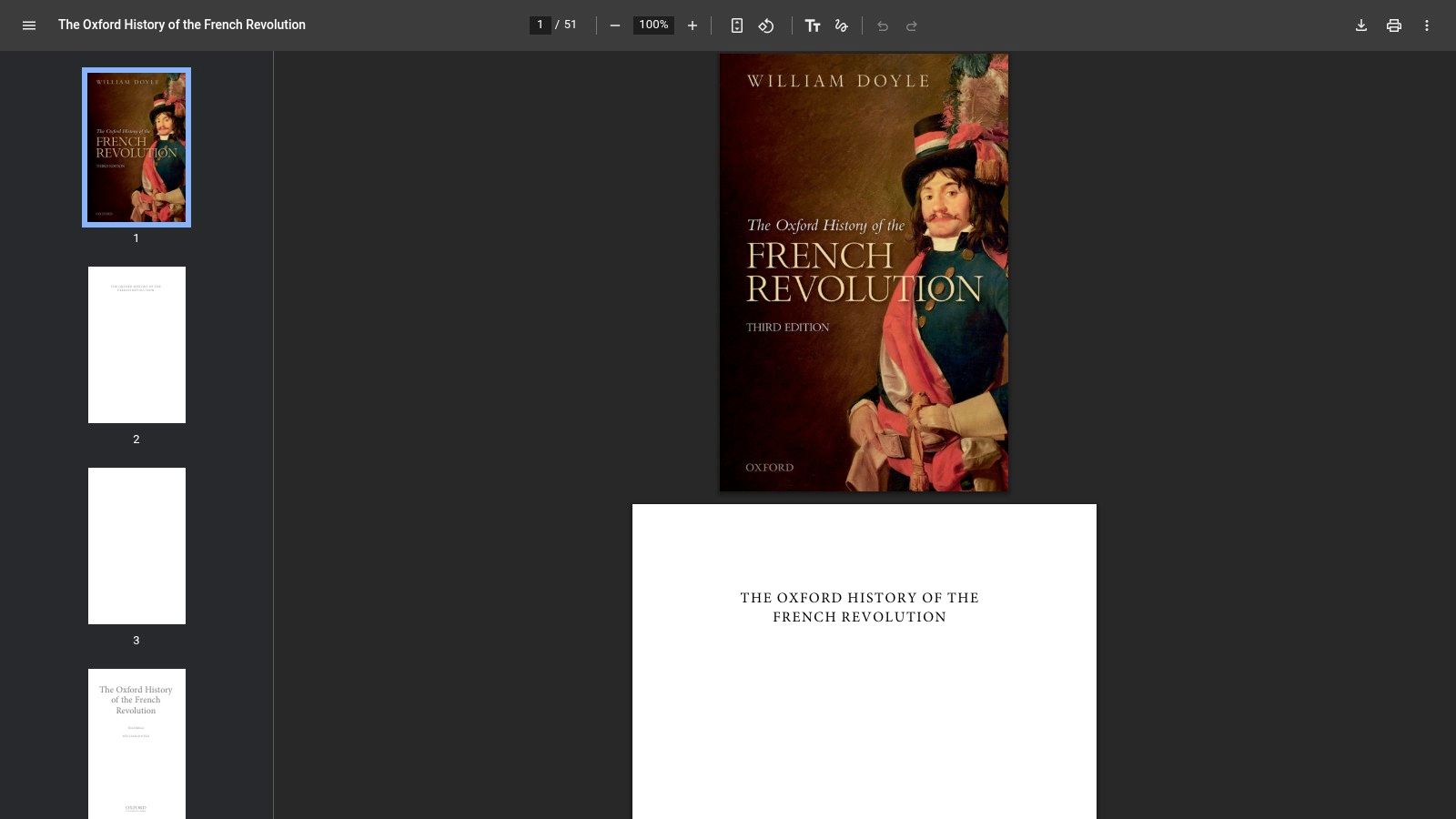
If Citizens is the dramatic option, William Doyle's The Oxford History of the French Revolution is the clean backbone text. I like it for students who need chronology first, especially when they're preparing for an exam, a tutoring sequence, or a serious reading plan that can support French discussion without constant hand-holding. The third edition also matters because it reflects the kind of updated scholarship that keeps a history book useful in a classroom setting.
This is the title I reach for when a learner says, “I don't need literary flair, I need clarity.” It is much easier to turn into lesson material than a sprawling interpretive narrative because the chronology stays visible, the argument stays controlled, and the prose doesn't wander. The result is a book that helps students build a neat mental timeline of Louis XVI, the Revolution, and Napoleon's rise.
Why it helps French learners
For language work, this book gives you precise, reusable structures. Students can practice cause-and-effect language, historical transitions, and summary writing without being overwhelmed by anecdote. That makes it a strong choice for anyone who wants a reliable study text rather than a dramatic read.
I usually assign this when a student needs a “spine” for the Revolution before moving to more specialized books.
The drawback is simple. It doesn't have the same narrative color as a trade history, so it won't hook every reader. You may also need to spend a little extra time finding publisher and edition details, which is why the Oxford University Press listing for Doyle's volume is worth bookmarking before you recommend it.
For learners who want structure, authority, and clean discussion notes, this is one of the most practical purchases in the category.
3. The Coming of the Terror in the French Revolution, Timothy Tackett
Timothy Tackett's The Coming of the Terror in the French Revolution is the book I use when a learner is ready to move from “what happened” to “why radicalization happened.” It narrows the lens to the period around 1791 to 1794 and gives students a sharp model for discussing fear, rumor, trust, and political breakdown. That makes it especially useful for advanced French learners who want serious content for debate, not just names and dates.
The method matters here. Tackett works with letters, diaries, and assembly records, so the argument grows out of human voices rather than broad summary alone. That is excellent for tutoring because students can notice how political emotion is expressed, then imitate that analytical language in French. It's the kind of book that helps a learner sound more precise when talking about polarization, instability, and public fear.
How I use it in sessions
I like this book for short, focused lesson segments. One chapter can fuel a whole discussion if the student is asked to identify the trigger, the reaction, and the institutional consequence. The structure is teachable, which is exactly what advanced learners need when they're trying to produce more than textbook summaries.
- Best for students comfortable with denser prose and analysis.
- Strongest use case is seminar-style discussion or professional French.
- Less ideal for casual readers who want a sweeping, colorful narrative.
- Best paired with a broader survey so the Revolution doesn't feel too narrow.
The Harvard University Press page for Timothy Tackett's study is the right place to check the edition and framing before assigning it. If your learner already knows the broad outline of the Revolution, this book gives them a sharper, more argumentative French reading experience.
4. France in the World: A New Global History, eds. Patrick Boucheron & Stéphane Gerson
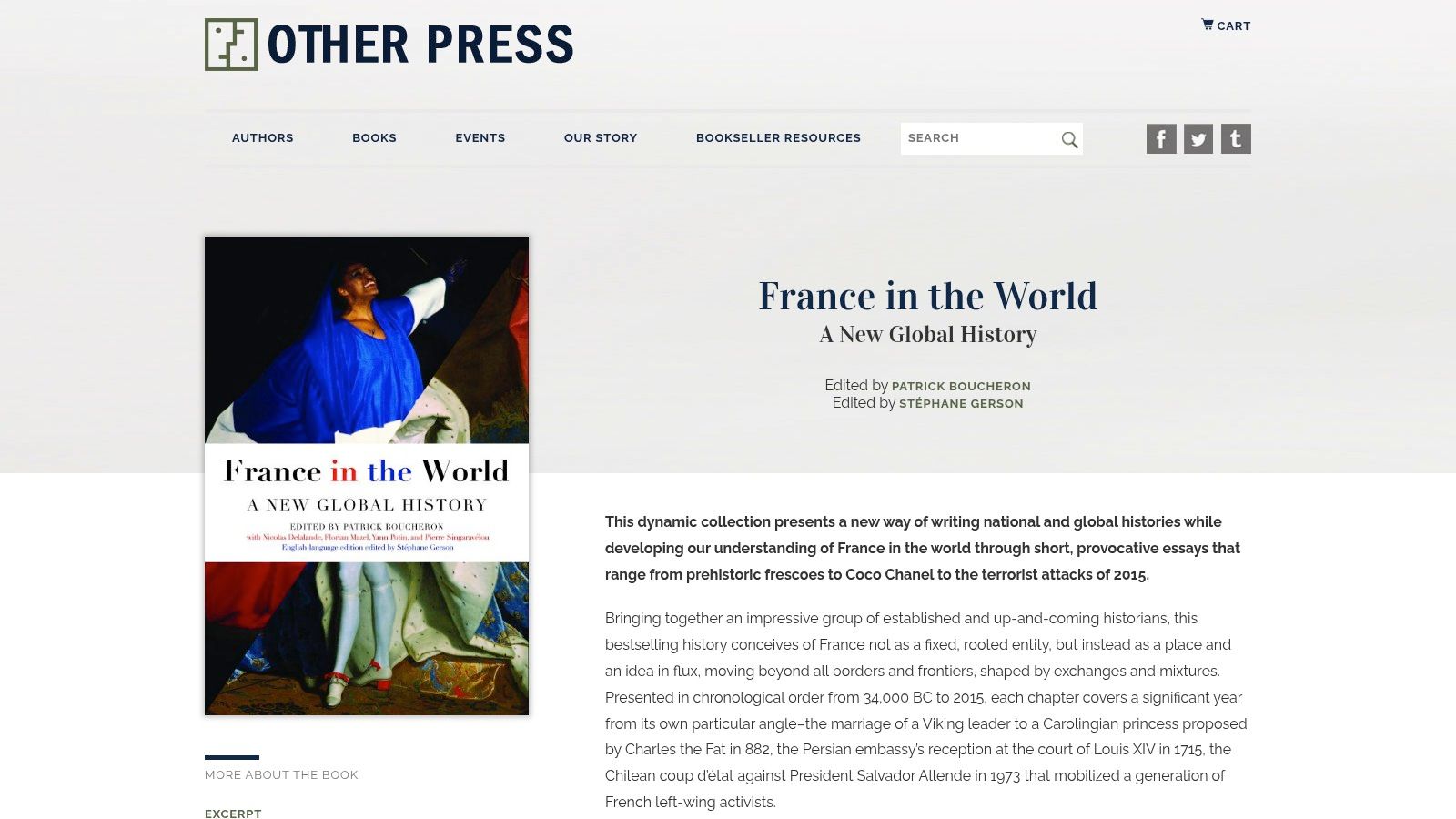
France in the World works differently from a standard national history, and that difference is exactly why I like it for tutoring. The book is built from short, modular essays, so a student can read one piece at a time without losing the thread of a larger argument. For busy learners, that makes it one of the most flexible choices among the best French history books.
The global framing is its biggest advantage. Instead of treating France as an isolated story, it places the country inside wider currents, which gives students richer vocabulary for empire, exchange, identity, and modern culture. That is useful when a conversation jumps from the past to contemporary France, because learners get practice linking historical themes to the present.
Practical rule: use one essay as a timed reading, then ask for a spoken comparison with another historical period or another country. The book handles that kind of cross-topic work very well.
Why it fits modern tutoring
I like assigning this to students who need history in manageable units. It's especially good when lesson time is short, because each essay can stand alone while still contributing to a bigger picture. The downside is that it's not a continuous narrative, and the style changes from chapter to chapter, so some learners will find it less coherent than a single-author survey.
That trade-off is often worth it. A modular book encourages selective reading, and selective reading is often how adults study. For a broader cultural angle, my learners also use the French culture reading guide when they want to connect historical reading with conversation topics.
The Other Press overview of France in the World is the best place to check the structure before buying. If you want history that can be broken into lesson-sized pieces, this is one of the most tutor-friendly options available.
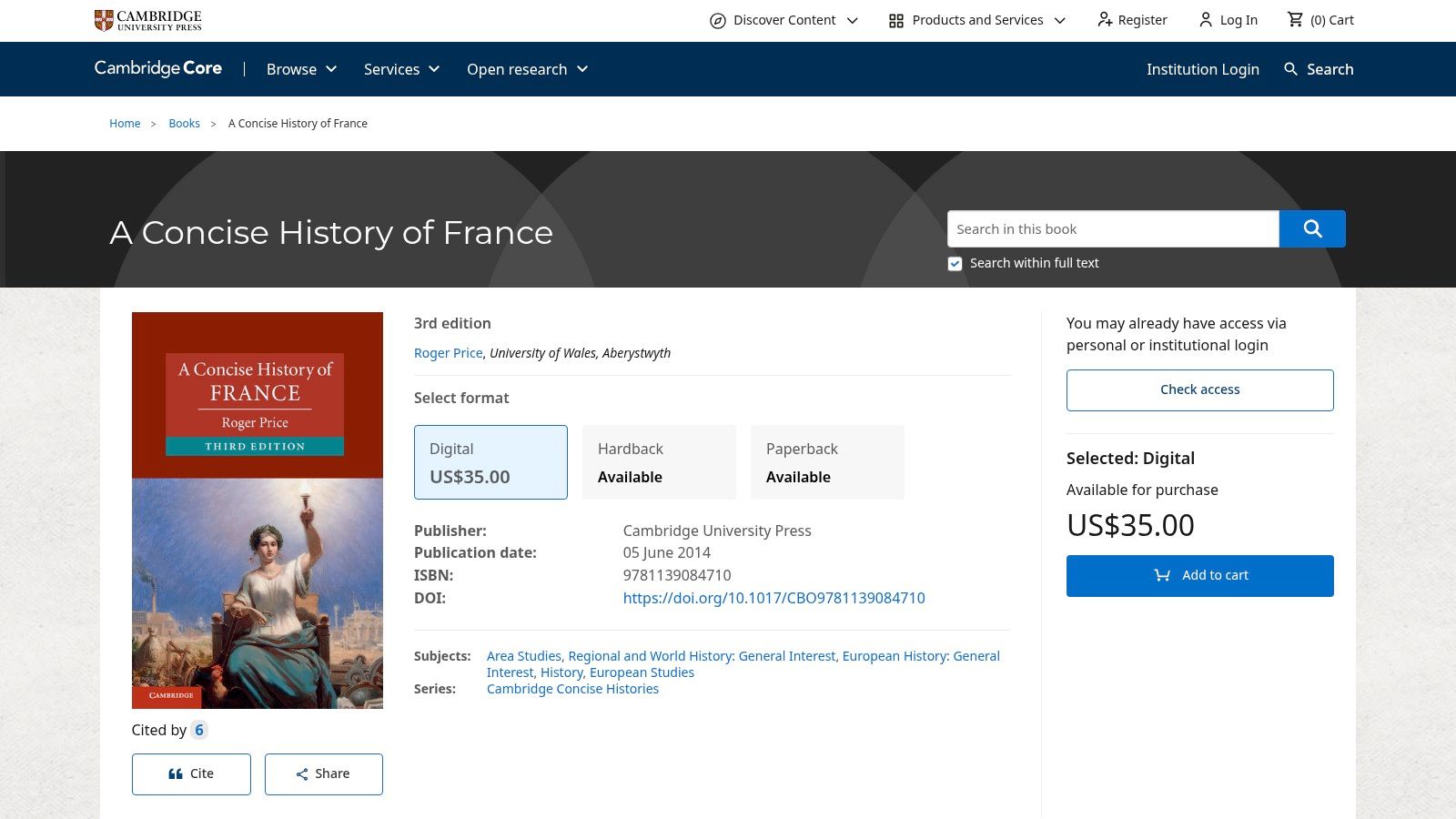
5. A Concise History of France (3rd ed.), Roger Price
Roger Price's A Concise History of France is the book I recommend when a learner wants one dependable survey from the Middle Ages to the present. It's compact, organized, and easier to assign than a massive narrative history, which is why it fits so well with students preparing for DELF or DALF civilization sections. It gives the kind of broad grounding that lets a learner talk about multiple eras without getting stuck in isolated facts.
What makes it especially practical is the balance. You get political, social, and economic coverage without the book becoming unwieldy, and that makes it easy to turn into short writing or speaking tasks. In tutoring, I often use a chapter as the basis for a summary, then ask the student to explain how that period shaped later French identity.
Where it shines
The biggest advantage is efficiency. A learner who needs a structured overview can move through it without feeling trapped in a giant tome, and the third edition means it reaches contemporary France rather than stopping at the classics. It's also the sort of book that works in paperback or digital form, which makes it practical for classroom use and remote study.
- Best for students who want a textbook-style overview.
- Best for bilingual families and test preparation.
- Best for learners who like clean organization over literary flair.
- Not ideal for readers who want rich scenes and dramatic storytelling.
I'd pair it with speaking practice because the book's strength is clarity, not personality. The Cambridge edition page for A Concise History of France is the reliable reference if you're choosing between formats. For learners who need a strong, uncomplicated base, this is one of the safest buys.
6. The Discovery of France: A Historical Geography from the Revolution to the First World War, Graham Robb
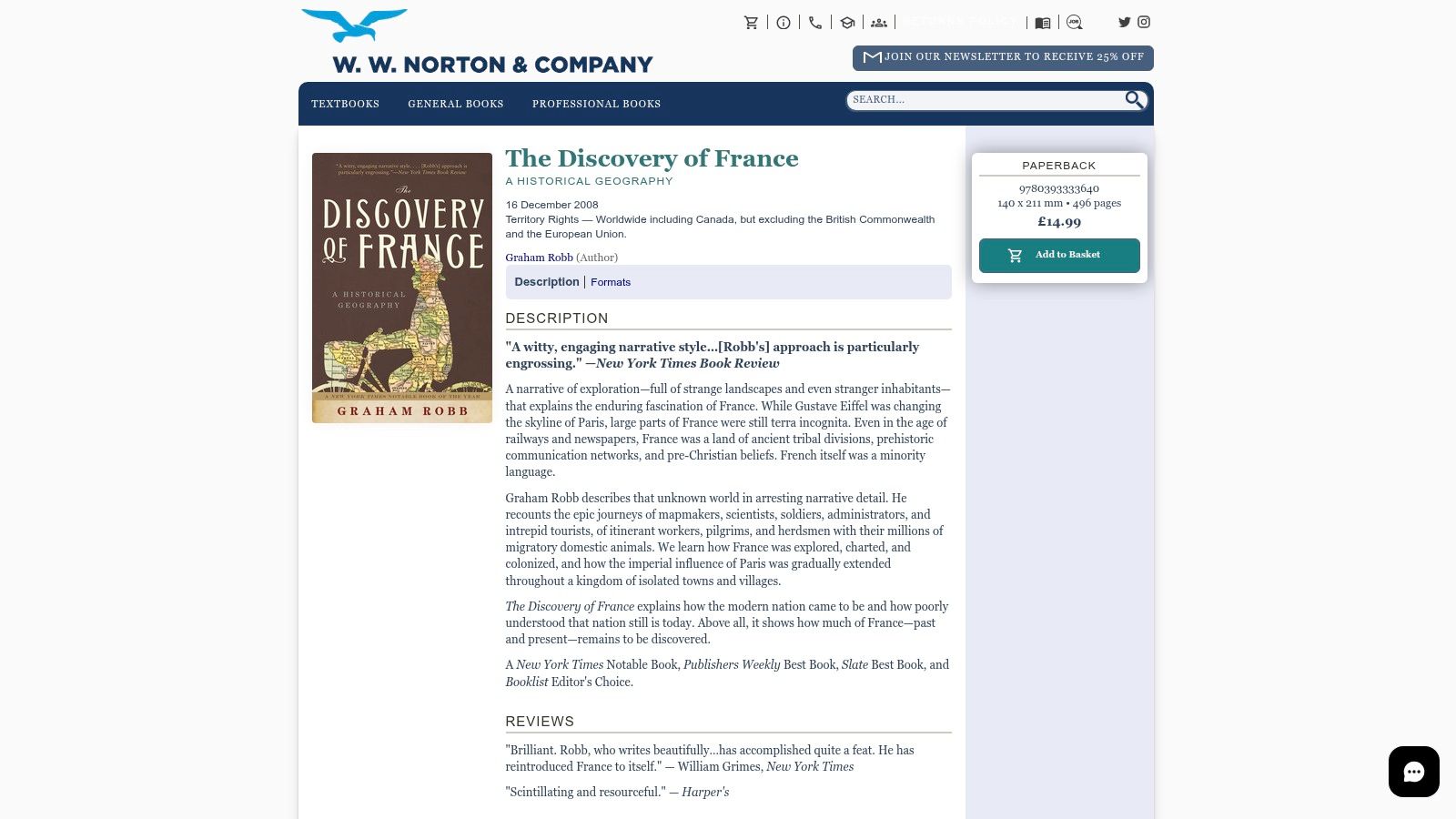
Graham Robb's The Discovery of France is the book I give learners who think they know France, but mostly know Paris. It looks at regional life, roads, languages, beliefs, and daily experience, which makes it far more useful than a standard national overview for cultural conversation. The book also appears often in expert-style reading lists, which tells me it has real staying power among serious readers.
This is a particularly good fit for travelers and advanced students because it changes the vocabulary set. Instead of only practicing kings, revolutions, and republics, a learner can talk about region, terrain, local custom, and cultural difference. That gives French conversation much more depth, especially when the student needs to describe a trip, compare regions, or discuss how modern France was built from local worlds.
How to use it with learners
I like to assign one region or episode at a time, then build speaking prompts around it. That can turn into a vocabulary lesson on geography, social life, or historical change, depending on the student's level. The book's prose is readable enough to support discussion, but it's not a conventional political history, so it works best when paired with a fuller survey.
My French travel itinerary page pairs naturally with this title, because learners can connect cultural history to real destinations and practical trip language. The trade-off is that some readers will want stronger chronology, and some scholars have challenged parts of its argument. I treat it as a brilliant companion text, not the only book on the shelf.
For the right learner, it opens up the France beyond the capital, and that usually leads to better French conversations.
7. Peasants into Frenchmen: The Modernization of Rural France, 1870–1914, Eugen Weber
Eugen Weber's Peasants into Frenchmen is one of the classic books I reach for when a learner wants to understand how modern France was made at the local level. Its argument about schools, military service, rail, and media makes it extremely useful for advanced students who need to talk about language policy, centralization, and civic identity. It's also one of the titles that still comes up in serious French history discussion, which says a lot about its durability.
The book is academic, and it knows it. That means the prose asks for patience, but the reward is a strong framework for understanding how rural people became part of a national culture. For language learners, that framework is useful because it supplies the vocabulary of institutions, modernization, and social change, all of which show up in higher-level conversation.
Practical rule: don't assign this to a hesitant intermediate reader first. Give it to a motivated student who already has a survey text and wants sharper analytical language.
Best use in tutoring
This is the title I use when a learner needs to discuss nation-building with some seriousness. It's excellent for curriculum-aligned work, especially if the student is studying how the French state unified culture and language across regions. It's less friendly than Robb's book, but more rigorous for historical argument.
For tradition, regional identity, and the long shaping of modern France, the book page for Peasants into Frenchmen is the edition reference worth keeping close. My French traditions resource also pairs well with this title for learners who want to connect history to lived cultural practice. If your student can handle a denser classic, this one pays off in both historical insight and advanced French vocabulary.
Top 7 French History Books Comparison
| Title | 🔄 Implementation Complexity | ⚡ Resource Requirements | 📊 Expected Outcomes | Ideal Use Cases | ⭐ Key Advantages |
|---|---|---|---|---|---|
| Citizens: A Chronicle of the French Revolution, Simon Schama | High, very long, narrative-driven; needs selection for lessons | High, 976 pages; significant reading/time investment | Immersive grasp of personalities, politics, culture; strong discussion fuel | Book clubs, seminar prompts, immersive courses | Highly readable storytelling; rich cultural & visual detail |
| The Oxford History of the French Revolution (3rd ed.), William Doyle | Low–Medium, concise, structured; easy to integrate into curricula | Medium, compact one-volume, updated scholarship | Clear, authoritative overview and chronology for study | Course backbone, structured study, exam prep | Trustworthy synthesis; balanced analytical framing |
| The Coming of the Terror, Timothy Tackett | Medium, focused analytical study; best for topic-specific modules | Medium, academic but single-focus; manageable length | Sharp model of radicalization; analysis of political culture | Advanced seminars, research-focused classes | Evidence-based, chapterable for lessons |
| France in the World, eds. Boucheron & Gerson | Low, modular essays; easy to assign by topic | Medium, long volume but short standalone essays | Global, multicultural perspectives connecting past to present | Time-boxed lessons, cultural/context modules, standalone readings | Highly modular; wide thematic range and contributors |
| A Concise History of France (3rd ed.), Roger Price | Low, textbook-style, streamlined for teaching | Low, concise survey suitable for classroom use | Efficient, coherent national overview across eras | Intro courses, DELF/DALF prep, bilingual learners | Balanced, up-to-date survey ideal for structured study |
| The Discovery of France, Graham Robb | Medium, thematic/regional approach; pairs well with surveys | Medium, readable but best supplemented by general histories | Deep cultural-geographic insight into regional diversity | Travel-focused lessons, cultural conversation, advanced topics | Vivid prose and regional case studies; engaging cultural lens |
| Peasants into Frenchmen, Eugen Weber | Medium–High, academic classic; best for focused modules | High, dense archival scholarship, older examples may require context | Foundational framework on nation-building, language, centralization | Advanced seminars, nationhood and policy studies | Influential, enduring scholarly framework |
Turn Your Reading Into Fluent Conversation
Choosing the right history book is the first step. The actual progress happens when you use that book to speak, summarize, question, and disagree in French. That's where history stops being passive reading and starts becoming usable language.
I've seen this work with students who felt stuck for years. One adult learner used a Revolution chapter each week, then spent the last ten minutes of every lesson explaining a figure's motives in French. After a few weeks, her summaries got cleaner, her vocabulary got more precise, and she stopped avoiding political topics in conversation.
The same approach works with every book on this list, but it works best when the reading matches the learner's level and goal. Citizens helps if the student needs narrative and debate. The Oxford History of the French Revolution or A Concise History of France works better when structure matters more than style. France in the World and The Discovery of France are ideal when conversation needs breadth, culture, and regional texture.
If you want to turn one of these books into a real study plan, we can help. At Elite French Tutoring, we build lessons around the books you want to read, then turn those pages into speaking practice, comprehension work, and confident conversation. Book a free consultation, choose the history book that fits your level, and let's make your next French discussion the first one that feels natural.