Skip to content
You press play on a French podcast, catch a few words, and then lose the thread before the second minute. Or worse, the episode feels so easy that it never pushes your listening forward. The right choice depends on what you need to hear right now, your current level, whether you want transcripts, how much time you can really study, and whether the goal is travel conversation, exam prep, cultural fluency, or professional communication.
That's why I'd compare podcasts in French the same way I'd compare tutoring materials, by level, topic, format, and support. A learner who needs scaffolding shouldn't pick the same show as an executive who wants business vocabulary or a B1 learner trying to move toward native-speed audio. The best podcast is the one that fits your routine and gives you something to do with the listening afterward.
I also recommend thinking beyond passive listening. A tutor can turn one strong episode into pronunciation work, shadowing, summary practice, and targeted speaking drills. That's the difference between “I listened” and “I can use this.”
Table of Contents
- 1. News in Slow French
- 2. Coffee Break French
- 3. innerFrench
- 4. RFI Journal en français facile
- 5. Duolingo French Podcast
- 6. FrenchPod101
- 7. L'Heure du Monde
- 8. Les Pieds sur terre
- 9. Français Authentique
- 10. La Story
- Top 10 French Podcasts, Comparison
- Turn Listening Time Into Speaking Progress
1. News in Slow French
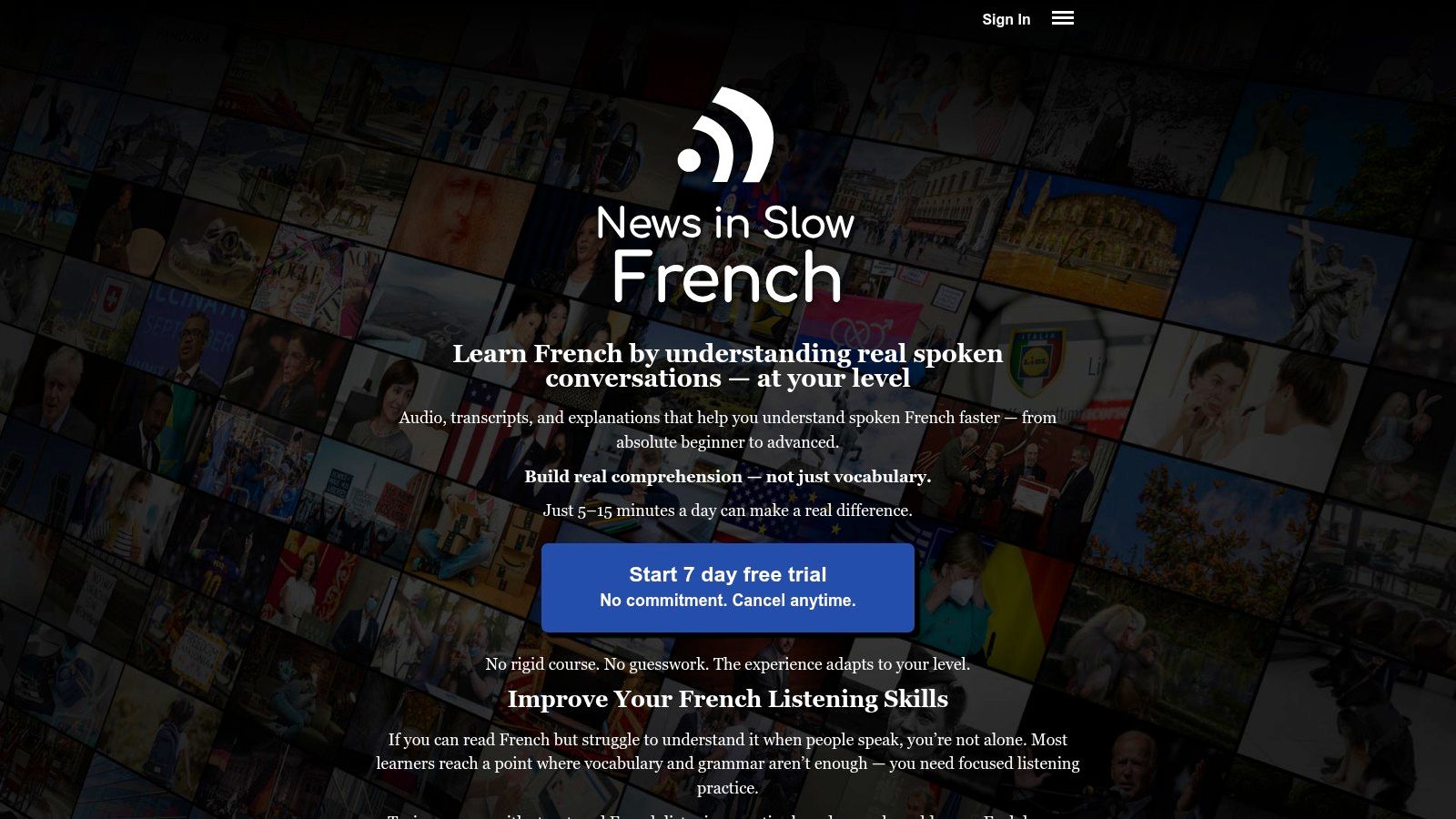
If you want structure more than surprise, News in Slow French is one of the easiest places to start. The platform is built around three levels, beginner, intermediate, and advanced, so you're not forced into native-speed audio before you're ready. It also adds interactive transcripts with translations, grammar explanations, quizzes, and optional live conversation Rooms, which makes it feel closer to a guided course than a casual podcast.
The trade-off is simple. The best tools sit behind a paywall, and the “Audio only” tier leaves out the transcript and exercise layer that makes the show especially useful for study. If you only want background listening, that may be enough. If you want real progress, the full package is the point.
Best fit and why it works
This is the show I'd point to for learners who like repeatable routines and clear pacing. The weekly news format helps you build vocabulary around current events without getting buried in fast, unstructured conversation. It also fits exam-minded learners who want review materials and a curriculum-like pathway.
Practical rule: use this when you want listening practice that you can study, not just consume.
For learners who are comparing podcasts in French as part of a paid study plan, this one stands out because the value comes from the scaffolding, not just the audio. If you want to combine it with self-study, it pairs well with a tutor who can convert the transcripts into speaking prompts and correction work.
2. Coffee Break French
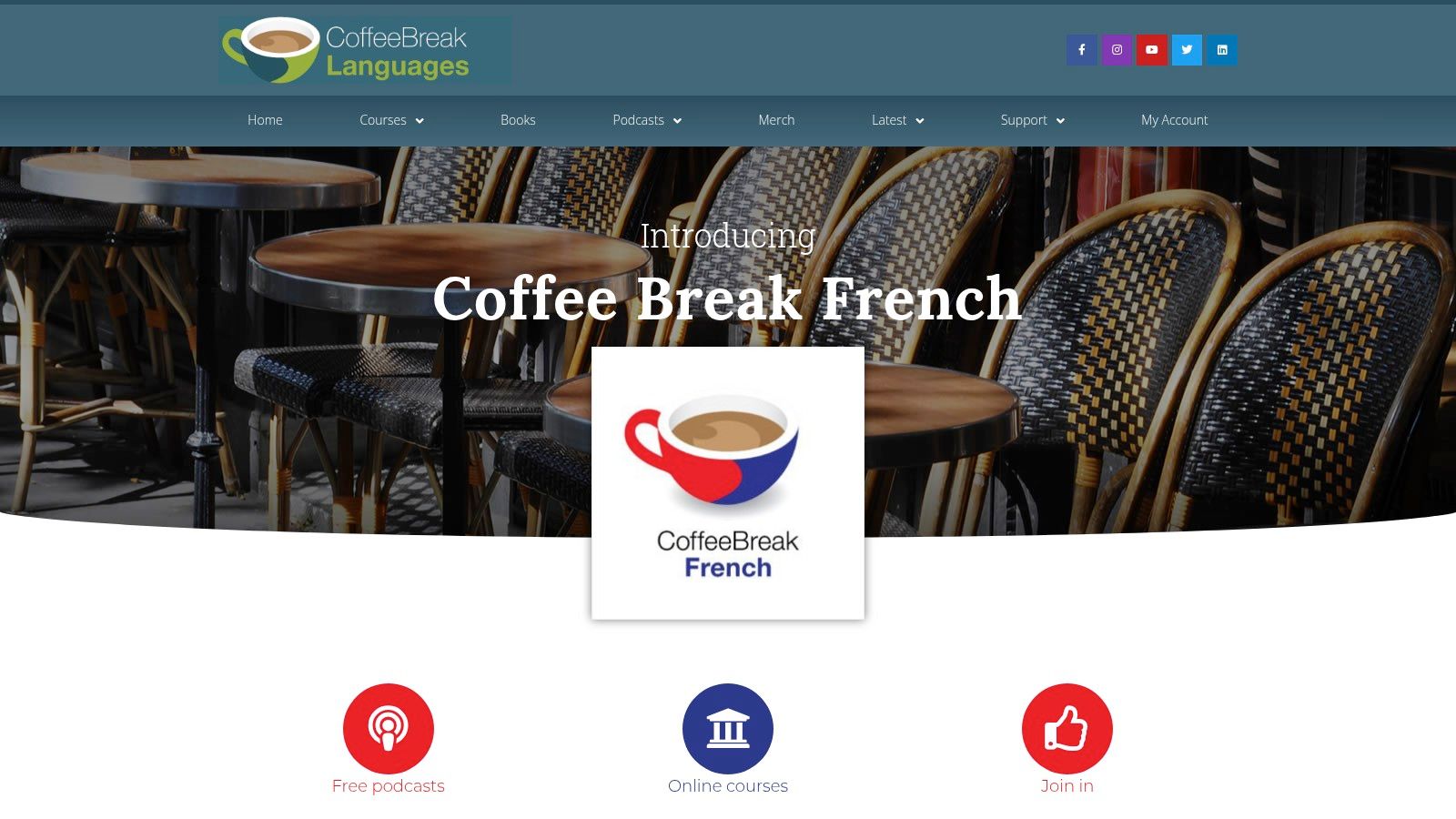
Coffee Break French suits learners who want structure without feeling trapped in a textbook. The seasons follow a clear path from beginner upward, and the blend of English explanation with French dialogue makes each lesson easier to follow. For anyone moving from classroom French into regular listening, that support can make the difference between giving up and keeping a routine.
The trade-off is clear. English stays present, especially early on, so learners who want full immersion may eventually want something more demanding. A good share of the transcripts and fuller study materials also sit behind paid tiers, so the free version gives you the lessons but not the whole study system.
Good for learners who need a guided bridge
I recommend it to learners who know grammar rules but still hesitate when French speeds up. The teacher-led style helps with usage, pronunciation, and confidence, especially if you follow one season in order instead of jumping around. The extra video and mobile-friendly setup also make it easy to use on a commute or in short daily sessions.
It works best as part of a study routine, not just background audio. Listen to one episode, review the transcript if you have access, then turn a few lines into speaking prompts or shadowing practice. That is where the lesson starts to stick.
If you want to push the listening into speaking, a resource like how to practice French conversation can turn a Coffee Break episode into a short speaking warm-up with clear prompts. That kind of follow-up is useful when you want the podcast to support tutoring, self-study, or both.
For learners comparing podcasts in French by level and study support, this is a practical middle path. It is less immersive than native content, but far easier to use well when you need explanation, pacing, and a clear next step.
3. innerFrench
innerFrench is what happens when an intermediate learner is ready to stop relying on English scaffolding. The episodes are 100% French, but the delivery stays clear and measured, so you get native language without the feeling of being thrown in the deep end. Topics usually center on culture, society, and learning strategies, which makes the podcast especially good for learners who want thoughtful content instead of short textbook-style lessons.
The transcripts are a major advantage because they let you study one short segment twice, first for meaning and then for phrasing. The main limitation is level fit. This is a better bridge for B1+ learners than a starting point for true beginners, and some listeners report occasional login friction around the transcript area.
Why intermediate learners keep returning to it
What makes this show work is consistency. The pacing is steady, the voice is familiar, and the topics stay relevant enough to hold attention while still being manageable. That combination helps learners move from “I understand the gist” to “I can follow the argument.”
A lot of self-study learners also need a better routine, not more content. A resource like how to learn French on your own fits well here because innerFrench is most effective when you pair listening with note-taking, transcript review, and short spoken summaries.
This is one of the best podcasts in French for shifting from learner media to real French media. It doesn't hold your hand, but it does give you enough structure to keep progressing without burning out.
4. RFI Journal en français facile
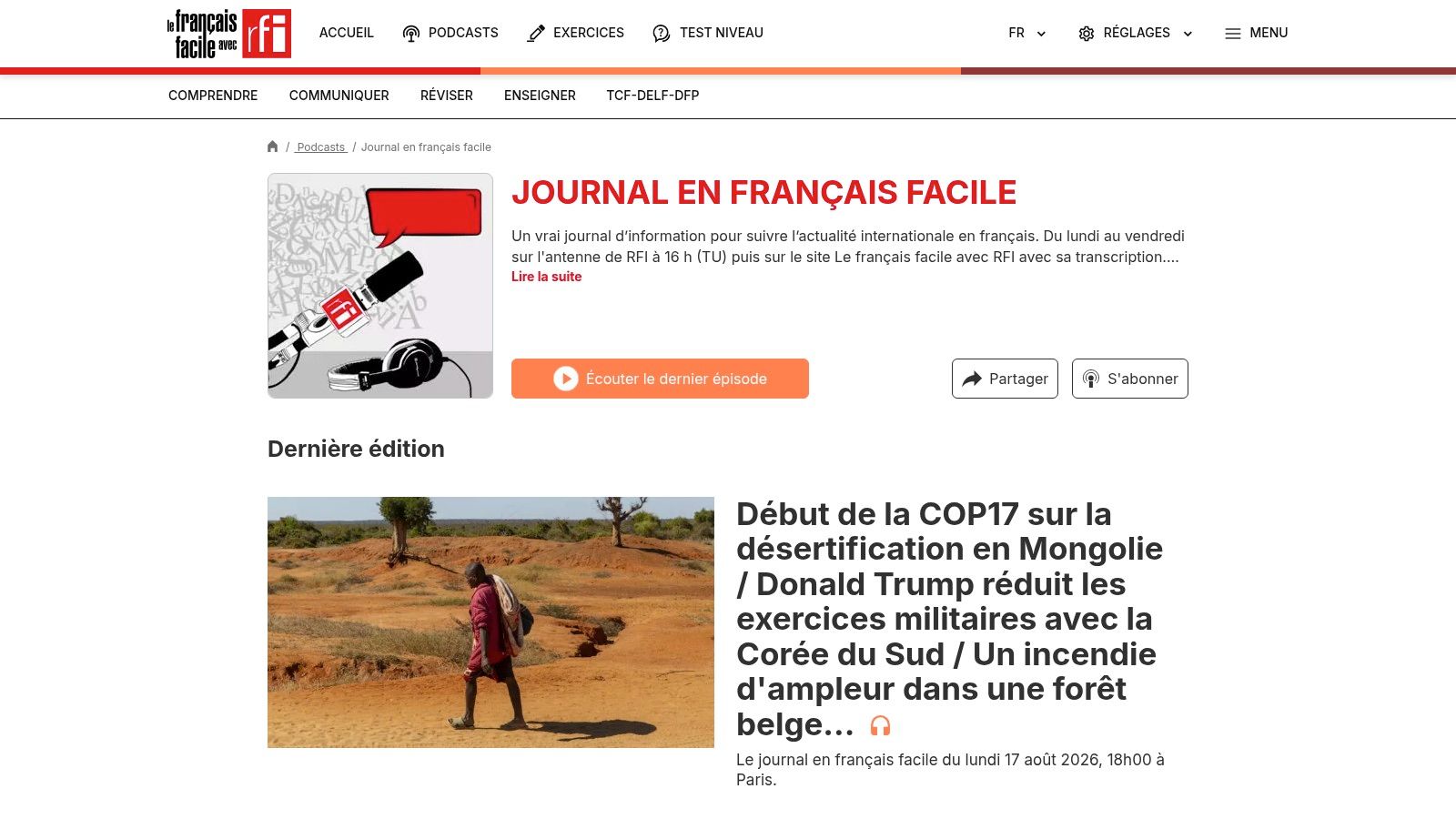
If your biggest problem is consistency, RFI's Journal en français facile is the most habit-friendly option on this list. The episodes are short, weekday news briefings, and the delivery is built for learners who want current events without the chaos of a live radio feed. The transcripts and exercises on the Français facile site make it easy to turn one episode into a repeatable study block.
This is also one of the most practical choices for people who need daily input but only have ten minutes at a time. The news focus keeps vocabulary grounded in the world, and the broadcaster's editorial standards give the material a reliable feel. The limitation is pacing. It's learner-friendly, but it still moves briskly enough that complete beginners may struggle on first listen.
Best used as a daily anchor
I'd recommend this to anyone who wants a consistent listening habit. You can listen on the commute, review the transcript later, and then summarize the story aloud in two or three sentences. That's enough to keep your French active without needing a long study block.
The best daily podcast is the one you can actually repeat tomorrow.
Among podcasts in French, this is one of the cleanest solutions for vocabulary growth around politics, society, and public affairs. If you're preparing for interviews, relocation, or just want to understand what French speakers are talking about, this one earns its place fast.
5. Duolingo French Podcast
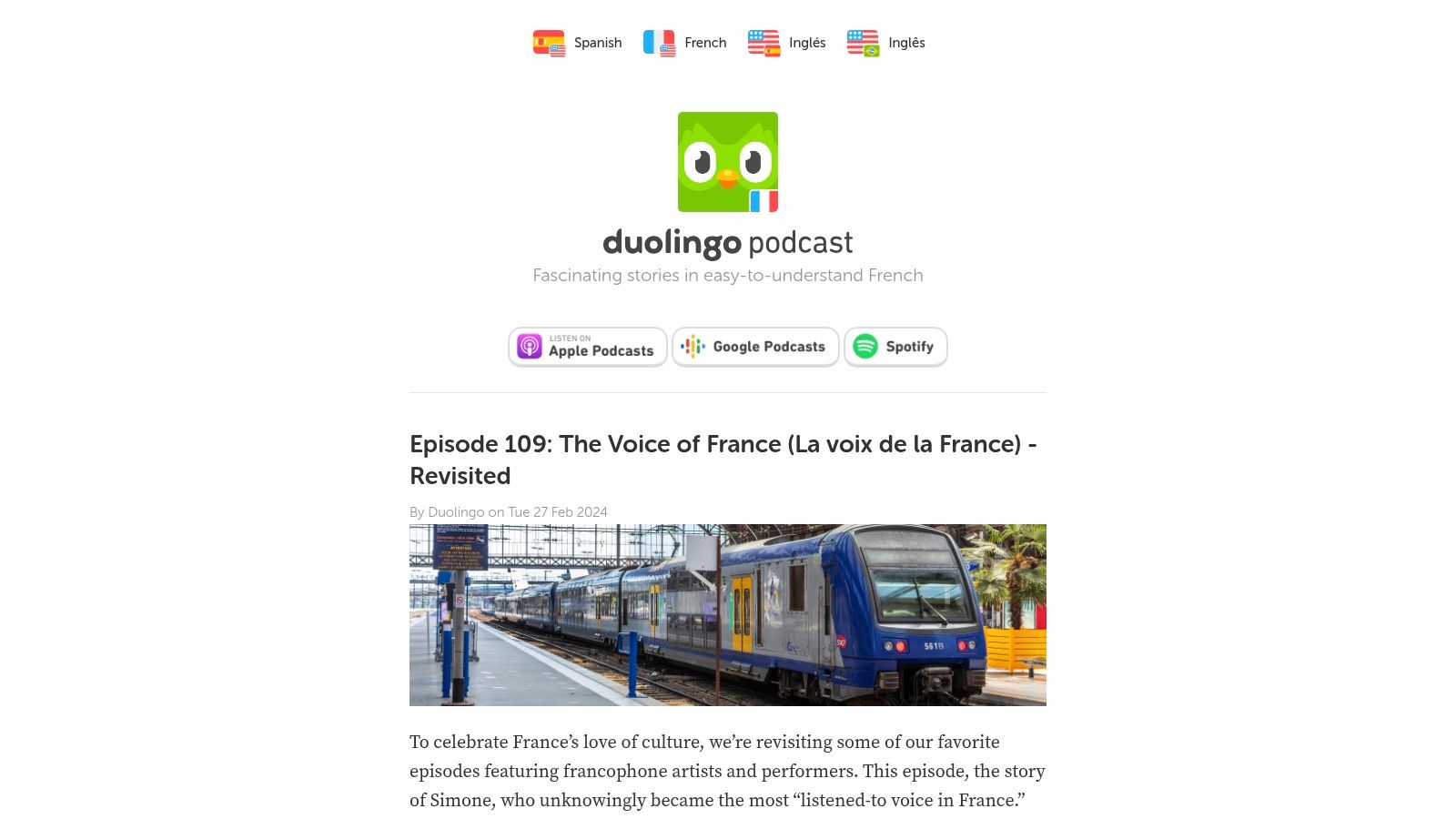
The Duolingo French Podcast is a story-first listen, which makes it unusually effective for people who get bored by lesson-style audio. Episodes mix French storytelling with light English framing, so the comprehension load stays manageable for high beginners and lower intermediates. Most episodes also have transcripts, and the back catalog is still large enough to keep exploring even though the series is no longer producing new episodes.
That archive matters because learners often need repetition more than novelty. You can return to the same episodes with better comprehension, which is useful for building confidence and identifying phrases you want to recycle in speech. The downside is obvious, though. Because the series has ended, it's less useful if you want a living show with fresh topics every week.
Why the format still works
Story-based French is easier to stick with because the brain follows narrative momentum. You're not just decoding grammar, you're tracking a person, a problem, and an outcome. That keeps attention higher than a plain explanation format.
For learners who want a bridge from streaming audio to actual study, I'd still use it as part of a plan, not as a one-stop solution. A guide like French podcasts for learning French fits naturally here because the Duolingo archive is strongest when you match episodes to your level and then practice speaking from them.
Among podcasts in French, this one is especially good for learners who need emotional engagement. If the story grabs you, you're much more likely to listen twice, and that's where the learning compounds.
6. FrenchPod101
FrenchPod101 suits learners who want structure without being locked into one format. Its library moves from A1 to C1, and the platform adds lesson notes, quizzes, spaced-repetition tools, an app, and optional Premium PLUS coaching. That mix makes it easy to shape a study plan around travel, work, or exam prep.
Breadth is the main advantage. You can choose targeted topics, switch between formats, and keep your study inside one system instead of piecing together several tools. The trade-off is that much of the value sits behind the paywall, and the production style changes from lesson to lesson, so the experience can feel uneven compared with a more tightly edited show.
Best for targeted, flexible study
Busy learners get the most from it. The app and spaced-repetition tools fit short study sessions, and the optional coaching adds feedback for people who want more than listening practice. If your week changes often, that flexibility is hard to beat.
It also fits learners who need speaking practice alongside audio. A page like how to practice French conversation works well alongside FrenchPod101, because the platform gives you input while conversation practice still needs its own outlet.
For shoppers comparing podcasts in French as part of a paid learning stack, this is one of the most configurable choices. The interface and lesson mix are less polished than a single-focus show, but they can serve you better if you want structured, modular progress and a study routine you can adjust as your needs change.
7. L'Heure du Monde
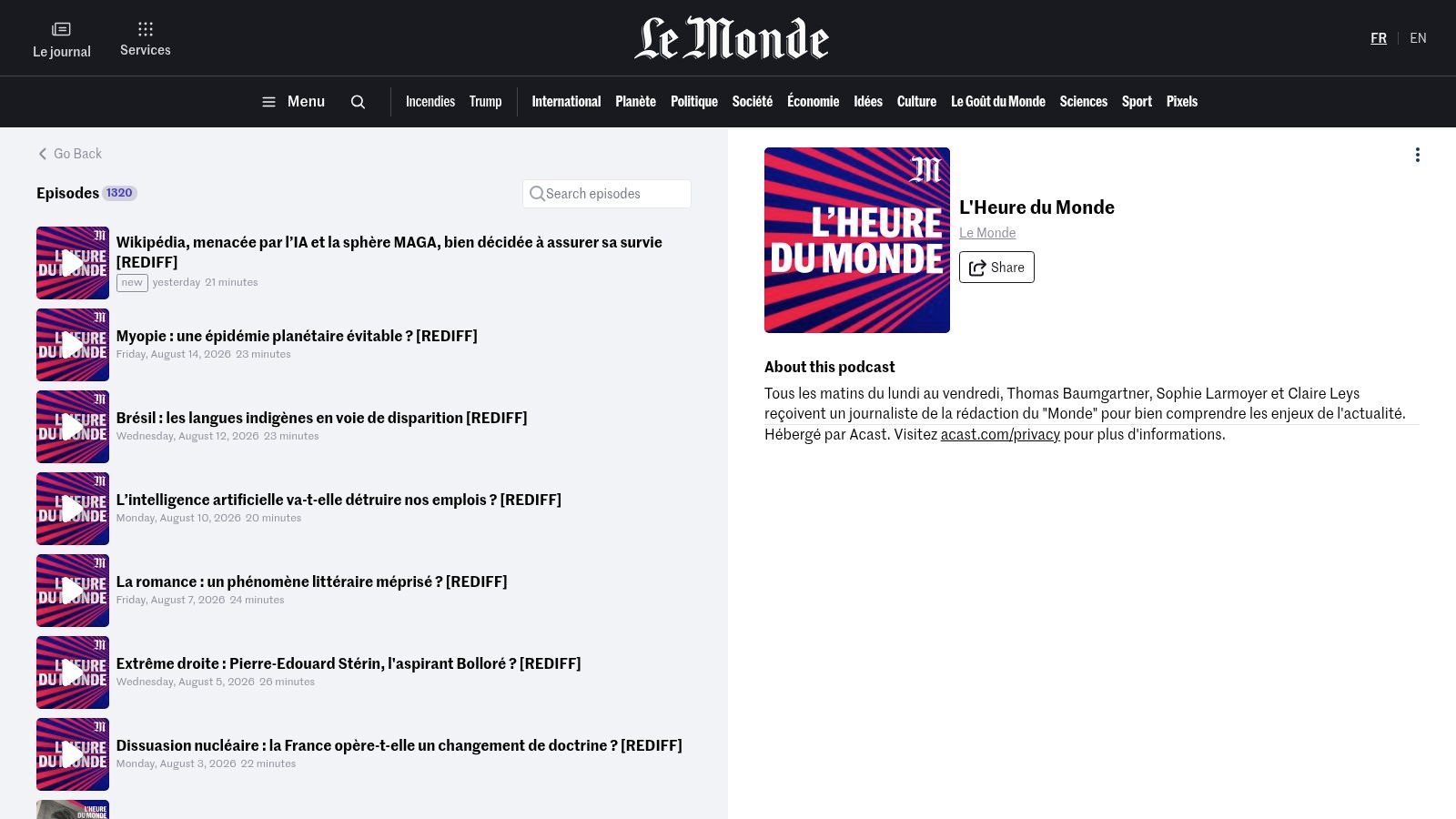
L'Heure du Monde is the kind of podcast I'd point a serious professional learner toward without hesitation. Each episode goes deep on one issue, usually in the 20 to 30 minute range, with journalists and subject-matter experts shaping the discussion. That gives you more than current events vocabulary, it gives you the logic of French public discourse, which is often what advanced learners need.
The podcast works especially well for business French and executive listening because the editorial structure is clear. You can take notes, summarize the argument, and reuse the vocabulary in meetings or presentations. The trade-off is that there's very little learner scaffolding, so if your comprehension isn't already strong, the show can feel dense fast.
When advanced learners need substance
This is the kind of listening I'd choose when I want to study how French speakers explain complex issues, not just how they chat about them. That makes it useful for executives, consultants, and anyone preparing for French-speaking workplaces. Some web content may require sign-up flows, so it's more of a committed study resource than a casual play-and-go option.
If you're comparing podcasts in French for professional use, this one stands out because it rewards note-taking. One episode can generate vocabulary, discussion points, and follow-up reading for a whole week of work.
It's not beginner-friendly, but that's not the point. It's a strong fit when you're past survival listening and need sharper analytical language.
8. Les Pieds sur terre
Les Pieds sur terre is one of the most useful French listening resources for advanced learners who want real voices and real stories. The program leans into documentary storytelling, often with first-person narratives and field recording, which means you hear how French sounds in different settings rather than how it sounds in classroom material. The archive is huge, and the public-radio production quality is consistently strong.
The trade-off is the lack of built-in transcript support for all episodes. That makes it less convenient for intensive study unless you're willing to pause, replay, and take your own notes. It's also advanced enough that beginners can get lost quickly, especially when speakers shift registers or accents.
Why it helps culture and comprehension
The show is excellent for learners who want more than vocabulary lists. You get emotional tone, conversational rhythm, and social context in one place, which makes it especially valuable for discussion prep or cultural fluency. I've found it particularly useful when a learner needs richer listening material but doesn't want business or news content.
If you can summarize one episode of documentary audio in French, you're doing real comprehension work.
For learners who want podcasts in French that sound alive rather than simplified, this is one of the strongest options. It's not the easiest, but it's one of the most rewarding once your ears are ready for it.
9. Français Authentique
Français Authentique is built around short, frequent episodes and a teacher-led monologue style. The focus is practical expression, learner mindset, and confidence building, which makes it especially attractive to people who want a daily French habit without a lot of setup. The archive is large, and the companion paid programs add a layer of continuity if you decide you want more structure.
What makes this show work is accessibility. The tone stays friendly, the episodes are easy to slot into a commute, and the topics feel usable in ordinary conversation. The main limitation is that the format is less structured than a full course, so beginners may need extra support to turn the listening into speaking gains.
Good for confidence and routine
I like this for learners who need encouragement as much as input. If you're past absolute beginner stage and trying to stay in contact with French every day, the podcast can keep momentum alive without demanding a huge time block. That makes it practical for working adults and anyone rebuilding consistency.
For pronunciation-focused learners, a companion resource like French pronunciation for English speakers fits well because short teacher-led episodes often reveal where your mouth needs to work harder.
Among podcasts in French, this is one of the easiest to keep in a routine. It won't replace a course, but it can keep you moving between lessons.
10. La Story
La Story from Les Échos is a strong choice when your French goal overlaps with business, policy, or markets. Episodes regularly focus on companies, economics, and current affairs, and the mix of journalists plus external experts gives the show a practical, professional edge. The archive is especially useful if you want vocabulary around sectors, corporate developments, or French business news.
This is not a learner podcast, and that matters. There's no built-in scaffolding, so the listening is best reserved for advanced learners or professionals who already have enough comprehension to extract meaning from fast, information-dense audio. The France and EU angle can also feel narrower than some global business audiences want, although that same focus is exactly what makes it useful for people working with French markets.
A serious tool for professional French
I'd use this when a learner wants to sound informed in meetings, not just conversational. It helps you hear how journalists and experts frame business problems, which is useful for presentations, internal discussions, and sector analysis. If you're studying with a tutor, one episode can become a case study in vocabulary, summary, and opinion-building.
For professionals comparing podcasts in French, this is one of the clearest fits because the content maps directly to workplace language. It's not casual listening, but it is highly relevant listening.
Top 10 French Podcasts, Comparison
| Program | Core features | Quality ★ | Price/value 💰 | Target 👥 | USP ✨🏆 |
|---|---|---|---|---|---|
| News in Slow French | Graded news (3 levels), interactive transcripts, grammar + quizzes, live Rooms | ★★★★☆ | Paid subscription; strong exam prep 💰 | 👥 Beginner→Advanced; DELF/DALF candidates | ✨ Scaffolded news + exam-focused pathway 🏆 |
| Coffee Break French | Sequential seasons, English explanations + French dialogues, free podcast + paid courses | ★★★★☆ | Free episodes; optional paid courses 💰 | 👥 Busy learners, beginners→upper‑intermediate | ✨ Clear teacher-led grammar; mobile-friendly |
| innerFrench | 100% French monologues, full transcripts, culture & learning topics | ★★★★☆ | Free podcast; optional paid community 💰 | 👥 B1+ intermediate learners | ✨ Natural-paced immersion; great bridge to native media 🏆 |
| RFI – Journal en français facile | Daily ~10‑min learner news, free transcripts & exercises | ★★★★☆ | Free (public broadcaster) 💰 | 👥 High-beginners→intermediate; daily habit builders | ✨ Consistent daily news + trusted source |
| Duolingo French Podcast | Story-based bilingual episodes, transcripts, large archive (no new eps) | ★★★☆☆ | Free archive; no new episodes 💰 | 👥 High-beginners→lower-intermediate | ✨ Engaging narratives that motivate listening |
| FrenchPod101 (Innovative Language) | Graded A1–C1 library, notes, SRS, app, optional 1:1 coaching | ★★★★☆ | Freemium; many features behind paywall; promos 💰 | 👥 Self-directed learners A1–C1; busy professionals | ✨ Huge catalog + SRS + optional tutoring |
| L'Heure du Monde (Le Monde) | 20–30 min deep dives, journalists & experts, thematic archive | ★★★★★ | Free (some content may require account) 💰 | 👥 Advanced learners; executives & professionals | 🏆 High-quality analysis; business-relevant vocabulary |
| Les Pieds sur terre (France Culture) | First-person documentaries, varied registers, high production | ★★★★★ | Free (large archive) 💰 | 👥 Advanced learners seeking cultural fluency | 🏆 Authentic storytelling; nuanced registers |
| Français Authentique | Short teacher monologues, frequent episodes, focus on natural expression | ★★★★☆ | Free podcast; optional paid programs 💰 | 👥 B1+ daily learners; speaking confidence seekers | ✨ Friendly, habit-building content |
| La Story (Les Échos) | Business & economics episodes, journalists & experts, sector archive | ★★★★☆ | Free (business-focused) 💰 | 👥 Business professionals & corporate teams | 🏆 Business-first insights and sector vocabulary |
Turn Listening Time Into Speaking Progress
The best podcasts in French aren't the ones with the biggest archives or the most polished branding. They're the ones that match your level and give you a repeatable way to practice. Beginners usually need structured or lightly scaffolded audio, so News in Slow French, Coffee Break French, or the Duolingo French Podcast can make listening feel manageable. Intermediate learners often get the most value from transcripts, which is where innerFrench, RFI Journal en français facile, and Français Authentique become more useful. Advanced and professional learners can move toward documentary, current-affairs, or business content like Les Pieds sur terre, L'Heure du Monde, and La Story.
The routine matters as much as the show. I usually recommend a simple four-step loop. Listen once for the main idea. Revisit a short segment with the transcript. Collect a few useful expressions. Then summarize the episode aloud in your own words. If you're serious about progress, bring one excerpt or one question to a tutor and use it for correction, pronunciation, and speaking practice.
That's the point where a podcast stops being entertainment and starts becoming training. A good tutor can help you decide whether the episode is too easy, too hard, or just right, then turn it into a plan you can repeat each week. If you want individualized feedback, compare Elite French Tutoring lesson options or book the free 20-minute consultation, and we'll shape a podcast-based practice plan around your current level, your objectives, and the way you like to learn.