Skip to content
You want serious French technique, but the right choice isn't obvious. Should you commit to a Paris diploma, choose a pastry-focused campus, pursue culinary management, or stay home with an online program? The best French cooking schools serve very different learners, so prestige alone isn't a useful buying guide.
I ranked these seven programs by student fit, weighing professional intensity, specialization, English-language access, flexibility, career direction, location, admissions practicality, and relocation demands. Treat published tuition and duration as decision points, not permanent quotes. Verify current details directly with each school before applying.
No supplied material provides a verifiable individual student success story, so I haven't invented one. If you need French for culinary study, interviews, travel, kitchen communication, or relocation, Elite French Tutoring's free 20-minute consultation is a sensible language-support step before you apply.
Table of Contents
- 1. Le Cordon Bleu Paris
- 2. FERRANDI Paris
- 3. École Ducasse
- 4. ENSP
- 5. École Lenôtre
- 6. Institut Lyfe
- 7. Auguste Escoffier School of Culinary Arts
- Top 7 French Culinary Schools Comparison
- Match the Program to Your Next Kitchen
1. Le Cordon Bleu Paris
Le Cordon Bleu Paris is the clearest choice for a student who wants a structured, technique-first education in Paris and values a credential recognized across an international culinary network. The school traces its history to Paris in 1895, when journalist Marthe Distel founded the institution, and it now operates in more than 20 countries with over 35 schools, training about 20,000 students annually, according to Le Cordon Bleu's institutional history.
The flagship route is the Diplôme de Cuisine, available as a standard nine-month program or a six-month intensive track. Students seeking both savory and pastry training can choose the Grand Diplôme, while Culinary Management and professional pathway options add a broader career direction. English-taught cohorts, published intake information, and visa guidance make the campus practical for international applicants planning a move to France.
The trade-off is commitment. Paris living costs are high, and a highly structured timetable can make outside employment difficult, especially on an intensive track. Tuition also sits firmly in the premium category. Published Paris fees list the Basic Cuisine Certificate at €13,500 for three months, the Intermediate Cuisine Certificate at €12,900 for three months, the Cuisine Diploma at €34,000 for nine months, and the Grand Diplôme at €55,000 for nine months.
Best fit for a planned international move
Choose Le Cordon Bleu Paris if you want a recognizable Paris credential, frequent start-date options, and a clear progression from foundational technique to a larger diploma. It also suits applicants who need a school with established international admissions processes.
Before applying, read this guide to studying abroad in Paris and then compare the school's current intake, visa, housing, and payment information directly.
Practical rule: Pick the standard route if you need more time to absorb technique. Choose the intensive route only if your schedule, finances, and prior kitchen experience can support a faster pace.
2. FERRANDI Paris
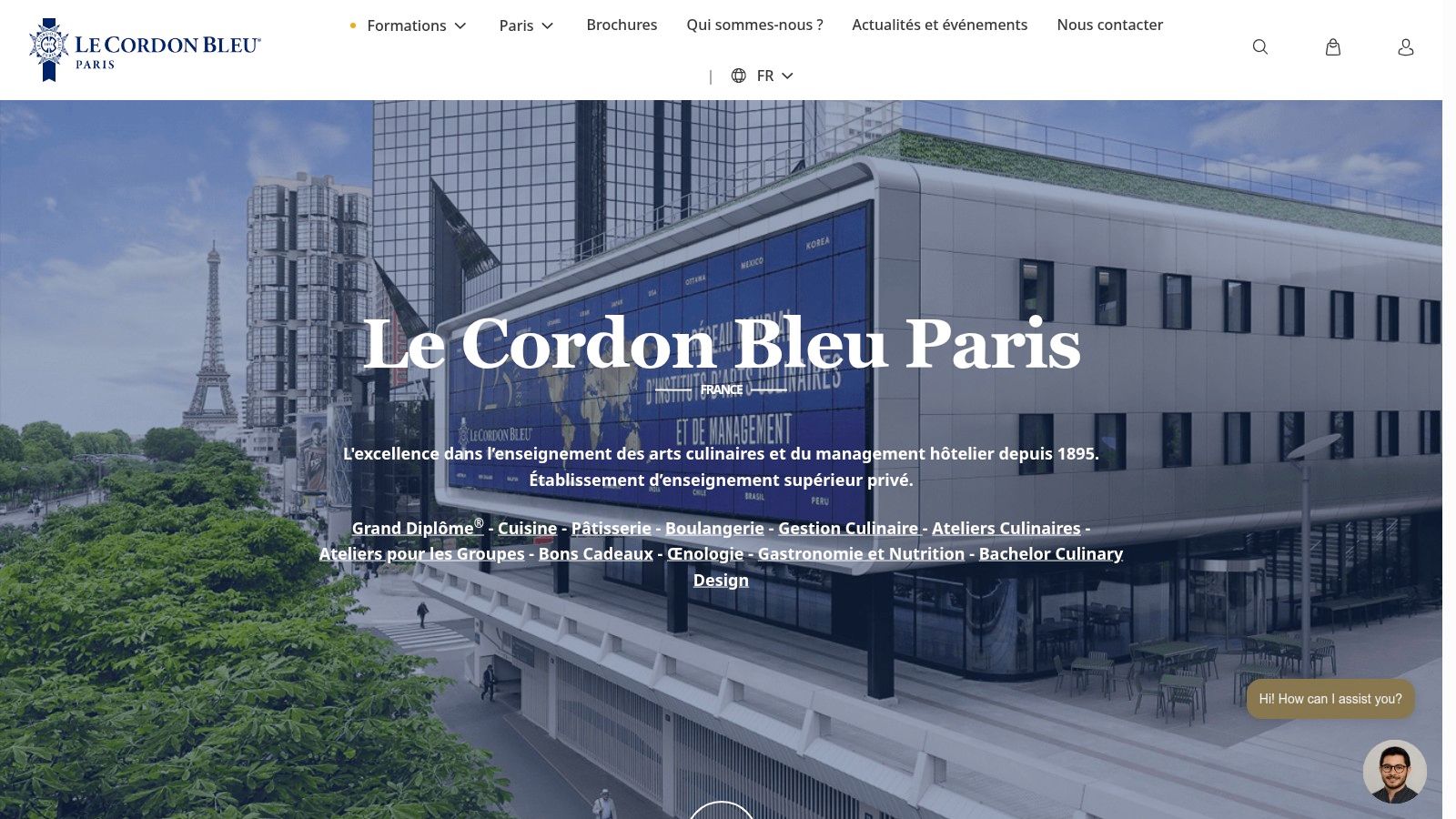
FERRANDI Paris is my strongest recommendation for a short, professional, English-accessible route into French cuisine. It has the feel of a serious grande école, but its intensive programs are easier to evaluate than a long academic commitment. Students who want practical kitchen training, an internship option, and a defined admissions process should put this school near the top of their list.
The Intensive Professional Program in French Cuisine lasts 16 weeks and includes an optional three-month internship, with tuition listed at €24,500 on the official program page. FERRANDI also offers an Advanced Professional Program lasting eight weeks and 280 hours, with tuition of €13,750, including uniforms, course materials, and excursions, as stated on its Advanced Professional Program page.
English-taught professional programs include translation during guest demonstrations, while embedded professional French classes support students preparing for internships and workplace communication. That combination matters. You can study core technique in English while building the practical vocabulary needed for a French kitchen.
A focused route, not a complete academic degree
FERRANDI's main weakness is also part of its appeal. The intensive format is short, so it works well for career changers and experienced cooks who need a concentrated professional reset. It isn't the obvious choice for someone seeking a multi-year degree or extensive general education.
The school publishes tuition and admissions timelines clearly, but direct scholarship support is limited. Ask about interview expectations, internship eligibility, accommodation, insurance, and the exact language balance before paying a deposit. Studying in France is easier when your documents, interview answers, and professional vocabulary are ready in advance.
Choose FERRANDI if you want intensity with a practical bridge to employment, rather than the broadest possible campus experience.
3. École Ducasse
École Ducasse is the best fit for students who want modern facilities, hands-on practice, and a choice between short training and longer academic study. Its Paris campus is in Meudon, close enough to Paris for access to the capital while offering a purpose-built environment with professional kitchens, pastry and bakery laboratories, an on-campus restaurant, and an edible garden.
The program range is the key selling point. Applicants can compare short professional intensives with multi-year Bachelor programs, including English tracks. That makes École Ducasse more adaptable than a school built around one standard diploma. International admissions pages also provide guidance on tuition and visas, although some applicants may still need to contact the school to confirm the full current cost.
A broad comparison of French culinary schools lists École Ducasse programs at two to nine months and gives a tuition benchmark of €13,677, while emphasizing that duration and cost vary by program. Use that comparison as an initial shopping reference, then confirm the exact fee through École Ducasse's official Paris campus information.
Choose the campus for applied training
The on-campus restaurant gives students a setting where service and guest-facing standards matter, not just isolated classroom technique. École Ducasse also benefits from industry connections through the Sommet Education network, which can help students who want a professional environment rather than a purely recreational cooking experience.
The disadvantages are practical. Longer programs can be competitive, nearby housing can be expensive, and public tuition information isn't always as straightforward as FERRANDI's. Ask for a complete cost sheet covering tuition, equipment, accommodation, insurance, meals, and required administrative expenses.
If you want a modern Paris-area campus but aren't sure whether you need a short intensive or a degree, École Ducasse is the strongest comparison point.
4. ENSP
ENSP, the École Nationale Supérieure de Pâtisserie, wins for specialization. Don't choose it because you want a general culinary education. Choose it because pastry, baking, chocolate, confectionery, or ice cream is the work you want to practice every day.
The school forms part of the École Ducasse network and operates from a dedicated campus in Yssingeaux. Its purpose-built pastry and bakery laboratories support intensive practical learning, while English and French options make the school accessible to international applicants. Selected international partnerships and Erasmus+ work-placement opportunities can add mobility to the training path, but applicants should confirm eligibility for their specific program.
A broad school comparison places École Lenôtre and other French programs across varied duration and price ranges, but ENSP's plan-specific fees and schedules need direct confirmation. Start with the official ENSP campus information, then request the current brochure before making a budget.
Rural location, serious pastry focus
Yssingeaux offers a different student experience from Paris. You'll have fewer immediate big-city job options during study, but the dedicated environment can help a focused pastry student avoid distractions. The campus is a poor fit if savory cuisine is your central goal or if you need daily access to Paris restaurants and employers.
The strongest applicants will enjoy repetition, precision, production planning, and the physical rhythm of pastry work. They should also be ready to ask detailed questions about accommodation, placement arrangements, language requirements, and whether a chosen course includes the specialty they want.
For a useful at-home supplement, Elite French Tutoring's French cookbook resource can help you turn recipes into French-speaking practice while you prepare for study.
5. École Lenôtre
École Lenôtre is the practical recommendation for adult learners, career changers, and aspiring restaurant owners. Its location near Rungis gives students proximity to the Marché de Rungis and a product-focused environment, while its modular structure lets applicants build training around a specific professional objective.
The school offers pathways across cuisine, pastry, bakery, and charcuterie. In cuisine, the Essentials, Advanced, and Mastery structure provides a progression that can suit someone who doesn't want to enroll in a single long diploma. Industry internships and specialist workshops with MOF and guest chefs add professional context, while small cohorts support repeated hands-on practice.
Business preparation is a meaningful differentiator. Students planning to operate a restaurant in France can ask about HACCP and Permis d'exploiter training, rather than treating cooking skill as the only requirement. The École Lenôtre professional cuisine program is the right starting point for comparing modules and requesting current documentation.
Best for practical momentum
École Lenôtre isn't the best choice if you want a conventional academic degree. Its strength is upskilling, applied repetition, and a flexible route for someone changing direction without abandoning existing work or responsibilities.
Pricing isn't universally published, so don't rely on informal estimates. Request a complete brochure with tuition, materials, internship terms, schedule, class size, accommodation guidance, and any extra business certifications. A modular course can look affordable at first but become a larger commitment once you add several levels and living costs.
Choose École Lenôtre when your question is, “What do I need to work in a kitchen or prepare to run a food business?” Choose another school if your main goal is an academic credential.
6. Institut Lyfe
Institut Lyfe, formerly Institut Paul Bocuse, is the strongest option for students who want culinary training combined with management and higher education. Its campus is in Écully near Lyon, not Paris, and that location changes the decision. You aren't buying a short Paris immersion. You're considering an academic pathway with culinary, hospitality, leadership, and business dimensions.
The school offers a Bachelor's in International Culinary Arts Management and a Master's in Culinary Leadership & Innovation, with 100% English tracks. It also provides short immersive programs and has expanded its pastry offering through a Pastry Academy. The Michelin-starred pedagogical restaurant, Saisons, gives students experience serving real clients in a training environment.
State recognition, international admissions support, and English delivery make Institut Lyfe appealing to students who need a degree-oriented route without studying primarily in French. The Institut Lyfe official website should be your source for current admissions criteria, program prerequisites, tuition, and intake information.
A management decision, not only a cooking decision
Choose this school if you can see yourself leading a restaurant, developing culinary concepts, managing hospitality operations, or building a broader food career. The management component is a benefit for those goals, but unnecessary overhead for someone who only wants to sharpen classic kitchen technique quickly.
Full degree programs require a multi-year commitment and a larger total cost of attendance than short courses. Admissions can also involve ECTS and prerequisite expectations. Prepare academic transcripts, language documentation, references, and a clear explanation of your career direction.
For students planning international careers, French practice for work opportunities in France can help with interviews and professional communication alongside formal study.
7. Auguste Escoffier School of Culinary Arts
Auguste Escoffier School of Culinary Arts is the clear alternative for a U.S.-based learner who wants French culinary foundations without relocating to France. It operates campuses in Austin and Boulder and offers nationwide online study, so students can compare campus immersion with a more flexible home-based route.
The online Culinary Arts diploma and associate degree options include a required industry externship. That model separates theory and guided practice from local workplace experience, giving working adults a way to keep earning or managing family responsibilities while studying. The school also offers related paths in pastry, plant-based cooking, entrepreneurship, and other culinary areas.
Because this is a U.S. school, applicants can investigate U.S.-based financial aid for qualifying students, ACCET accreditation, and NC-SARA participation for online programs through the Auguste Escoffier School website. Confirm eligibility and current terms directly, especially if you live outside the United States.
Flexibility comes with a different network
The major advantage is logistical. You avoid a French visa, relocation, and Paris housing search, while the online format can fit around work. The required externship also means the program isn't purely screen-based.
The compromise is equally clear. Auguste Escoffier isn't a French institution, and online students won't receive the same daily campus culture or Paris-based network as applicants at Le Cordon Bleu, FERRANDI, or École Ducasse. Online study also demands self-discipline, reliable kitchen access, and initiative in arranging workplace practice.
Choose it when flexibility and U.S. logistics matter more than studying inside France. It isn't a substitute for a Paris credential, but it may be the better fit for your actual life.
Top 7 French Culinary Schools Comparison
| Institution | 🔄 Implementation complexity | ⚡ Resources & cost | ⭐ Expected quality | 📊 Career impact | 💡 Ideal use cases |
|---|---|---|---|---|---|
| Le Cordon Bleu Paris | Highly structured programs; multiple intakes; intensive tracks require full-time commitment | Premium tuition + high Paris living costs; 6–9 month diplomas or longer for Grand Diplôme | Globally recognized, technique-first training ⭐⭐⭐⭐ | Strong international alumni network and employer recognition | Students seeking a classic, credentialed French technique curriculum in Paris |
| FERRANDI Paris | Short, intensive 16-week program with interview-based admissions and optional internship | Short duration reduces living cost; limited scholarships offered | Professional, industry-focused training ⭐⭐⭐⭐ | Clear internship pathways and employer links in France and abroad | Fast professional pathway to industry for students needing a compact program |
| École Ducasse, Paris Campus | Range from short intensives to multi-year Bachelors; centralized admissions | Modern campus facilities; tuition sometimes requires direct inquiry; nearby housing costly | High-quality hands-on training in state-of-the-art facilities ⭐⭐⭐⭐ | High placement rates via Sommet Education network | Learners seeking modern, practical training with strong industry connections near Paris |
| ENSP, École Nationale Supérieure de Pâtisserie | Pastry-specialized diplomas with ~90% hands-on hours; focused curriculum | Purpose-built pastry labs; rural campus (relocation required) | Top-tier pastry/bakery specialization ⭐⭐⭐⭐⭐ | Strong outcomes for pastry careers; Erasmus+ placement options | Students wanting deep, professional specialization in pastry and bakery arts |
| École Lenôtre | Modular, small-cohort format; flexible scheduling for adults and career changers | Module-based pricing; some details via brochure/contact; near Rungis market | Very practical, repetition-focused professional training ⭐⭐⭐⭐ | Good operational readiness for entrepreneurial or shop roles | Career changers and aspiring restaurateurs seeking practical, modular training |
| Institut Lyfe (Paul Bocuse) | Multi-year Bachelor/Master tracks with selective admissions; English tracks available | Higher total cost for full degrees; state-accredited programs | Strong blend of culinary and management education ⭐⭐⭐⭐ | Management and leadership career pathways; Michelin-starred training restaurant experience | Students wanting academic degrees + culinary leadership/management credentials |
| Auguste Escoffier School of Culinary Arts | Flexible online or on-campus options; externship required; accessible admissions | U.S. accreditation, financial aid available for qualifiers; no France relocation | Solid classical foundation with online flexibility ⭐⭐⭐ | Local externship networks; practical experience near student | U.S. students or working adults needing flexible/online culinary training without relocating to France |
Match the Program to Your Next Kitchen
The best French cooking school is the one that matches your next professional move, not the one with the most recognizable name. If you want a structured, globally recognized Paris credential, choose Le Cordon Bleu Paris. Its classic cuisine and pastry pathways suit international students prepared for premium tuition, a demanding schedule, and relocation.
Choose FERRANDI Paris for a shorter English-taught professional route with an optional internship. It makes the most sense for a career switcher who wants concentrated training and a direct connection to professional kitchen experience. Choose École Ducasse if modern facilities, hands-on restaurant training, and varied program lengths matter more than a single traditional pathway.
For pastry, baking, chocolate, confectionery, or ice cream, choose ENSP. Its specialization and dedicated facilities outweigh the rural location only if pastry is your priority. Choose École Lenôtre for modular career-change training, practical repetition, and preparation for restaurant entrepreneurship. Choose Institut Lyfe if culinary arts should sit alongside management, leadership, hospitality, and a state-recognized academic route. Choose Auguste Escoffier if you need U.S.-based or online flexibility and don't want visa or relocation logistics.
Before you submit an application, answer these questions:
- Goal: Are you changing careers, building professional credentials, improving a hobby, or preparing to open a restaurant?
- Specialization: Do you want savory cuisine, pastry, bakery, chocolate, hospitality, or management?
- Language: Is the program fully English-taught, supported by translation, or dependent on French kitchen communication?
- Duration: Does the published schedule fit your work, family, visa, and financial situation?
- Internship: Is an internship optional, required, included, or arranged separately?
- Admissions: What prerequisites, interview materials, language evidence, and academic records are required?
- Relocation: What visa, housing, insurance, transport, and local registration issues will you need to handle?
- Funding: What are the current tuition, scholarship options, payment schedule, equipment costs, and living expenses?
French culinary education is concentrated in major cities and international hubs. An independent business-data report counted 143 culinary schools in France in July 2026, including 20 in Paris, or about 14% of the national total, according to the France culinary school report. That concentration creates choice, but it also makes location a real cost and lifestyle decision.
Employment outcomes can help you compare schools, but don't treat one result as universal. CEPROC reports 9 out of 10 graduates in salaried employment six months after leaving, while other French hospitality and cooking programs in the same government ecosystem show around 7 out of 10 employed at six months, as reflected in InserJeunes establishment data. Ask each school how it defines employment, which program the figure covers, and whether the result applies to international students.
Short courses, apprenticeships, and online study can all be sensible choices, but they aren't interchangeable credentials. A short course may be ideal for skill-building, an apprenticeship for paid workplace learning, and online study for flexibility. Compare the outcome you need before comparing the brand.
Don't guess your French level or wait until an interview exposes a vocabulary gap. If you need French for culinary school applications, admissions interviews, kitchen communication, or relocation, book Elite French Tutoring's free 20-minute consultation to compare a customized language-support option.