You're trying to sound natural in French, but your vocabulary feels flat the moment someone mentions art, culture, or style. That's exactly where popular French artists become useful, because they give you real conversation material, not just textbook phrases. If you can talk about Monet's light, Picasso's Cubism, or Chanel's elegance with confidence, you're no longer reciting French, you're participating in it.
I use artists like these with learners who want French for travel, work, exams, or social confidence. The best part is that each name opens a different kind of language: descriptive, argumentative, emotional, poetic, or professional. That means you can choose the artists that fit your goal instead of memorizing a random list.
This guide gets straight to the names that matter most for practical French learning. You'll see how each artist can sharpen your vocabulary, improve your cultural fluency, and give you a concrete topic for lessons, museum visits, or client conversation. For learners who want a stronger speaking edge, that's a much better return than studying isolated word lists.
A few artists below are also excellent for pronunciation, because their names, titles, and written materials give you natural speaking practice. If you've ever wanted to discuss art without freezing up, this is the shortlist I'd start with.
Table of Contents
- 1. Claude Monet, Impressionist Master for Aspiring French Conversationalists
- 2. Pablo Picasso, Modern Art Vocabulary for Advanced French Learners
- 3. Frida Kahlo, Emotional Expression and Personal Narrative in French
- 4. Henri de Toulouse-Lautrec, Parisian Nightlife Vocabulary and Cultural Immersion
- 5. Simone de Beauvoir, Philosophical French and Feminist Discourse
- 6. Henri Matisse, Color, Creativity, and Playful French Learning
- 7. Jean-Michel Basquiat, Street Art, Contemporary Culture, and Cool French
- 8. Coco Chanel, Fashion, Elegance, and Aspirational French for Professionals
- 9. Marc Chagall, Surrealism, Symbolism, and Poetic French Expression
- 10. Josephine Baker, Performance, Cultural Impact, and Authentic French Integration
- 10 Popular French Artists, Comparative Learning Themes
- Your Next Steps in Artful French Mastery
1. Claude Monet, Impressionist Master for Aspiring French Conversationalists
Monet is the artist I reach for when a learner wants French that feels elegant but still accessible. His work gives you a way into museum conversation, color vocabulary, and the softer descriptive phrases that native speakers use naturally when they talk about beauty. He's also one of the clearest commercial-intent anchors for learners who want a museum visit, a print purchase, or a private art lesson with a French angle, because he's consistently identified as the founder or pioneer of Impressionism, and Impression, Soleil Levant is the painting tied to that movement's origin story Art Facts on Monet and Impressionism.
Why Monet works so well in French lessons
Monet's appeal is practical. You can describe light, reflections, water, brushwork, and atmosphere without needing advanced technical art history, which makes him ideal for intermediate learners. When I'm coaching someone for a gallery opening or a café conversation in French, Monet gives us a rich but manageable set of phrases, especially around impression, couleur, nuance, and sensation.
His letters are also useful for learners who want more natural phrasing. Reading them aloud helps with rhythm and emotional tone, and that's where many students start to sound more human. If you're preparing for social French, I'd use Monet as the bridge between textbook adjectives and the kind of observational language French speakers enjoy.
Practical rule: If you can explain what Monet does with light in two or three clear French sentences, you already have a stronger cultural conversation base than most learners.
For a structured pronunciation boost, I often pair this with French pronunciation support for English speakers. That combination helps students move from “I know the artist” to “I can talk about him smoothly.”
What I've seen work with students
A Manhattan corporate executive I worked with used Monet to prepare for gallery-season client entertaining. He didn't need a lecture, he needed usable French for opening small talk, and Monet gave him exactly that. An expat family relocating to Paris also used Monet's garden imagery to rehearse conversations about French aesthetics, which made their first museum outings feel far less intimidating.
Try this in a lesson or on your own:
- Use museum language: Practice saying what you see, not just what you like.
- Read aloud: Short passages from Monet's letters help with cadence.
- Compare artists: Contrast Monet's treatment of light with another Impressionist to build comparative structures.
- Role-play real settings: A museum visit, an art dinner, or a gallery critique all work well.
If you want French that sounds cultured without becoming stiff, Monet is one of the safest places to begin.
2. Pablo Picasso, Modern Art Vocabulary for Advanced French Learners
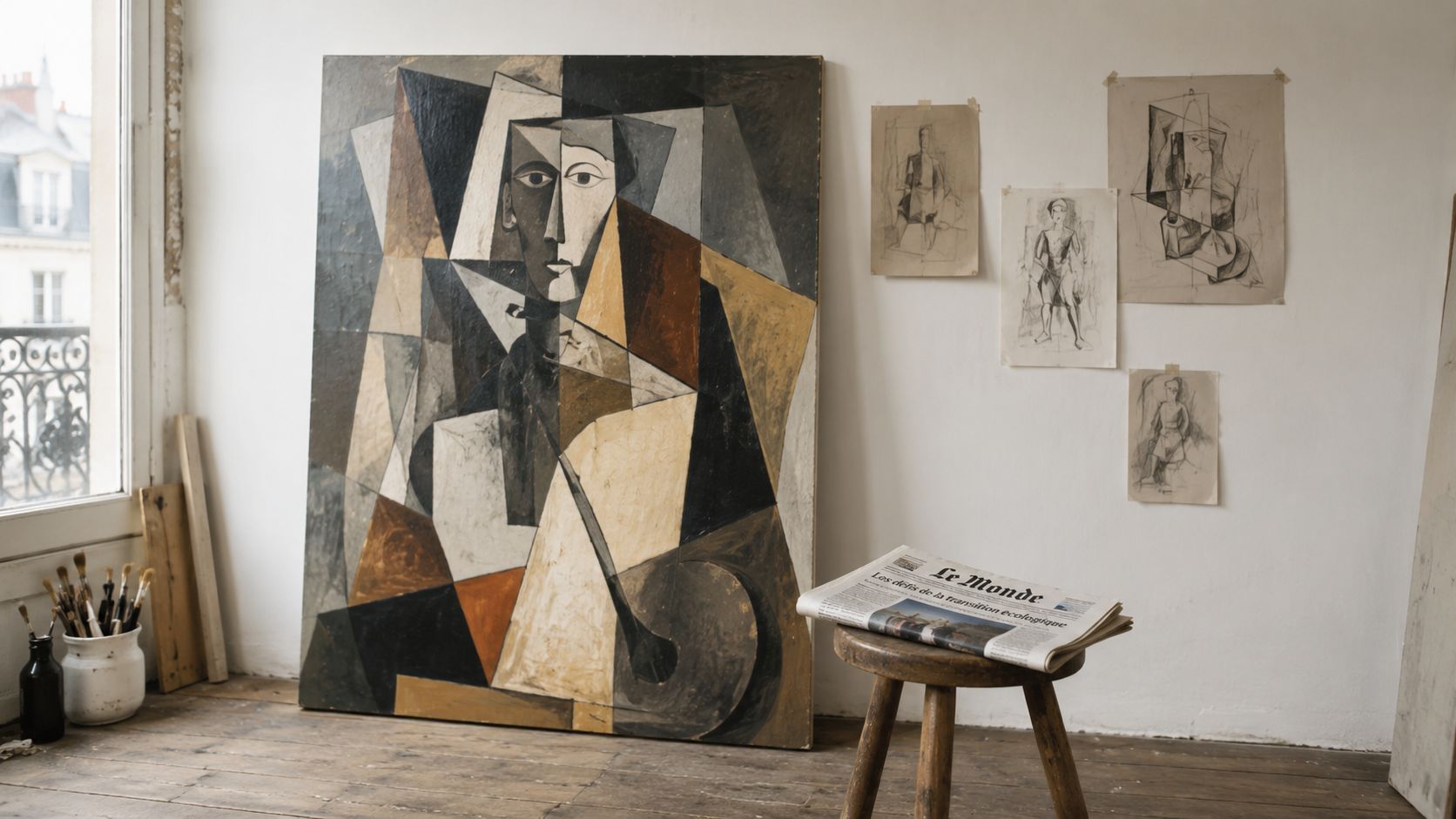
A learner who already manages everyday French needs a different kind of challenge, and Picasso delivers it fast. His work pushes you toward abstraction, interpretation, and disagreement, the exact territory where advanced French starts to sound precise instead of merely correct. He was born in Spain, yet he spent much of his career in Paris and helped shape French artistic discussion, so he belongs on any serious list of popular French artists for learners who want real cultural authority.
Picasso also gives you a stronger way to speak about viewpoint. Cubism turns one object into several angles at once, and that naturally pulls in the language of contrast, interpretation, and layered meaning. You have to explain, compare, defend, and sometimes challenge, which is how refined French starts to show up in conversation.
For corporate or diplomatic learners, that matters a great deal. Picasso often appears in French discussions as a reference for modernity, controversy, and creative freedom, so a clear opinion about his influence makes you sound comfortable in higher-level exchanges. I usually tell students to stop memorizing labels and start listening for how French speakers justify their reactions to his work.
A better exercise is criticism, not biography. I ask students to read a French interview, pause often, and state whether they agree with Picasso's choices or the criticism around them. That simple shift moves them out of passive reading and into active French argumentation.
A useful way to practice
Focus on how French critics debate Picasso, not on trying to master every phase of his career. The language of debate, concession, and nuance appears sooner that way, and it gives you phrases you can reuse in meetings, classes, and museum conversations. One senior UN diplomat I worked with used French media coverage about Picasso to strengthen diplomatic discourse, while an MBA student preparing for Paris built business vocabulary through gallery discussions.
In advanced French, Picasso is less about naming movements and more about defending a point of view with precision.
A virtual museum tour helps if you pair it with French audio descriptions, then summarize the work in your own words. That turns passive exposure into speaking practice. A DALF C1 candidate I coached improved essay confidence by writing about Picasso's role in French post-war identity, because the topic required clear structure and stronger transitions.
If you want a practical model for speaking about Parisian culture with confidence, how to sound more like a Parisian in French is a useful next step. Picasso gives you the vocabulary for sharp opinions, and that extra edge carries into interviews, seminars, and serious cultural debate.
3. Frida Kahlo, Emotional Expression and Personal Narrative in French
Frida Kahlo isn't French, but she's one of my favorite tools for helping learners speak French with more honesty. Many students can describe facts in French and still struggle to tell their own story. Kahlo's self-portraits, journals, and letters create a model for emotional vocabulary, identity language, and resilient self-expression that transfers beautifully into real conversation.
Why Kahlo helps hesitant speakers
Adult learners often ask me how to sound less robotic in French. Kahlo offers a direct path, write and speak from lived experience. Her work is intimate, direct, and emotionally layered, which makes it a strong fit for learners who need to talk about family, relocation, health, change, or personal values.
This matters especially for people moving to French-speaking regions. An expat mother who studied Kahlo with us in Lyon found that family conversations became warmer because she had more precise emotional vocabulary. A bilingual teenager I worked with used Kahlo as a way to explore identity in French, and that gave her the confidence to speak more openly in class.
How to use her work in practice
The most effective exercise is simple. Write a short journal entry in French about your own day, your mood, or a memory, then read it aloud. Kahlo's diary style gives learners permission to be personal without feeling forced. If your French has been stuck in safe territory, this kind of writing changes the tone fast.
For learners preparing for citizenship interviews or family conversations, Kahlo is also useful because she encourages clear statements of values. That means practicing phrases for resilience, pain, hope, and belonging, which are easy to avoid in standard coursework but very necessary in real life.
- Journal in French: Keep entries short and honest.
- Read aloud: Hear how emotional vocabulary sounds in your mouth.
- Discuss real experiences: Use your own story as practice material.
- Practice vulnerability language: Health, family, conflict, and recovery are all worth rehearsing.
Kahlo gives French learners more than art vocabulary. She gives them a voice that sounds lived-in, not translated.
4. Henri de Toulouse-Lautrec, Parisian Nightlife Vocabulary and Cultural Immersion
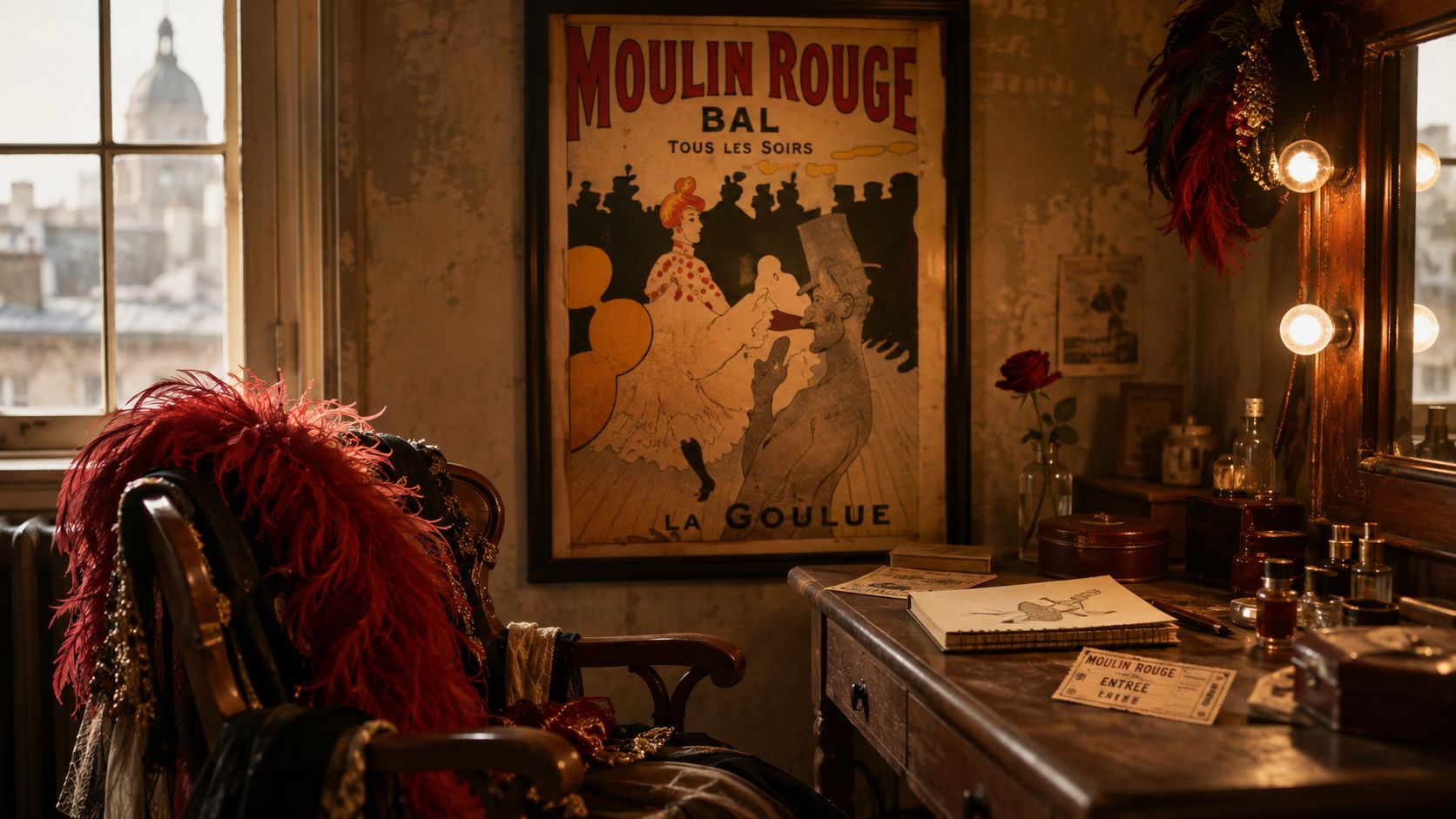
Toulouse-Lautrec is my go-to artist for learners who want Parisian French that feels lived, not textbook-perfect. His posters, cabaret scenes, and depictions of bohemian life open up a world of social language that still matters in cultural conversations today. If you're preparing for travel, relocation, or a semester abroad, he gives you a shortcut into the rhythm of Belle Époque Paris.
What makes his world so useful
A lot of learners know how to say they visited a museum. Fewer can talk about cabarets, social scenes, performance spaces, or the way a city feels after dark. Toulouse-Lautrec helps with all of that. He also gives you a sense of how Parisians joked, dressed, and gathered, which makes your French sound more context-aware.
When a family relocating to Paris studied him with us for three months, they reported feeling more confident navigating social scenes soon after arrival. A travel client preparing for a two-week immersion said the study made Paris feel less like a tourist destination and more like a place with recognizable codes. That kind of confidence matters, because cultural fluency lowers anxiety.
A practical way to study him
Start with his posters and look for embedded language, slang, and references. Then look up the people he depicted, because the stories behind them create better vocabulary hooks than isolated words ever do. If you want to push this into speaking practice, role-play a 1890s Paris evening and describe what you see, hear, and notice.
Here's the key vocabulary zone to lean into:
- Entertainment words: cabaret, theater, concert, performance
- Social words: gathering, crowd, atmosphere, nightlife
- Descriptive words: lively, bold, elegant, smoky, intimate
Practical rule: If you can describe a Paris evening with Toulouse-Lautrec vocabulary, you can handle far more natural social French in the real city.
For learners who want a deeper cultural lens, I also recommend how to sound more like a Parisian. It pairs well with this artist because both focus on social confidence, not just grammar.
Toulouse-Lautrec makes French feel like a city you can enter, not a subject you have to memorize.
5. Simone de Beauvoir, Philosophical French and Feminist Discourse
Simone de Beauvoir is essential if your French needs intellectual weight. She's not an artist in the museum sense, but she is a foundational French thinker whose writing trains you to understand how educated French speakers build arguments. For professionals, academics, and diplomats, she's one of the most valuable names to know because she turns popular French artists into a broader cultural category that includes serious French intellectual life.
Why Beauvoir matters for advanced learners
Beauvoir's prose demands attention to structure, nuance, and logic. That makes her perfect for learners who already speak fairly well but want to sound more precise. Her essays and philosophical writing push you into existentialism, feminism, ethics, and identity, which are all areas where French sentence patterns matter as much as vocabulary.
I usually start learners with shorter passages before moving to The Second Sex. That keeps the work manageable and prevents the common problem of overloading on complexity too early. Reading slowly, then discussing each idea between paragraphs, helps learners absorb not just the content but the argumentative style.
Where this becomes practical
A professor preparing to lead seminars in Paris used Beauvoir to sharpen her academic French, and the change showed in her writing and seminar discussion. A UN diplomat working on gender and ethics-related negotiations used Beauvoir's ideas to strengthen persuasive language in French. Those are the kinds of situations where fluency alone isn't enough, you need intellectual credibility.
If you're writing, emulate her sentence patterns. If you're speaking, practice disagreement and concession. French high-level conversation often depends on how gracefully you frame a position, and Beauvoir is one of the best models for that.
French sounds more sophisticated when your ideas are organized, not just correct.
For learners ready to stretch into more demanding discussion, advanced French conversation training is a strong next step. Beauvoir becomes much more useful when you can debate her ideas out loud.
If your goal is professional French with substance, she belongs near the top of your study list.
6. Henri Matisse, Color, Creativity, and Playful French Learning
Matisse is the artist I recommend when a learner needs more joy in the process. His work is accessible, vivid, and useful for building everyday descriptive French. If your French has started to feel stiff, Matisse gives you room to be playful while still working on serious language.
Why Matisse helps learners speak
His cutouts and paintings are ideal for vocabulary around color, shape, movement, and emotion. That makes him a strong choice for children, teens, bilingual families, and adults who freeze up when lessons feel too formal. I've watched reluctant students speak more often when Matisse enters the lesson, because the art invites response instead of perfection.
A bilingual student I worked with became more engaged after several weeks of Matisse study. He began describing his own artwork in French without prompting, which is the kind of transfer I want to see. An adult learner with language anxiety also used Matisse to reconnect with French study and later felt ready for group classes.
The shift is practical. Once learners have a visual starting point, they have less pressure to invent ideas from nothing, and that often leads to clearer speech.
How to make the learning stick
Make your own Matisse-inspired cutouts, then describe them in French as you go. That combines physical creativity with speaking practice, and it helps memory more than passive review does.
You can also start naming shades, textures, and emotional effects. Instead of repeating basic colors, push toward richer phrasing such as soft, bright, bold, calm, or lively. If you're teaching kids, this works especially well at home because the activity feels like play, not homework.
A useful bonus is that Matisse's own statements often stay clear and direct. Learners can read them without wrestling with heavy theory, and they make good models for saying something meaningful in simple French. His work also fits naturally with art-and-style vocabulary, so a related lesson on French fashion vocabulary for learners can sit alongside a Matisse session without feeling forced.
Visit a museum with Matisse works if you can, then practice describing one piece for a full minute. That kind of sustained description builds stamina quickly.
7. Jean-Michel Basquiat, Street Art, Contemporary Culture, and Cool French
Basquiat gives learners the French they hear in creative spaces, not the French they memorized from formal exercises. He's American, but his connection to Paris, French Dadaism, and contemporary European culture made him relevant to how young French people talk about art, rebellion, and authenticity. For teens, young professionals, and creative learners, he's one of the best bridges into modern cultural French.
Why Basquiat works with younger learners
I've watched resistant teenagers come alive when Basquiat enters the lesson. They suddenly see French art as current, visual, and socially relevant instead of distant and academic. That shift matters, because engagement drives retention, and Basquiat gives learners a reason to want to speak.
His use of text in paintings is especially useful. It pushes learners to notice how French words can function as image, identity marker, or provocation. That opens up a different kind of reading practice, one that feels closer to contemporary culture and less like homework.
The best way to study him
Focus on the French words in his work and ask why he chose them. Then compare how French artists and writers discuss his style. This gives you access to contemporary vocabulary around graffiti, urban culture, and artistic identity, which is valuable if you're heading to Paris for study or work.
- Look at the text: Notice the French words Basquiat uses.
- Read commentary: See how French speakers describe his impact.
- Practice street-art vocabulary: Graffiti, mural, tag, urban, raw, ironic.
- Create your own text art: Write short French phrases that express identity or critique.
A young creative professional I coached moved to Paris feeling insecure about her cultural knowledge. Basquiat gave her a reference point she could use in creative conversations, and that changed how she showed up in artist circles.
Basquiat is the artist you choose when you want French to feel current, alive, and worth saying out loud.
8. Coco Chanel, Fashion, Elegance, and Aspirational French for Professionals
Chanel gives professional French a clear edge because she sits at the point where style, business, and self-presentation meet. I often guide executives and senior women toward her work because understanding Chanel helps them read how French culture signals authority. That changes more than wardrobe choices. It changes how people hear you in meetings, networking events, and luxury-sector conversations.
Why Chanel belongs in a practical French list
Her interviews and biography teach more than fashion vocabulary. They show how simplicity, quality, and confidence work in French professional speech. If your communication tends to be over-explained or hesitant, Chanel is a strong corrective.
I've seen this matter especially for people in corporate leadership and luxury goods. An executive recruiter preparing for a Paris office launch studied Chanel's communication style and earned stronger respect from Parisian colleagues. A woman executive preparing for C-suite advancement used Chanel to practice authority in French meetings, and that shift showed up in her delivery.
How to make Chanel useful in study
Start with her interviews in French, then study how she frames ideas and presents herself without over-justifying. Notice the trade-off. French professional confidence often sounds more elegant when you say less, but choose better words. That habit helps in introductions, emails, and presentations alike.
For language learners working in fashion, retail, or luxury, fashion terms in French adds useful vocabulary to the cultural study. It turns Chanel from an icon into a working resource for client conversations, showroom visits, and product descriptions.
Chanel works because she gives you a style standard and a communication standard. In practice, that combination helps French sound polished, credible, and ready for professional use.
9. Marc Chagall, Surrealism, Symbolism, and Poetic French Expression
Chagall is the artist I reach for when a learner wants French with depth. His imagery is dreamlike, symbolic, and personal, which makes him ideal for people who want to move beyond functional speaking into more expressive language. Though born in Russia, he spent much of his artistic life in Paris and became foundational to French Surrealism and modern thought.
Why Chagall changes the way learners speak
Chagall trains metaphor. That alone makes him valuable, because metaphor is one of the fastest ways to sound more refined in French. Instead of speaking only in literal statements, you start noticing how images, memory, and emotion can carry meaning.
That's especially useful for expats and academics. An artist relocating to Paris used Chagall to build more precise artistic vocabulary, and a literature professor preparing to teach modernist art history used him to strengthen analytical French. In both cases, the art pushed the language into more expressive territory.
The most effective practice
Pick one painting and write a poetic French description of it. Then read it aloud and revise it with a tutor or language partner. That process forces you to search for richer verbs, more thoughtful adjectives, and better transitions between ideas.
You can also read Chagall's autobiographical writings and look for the connection between memory and symbol. That helps you see how French speakers build meaning through suggestion rather than blunt explanation. For learners who already speak decently but sound flat, this is a major upgrade.
- Describe what you see
- Explain what it suggests
- Connect it to memory or emotion
- Rewrite the same idea with more poetry
An adult learner who wanted more emotional expressiveness in French used Chagall this way and found that family conversations became more meaningful. That's the kind of change that sticks.
Chagall teaches French that can carry mood, not just information.
10. Josephine Baker, Performance, Cultural Impact, and Authentic French Integration
Josephine Baker is essential for learners who want to understand how French identity can be lived, not just inherited. Though American-born, she became a defining figure in Paris, reshaping culture and breaking racial barriers. For expats, international professionals, and anyone preparing to integrate more fully into French life, her story offers both language and perspective.
Why Baker matters for real-life French
Baker's life in Paris shows how cultural belonging works in practice. She moved through performance, activism, and public identity in a way that makes her relevant far beyond entertainment history. That's why I recommend her to adults who want to discuss equality, belonging, and social participation in French with more confidence.
Her recorded performances and interviews are also excellent pronunciation models. They give learners natural rhythm, expressive delivery, and a sense of public-facing French that sounds alive. If your speech tends to be flat, Baker is a strong corrective.
How I'd use her with learners
Start with her biography in Paris and pay attention to the choices she made to integrate into French society. Then listen to her French recordings and repeat short phrases with attention to cadence. Finally, use her activism as a conversation topic to build vocabulary around justice, community, and cultural identity.
A family relocating to Paris used Baker's story to prepare for the emotional side of transition, and they felt less anxious once they understood that integration is a process, not a single event. A young professional from the African diaspora also found confidence through Baker because she modeled cultural participation without self-erasure.
Belonging in French culture is easier to discuss when you have real examples of people who built it through action.
If you want French that supports relocation, civic conversation, or public life, Baker belongs on your list.
10 Popular French Artists, Comparative Learning Themes
| Artist | Complexity 🔄 (implementation) | Resources ⚡ (requirements) | Expected outcomes 📊 | Ideal use cases 💡 | Key advantages ⭐ |
|---|---|---|---|---|---|
| Claude Monet, Impressionist Master | 🔄 Moderate, needs basic art vocab & contextualization | ⚡ Museum visits (Met/MoMA), Monet's letters, tutor-led discussions | 📊 Improved cultural conversation & art vocabulary (DELF A2–B1); ⭐⭐⭐ | 💡 Social/business French, cultural small talk, museum visits | ⭐ Recognizable works + authentic French letters |
| Pablo Picasso, Modern Art Vocabulary | 🔄 High, abstract concepts and advanced discourse | ⚡ Advanced texts, critiques, interviews, museum resources | 📊 Sophisticated argumentative language & abstract vocab (B2–C1/DALF); ⭐⭐⭐⭐ | 💡 Diplomacy, academia, advanced professional French | ⭐ Teaches complex argumentation and abstract expression |
| Frida Kahlo, Emotional Expression | 🔄 Moderate, emotionally intense, needs sensitive guidance | ⚡ Journals/letters (translations), tutor for personal topics | 📊 Strong personal-narrative skills and emotional vocabulary; ⭐⭐⭐ | 💡 Adults, expats, family & social French, citizenship interviews | ⭐ Models authentic vulnerability and intimate expression |
| Henri de Toulouse-Lautrec, Nightlife Vocabulary | 🔄 Moderate, period slang needs contextualization | ⚡ Posters, sketches, cultural histories, role-play materials | 📊 Colloquial Parisian fluency and social vocabulary; ⭐⭐⭐ | 💡 Travel/relocation to Paris, social immersion, conversational French | ⭐ Rich source of authentic, colloquial Parisian language |
| Simone de Beauvoir, Philosophical French | 🔄 Very high, dense texts and intellectual engagement | ⚡ Original essays, guided seminars, debate practice | 📊 Advanced academic discourse & philosophical vocabulary (C1–C2); ⭐⭐⭐⭐ | 💡 Academia, diplomacy, high-level professional leadership | ⭐ Builds rigorous argumentative and academic register |
| Henri Matisse, Playful, Creative Learning | 🔄 Low, accessible, hands-on approach | ⚡ Art projects, museum visits, simple writings/interviews | 📊 Boost in descriptive vocab, confidence & creativity; ⭐⭐⭐ | 💡 Children, bilingual families, hesitant learners, creative adults | ⭐ Encourages playful experimentation and clear expression |
| Jean-Michel Basquiat, Contemporary Cool French | 🔄 Moderate, contemporary slang and cultural coding | ⚡ Street-art media, interviews, contemporary criticism | 📊 Contemporary/informal register and code-switching skills; ⭐⭐⭐ | 💡 Teens, young creatives, study abroad, contemporary arts scenes | ⭐ Teaches edgy, current informal vocabulary and bilingual use |
| Coco Chanel, Fashion & Professional Elegance | 🔄 Moderate, professional/contextual nuance required | ⚡ Interviews, biographies, sector-specific vocab, case studies | 📊 Professional polish, sophisticated register for business/luxury; ⭐⭐⭐⭐ | 💡 Luxury sector professionals, executives, diplomacy, branding | ⭐ Teaches elegance, concise presentation, and industry language |
| Marc Chagall, Poetic & Metaphorical Expression | 🔄 High, abstract/poetic learning needs tutor mediation | ⚡ Artist writings, deep painting analysis, guided composition | 📊 Poetic/metaphorical fluency and storytelling nuance; ⭐⭐⭐⭐ | 💡 Artists, academics, advanced learners seeking expressive depth | ⭐ Develops metaphorical language and narrative sophistication |
| Josephine Baker, Cultural Integration & Performance | 🔄 Moderate, historical complexity and sensitive topics | ⚡ Recordings, biographies, performance analyses, cultural study | 📊 Improved pronunciation, cultural-integration strategies; ⭐⭐⭐ | 💡 Expats relocating to France, community-building, social integration | ⭐ Real-world models for integration, rhythm, and expressive delivery |
Your Next Steps in Artful French Mastery
If you've been trying to make your French sound more natural, the quickest win is to stop studying art as background knowledge and start using it as speaking material. Popular French artists give you ready-made language for opinions, comparisons, emotions, and professional conversation, which is exactly where many learners get stuck. The right artist can also match the exact kind of French you need, whether that's museum conversation, business polish, social confidence, or exam-level argumentation.
I've seen this work with students across very different goals. A corporate client needed cleaner cultural small talk for gallery events. A teen needed something cool enough to keep her engaged. An adult learner needed more emotional range. In each case, the fix wasn't more random vocabulary. It was the right topic, used in the right way, with feedback that made the language usable.
The fastest progress usually comes from pairing one artist with one real-world setting. Visit a museum, read a short text aloud, then talk through it with a tutor. If you're in a professional field, choose Chanel, Picasso, or Beauvoir. If you want easier entry points, Monet and Matisse usually work beautifully. If your French feels too formal or too timid, Basquiat, Kahlo, or Baker can open it up.
You don't need to master all ten at once. Pick two or three that fit your goals, then build a speaking routine around them. That gives you vocabulary, confidence, and cultural range without overwhelming your schedule.
Ready to turn art into real French fluency? Book a free consultation with Elite French Tutoring and we'll build a lesson plan around the artists, settings, and speaking goals that matter most to you. Whether you want private online lessons, in-person support in New York, or a customized program for work, travel, or family life, we'll help you use these cultural topics to speak with more confidence from the very first session.